


(OSV News) — Roughly 300 years after Christ’s death and resurrection, the first nation in the world adopted Christianity as its state religion. The conversion of this country — Armenia — happened under the leadership of one man in particular: St. Gregory the Illuminator.
“We owe him the most precious part of our Armenian identity which is our Christian faith,” Simone Rizkallah, a Catholic writer and speaker who is a first-generation American of Egyptian-Armenian descent, told OSV News ahead of St. Gregory’s feast day Sept. 30. “Through him, Armenia became the first Christian nation, and the faith became woven into who we are as a people — into our churches, our language, our culture, our memory, even the way we continue to survive amidst persecution and displacement.”
Rizkallah, an Armenian Catholic Eparchy of Our Lady of Nareg episcopal appointee for the Eastern Catholic Formation of the Eastern Catholic Association of the U.S. Conference of Catholic Bishops, added, “We are proud to be Armenian because our national identity has become almost inseparable from our faith in Jesus Christ.”
Many churches recognize St. Gregory, an early Christian saint who lived in the third and fourth centuries. The Armenian Apostolic Church celebrates him as their founder and their first leader, or first Catholicos of All Armenians. Recent Catholic popes, from St. John Paul II to Pope Leo XIV, have sought his intercession. Some have also shared the extraordinary story of how his conversion of an Armenian king, King Tiridates III, led to the conversion of a country.
“When, through the preaching of Saint Gregory, King Tiridates III was converted, a new light dawned in the long history of the Armenian people,” St. John Paul II said during a 2001 homily in Yerevan, the capital of Armenia. “The universality of the faith was wedded inseparably to your national identity.”
The story of St. Gregory
In an apostolic letter released that same year, St. John Paul II tells the story of the Armenian people’s conversion while citing an early historian known as Agathangelos.
This conversion happens within the context of St. Gregory’s tragic childhood connection to King Tiridates, according to the Armenian Apostolic Church. St. Gregory’s father, sent by a Persian king, assassinated King Tiridates’ father. St. Gregory’s father was killed for his actions, but St. Gregory survived under the care of his nurse’s family in Roman Caesarea, where he had a Christian upbringing. When St. Gregory learned of his father’s evil deeds, he dedicated himself to the service of King Tiridates.
St. John Paul II describes the “providential and dramatic meeting of the two heroes.”
“It started, in fact, with a dispute: Gregory, asked by the king to make a sacrifice to the goddess Anahit, adamantly refused, explaining to the sovereign that there is only one Creator of heaven and earth, the Father of the Lord Jesus Christ,” the pope writes, adding that St. Gregory was tortured. “Seeing his steadfast constancy in professing the Christian faith, the king had him thrown into a deep pit, a dark, narrow place infested with snakes, where previously no one had ever survived.”
The king also learned the identity of St. Gregory’s father while torturing the saint, according to Agathangelos.
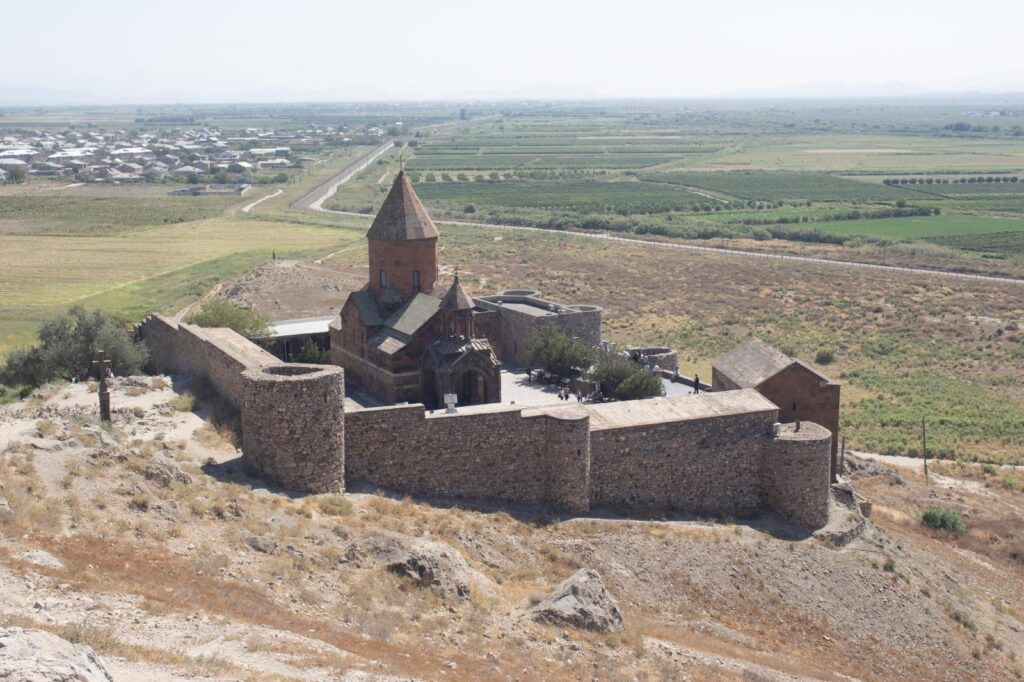
St. John Paul II goes on to say St. Gregory survived in the pit for 13 years with the aid of a kind widow. Today, people can visit his confined, windowless pit housed at an ancient Armenian monastery named Khor Virap, which means “deep dungeon” or “pit.”
The saint’s return to the outside world came after a beautiful holy virgin named Hripsime fled to Armenia with some companions to escape the Roman Emperor Diocletian, who was attempting to seduce her. Once she arrived in Armenia, King Tiridates also pursued her, and she likewise refused him. The king ordered her and her companions to be tortured and killed. St. John Paul II adds that, according to tradition, the king transformed into a wild boar as punishment for his actions. He was not cured until he obeyed a heavenly message and freed St. Gregory.
“Having obtained through the saint’s prayers the miracle of being restored to human form, Tiridates realized that Gregory’s God was the true one and decided to convert, along with his family and army, and to work for the evangelization of the whole country,” the pope writes. “This is how the Armenians came to be baptized and how Christianity was imposed as the nation’s official religion.”
A continuing legacy
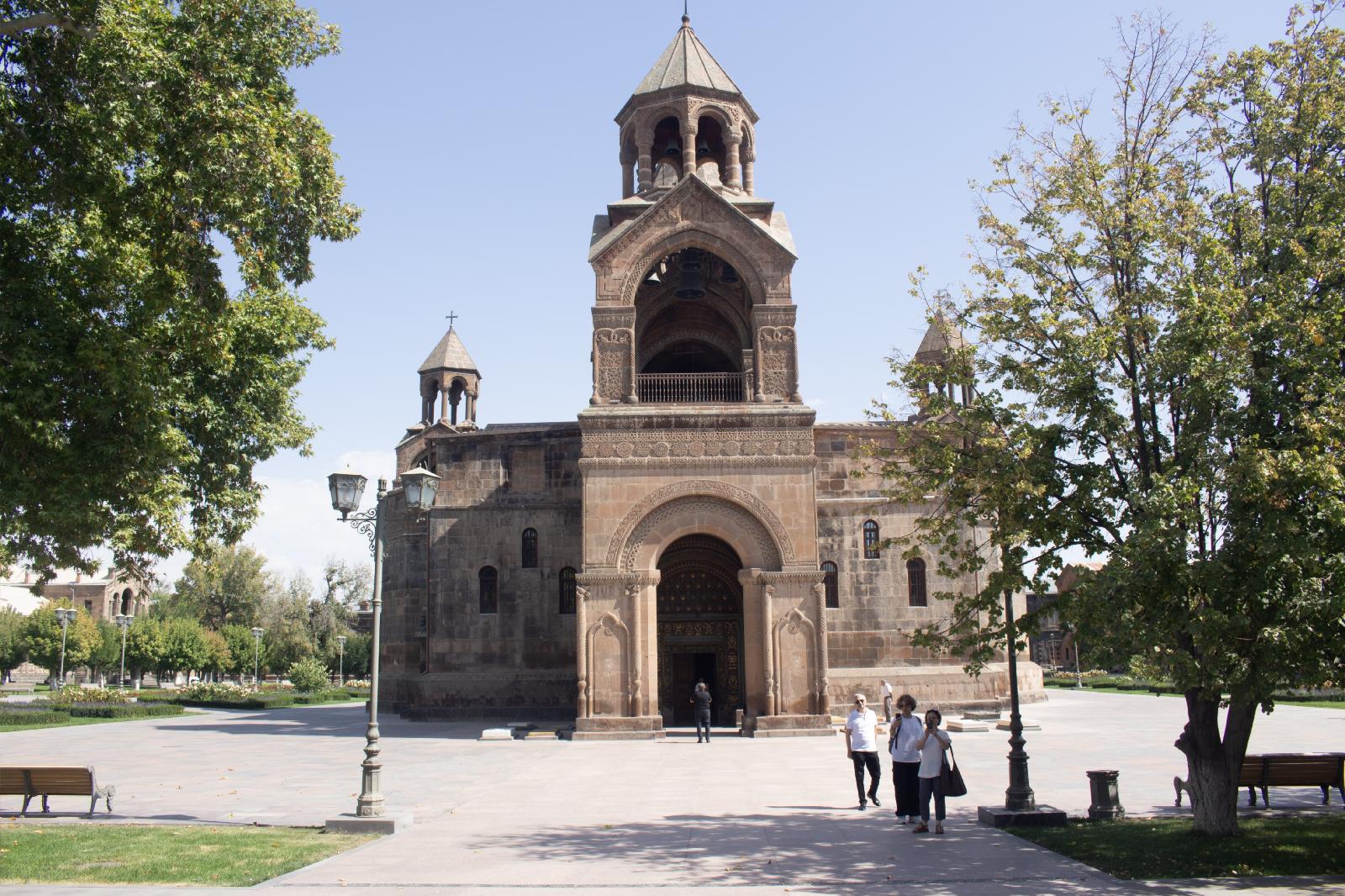
St. Gregory went on to found now-famous sites in Armenia before embracing the life of a hermit. After a vision of God, he oversaw a church built in Vagarshapat, Armenia, which is known as Etchmiadzin Cathedral, or the place where “the Only-begotten descended.” Today, it is considered the oldest continuously-used cathedral in the world and houses relics, including of St. Gregory.
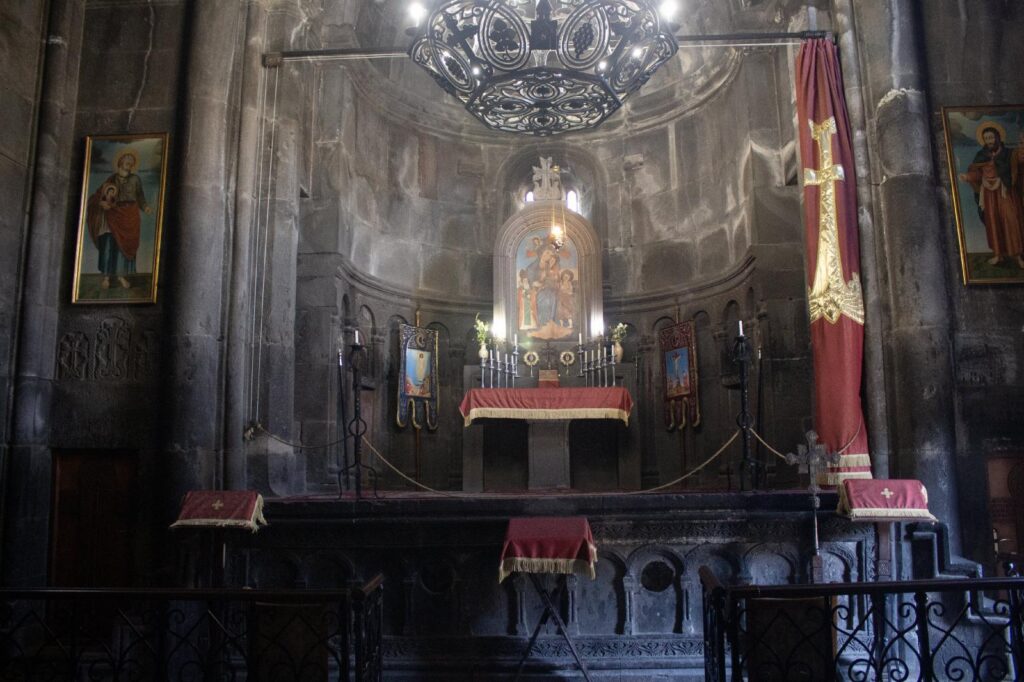
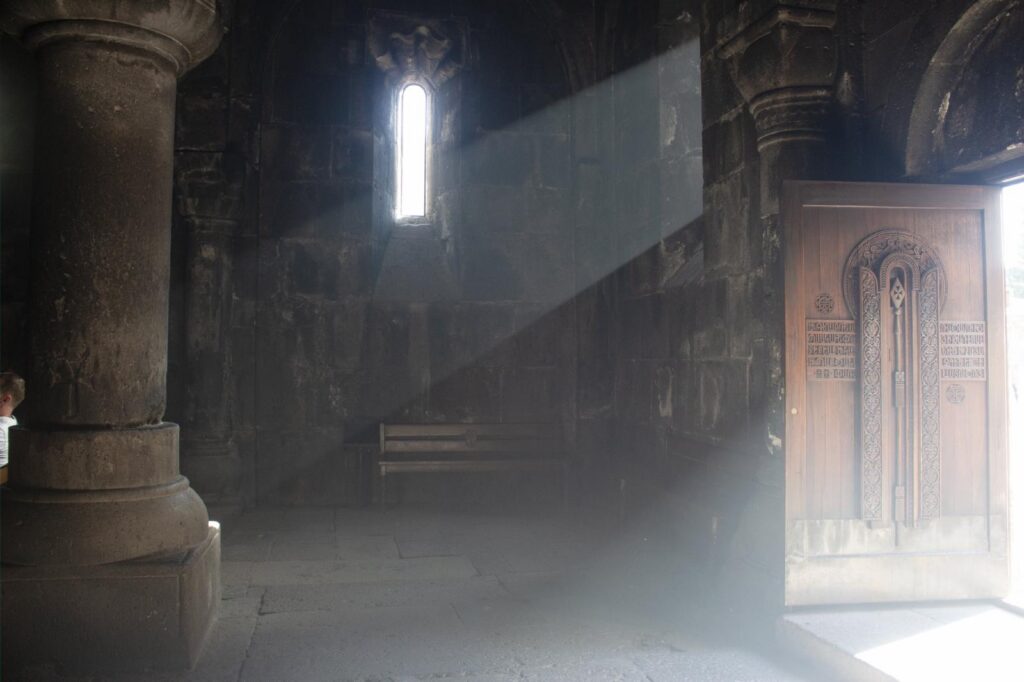
Tradition says he also founded the Monastery of Geghard in central Armenia. Geghard means “spear,” because the monastery once housed the spear said to have pierced Christ’s side on the cross. Today, it is a UNESCO World Heritage Site.
Nods to this saint can also be found in Vatican City, from a statue on an exterior wall of St. Peter’s Basilica to a courtyard named after him. And, as relations deepened between the Catholic Church and the Armenian Apostolic Church, St. John Paul II, the first pope to visit Armenia, gifted the current Catholicos of All Armenians with a relic of St. Gregory in 2000.
Throughout the years, popes have repeatedly commemorated him for evangelizing Armenia.
“This great Saint, more than 17 centuries ago, made the Armenians a Christian People, rather, the first People to officially be Christian,” Pope Benedict XVI said in 2008, before adding that he “was called the Illuminator precisely because in him the Face of the Saviour was reflected in an extraordinary way.”
More recently, in 2024, Pope Francis celebrated St. Gregory as a holy man who “brought the light of Christ to the Armenian people, who were the first, as such, to welcome that light into their history.”
A saint for every Christian
For her part, Rizkallah said Armenia embraced Christianity even before Rome did.
“St. Gregory organized the ecclesiastical structure of Armenian Christianity, established churches, and trained clergy, reportedly even ordaining his own sons as his successors,” Rizkallah, who also serves as manager of Jewish-Christian Partnerships at Tikvah and as a founding member of the Coalition of Catholics Against Antisemitism, said. “But for Armenian Catholics especially, he also connects our particular Armenian Christian inheritance to the universal Church.”
“St. Gregory doesn’t belong only to Armenians,” she added later, “he belongs to every Catholic and, in a real sense, to every Christian.”
Katie Yoder, who writes for OSV News from Maryland, traveled to Armenia as part of a U.S. delegation with the nonprofit Save Armenia Sept. 13-19.
