



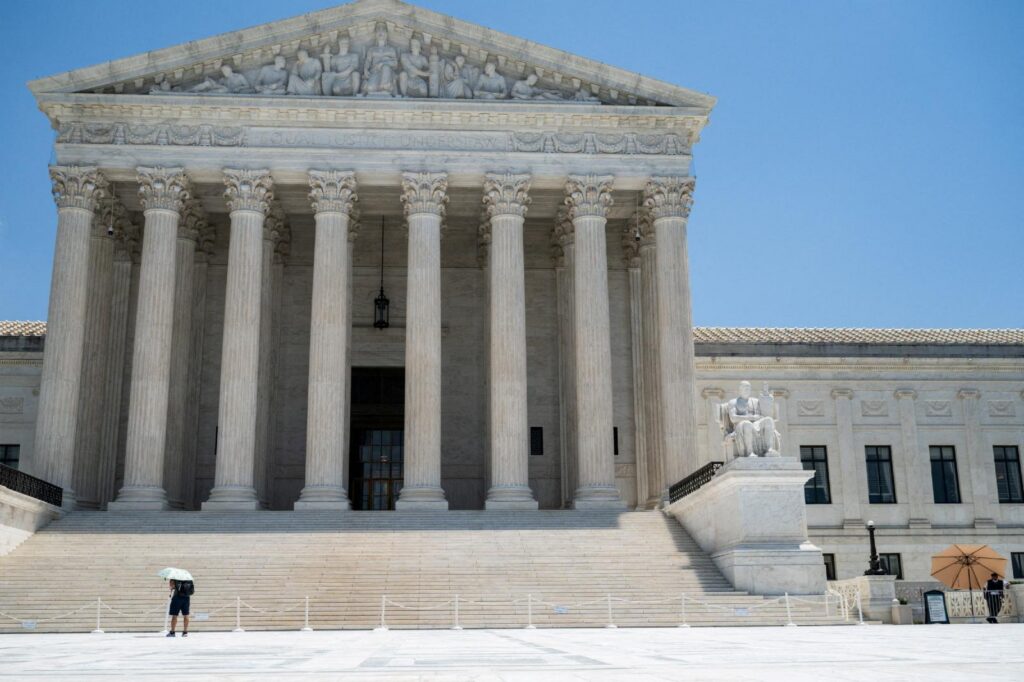
WASHINGTON (OSV News) — The U.S. Supreme Court issued major rulings in the final days of June as it concluded its 2025-2026 term.
The same week in Washington, House Republican leadership canceled votes, effectively sending the chamber home early for its July 4 recess amid a stalemate over key agenda items, while a new New York Times/Siena poll found control of the Senate is up for grabs in the midterm elections.
— Supreme Court concludes term with major rulings, including upholding birthright citizenship
On the final day of its term June 30, the high court issued major rulings finding President Donald Trump’s executive order limiting birthright citizenship violated the 14th Amendment, and upholding West Virginia and Idaho state laws requiring student athletes to compete on sports teams that correspond to their biological sex rather than their self-identified gender.
Prior to the rulings, the U.S. Conference of Catholic Bishops filed amicus briefs in both cases supporting those outcomes.
Other major rulings issued in the final days of the 2025-2026 term had to do with a pair of cases concerning presidential power. The Supreme Court upheld Trump’s firings of the heads of independent federal agencies, with a key exception: the Federal Reserve, the nation’s central bank.
The court said Fed governor Lisa Cook may remain in her job while litigation over Trump’s attempt to fire her proceeds. Trump has accused Cook of mortgage fraud, which she has denied.
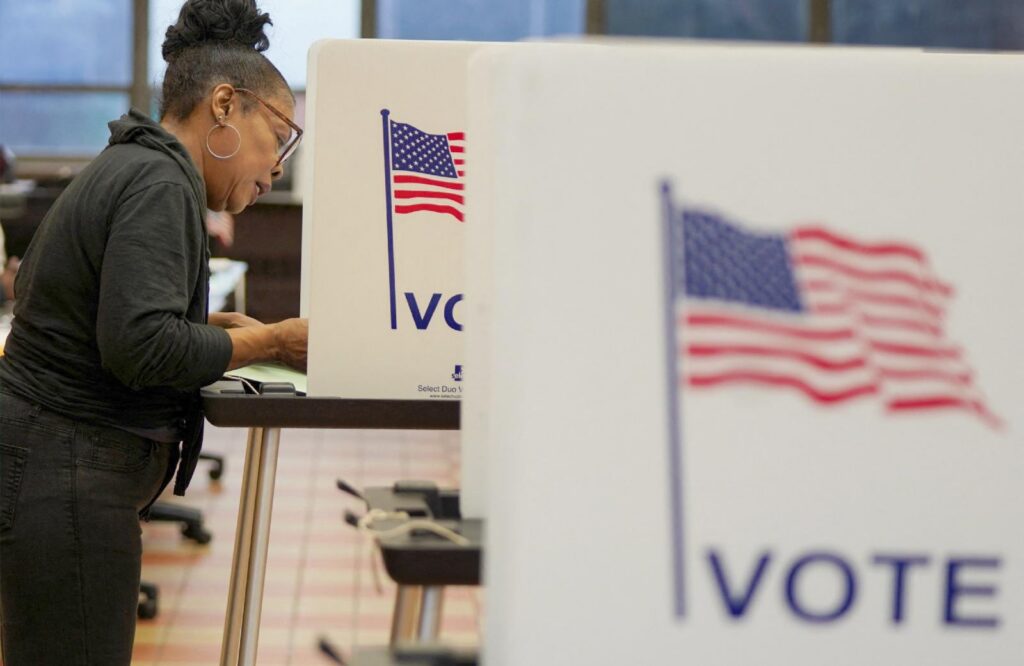
The Supreme Court also upheld a Mississippi law permitting mail-in ballots to be counted as long as they are postmarked by Election Day and received within the following five days.
— House begins July 4 recess after stalemate on key GOP agenda items
House Speaker Mike Johnson, R-La., sent members of the House home early for the July 4 recess when plans to consider a key annual defense policy bill stalled over some members of his party’s efforts to pass a voter-ID bill sought by Trump.
The House rejected a procedural rule that would have begun debate on the bill, as well as a vote to attach Trump’s stated legislative priority, the SAVE America Act, to the defense measure, considered must-pass legislation.
Lawmakers have relatively few legislative days scheduled between the Fourth of July and Labor Day, with a five-week recess planned for the end of July and most of August.
Trump has demanded that lawmakers pass the SAVE America Act, a voter ID bill that would require proof of citizenship — specifically a birth certificate, a U.S. passport or related documents such as a naturalization certificate — to register to vote in federal elections. However, a Real ID would not meet this registration requirement under the terms of the bill. It would also require the presentation of a photo ID to vote. Supporters of the bill argue it would prevent voter fraud.

However, critics of the SAVE America Act say citizenship is already a requirement to vote in federal elections, and examples of noncitizens voting are rare. They also argue it would bar eligible citizens from voting if they did not have access to their birth certificate or hold a passport. Roughly 52% of registered voters do not have an unexpired passport with their current legal name, according to the Bipartisan Policy Center.
However, the SAVE America Act lacks sufficient support in the Senate to meet the upper chamber’s 60-vote filibuster threshold.
The previous week, Trump canceled a planned signing ceremony for a bipartisan housing bill, the 21st Century ROAD to Housing Act, as part of his call to pass the SAVE America Act. Catholic groups including the U.S. bishops had previously offered their support to the housing bill.
— Poll: Control of the Senate up for grabs in November
As both parties attempt to win congressional majorities in November, Republicans currently hold a 53-seat majority in the U.S. Senate, meaning that if Democrats were to win control, they would need to gain at least four seats while maintaining all of the ones they currently hold. The poll found potential paths for each party to win a majority.
Control of the upper chamber will likely come down to states with competitive races, known as battleground states. The poll surveyed voters in six of these states: Alaska, Iowa, Maine, North Carolina, Ohio and Texas.
“The fight for control of the U.S. Senate is on,” Don Levy, executive director of the Siena Research Institute, affiliated with Siena College, a Franciscan-run school in Loudonville, New York, said in a statement.
“Republicans hold razor thin leads in Alaska, Iowa and Ohio while in North Carolina, the former governor holds an early 7-point advantage,” he said. “Of the six states we polled, these four as well as Maine and Texas, all except for North Carolina are well within the margin of error.”
On average, asked if November’s general election for the U.S. Senate were held today, which candidate they would be more likely to vote for, respondents in those six states were evenly split, with 47% saying they would support the Republican candidate and 47% saying the Democratic candidate. Another 6% were undecided.
Kate Scanlon is a national reporter for OSV News covering Washington. Follow her on X @kgscanlon.
