


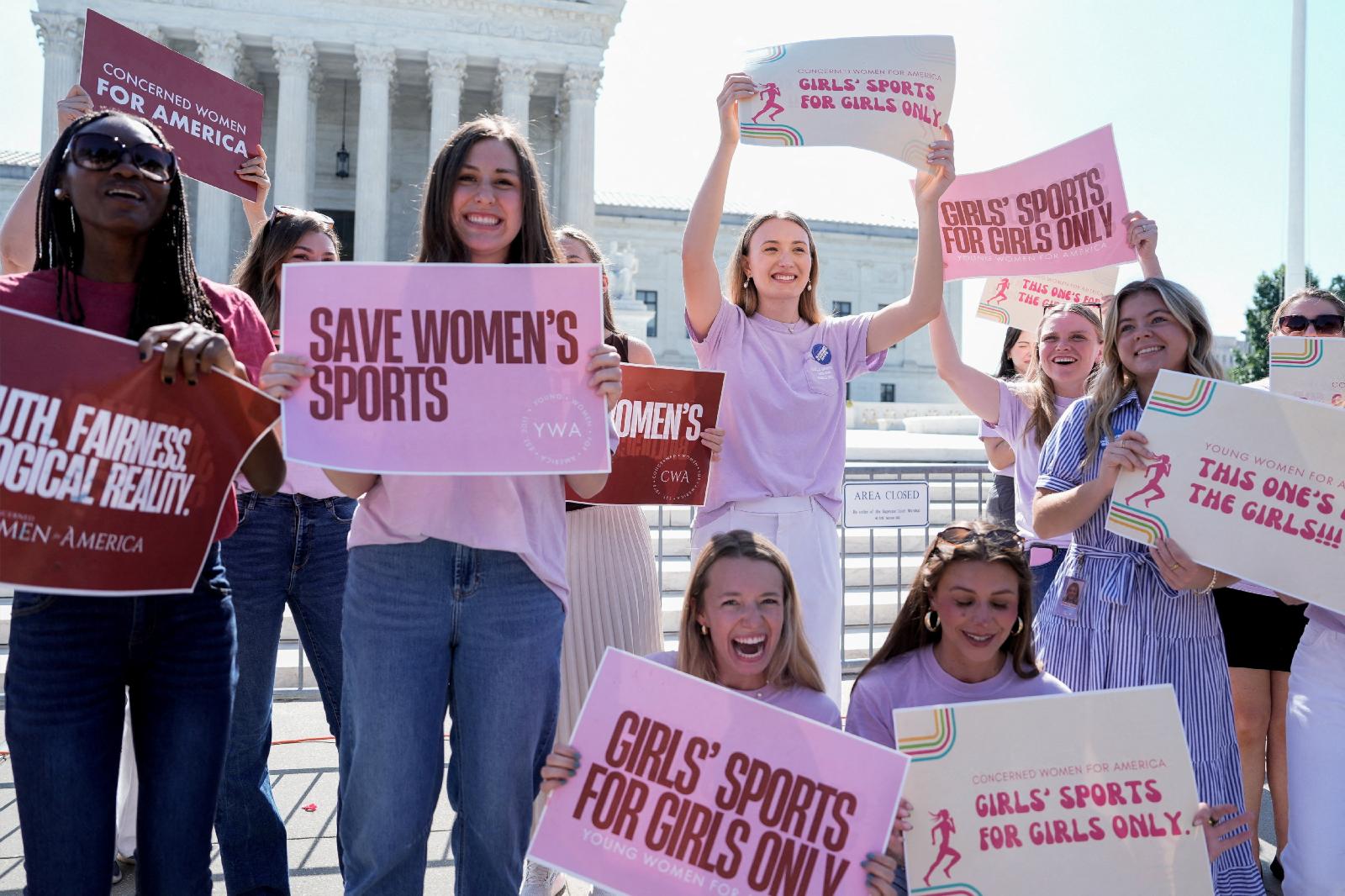
WASHINGTON (OSV News) — The U.S. Supreme Court on June 30 upheld West Virginia and Idaho state laws requiring student athletes to compete on sports teams that correspond to their biological sex rather than their self-identified gender.
The ruling comes after the high court in 2025 upheld a Tennessee state law banning certain types of medical or surgical gender reassignment procedures for minors who identify as transgender.
In a majority opinion, Justice Brett Kavanaugh wrote that Title IX “allows schools to provide separate women’s and men’s sports teams defined by biological sex.”
The court also found that “West Virginia and Idaho did not violate the Equal Protection Clause of the Fourteenth Amendment by maintaining female sports teams for biological females.”
“To provide equal opportunity for female athletes, schools do not merely maintain, for example, one soccer team, one basketball team, one ice hockey team, and one lacrosse team that are equally open to female and male athletes,” he wrote. “That approach would deny equal opportunity to female athletes because, as all agree, females and males have inherent physical differences relevant to athletic performance.”
Equal opportunity for female athletes cited
Kavanaugh said that to “ensure equal opportunity for female athletes, schools therefore typically maintain separate women’s and men’s sports teams,” and that Title IX’s regulations “require schools to provide the women’s and men’s teams equivalent equipment, facilities, scheduling, and the like.”
“The question before the Court is: Under Title IX and the Equal Protection Clause of the Fourteenth Amendment, may schools maintain women’s and girls’ sports for biological females? In other words, may schools determine eligibility for women’s and girls’ sports based on biological sex? The answer is yes,” he wrote.
Kavanaugh added that while 27 states “have enacted laws that maintain women’s and girls’ sports for biological females,” their ruling considered only those laws enacted by West Virginia and Idaho.
Kavanaugh was joined in his opinion by Chief Justice John Roberts, Justices Amy Coney Barrett, Clarence Thomas, Neil Gorsuch, and Samuel Alito. Gorsuch and Thomas also filed concurring opinions. Justice Sonia Sotomayor filed an opinion concurring in part and dissenting in part, in which Justices Elena Kagan and Ketanji Brown Jackson joined. Jackson also filed an opinion concurring in the judgment in part and dissenting in part.
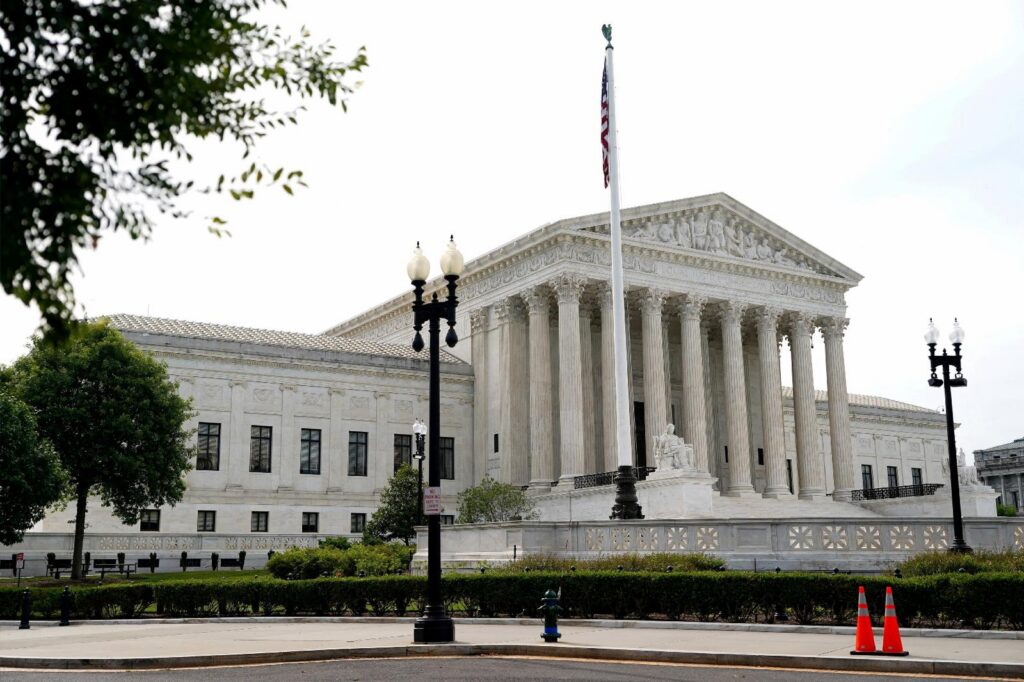
Dissent argues for judicial restraint
In her opinion concurring in part and dissenting in part, Sotomayor wrote, “This litigation implicates deeply sensitive, contentious, and evolving issues.”
“These circumstances demand exercising judicial restraint, not rushing to answer conclusively difficult questions without sufficient evidentiary development,” she said. “In opting otherwise, the majority extends great sympathy to those it favors: the young cisgender girls and women who play sports. I share that sympathy. Playing sports can lead to benefits that are immeasurable, and many are understandably invested in ensuring that competition stays fair and safe. Because the majority, however, inflicts a hardship on those it disfavors without giving them the fair and full opportunity the Constitution requires to litigate their contentions, I respectfully dissent.”
The cases, which the court heard in combined oral arguments in January, concerned challenges to those laws from students seeking to compete on women’s sports teams — one in middle school cross-country in West Virginia and the other on a university-level track and cross-country team in Idaho — that did not correspond with their biological sex. The attorneys general of those states asked the high court to uphold their respective states’ laws, both of which were previously blocked by lower courts.
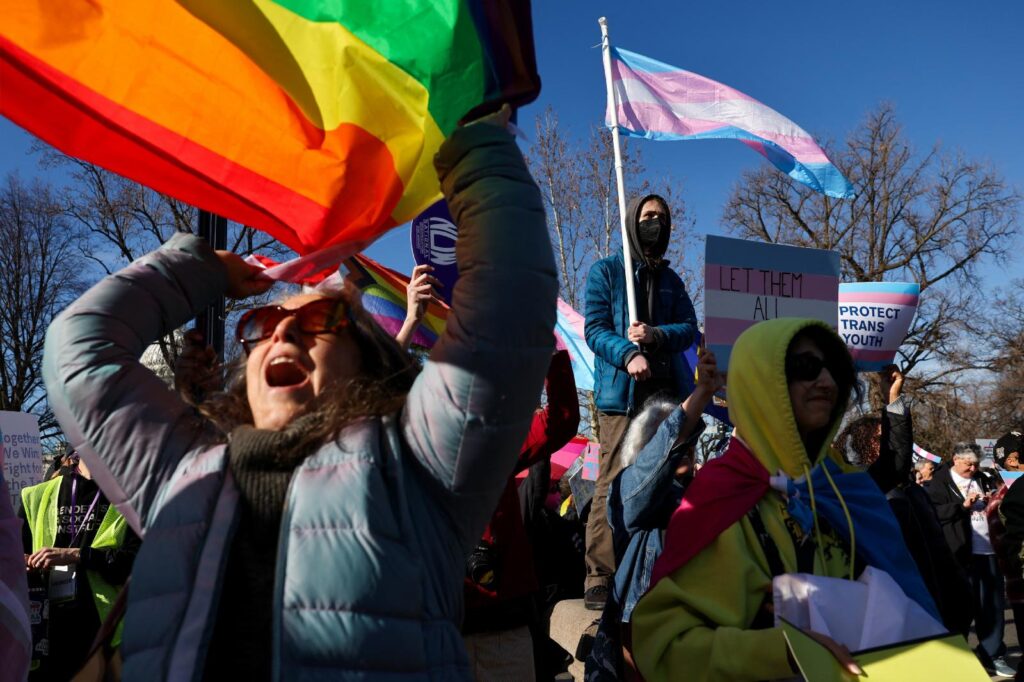
In Jan. 13 oral arguments in the combined Idaho and West Virginia cases, plaintiffs argued the bans ran afoul of the Equal Protection Clause, part of the 14th Amendment, because they discriminate on the basis of sex. But the states argued their laws are aimed at preserving women’s sports for women.
Catholic concerns at stake
In an amicus brief filed in the cases, the U.S. Conference of Catholic Bishops argued that “If Catholic schools were forced to allow males to compete on or against their female-only teams, they would need to abandon athletics programs or stop accepting federal funding. That is because allowing such competition would undermine fundamental Catholic teachings regarding the immutable, God-given differences between the sexes.”
“To be sure, Title IX contains an exemption for religious schools that are ‘controlled by a religious organization’; the exemption applies to requirements that are inconsistent with the organization’s religious tenets,'” it continued. “But that exemption is underdeveloped. And forcing schools to rely upon it would impose significant litigation costs, wasting money that would be better spent on students.”
In guidance on health care policy and practices released in March 2023, the U.S. Conference of Catholic Bishops‘ Committee on Doctrine stated the church’s opposition to interventions that “involve the use of surgical or chemical techniques that aim to exchange the sex characteristics of a patient’s body for those of the opposite sex or for simulations thereof.”
“Any technological intervention that does not accord with the fundamental order of the human person as a unity of body and soul, including the sexual difference inscribed in the body, ultimately does not help but, rather, harms the human person,” the document states.

Broader picture on transgender athletes
There is no clear data on how many student athletes who identify as transgender compete on teams opposite their biological sex in the U.S., as many sports associations do not track those numbers. NCAA President Charlie Baker, the former Republican governor of Massachusetts, told a Senate panel in December 2024 that out of more than 500,000 total college student athletes in the organization at that time, he believed fewer than 10 identified as transgender.
A 2022 study by the UCLA Williams Institute found that there are approximately 1.6 million people in the U.S. who identify as transgender in total, with about half of that population between the ages of 13 and 24.
However, a January 2025 JAMA Pediatrics study found fewer than 1,000 U.S. adolescents with commercial insurance and a gender-related diagnosis received puberty blockers from 2018 through 2022, and none of them were under the age of 12. The study did not include minors covered by Medicaid.
Kate Scanlon is a national reporter for OSV News covering Washington. Follow her on X @kgscanlon.
