


WASHINGTON (OSV News) — History shows that postliberal governments will always fail and will often leave the Church with a public perception issue in their wake, the authors of a new book argue.
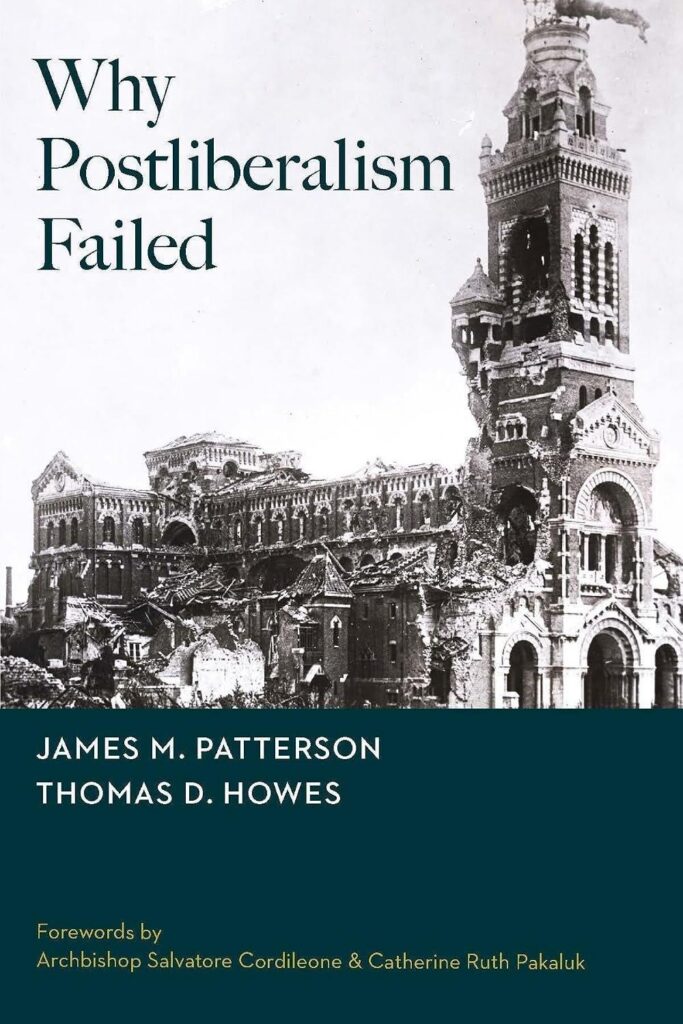
In “Why Postliberalism Failed,” a title alluding to 2018’s “Why Liberalism Failed” by Patrick J. Deneen, co-authors James M. Patterson and Thomas D. Howes said the postliberal ideology requires serious scrutiny.
Patterson is an associate professor of public affairs for the Institute of American Civics at the Baker School of Public Affairs and Public Policy at the University of Tennessee, Knoxville, and Howes is editor in chief and director of The Vital Center and a lecturer in the Princeton School of Public and International Affairs. The book was published June 22 by the Acton Institute, an American conservative and libertarian think tank that says it is guided by Judeo-Christian values.
Liberalism and postliberalism as political philosophies
Liberalism, understood as a tradition of political philosophy, is usually defined by an embrace of individual liberty, consent of the governed, and human rights.
Postliberalism, however, is often defined differently by its supporters and critics. Proponents often say they believe in implementing a government and institutions strong enough to advance policies they see as promoting the common good, and address what they see as failures of a post-war geopolitical framework.
But opponents often say this system comes at the expense of individual liberty, and bears striking similarities to authoritarian regimes like Spain’s Francisco Franco, a military general and fascist dictator who ruled the country from 1939 until his death in 1975.
Asked by OSV News in a joint interview how they define the term, Patterson said postliberalism is “three things: It’s an ideology, it’s an institutional strategy, and it’s a political program.”
Patterson called postliberalism “an institutional strategy, in that it refers to using a small number of cohesive people who can accrue the benefits to themselves in order to occupy selective groups, or elite formation groups, and positions of political hierarchies in order to implement their ideas without needing to gain a large audience of support.
“And,” he continued, “it is a political program in that they want to establish this sort of executive unbound on the basis of its defense of the Catholic Church, and (they) want to pursue policies of economic autarky, foreign policy isolationism, and will do nothing to stop their pursuit of those things.”
San Francisco archbishop writes foreword
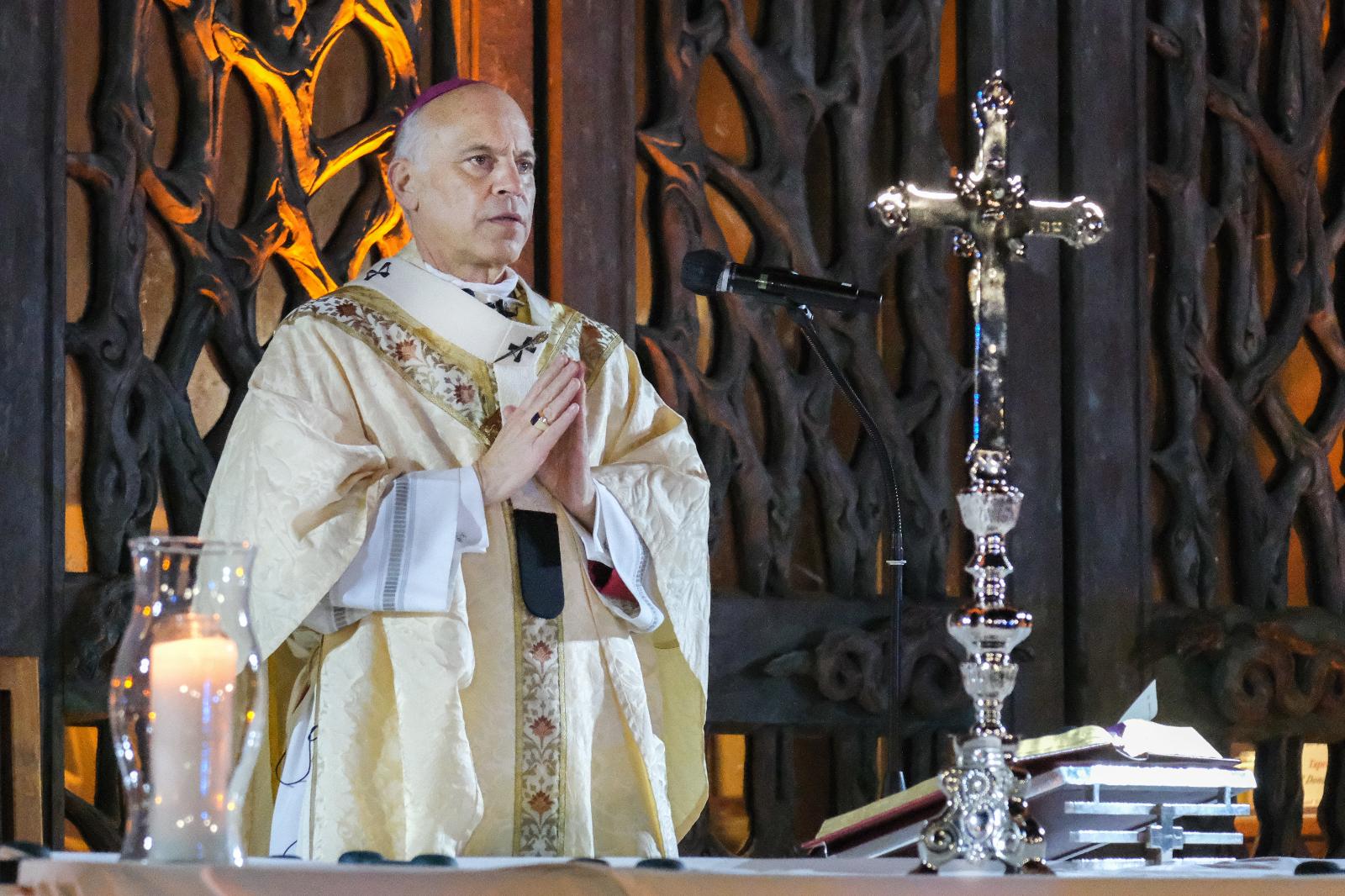
Archbishop Salvatore J. Cordileone of San Francisco wrote a foreword to the book, expressing concern about “the growing attraction to the postliberal vision of some younger Catholics.” The archbishop, who was recently appointed by Pope Leo XIV to the Vatican’s highest court, the Supreme Tribunal of the Apostolic Signatura, argued the authors’ concerns should be “taken seriously and answered honestly.”
Archbishop Cordileone noted, “In every age, the Catholic Church must examine with sobriety the political projects that claim her name, invoke her authority, or promise to advance the common good in her defense.”
“It’s an ideology using Catholic arguments, or at least Catholic tradition, to defend authoritarian administrative government led by an unconstrained executive,” Archbishop Cordileone wrote.
Speaking with OSV News, Howes said, “There are going to be some people who identify as postliberals that don’t adhere to one or more of those elements.” But he said the concept often involves “autocratic rule with a strong bureaucracy.”
Patterson and Howes said that postliberalism has already been tried and failed across the globe, such in Franco’s Spain. They trace the ideology worldwide, including to failed regimes in Europe and Latin America.
Church faces consequences when tied to postliberal governments
And, if the Catholic Church had been seen as tied to such regimes, it has also typically left the Church with public perception issues after their collapse, the authors said.
“The politicization of the Church into a legitimating body for an authoritarian regime rapidly builds a coalition of people in opposition to that regime and to the Church,” Patterson said.
Conversely, Howes said, Poland remains “one of the most Catholic countries left in Europe, and the Church was always seen as against the oppressors in that country,” unlike in countries where “the Church was seen as on the side of the oppressors, whether that’s true or not.”
Stressing that there were “plenty of good Spanish priests and bishops in Spain during Franco’s time,” Franco’s use of Church entities to implement his agenda resulted in a public perception that associated secularism with democracy, Howes said.
Asked about what level of influence postliberalism has in American politics, Patterson replied, “People often say, ‘There’s no way people would vote for this,’ and the answer is, you already did: If you voted for JD Vance as vice president, you voted for postliberalism.”
Vance in 2023 identified himself as a member of the “postliberal right.”
‘Illiberal church-state regimes’ are not the solution says archbishop
But pointing to the recent defeat of former Prime Minister Viktor Orbán and his Fidesz party in Hungary — a political ally of President Donald Trump and Vance whose administration had been lauded by postliberals — over rampant corruption under their 16-year rule, Patterson and Howes argued in the book, “Postliberalism will always fail.”
Archbishop Cordileone commended the authors for their argument that “illiberal church-state regimes are not the solution.”
“They remind us the task before us is not to implement failed political ideologies, but to witness — patiently and persuasively — to the Gospel within the imperfect, but reformable, structures of modern democracy,” he wrote.
Kate Scanlon is a national reporter for OSV News covering Washington. Follow her on X @kgscanlon.
