


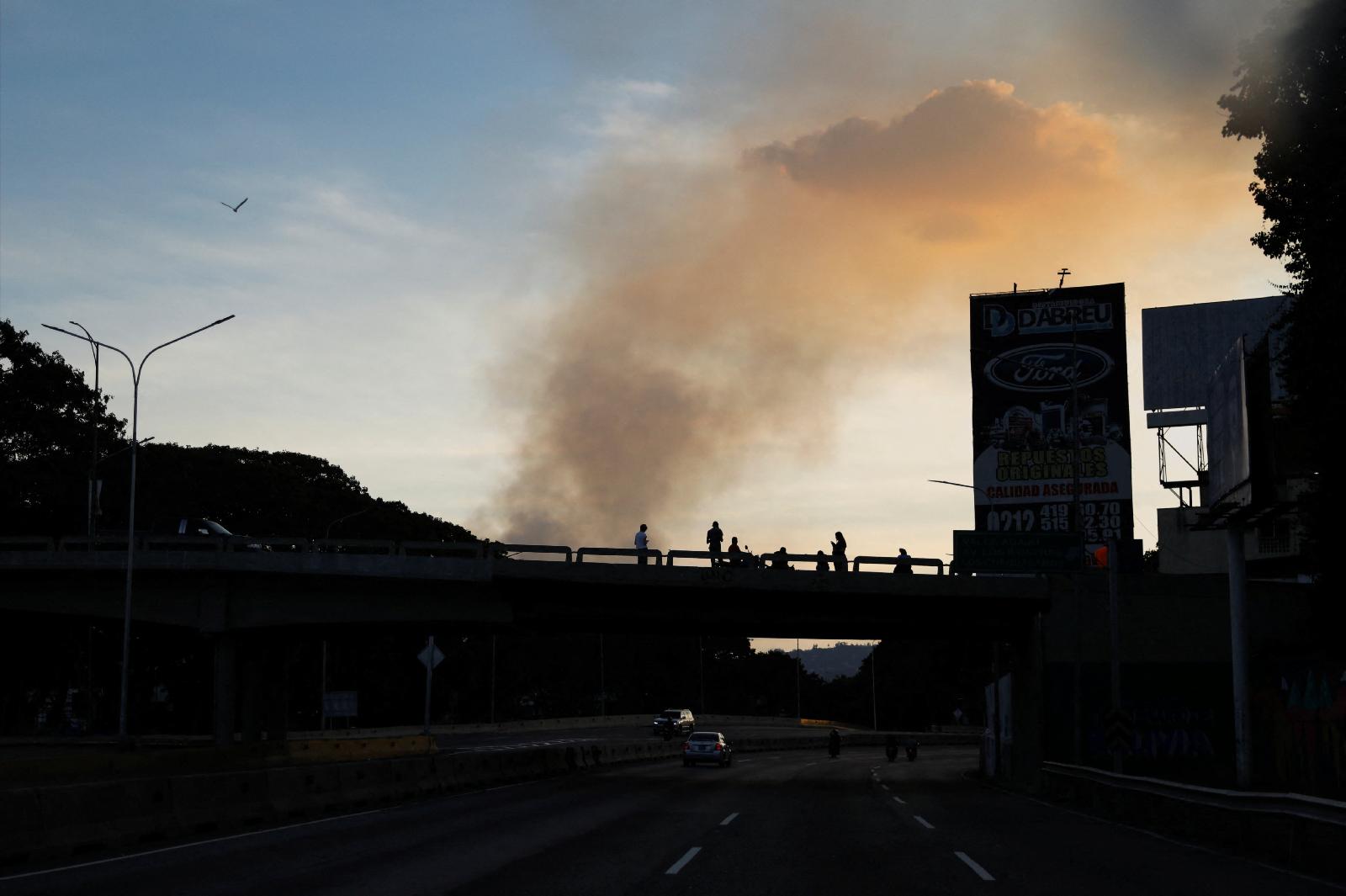
WASHINGTON (OSV News) — Members of Congress questioned the Trump administration’s plans for Venezuela after its recent strike to remove deposed Venezuelan President Nicolás Maduro from power, as well as its plans for Greenland.
The same week, the U.S. House failed to override a pair of vetoes by President Donald Trump; the Department of Health and Human Services made changes to health recommendations; and more.
Senate advances war powers resolution
The U.S. Senate on Jan. 8 advanced a war powers resolution, which would require congressional approval for Trump to take additional military action in Venezuela. The vote came as lawmakers also questioned the administration’s plans for Greenland and may consider a related measure to block military action there.
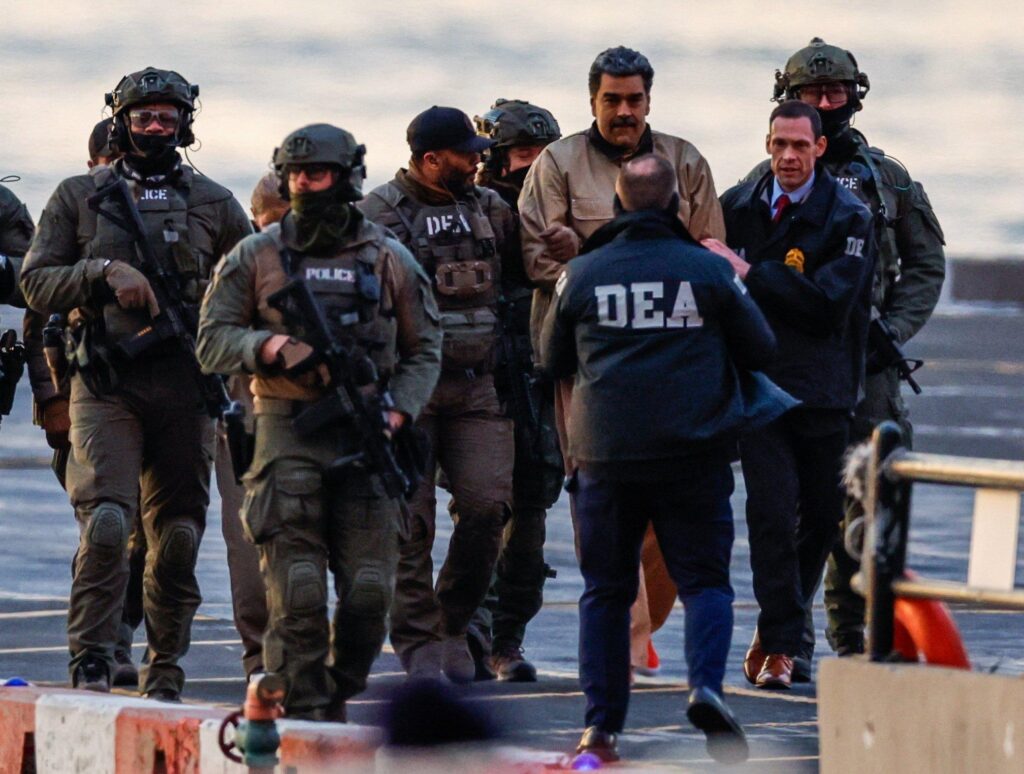
White House officials have described the raid on Venezuela as the execution of an arrest warrant for Maduro, who is expected to be tried on narco-terrorism charges in New York. But in the aftermath of the operation, Trump stated that the U.S. is going to run Venezuela, with a focus on reviving and extracting its oil, potentially for years. Trump has also said that if Venezuela’s government did not comply with U.S. demands, he was prepared to authorize further military action, emphasizing, “We’re not afraid of boots on the ground.”
“If there was ever a moment for the Senate to find its voice, it is now,” Senate Minority Leader Chuck Schumer, D-N.Y., said in comments on the Senate floor Jan. 8.
After briefing lawmakers on the Hill about the Venezuela strike, Secretary of State Marco Rubio fielded questions Jan. 7 on Trump’s plans for Greenland after the president and other White House officials escalated their rhetoric about acquiring Greenland for national security, while refusing to rule out military force to take the Arctic island. The semiautonomous territory is part of the Kingdom of Denmark, a NATO ally, and the comments set off alarm in Europe’s capitals.
Rubio told reporters the president was interested in buying the island, a position Trump floated in his first term in office.
“That has always been the president’s intent from the very beginning. He said it very early on,” Rubio told reporters at the Capitol. “I mean, this is not new.”
Among the diplomatic calls Rubio took after the strike on Venezuela was one with Cardinal Pietro Parolin, the Vatican’s secretary of state, the State Department said. A readout of the call said the pair discussed “pressing challenges, including efforts to improve the humanitarian situation, particularly in Venezuela, as well as the promotion of peace and religious freedom globally.”
Pope Leo XIV commented on “recent developments” in Venezuela in his address to members of the diplomatic corps accredited to the Holy See Jan. 9 in the Vatican Apostolic Palace, telling the gathering, “In this regard, I renew my appeal to respect the will of the Venezuelan people, and to safeguard the human and civil rights of all, ensuring a future of stability and concord.”
House passes health care subsidies extension
The U.S. House of Representatives passed a bill Jan. 8 to extend enhanced health care subsidies for three years by a vote of 230-196 after 17 Republicans broke with their party’s leadership to force a vote.
House Democrats earned enough Republican support on a discharge petition — a House procedure that allows a minority to force a floor vote on a measure if they get 218 signatures — after some Republicans broke with their party’s leadership in support of the measure, with many citing affordability issues.
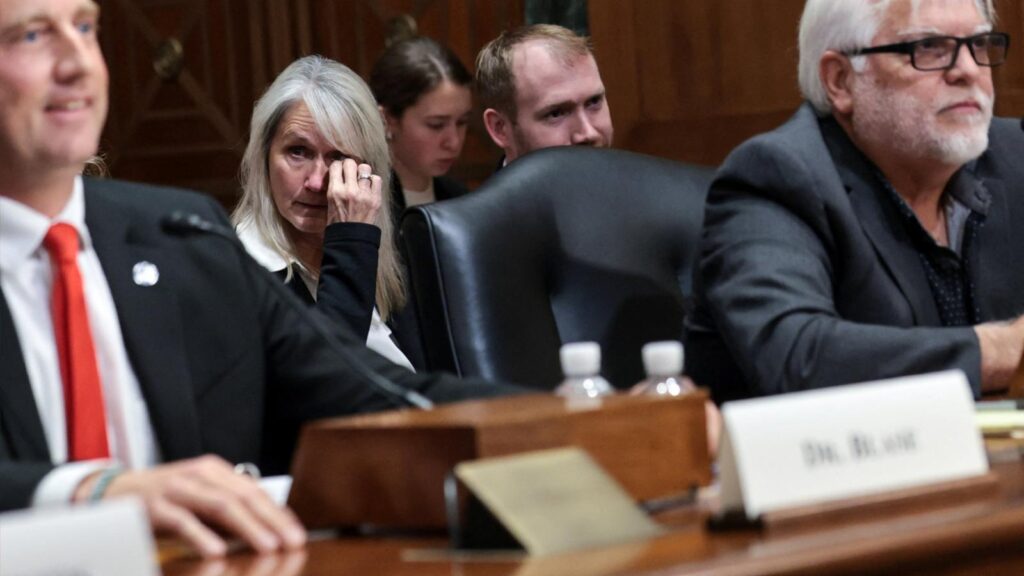
John Berry, national council president of the Society of St. Vincent de Paul USA, said in a statement the group welcomed “bipartisan efforts in Congress to extend the enhanced premium tax credits.”
“We urge members to continue good faith negotiations to ensure that health care continues to be affordable for the millions of Americans who purchase coverage through the health insurance marketplace,” he said.
A few days earlier, Trump told House Republicans to be “flexible” on the Hyde Amendment, which prohibits public funding of elective abortions, in negotiations on health care subsidies. Susan B. Anthony Pro-Life America, which works to elect pro-life candidates to public office, was among the pro-life groups that pushed back, with its president, Marjorie Dannenfelser, arguing in a statement the policy should be “a minimum standard in the Republican Party.”
In a Jan. 9 letter to Trump, Vice President JD Vance, House Speaker Mike Johnson, R-La., and Senate Majority Leader John Thune, R-S.D., a coalition of pro-life organizations including SBA List as well as Americans United for Life, Advancing American Freedom and Students for Life Action, as well as dozens of others, wrote: “As you consider how to address the challenges of creating an effective and efficient healthcare marketplace, you must do so in a way that honors and upholds American values.”
“You must protect human life by applying Hyde Amendment principles,” the letter said. “You must prohibit funding of elective abortions and plans that include abortion.”
House fails to override Trump vetoes
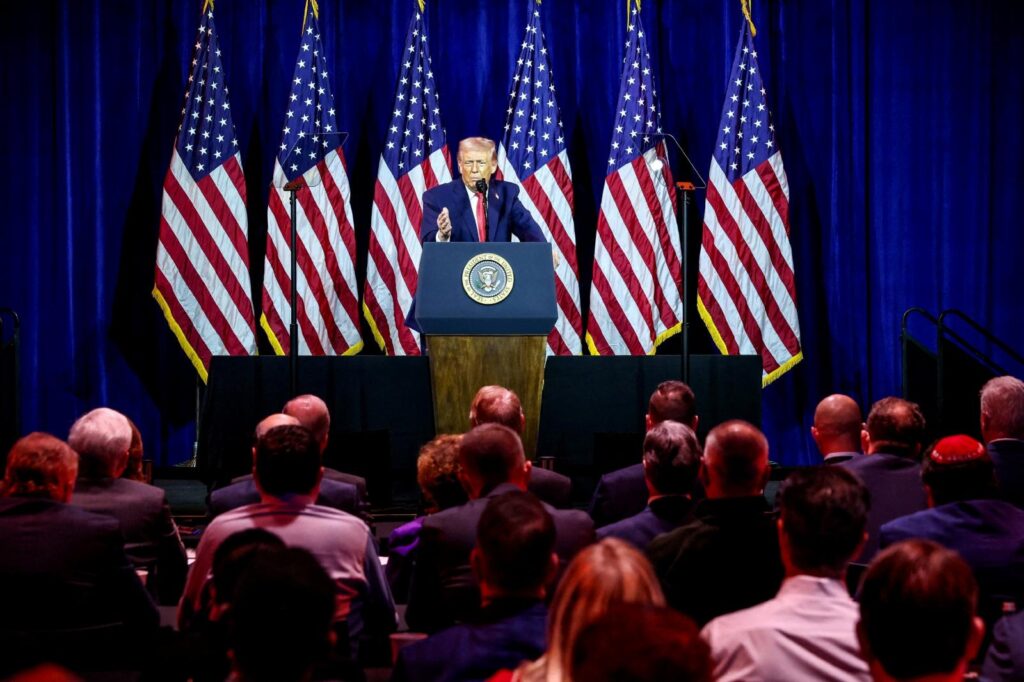
The U.S. House failed Jan. 8 in an attempt to override the first vetoes of Trump’s second term in office.
In December, Trump rejected two infrastructure bills that passed Congress with bipartisan support.
Trump vetoed a Colorado pipeline measure and legislation that would have given greater control over some tribal lands to the Miccosukee Tribe in Florida and instructed the Department of the Interior to work with the tribe to mitigate flooding in the area.
In his veto message on the Florida bill, Trump suggested the tribe’s participation in a lawsuit seeking to block the immigration detention facility in the Everglades dubbed “Alligator Alcatraz,” played a role in his decision to veto the legislation.
In his veto of the Colorado bill, which sought to facilitate the completion of a pipeline project to bring clean water to the southeastern part of the state, Trump said, “My Administration is committed to preventing American taxpayers from funding expensive and unreliable policies. Ending the massive cost of taxpayer handouts and restoring fiscal sanity is vital to economic growth and the fiscal health of the Nation.”
Some of the bills’ supporters, including Rep. Lauren Boebert, R-Colo., brought them back to the House floor in an attempt to garner enough support to override the president’s veto, which occurs when legislation can reach 285 votes, or a two-thirds majority.
But the Colorado bill failed in a 248-177 vote, while the Florida bill failed 236-188.
But the votes were noteworthy because dozens of Republicans voted with Democrats, which has been a relatively rare occurrence in the first year of Trump’s second term.
HHS changes its recommendations on childhood vaccines, food pyramid
Health officials sought to make changes to longstanding guidance on both childhood vaccinations and nutrition in early January.
The Centers for Disease Control and Prevention issued new guidance Jan. 5 upending the nation’s pediatric vaccine schedule, reducing the number of recommended vaccinations.
Health officials will continue to recommend the measles, mumps and rubella vaccines, as well as immunizations including those against polio, chickenpox and HPV. But they shifted their recommendations for vaccination against meningococcal disease, hepatitis B and hepatitis A to children they called at risk of such infections or where recommended by a doctor.
Advocates of the plan argued that the narrowed recommendations more closely align with vaccine schedules in other countries, but critics argued that circumstances in other nations are not parallel to the U.S. and reducing the number of vaccinations given could increase the risk of preventable disease. They also shifted recommendations on vaccinations against flu and COVID-19 to “shared clinical decision-making,” meaning that those who want one of those vaccines must consult with a health care provider.

“After reviewing the evidence, I signed a decision memorandum accepting the assessment’s recommendations,” Acting CDC Director Jim O’Neill said in a statement. “The data support a more focused schedule that protects children from the most serious infectious diseases while improving clarity, adherence, and public confidence.”
But the American Academy of Pediatrics argued in a statement that “today’s announcement by federal health officials to arbitrarily stop recommending numerous routine childhood immunizations is dangerous and unnecessary. The longstanding, evidence-based approach that has guided the U.S. immunization review and recommendation process remains the best way to keep children healthy and protect against health complications and hospitalizations.”
HHS Secretary Robert F. Kennedy Jr., an advocate for what he argues are healthier alternatives to processed foods, is also known as a vaccine critic. He also faced scrutiny from some pro-lifers for his stated “pro-choice” position on abortion.
During the height of the COVID-19 pandemic in 2020 and 2021, shortly before vaccines first became available to the general American public, the Holy See’s Congregation (now Dicastery) for the Doctrine of the Faith, Catholic bishops and theologians all released statements that the COVID-19 vaccines were morally permissible for Catholics to receive.
The 2020 statement from the Congregation (now Dicastery) for the Doctrine of the Faith said that while Catholics can morally undergo vaccination for COVID-19, that decision should be voluntary, not compulsory.
The same week, Kennedy and U.S. Secretary of Agriculture Brooke Rollins released new dietary guidelines Jan. 7, placing greater emphasis on protein — advising including it at each meal — and full-fat dairy instead of low- or non-fat options.
Rollins said in a statement, “At long last, we are realigning our food system to support American farmers, ranchers, and companies that grow and produce real food. Farmers and ranchers are at the forefront of the solution, and that means more protein, dairy, vegetables, fruits, healthy fats, and whole grains on American dinner tables.”
Senate unanimously approves installing plaque honoring Capitol Police who served on Jan. 6
The Senate Jan. 8 unanimously approved a measure to display an existing plaque honoring the Capitol Police officers who protected the Capitol building during the Jan. 6, 2021, riot.
Just days after the fifth anniversary of the riot — the day when 2,000 supporters of Trump attempted to block Congress’ certification of then-President-elect Joe Biden’s 2020 election victory — the upper chamber approved a bipartisan measure led by Sen. Thom Tillis, R-N.C., and Jeff Merkley, D-Ore., which they characterized as a short-term solution to a long-running debate over its installation.
“Telling the story about what happened on January 6th requires recognizing the heroism of officers who defended the U.S. Capitol and our democracy itself from violent insurrectionists,” Merkley said in a statement.
Merkley noted Congress passed a law in March 2022 mandating the plaque’s display, but it has yet to be installed, which he called “an egregious insult” to law enforcement officers who served that day.
“Today, we took an important step forward to honor their sacrifice, and I thank my colleague, Senator Tillis, for working with me to ensure we will never forget the truth about this attack on our democracy,” he said.
Tillis added in his own statement that “on January 6, 2021, courageous law enforcement officers from the United States Capitol Police and other agencies risked their lives to defend the United States Capitol and protect Members of Congress and their staff.”
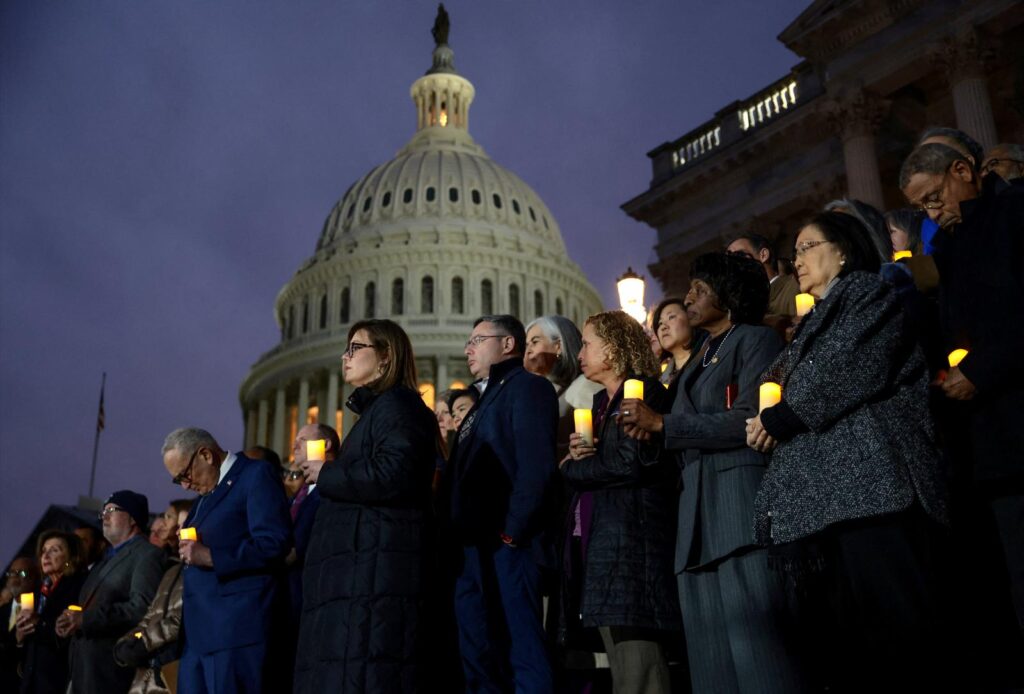
“Their brave actions upheld the rule of law and ensured that our democratic institutions could continue to function as intended,” Tillis, who is not seeking reelection, added. “Prominently displaying this plaque in the United States Senate ensures their heroism and sacrifice are properly recognized. We owe it to these brave men and women to honor their service and acknowledge the critical role they played in defending the United States Capitol.”
House Republican leadership has thus far declined to identify a location on the House side of the Capitol for the plague. The Senate resolution — which does not require House approval — directs the Architect of the Capitol “to prominently display, in a publicly accessible location in the Senate wing of the United States Capitol, a plaque honoring the members of law enforcement responding on January 6, 2021, until the plaque can be placed in its permanent location.”
Kate Scanlon is a national reporter for OSV News covering Washington. Follow her on X @kgscanlon.
