

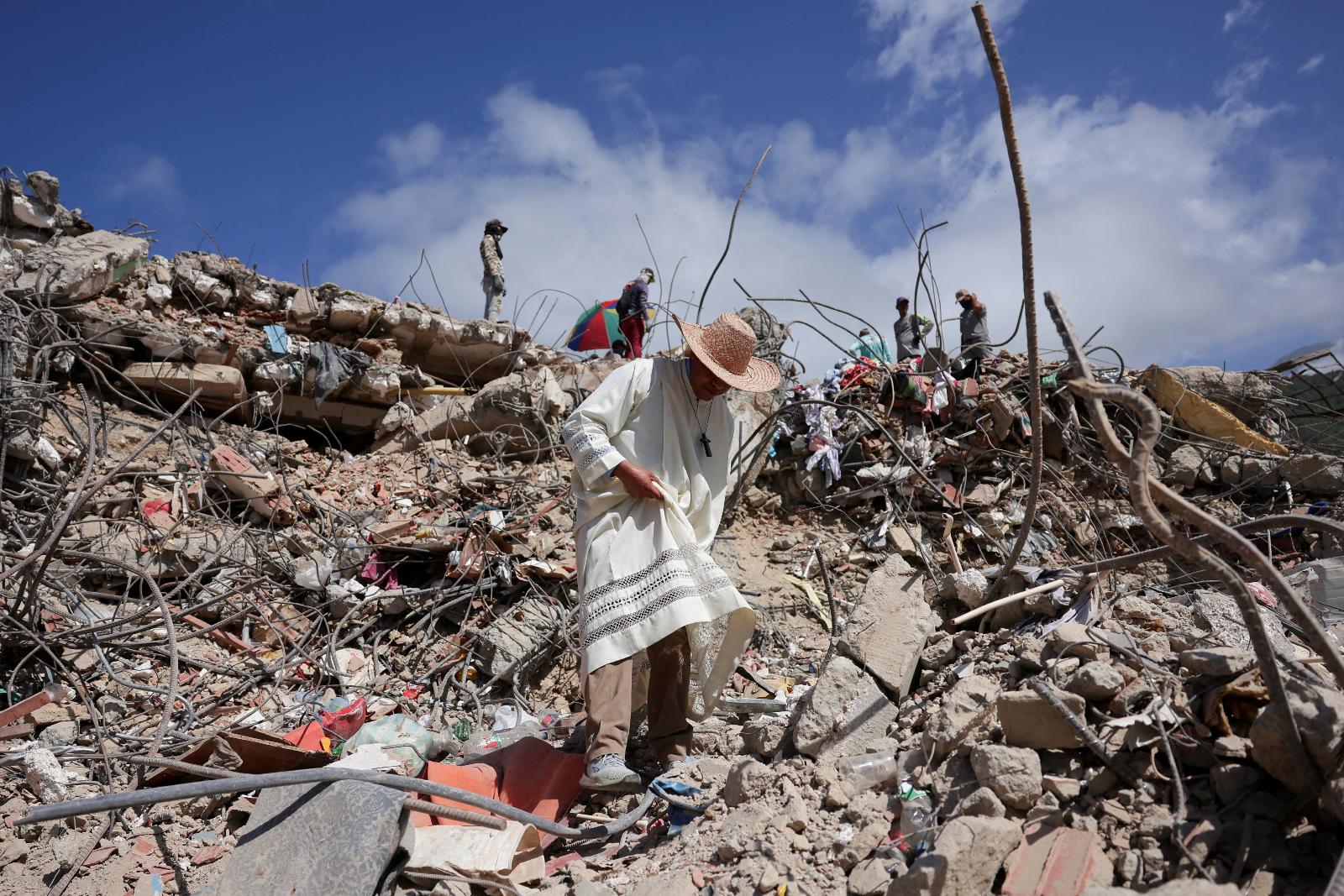
(OSV News) — Venezuelan Archbishop Jesús González de Zárate of Valencia had just finished celebrating Mass on the Feast of St. John the Baptist when the unthinkable happened.
Speaking with OSV News on Aug. 20, Archbishop González, who serves as president of the Venezuelan bishops’ conference, recalled the fateful day when his country was struck by back-to-back earthquakes, the strongest to hit the country in more than a century.
“I was right at the church doors, stepping out to greet the faithful in the atrium. And at that moment, the seismic movement occurred, and, well, the first impression was how long, how extensive the tremor was,” the archbishop said of the June 24 twin earthquakes.
Within minutes, Archbishop González said he witnessed the main plaza swaying and, upon realizing “the scale of the tragedy,” he began to reach out to family and priests, though communication was difficult in the quakes’ aftermath.
The death toll has surpassed 6,400, with over 86,000 injured
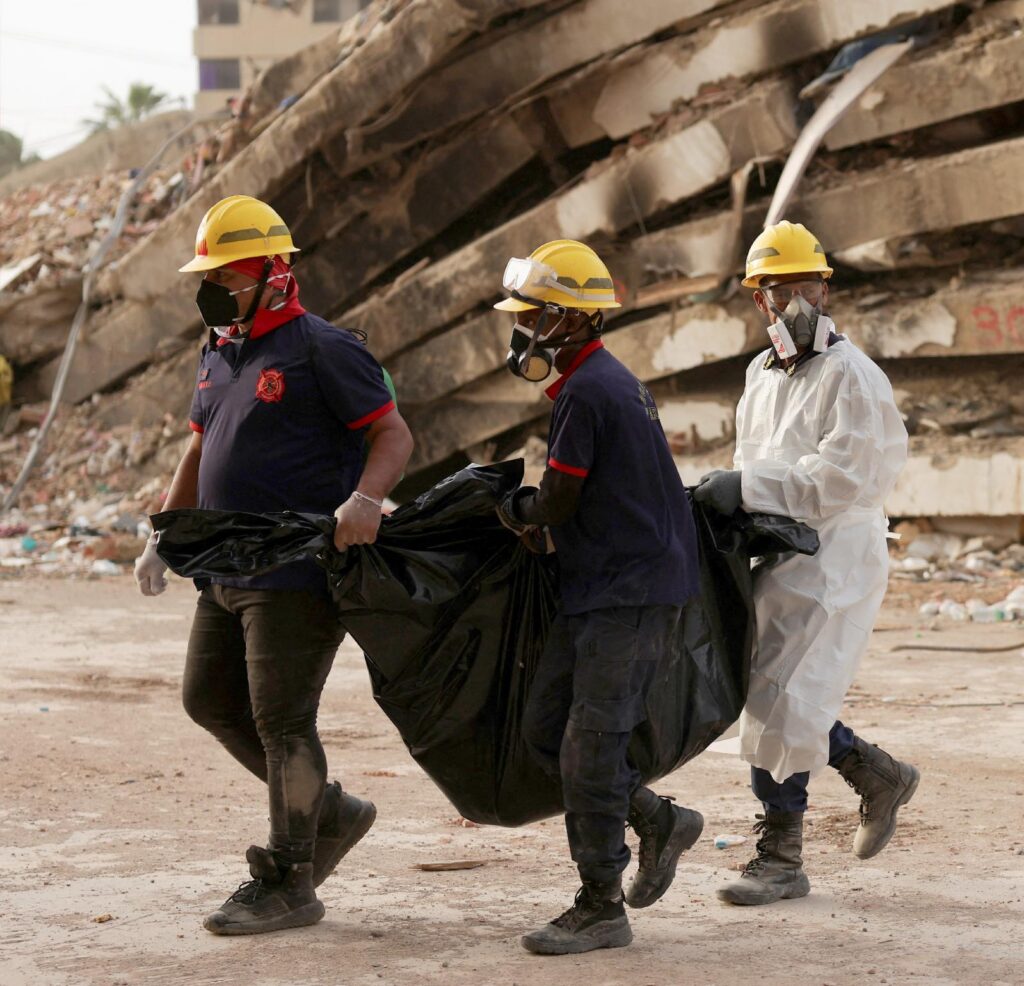
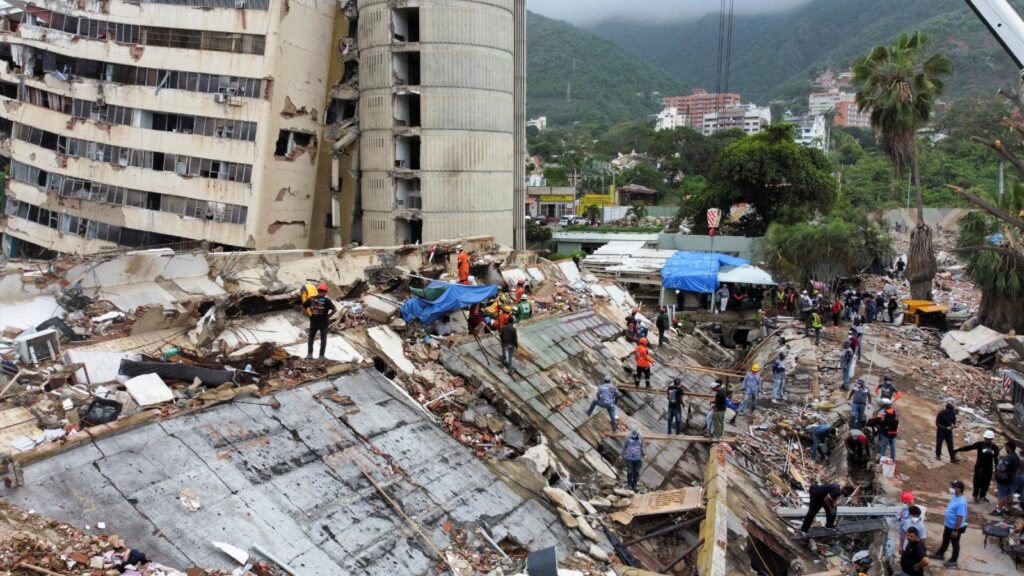
The twin earthquakes that struck the northern Venezuelan state of La Guaira measured magnitudes of 7.2 and 7.5, and by late afternoon June 25, news reports said that more than 1,500 people were injured and another 200 were trapped in rubble.
Now, two months later, the death toll has surpassed 6,400, and over 86,000 injured are still recovering in hospitals in the most affected areas.
Archbishop González told OSV News that the following evening, the bishops of Venezuela met via a Zoom call to “define the initial course of action,” which included a National Day of Prayer for Venezuela.
However, he noted that mobilizing charitable assistance in the most affected areas was a top priority. The archbishop said he also met with the priests of the Diocese of La Guaira “to learn firsthand what the real situation was.”
“It’s not the same seeing it through social media and the news as it is listening to the cry of pastors who lost their parishioners, their relatives, and many pastoral workers in their parishes who were affected by this great tragedy,” he said.
A sense of closeness
The Catholic Church’s response, the archbishop said, was immediate, not just in material aid but also “through the physical presence of numerous religious sisters, brothers, and priests who came from other parts of Venezuela, as well as lay missionaries whose sole purpose was to accompany people in their grief.”
“I take as an example the words of one priest: ‘We cannot go rescue people; we do not have the machinery, and we do not know how to rescue those who might be under the rubble. But we can, and we do know how to console people,'” Archbishop González told OSV News.
For the president of the Venezuelan bishops’ conference, the sense of “closeness, presence and prayer” was desperately needed in the weeks that followed. He noted that the public response to the June 28 National Day of Prayer was “massive,” as well as July 2, when the Church commemorated the country’s consecration to the Blessed Sacrament.
“There we saw our people’s faith, and how our people, alongside material aid, needed spiritual help,” he said. “The sheer fear generated by an event like this, felt across many areas, required that deeper spiritual and religious response that we, as the Church, could provide.”
However, that fear also led some to a superstitious interpretation of the disaster that viewed the tragic events as a sort of divine punishment, prompting the Venezuelan bishops’ conference to release a message urging Christians to become witnesses of hope.
“For this reason, we must reject the manipulation of those who, guided by superstition and fundamentalism, have claimed that the earthquakes are a punishment from God, a kind of divine vengeance,” the bishops wrote.
Archbishop González explained to OSV News that the superstitious interpretations of the earthquakes were confined to very small groups of Catholics who come from “numerous religious traditions of Afro-American origin.”
“Those who interpreted it as a punishment from God were the detractors of these folkloric expressions, which have a deep religious meaning centered on devotion that, in its most widespread expressions along the central coast of Venezuela, is linked to the origins of our people in African peoples,” he said.
Trust and attachment to God
The archbishop went on to say that the bishops’ message aimed to highlight “the merciful God, the God who accompanies His people, the God who reveals mercy and forgiveness through His Son, Jesus Christ.”
“The widespread experience has been one of great trust and attachment to God,” he told OSV News. “Many people were impacted, but they found their comfort and strength in God during this difficult ordeal.”
The head of the Venezuelan bishops’ conference said that two months on, the Catholic Church is still doing its best to minister to those in need, even as its priests face tremendous difficulties, particularly in the Diocese of La Guaira, the hardest-hit area.
“I was speaking with the bishop of La Guaira and with priests who are on a sort of reconstruction team; practically half of the clergy in La Guaira were left displaced. They have no home; they have no place to conduct worship. But it is like that everywhere. Here in the state of Carabobo, in the Archdiocese of Valencia, we have six closed churches — even in the cathedral we cannot hold services,” Archbishop González said.
Many pastoral workers died in the tragedy
In the Diocese of La Guaira, he added, six diocesan schools and five Catholic medical clinics and institutions were wrecked in the aftermath. He also said the diocesan seminary “is practically unusable” and a hospital run by the local Little Sisters of the Poor of Maiquetía is facing demolition after the earthquakes rendered the building unstable.
“The evangelizing and charitable work of the Church has also been hit because many pastoral workers died in the tragedy. Thank God no priests or religious died, but extraordinary ministers of the Eucharist, family ministry workers, and catechists lost their lives in the tragedy, as well as students and teachers from our Catholic schools,” Archbishop González lamented.
Amid the devastation, Archbishop González told OSV News he was moved by “the solidarity of the whole Church,” including from Pope Leo XIV and “various dicasteries who have made their presence felt through their communications.”
He also noted the solidarity expressed in messages and visits by representatives of bishops’ conferences in Latin America, as well as by Catholic charitable organizations such as Caritas and Aid to the Church in Need.
“They haven’t just sent goods or money to support us; they have shown up in the field,” Archbishop González said. “These two months have been an experience of profound closeness and ecclesial communion.”
Apostolic nuncio’s presence
He added that Archbishop Alberto Ortega Martín, the apostolic nuncio, as the pope’s representative, “has also been present practically every Sunday. The nuncio celebrates Mass in places where displaced people are living on the street, in the hardest-hit areas, to demonstrate the closeness of the Holy Father.”
Archbishop González was also appreciative of “Cartas para el Papa” (“Letters for the Pope”), an initiative launched by several Vatican journalists to collect letters from Venezuelans, which will be compiled into a single volume and presented to Pope Leo aboard the papal flight to France Sept. 25.
“I think the initiative is good because it expresses something we feel deeply: accompaniment and love for the Holy Father, which is one of the distinct traits of the Venezuelan people,” he told OSV News.
“First and foremost, as we know that we depend on God — that He is our Rock, our strength, our hope — we ask that he continue praying for us. That is where the source lies for the daily work of the Church,” Archbishop González said.
– – –
Junno Arocho Esteves is an international correspondent for OSV News. Follow him on X @jae_journalist.
