


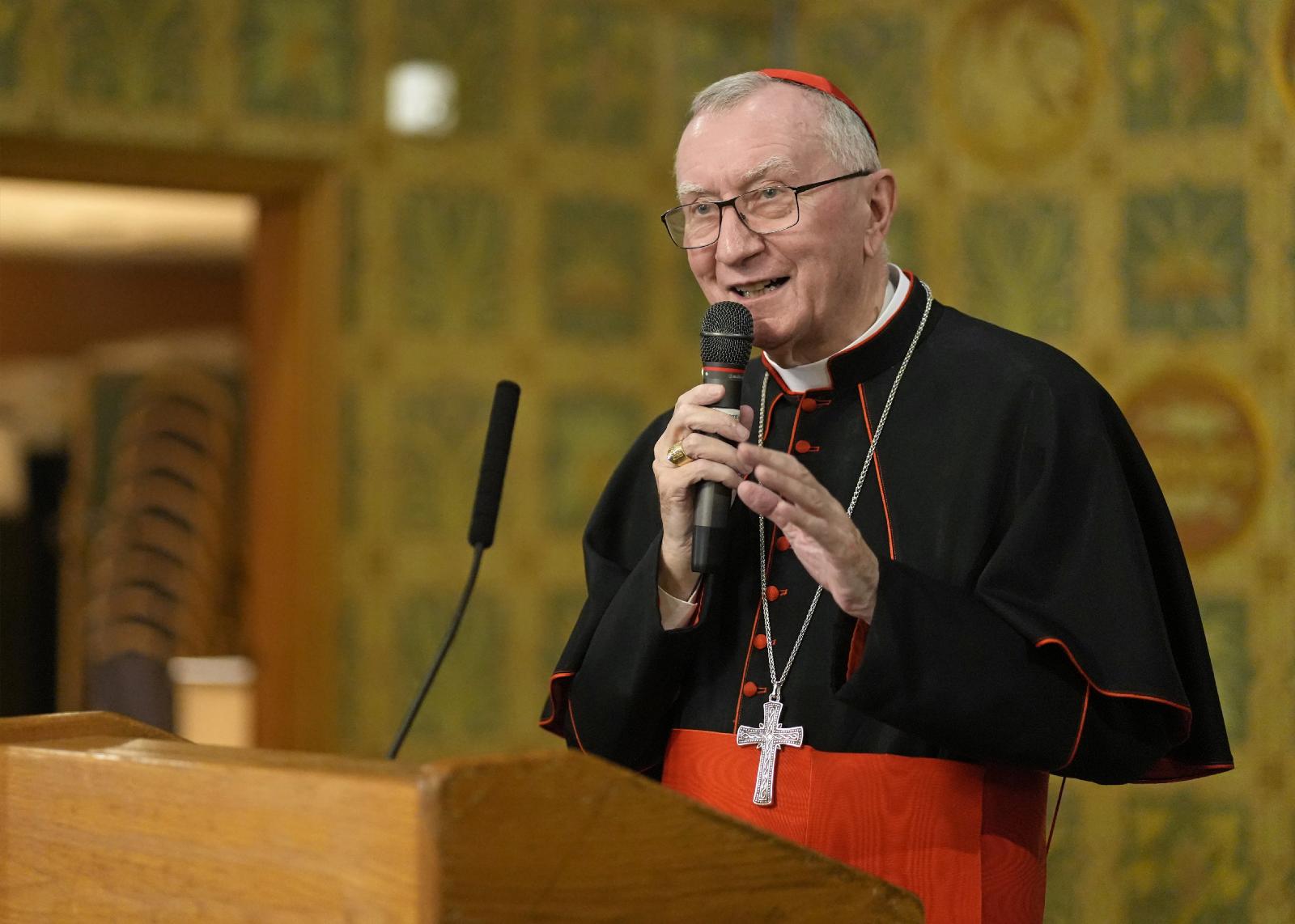
(OSV News) — Universal health care is “a moral imperative,” as “the Holy See has consistently reiterated,” the Vatican’s top diplomat told the United Nations.
Cardinal Pietro Parolin, the Vatican secretary of state, shared his thoughts in a statement delivered during the U.N.’s Sept. 25 High-Level Meeting on Pandemic Prevention, Preparedness and Response.
The gathering took place at the U.N.’s New York headquarters amid the multilateral body’s 81st General Assembly. The high-level events took place Sept. 18-28.
The Sept. 25 meeting was the second of its kind, with the first taking place in 2023 to assess global responses to the COVID-19 pandemic.
According to the U.N., the theme of the 2026 high-level meeting focused on developing a “multilateral and intergenerational approach” to prevent and address pandemics and public health emergencies.
‘Principles of equity and solidarity’
That approach is based on the “principles of equity and solidarity,” the U.N. said on the official webpage for the meeting.
Cardinal Parolin quoted Pope Leo XIV‘s encyclical “Magnifica Humanitas,” in which the pope noted that scientific, technological and medical advances “are not easily accessible to the vast majority of people, as was dramatically demonstrated during the recent pandemic.”
The cardinal added, “Failing to confront this gap will make it harder to prevent and respond to pandemics effectively in the future.”
He stressed the need to “start by addressing the circumstances which often increase the risk of severe illness and death: poverty, poor living conditions, and lack of healthcare.”
Globally, about 1 in 10, or more than 826 million people, live in poverty, with some 811 million living on less than $3 per day, according to statistics from the U.N. and the World Bank.
U.N.’s 2026 ‘World Cities Report’
In its 2026 “World Cities Report,” the U.N. notes that as many as 3.4 billion are estimated to lack “secure, safe, and adequate housing.”
An estimated 4.6 billion do not have access to essential health services, according to the 2025 UHC (Universal Health Care) Global Monitoring Report, jointly produced by the World Health Organization and the World Bank Group.
Cardinal Parolin said that universal health care is “rooted” in the Catholic Church’s recognition of the “equality of all in dignity and rights,” as the Church’s social teaching makes clear.
The cardinal also highlighted “our increasing interdependence and interconnectedness.”
He said that the principle of solidarity “implies building expertise and capacity in research, innovation, manufacturing, production, and regulation in developing countries.”
U.S., Italy reject adoption of a nonbinding agreement
Those implications had been noted in the draft political declaration produced by the Sept. 25 meeting for consideration by the U.N. General Assembly. The U.S. and Italy were among the nations opposing adoption of the nonbinding agreement, which may be reconsidered at a later point.
In his statement, Cardinal Parolin also underscored the “social fragmentation” both revealed and exacerbated by the COVID-19 pandemic.
At times, he said, “older persons were abandoned and many young people suffered from isolation and loneliness, inhibiting their personal and affective development.”
The cardinal drew on Pope Leo’s May address during an international conference on education and mental health, urging “greater attention” to mental health needs, especially among youth.
He quoted the pope’s address, emphasizing the need to remind people that “life has value, that each of us is loved, awaited and called to a task in the world.”
Gina Christian is a multimedia reporter for OSV News. Follow her on X @GinaJesseReina.
