


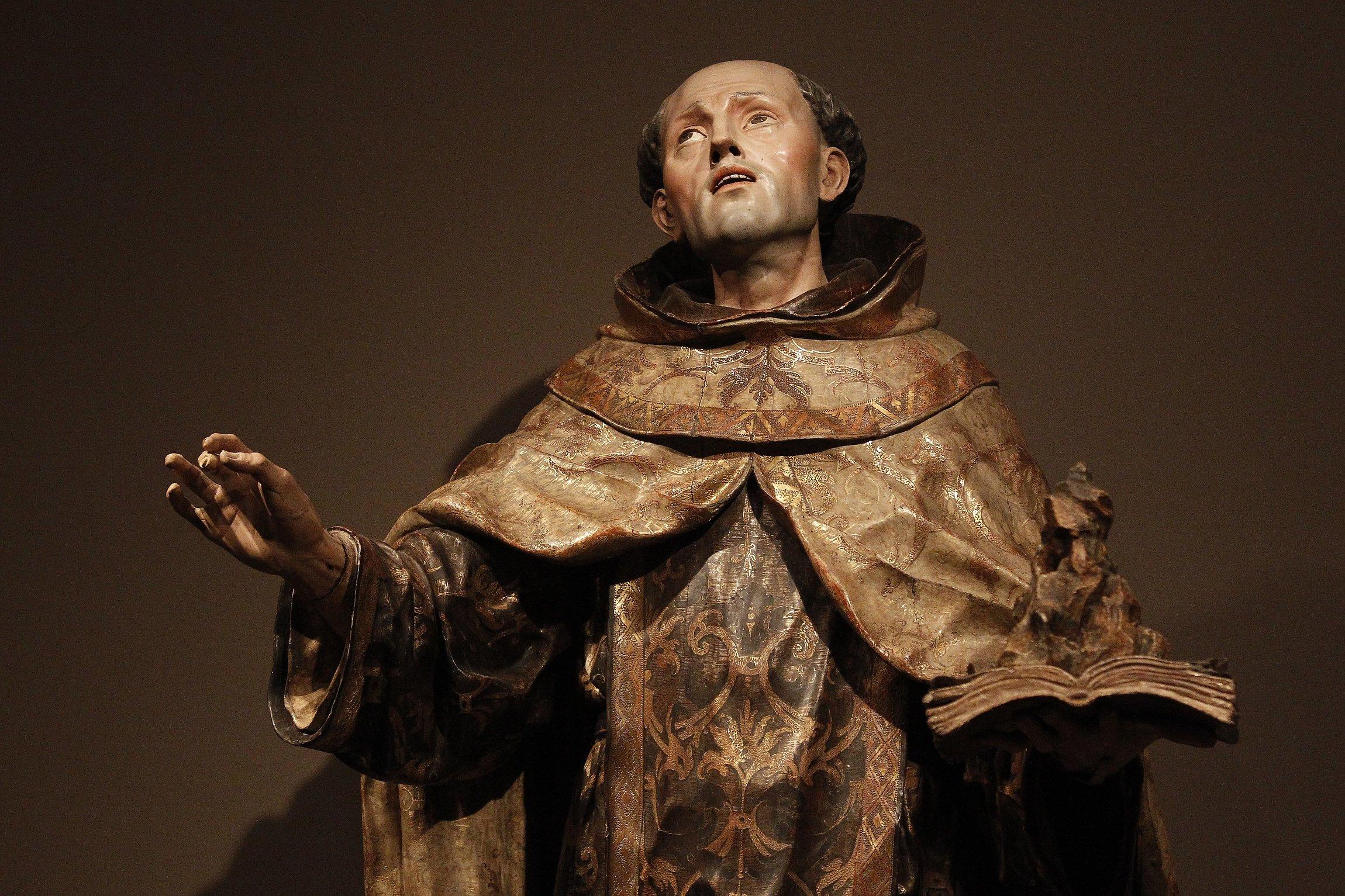
(OSV News) — Spanish Catholics have welcomed new public interest being shown in St. John of the Cross, on the twin anniversary of his 1726 canonization and proclamation as a doctor of the Church on Aug. 24, 1926.
“This saint sparks an interest far beyond strictly religious circles — it embraces a wide range of spiritual, literary, historical, artistic and cultural perspectives,” explained Father Miguel Ángel González González, prior of the Discalced Carmelite order’s La Santa monastery in Ávila.
“While Spain bears a responsibility for him as the place where he was born, lived, wrote, suffered and died, it would be insufficient to see him only as a Spanish saint. He’s a figure of the universal Church because his teaching transcends the boundaries of country, culture and era.”
The priest spoke as pilgrims and visitors converged on sites associated with the 16th-century mystic, including the town of Fontiveros, where he was born on June 24, 1542, and his tomb at Segovia’s Discalced Carmelite monastery.
‘One of the church’s great spiritual masters’
In an OSV News interview, Father González said the anniversary had provided a “providential opportunity” to “listen again to one of the church’s great spiritual masters,” sharing him with both believers and nonbelievers.
He added that the Church was grateful to the dioceses, municipalities, universities and religious communities helping promote the jubilee, which will conclude at Úbeda, where the saint died on Dec. 14, 1591.
“We live in a society experiencing many forms of darkness: wars, polarization, uncertainty, loneliness, mistrust and fear of the future,” said Father González, who is also councilor of the Discalced Carmelites’ Iberian province.
“St. John of the Cross doesn’t offer a superficial response. He knows the darkness exists — he himself passed through nights of misunderstanding, imprisonment, loneliness, illness, persecution and abandonment. Yet he shows how the night can also become a place of purification, freedom and encounter with God.”
Born into an impoverished family of weavers
Born Juan de Yepes y Álvarez into an impoverished weaving family, St. John founded the Discalced Carmelites with his older contemporary St. Teresa of Ávila, becoming a major Counter-Reformation figure through his celebrated poetry and mystical writings.
Educated by the newly founded Jesuit order, he joined the Carmelites in 1563 and studied at the University of Salamanca, founding a new Carmelite house and taking the name John of the Cross a year after he was ordained a priest in 1567.
While serving as spiritual director of St. Teresa’s Ávila convent in 1572-1577, he experienced the first of a series of visions of the crucified Christ. But with tensions erupting over his attempts to reform the Carmelites, the mystic was abducted in December 1577 and incarcerated for eight months by opponents of the order in Toledo.
After escaping, he was appointed provincial vicar for Andalusia and rector of a new Discalced Carmelite college at Baeza, going on to set up new houses in Granada, Malaga and other towns.
Penned classics of Spanish literature, Catholic theology
Withdrawing into solitude to avoid further disputes, John of the Cross died after penning works regarded today as classics of Spanish literature and Catholic theology, known in English under titles such as “The Dark Night of the Soul” and “The Spiritual Canticle.”
Anniversary events have included liturgical celebrations, concerts, conferences, exhibitions and prayer meetings, as well “cradle to tomb” pilgrimages retracing the saint’s life and journeys through Spain’s Sierra de Segura.
Holy Doors in his honor have also opened at parishes in Fontiveros and Úbeda, while the first World Meeting of Secular Carmelites at Ávila on July 23-26 brought together over 900 lay order members from 80 countries, with support from municipal institutions.
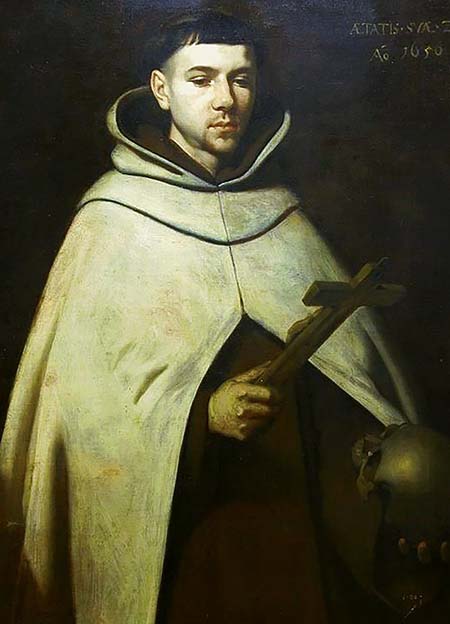
The Diocese of Ávila’s communications director, Auxi Rueda, told OSV News the anniversary had proved a “source of deep pride” for local Catholics, who viewed St. John of the Cross as a figure “woven into their geography, collective memory and everyday landscape.”
Public response has ‘surpassed expectations’
However, she added that the wider public response had “surpassed expectations,” and said the local Church would use the momentum generated by the anniversaries to develop its educational projects, catechetical programs, pilgrimages, retreats and youth meetings.
“People have come from around the world, drawn not only by religious fervor but also by his work’s incalculable literary and philosophical value,” Rueda said.
“In a deeply secularized, complex and fast-paced social context, the mystic from Fontiveros serves as a beacon, inviting a return to essentials: prayer, discernment, commitment and selfless love of neighbor. This jubilee demonstrates that the great Spanish mystical tradition, far from being a relic of the past, remains a living source of inspiration and spiritual renewal capable of engaging with the concerns and challenges facing today’s Christian communities.”
The pope evoked St. John of the Cross, whose works were first published in 1618, during his June 6-12 apostolic trip to Spain, recalling his writings in the “harsh conditions” of imprisonment during a June 7 Corpus Christi Mass in Madrid.
He told diplomats and civil authorities June 6 the saint “enriched the life of the Church” over five centuries through a mysticism with “open eyes,” and said his reflection on the “night” could help ease “transformations” and “weathering the tensions” in the 21st century.
Rueda said Pope Leo had rightly depicted St. John of the Cross as one of Spain’s “greatest spiritual and cultural creators,” adding that his famous “night of the soul” allegory should be interpreted not as “resigned pessimism or a retreat into sadness,” but as “a brilliant pedagogy for navigating uncertainty, existential crisis and inner emptiness.”
“St. John offers today’s men and women a path to liberation: he teaches that it’s precisely at moments of darkness that affections are purified, true inner freedom attained and an unshakeable light discovered,” the Ávila diocese communications director told OSV News.
“Contemporary Europe, characterized by haste, noise and digital hyper-connectivity, desperately needs the counterpoint of silence, anthropological depth and integral humanism which he proposes. He’s offering a path of renewal grounded in the centrality of love, respect for dignity and conscience, and a trusting openness to transcendence.”
Plans to expand ‘spaces fron prayer, formation’
Meanwhile, Father González agreed the jubilee had created an opportunity to rediscover Spain’s “extraordinary tradition of literature and spirituality,” adding that his order would also use it to expand its “spaces for prayer and formation.”
“St. John wields extraordinary significance for our times — not because he offers political or social prescriptions, but because he touches upon something deeper: the human heart and its search for meaning,” the Discalced Carmelite prior told OSV News.
“In a society defined by consumerism and accumulation, he speaks of inner freedom. In a society experiencing polarization, he shows the human heart cannot live divided. In a society afraid of the night, he teaches us to seek the light.”
Jonathan Luxmoore writes for OSV News from Oxford, England.
