


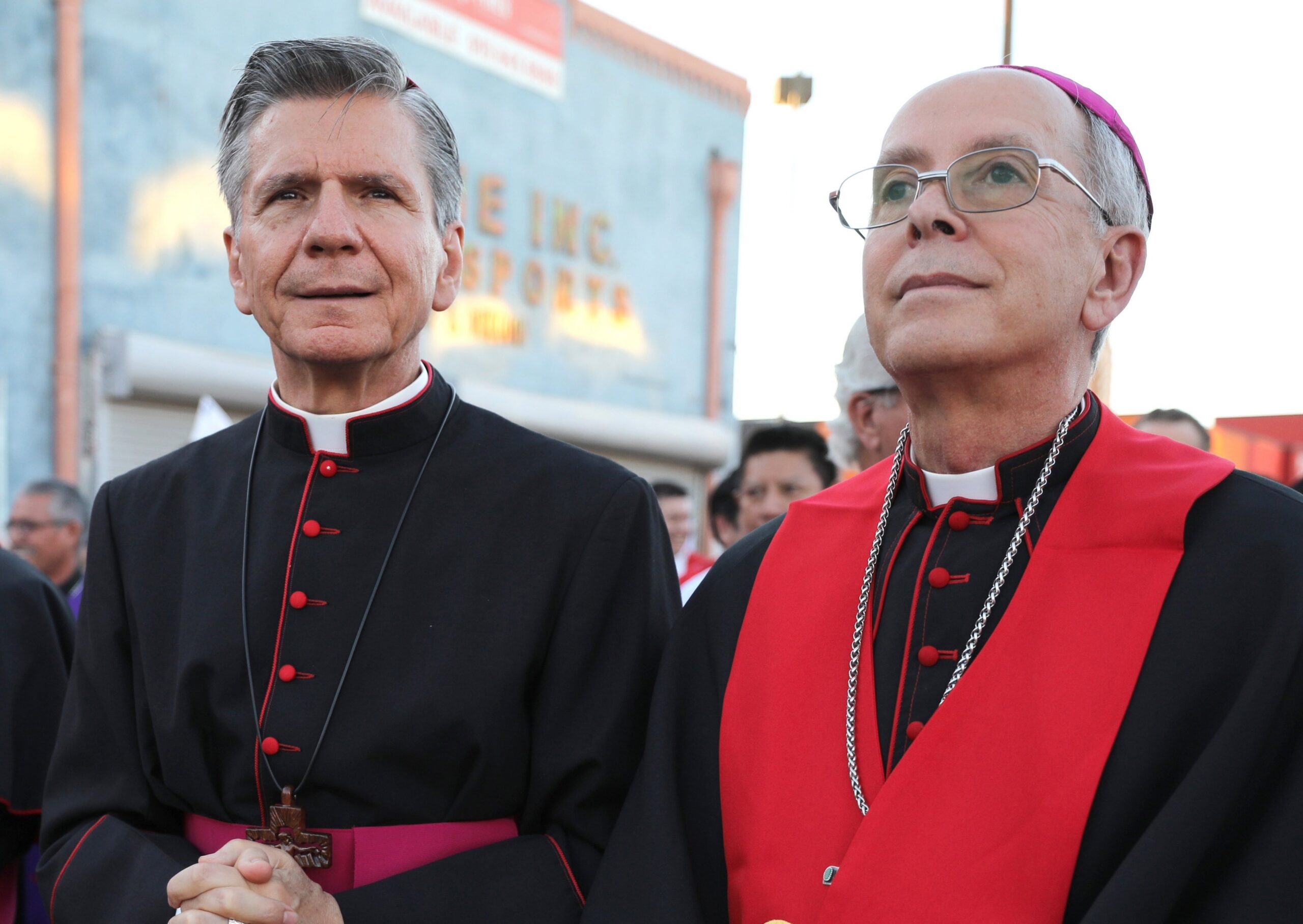
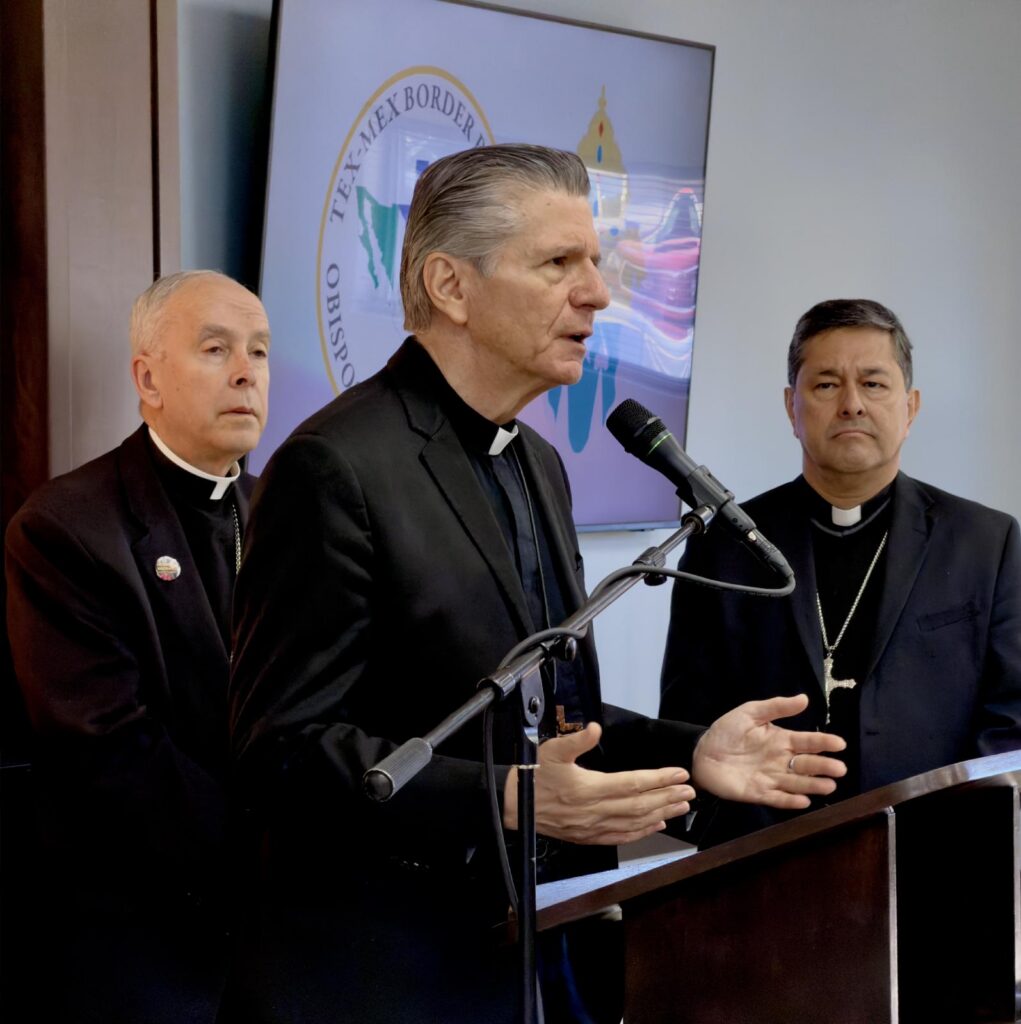
(OSV News) — Days after a meeting among several Catholic bishops serving along both sides of the Texas-Mexico border — a regular gathering for the “Tex-Mex” bishops — OSV News spoke with Archbishop Gustavo García-Siller of San Antonio to explore his thoughts on the impact of the Trump administration’s sustained crackdown on migration.
This interview has been edited for length and clarity.
OSV News: How would you sum up the current situation at the Texas-Mexico border?
Archbishop García-Siller: It’s very clear that for migrants from the south — from Mexico and other parts of Central America and South America — there have been very few crossings for weeks.
Usually, we think about migration (at the U.S.-Mexico border) as moving from south to north. And in the meeting that we just had, it was clearly stated in many different ways that now the migration is north-south. So it’s a shift.
Of course, we understand that nations have the right to protect our borders. But the question here is this new phenomenon, in which there are some recent migrants or refugees who were legally accepted in the United States — yet with this new administration, they have gone from being legally processed as refugees and migrants, who have been legally here, to illegal, automatically from one day to the next. And they also have been labeled criminals.
But many of those that became “illegals” and now “criminals” are people who have been here in the United States for 10, 15, 20, even 30 years. And those are the ones who are detained.
And of those who are detained, in the many detention centers in the country and the many more sites that ICE is getting, we need to recall that most of them, 70% or so, are not in the category of criminals.
So the question is why they are detained, and what treatment do they receive in the detention centers?
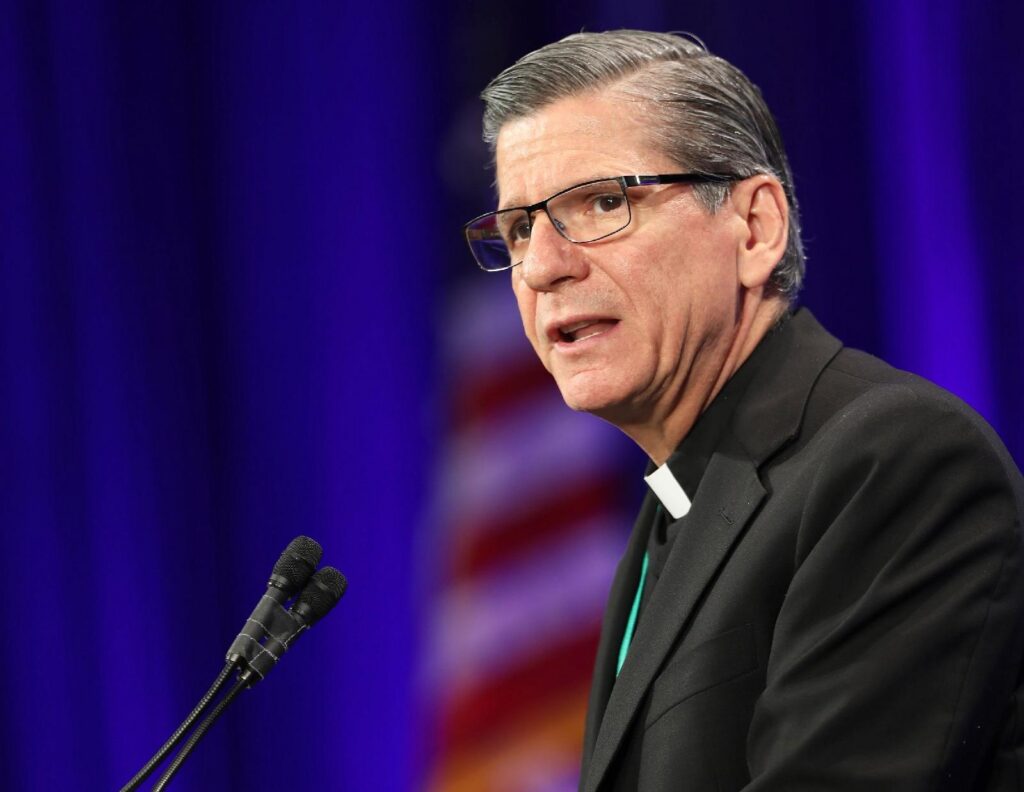
OSV News: Some of those detention centers are in and around your archdiocese, correct?
Archbishop García-Siller: Here in San Antonio, we have three, and they (U.S. Immigration and Customs Enforcement) just acquired a large, large building near San Antonio. These are buildings not meant to hold people, but merchandise — not humans.
OSV News: What kind of situations are deported migrants returning to?
Archbishop García-Siller: Several bishops in our meeting said that those released from U.S. custody and sent back have no identification — they (U.S. immigration officials) took all the papers of identification that they have, even from their own country. So these people return with nothing proving their identity. Their identity is taken away.
Besides that, they haven’t been in their country of origin for a long time. So they are lost.
And there have been detainees who have been sent to countries that are not even their own countries of origin.
So it’s all designed to make chaos of the process of how organizations help people to adjust, to be adapted, to be supported. I mean, they (U.S. immigration enforcement) just drop them in their country of origin or even in a country that they don’t know anything about.
And they are treated like prisoners, like criminals, to make them suffer all the way through, no matter what.
And there are different organizations (and detention facilities), and they don’t have exactly the same procedures. Some procedures must be alike in relationship with the federal government, but as to how they operate them, they have different styles, ways, regulations and practices. And the detainees are moved around.
We met a family where the parents were moved to seven different detention centers in the last few months. It’s hard to even understand in our minds how those people navigate (those moves). They don’t know what to do in one detention center. They demand this (in one place); the other place doesn’t even have even walls; it’s like a tent. I mean, the dynamics are very different.
And the whole point is that they should not feel comfortable and to understand the system. The government controls them and the detention centers.
We are totally opposed to it. In the Church, we are totally opposed to it. We proclaim human dignity.
We want them to understand the system in order to find ways of dealing with it, and we want solutions to help them to move forward in whatever way we can.
OSV News: For many, if not most, of those returning to their countries of origin, the conditions that drove them to migrate for safety reasons — such as conflict, narcotrafficking, environmental degradation — remain unchanged. How are those you speak with navigating that reality?
Archbishop García-Siller: Not only not changed, but those returning have been for several decades outside that country of origin. For them, the situation is even worse.
But I will tell you this: Many of the detainees arrived at a point where they say, “Deport me. Because this is shameful; I’m not a criminal. And I have been humiliated to a point that I want you to send me back.”
Yet another aspect of these detention centers is that they are not sending everyone who wants to go back. They don’t send them back.
So the question is, why?
Because it’s a business. So the government needs to use what they have in the budget for this crackdown on immigration. That is a huge amount of money. They have to contract detention centers, organizations, all for profit.
We need to recall that these detention centers that the federal government uses are for profit.
They cannot have empty beds, because otherwise they don’t make money. So they keep the detainees as much as they can, until they know they will be replaced by more detainees, newer detainees.
So it’s business, business, business, business, business.
And people are suffering, including children. I call it a really perverse, inhumane system of dealing with people.
And we can tell you that we know about these situations, because in this archdiocese and many other dioceses in the country, we have been working for migrants and refugees for many decades. But it’s not for profit. So it’s very different, how we approach respect for people. We (the Church) are not using this situation of migrants and refugees for business.
OSV News: Are you concerned that with the new U.S. and Israel-Iran war, domestic concern for migrants will be sidelined?
Archbishop García-Siller: When I think about the wars that are now taking place throughout the world — they are led by those who are autocrats, tyrants, with systems created for an extreme sense of control. We are (here in the U.S.) trying to be peacemakers, but I think there is already a war in the U.S.; there is conflict and violence inside the country. And then this sense of conflict spreads outside the country. I mean, it’s hard to understand the rationale. … It’s chaos.
OSV News: Have you seen any shifts over the past year on how American Catholics think about immigration?
Archbishop García-Siller: Sometimes, in a few conversations here and there, I’ll hear that people have changed their thinking. And sometimes it’s because some of them were affected because a neighbor, friends, parishioners were detained. And so that leads them to think about it, and they come to say, “Well, we need to control our borders, but in the way it’s happening, there’s something wrong.”
But it’s still a very low percentage. For the majority who don’t change, it’s because their political party and their affiliation seem more important, and it has taken a dimension of greater importance with regard to how important our faith is, and having God in our lives. For some Catholics and Christians, Jesus Christ — his words, his actions, his lifestyle, the values that the faith presents — they are not a priority.
Jesus experienced the most profound migration than any other human being in the world. He, as God, also became man.
Gina Christian is a multimedia reporter for OSV News. Follow her on X @GinaJesseReina.
