


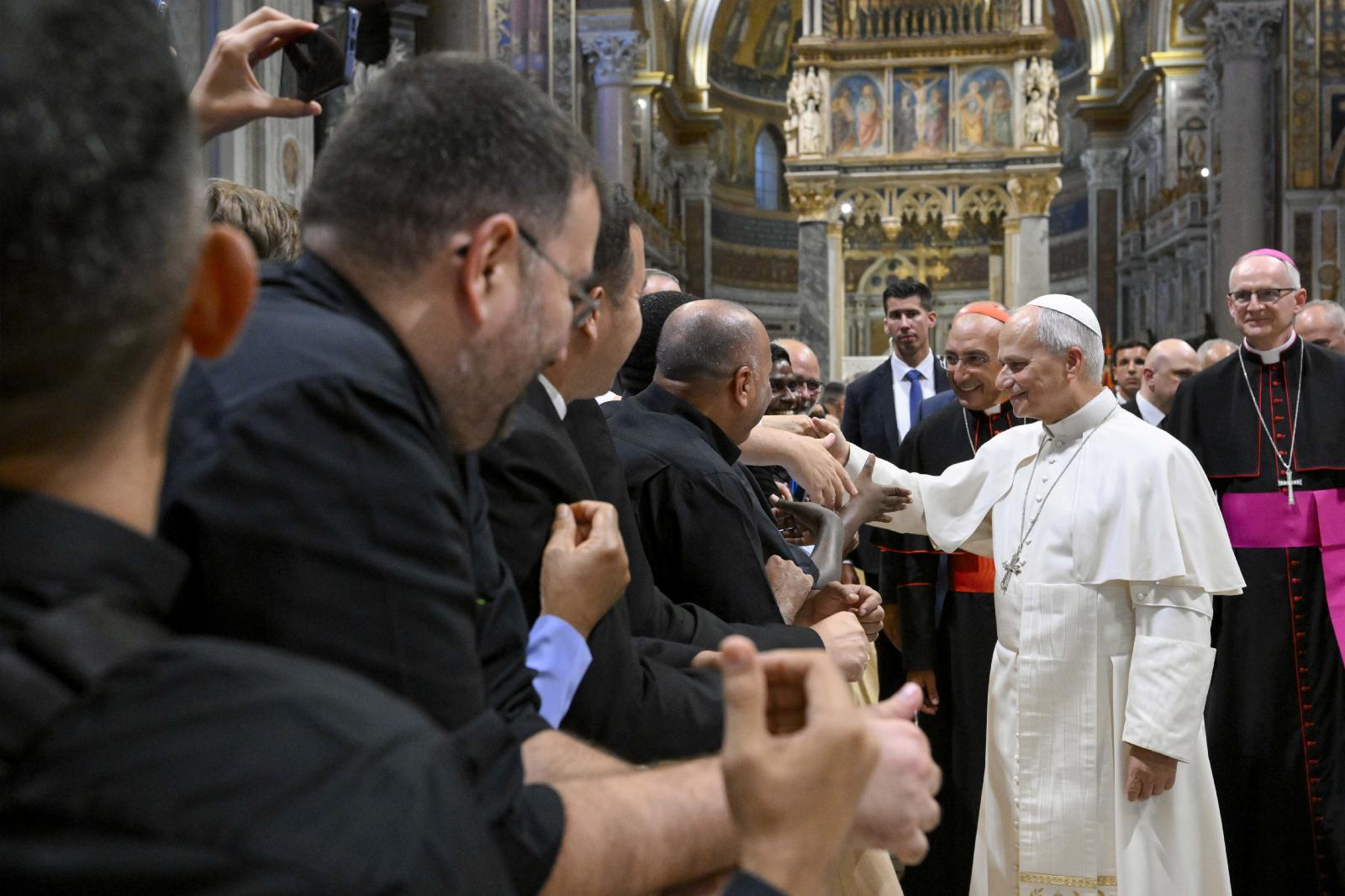
ROME (CNS) — Led by their priests, Catholics need to come together and face the truth about what their local church is doing and why, Pope Leo XIV told clergy and laypeople in his diocese.
This process of discernment and “pastoral evaluation does not ask you to do more; on the contrary, it gives you permission to do less — and to do it better,” the pope, who is bishop of Rome, said to applause.
Pope Leo addressed hundreds of diocesan leaders, both clergy and laity, during a diocesan assembly Sept. 18 at the Basilica of St. John Lateran, the cathedral of the Diocese of Rome. The leaders represented the 334 parishes and their ministries in a diocese that covers 340 square miles.
The pope first listened to a young woman, a couple and a member of the diocese’s Caritas team as they recounted the various joys and challenges they face in their lives and work.
Speaking in Italian, Pope Leo thanked everyone for their faith, service and dedication, saying to applause, “The good doesn’t make any noise; the Lord knows it, and today I, too, wish to acknowledge it.”
A multiyear process to lead to pastoral action
The diocese’s extensive work on discerning its “‘spiritual illnesses’ has taught us to recognize what, in our ecclesial life, needs to be healed, corrected or transformed,” he said, referring to a diocesan report that was formally delivered to Pope Francis in 2018. The late pope then asked the diocesan leaders to respond to their findings with a multiyear process that would lead to pastoral action that is “more responsive to the mission and needs of Romans today, but also more creative and liberating for priests and those who directly collaborate in their mission and in the building up of the Christian community.”
Pope Leo picked up on his predecessor’s call, adding that the ongoing synodal process has also “taught us how to listen and discern together, as co-responsible for the one mission.”
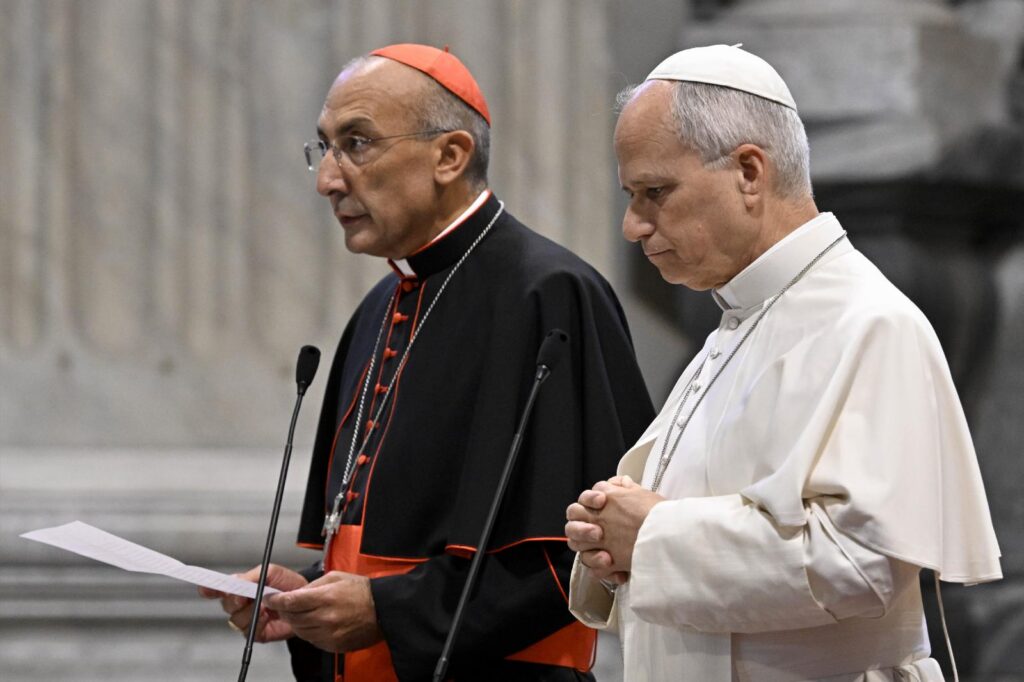
Therefore, he said, “We are not starting from scratch, and nothing we have experienced should be set aside.” Also, “I urge you not to bear these struggles alone,” as serving the faithful and larger community is more challenging than ever.
“I am not presenting you with a new pastoral program,” he said; rather, Pope Leo proposed a journey or “method” of verification and “pastoral evaluation,” which, if it were ever “to become yet another burden,” then it would be failing “its very purpose.”
Method entails ‘seeking the truth’
The method entails “seeking the truth,” he said, by “recognizing what has borne fruit, understanding what did not work and seeking the reasons for this together” with the entire church community and “by also listening to people who do not attend (church) and who see things, so to speak, ‘from the outside.'”
It involves reflecting together and asking “Why” for everything they do, he said. “Why are we doing it? What evangelical intention motivates us? What real need are we seeking to address? How does this choice align with the Church’s mission?”
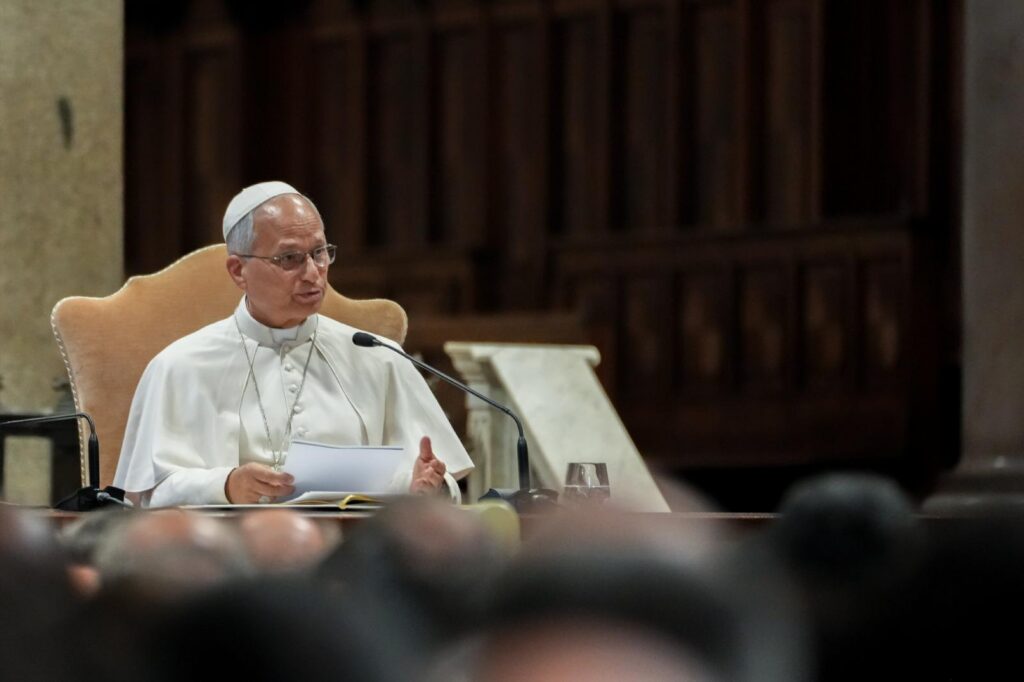
Then, he said, they must ask, “Why do we achieve these results and not others? Why do some initiatives foster growth while others remain isolated? Why do some people participate while others remain on the sidelines?”
Discerning the reasons for their choices and the reasons for how those choices turned out will allow “us to recognize what should be maintained, valued, corrected, abandoned or initiated,” the pope said.
4 priorities or goals for discernment
Pope Leo said their method of discernment should focus on four priorities or goals by asking:
— Does this truly lead to Christ and help others encounter him in their real lives?
— Does this build new, free and reconciled communities made up of authentic relationships where people feel “welcomed, accompanied, valued, and jointly responsible?”
— Does this truly serve the city of Rome, sharing in people’s hopes, vulnerabilities and questions, recognizing the questions to which the Gospel can respond?
— How well does this form the people of God, fostering growth in the faith, maturing into missionary disciples with a sense of co-responsibility and capable of translating it “into concrete choices in life and service?”
There will be different “stages” to walk together, the pope said, “not just for a year, but on a journey — so that it may be true discernment and not just another initiative added to the rest.”
‘Common method of listening, discernment, evaluation’
The pope “is not asking you to plan new activities: he is proposing a common method of listening, discernment, evaluation and conversion” within the five areas of catechesis and Christian initiation, youth, the family, charity and vocations, he said, so that leadership meetings can “become, more and more, places of encounter, dialogue, and shared pastoral planning.”
Pope Leo also offered his reflections on the kind of priests the Diocese of Rome needs.
“A priest should be a man who listens before responding, who discerns before deciding. A person who remains in the presence of the Lord, because he cannot lead others to an encounter that he himself is not experiencing,” he said. “Why am I a priest? Does my daily life still correspond to the reason why the Lord called me by name?”
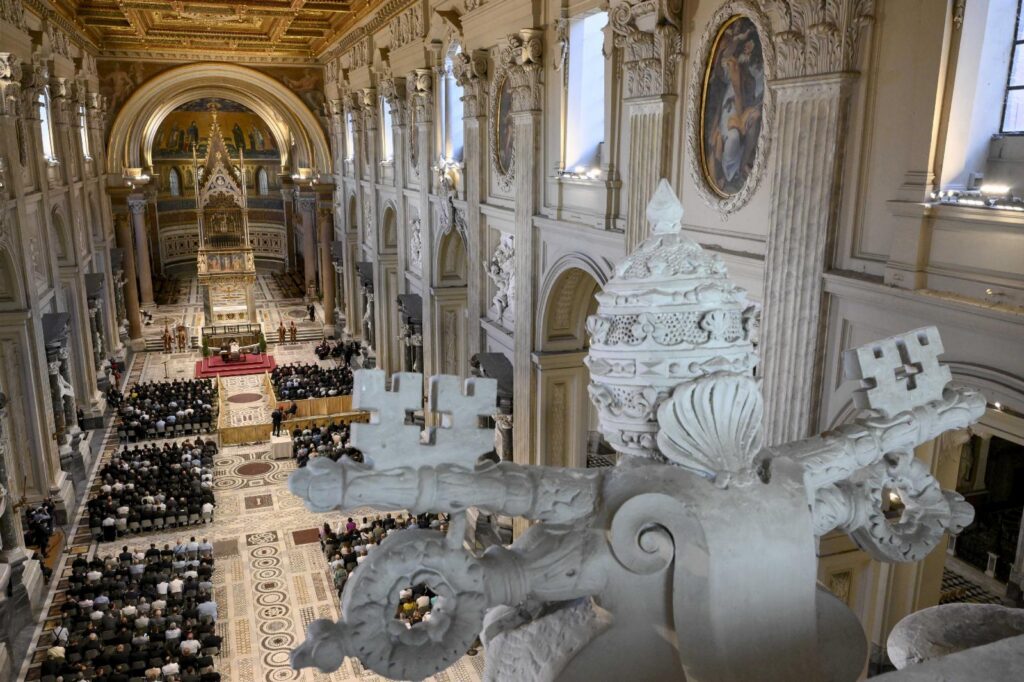
The priest Rome needs also does not assign all responsibilities to himself, but “recognizes charisms, forms consciences and enables the shared responsibility of the laity — not because of a lack of manpower, but out of fidelity to the nature of the Church.”
“A community in which everything depends on the priest is a fragile community, and presiding over does not mean doing everything,” he said. “It means fostering communion, valuing the vitality of others, connecting people and situations, and safeguarding unity.”
Initiating inquiry into life of late priest who found Rome diocesan Caritas
“A method, on its own, has never converted anyone,” Pope Leo said, declaring that to provide concrete inspiration, he had “joyfully approved the decision to take the necessary steps to initiate the diocesan inquiry into the life, virtues, and reputation for holiness of Msgr. Luigi Di Liegro,” who founded the diocesan Caritas.
The monsignor, who died just shy of 69 years of age in 1997, believed one had to “see” reality on the ground before building anything, Pope Leo said.
Msgr. Di Liegro often took an analytical approach to social problems to address their root causes, such as helping people before they became homeless. “Poverty in the city was often the result of squandered money, unbridled consumption and inefficiency,” he said in 1992.
Providing something like a soup kitchen was an “act of justice and a sharing of the sufferings and hopes of the city’s poor against every temptation to fear the different or the foreigner,” he had said.
