


On May 15, 2026 — the 135th anniversary of “Rerum Novarum” — Pope Leo XIV signed his first encyclical, “Magnifica Humanitas.” The date was deliberate.
In 1891, Pope Leo XIII confronted a world transformed by the industrial revolution: Workers stripped of dignity, wealth concentrated in the hands of a few and a Church being told to stay out of “worldly matters.” He refused.
The result was the foundational text of Catholic Social Teaching.
Pope Leo XIV is confronting another revolution. This time, the factory floor has been replaced by the digital ecosystem — artificial intelligence, algorithmic decision-making and data economies powerful enough to reshape how human beings work, communicate and understand reality itself. And once again, a pope is refusing to stay on the sidelines.
But “Magnifica Humanitas” is not merely an encyclical about AI. It is the work of the first modern pope formed primarily as a missionary — and that fact may explain the document more than anything else.
A missionary background
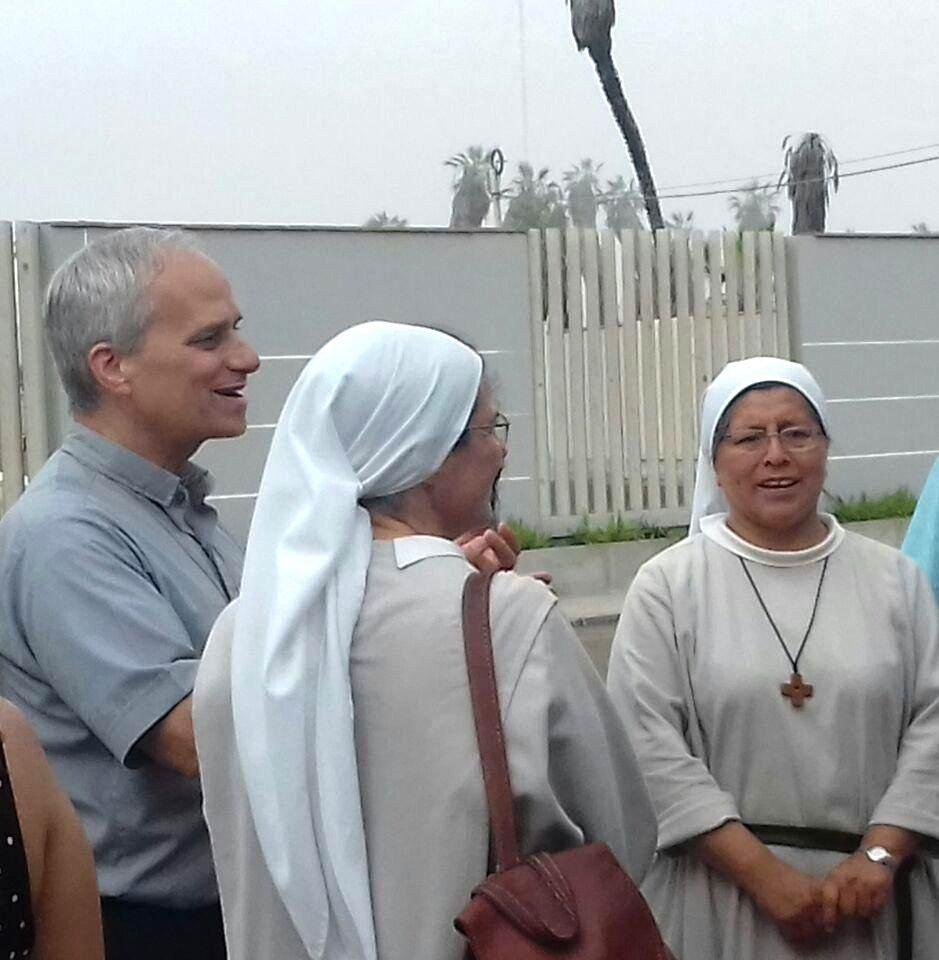
Before the Roman curia, the Wednesday audiences and traveling on a chartered plane with an entourage, there was the particular, unglamorous, irreplaceable work of a missionary who stood in a Peruvian village, a barrio, a parish at the edge of a diocese, and asked: How do I announce Jesus Christ to this person, in this situation, shaped by these forces?
When Pope Leo writes about AI and dignity and truth and work, he’s not writing as a philosopher or a bureaucrat. He’s writing as someone who has done that missionary work. This formation does not disappear when a man becomes pope.
What Pope Leo sees in the digital revolution is not primarily a policy problem. It is a missionary situation.
He says so, though not in those words, from the very first pages of “Magnifica Humanitas.”
Setting out the stakes of what he is about to address, he frames everything around a single, ancient question: “Where are we going? Toward what goal do we wish to orient ourselves? What direction should we choose as people and as a human community?”
Those are not questions for a technology ethics committee nor for the founders of Anthropic and OpenAI. They are questions for a Church that believes human beings have a destination, that history has a direction, and that the Gospel illuminates both. They are the questions that drove St. Paul to Athens, St. Francis Xavier to Japan, St. Therese of Lisieux to dedicate her life in prayer for lands she’d never set foot on — and Leo XIV places them at the center of a document that will be reduced to one on “AI.”
The move is deliberate. The pope explicitly connects “Magnifica Humanitas” to “Rerum Novarum,” not merely as a historical anniversary but as a living methodological commitment.
Pope Leo XIII, he recalls, understood that “the proclamation of the Gospel cannot overlook the concrete lives of people.” That principle is the inheritance Pope Leo XIV is claiming. Social doctrine, in this reading, is not a department of the Church’s work, separate from evangelization and pastoral life. It is the form evangelization takes when the Church takes seriously the conditions in which real human beings live, work, suffer and search for meaning.
And the conditions have changed dramatically.
Challenges in our world
“Magnifica Humanitas” describes a world in which the primary forces shaping human life — the platforms that govern communication, the algorithms that assign opportunity, the systems that decide who gets credit, employment, or visibility — are no longer in the hands of governments or communities or even markets in any traditional sense. They are in the hands of a small number of private, transnational actors whose resources and capacity to intervene, the pope observes, “surpass those of many Governments.”
For a missionary reading this, the question is immediate and practical: What does it mean to announce Jesus Christ to a person whose information environment is saturated with manipulation, whose work has been automated away, whose dignity is being measured in data points? What does it mean to build a community of faith in a digital ecosystem designed, as the encyclical puts it, to “capture users’ time and attention, exploiting their vulnerabilities and weakening their inner freedom”?
Pope Leo does not flinch from these questions. He also does not reduce them to their technical dimensions. His answer, in the end, is the same answer the Church has always given — but sharpened, clarified, made urgent by the particular pressures of this moment. The human person is not a data profile. Human dignity is not earned by productivity. The Gospel announces a love that precedes and transcends everything the digital economy can measure.
“The value of persons … does not depend on what they achieve or produce,” Pope Leo XIV wrote. “There are rights that apply to everyone simply by virtue of being human, and no human power can legitimately deny or arbitrarily limit them.”
A missionary in any era would recognize that sentence. It is the premise of every act of witness among the poor, the marginalized, the discarded — the people whom the encyclical, channeling Pope Francis, describes as those rendered invisible by a “throwaway culture.” In the digital age, that culture has new mechanisms. The missionary’s task has new terrain. The announcement remains the same.
Evangelizing the ‘digital continent’
Which is why the most revealing sentences in “Magnifica Humanitas” appears not in the chapters on AI governance or economic justice or autonomous weapons, but in the conclusion, in a passage that reads less like policy and more like a sending: “We must consider the digital world as a new continent to be evangelized, one that requires generous missionaries who are mature in the faith.”
A new continent to be evangelized. The language is ancient. It belongs to the vocabulary of the great missionary expansions — the friars who crossed oceans, the Jesuits who mastered languages, the women religious who built hospitals and schools in places governments have yet to reach. In fact, Pope Benedict XVI coined the term “digital continent.”
Pope Leo XIV, who knows that vocabulary from the inside, uses it here, in an encyclical about artificial intelligence, without irony and without metaphor. He means it: The Great Commission to “go, therefore, and make disciples of all nations” includes the digital realm.
The digital world is not simply an extension of the physical world the Church already inhabits. It is a distinct cultural territory, with its own power structures, assumptions and vision of the human person — one that often contradicts the Gospel at its deepest level. And new territories require missionaries: not tourists, not commentators, not critics posting from a safe distance. People who enter, who learn, who accompany, who announce.
That is what Pope Leo — the missionary pope — is asking of the Church. He is asking for Catholics to bring to the digital world the same qualities that have always characterized authentic missionary witness — theological depth, cultural intelligence, genuine presence and what the encyclical calls “a heart open to others, an intelligence willing to listen and a will that seeks what unites rather than what separates.”
“Rerum Novarum” gave the Church a framework for engaging industrial capitalism — and from that framework grew a century of Catholic labor organizing, social reform and institutional witness that changed millions of lives. “Magnifica Humanitas” is offering something analogous for the digital age: Not a set of technical recommendations, but a vision of the human person robust enough to resist the reductions the digital economy imposes, and a missionary imperative clear enough to send the Church into a territory it has not yet fully entered.
Pope Leo XIII wrote for his moment. Pope Leo XIV is writing for ours. The question both documents are asking is intrinsically the same one: Who is the Church for? And where must she go?
Ines San Martin writes for OSV News from Madrid. She is the editor of Mission Magazine, a publication of the Pontifical Mission Societies USA.
