


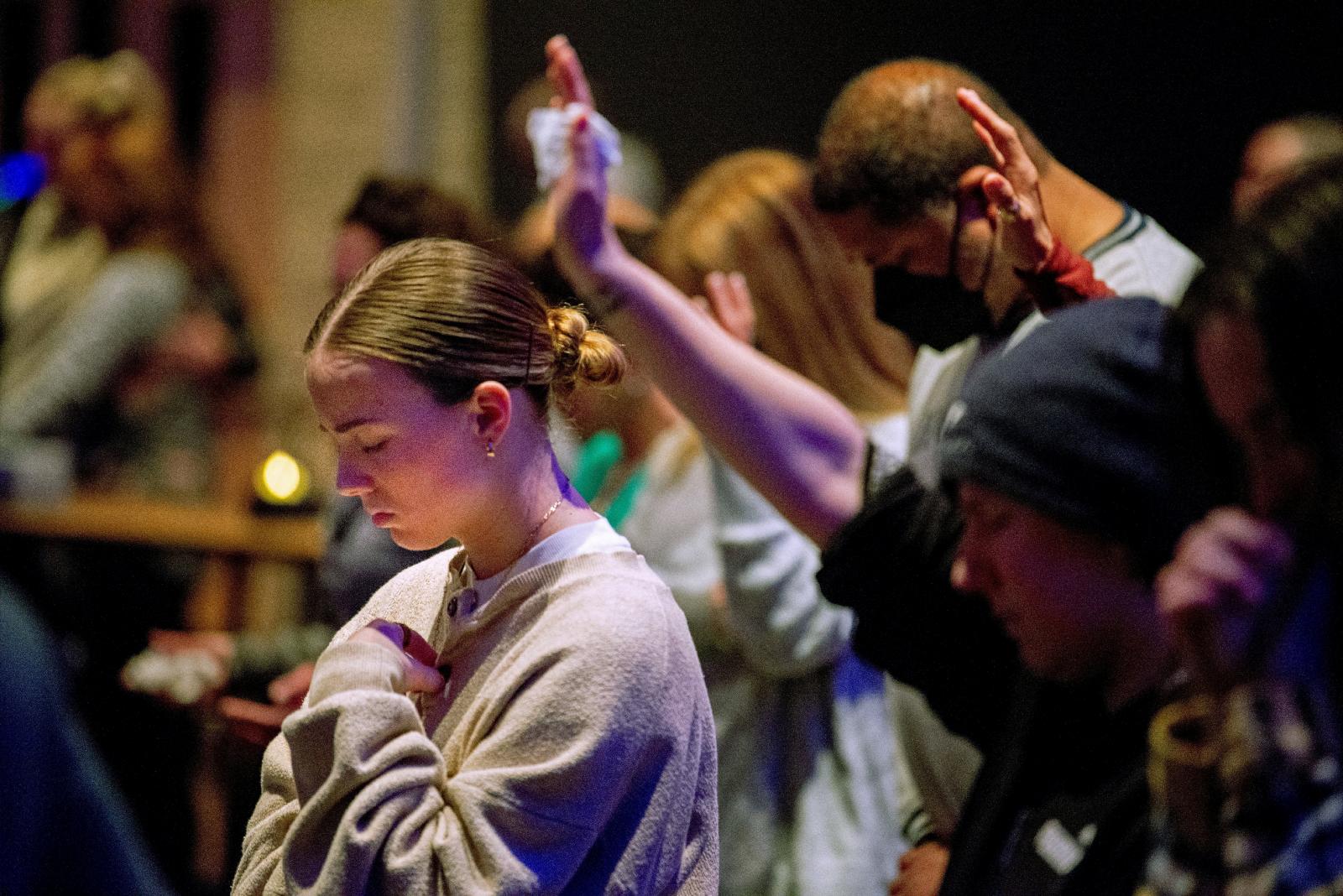
In this beautiful but broken world, there is not a single human being who will not be touched by sickness, sorrow and death — sometimes all at once.
Whether it be a tragic car accident, a cancer diagnosis or the shocking, untimely death of a loved one, suffering is an inescapable part of the human condition. Truly, it is not a matter of “if” a crisis will touch our lives, but “when.”
In these days following a tragedy that has changed my family forever, I have taken comfort in the words of Corrie Ten Boom, the well-known Christian survivor of the Holocaust who often quoted the famous poem “The Tapestry.” Ten Boom talked about this poem so often, many have mistakenly attributed its authorship to her. But it was actually written by the 19th-century minister Grant Colfax Tullar.
My Life is but a weaving
between my Lord and me;
I cannot choose the colours
He worketh steadily.
Oft times He weaveth sorrow
And I, in foolish pride,
Forget He sees the upper,
And I the under side.
Not til the loom is silent
And the shuttles cease to fly,
Shall God unroll the canvas
And explain the reason why.
The dark threads are as needful
In the Weaver’s skilful hand,
As the threads of gold and silver
In the pattern He has planned.
He knows, He loves, He cares,
Nothing this truth can dim.
He gives His very best to those
Who leave the choice with Him.
I find this poem an enormous comfort, especially in times of sorrow. It reminds me of our limited scope as human beings when it comes to perceiving God’s mysterious plan. “The Tapestry” also echoes St. Paul’s words to the Corinthians: “For now we see through a glass, darkly; but then face to face. Now I know in part; but then shall I know fully, even as I am fully known.”
My only caveat with “The Tapestry” is the fact that I think St. Thomas Aquinas, the 13th-century priest and doctor of the Church, would argue that our all-loving God doesn’t purposefully weave the dark threads symbolizing evil into our lives. Rather, he permits them in order to bring about a greater good.
Tullar (1869-1950) was a Methodist minister and hymn writer. His difficult early life likely influenced the insightful poem. His mother died when he was a young child and his father was disabled in the Civil War. Tullar was raised by abusive relatives who forced him into child labor in a wool mill where he likely first saw a weaver’s loom.
By 18, Tullar found himself in the grip of alcoholism and perched on the edge of a ferry on a cold, dark night. Suicidal, he was about to throw himself into icy waters when an elderly stranger restrained him and spoke to him lovingly. The moment was a turning point for Tullar who shortly thereafter experienced a spiritual awakening at a Methodist youth camp.
Don Chapman at HYMDEX writes about “The Tapestry” and its author eloquently: “Tullar’s life story serves as a powerful reminder that no life is beyond redemption, and that even the darkest nights can give way to the most beautiful dawns.”
Sarah Robsdottir is a Catholic convert and homeschooling mom to seven sons. Her latest novel, “Joan of Arkansas,” was released by Voyage Publishing earlier this year. Visit Sarah at www.sarahrobsdottir.com.
