


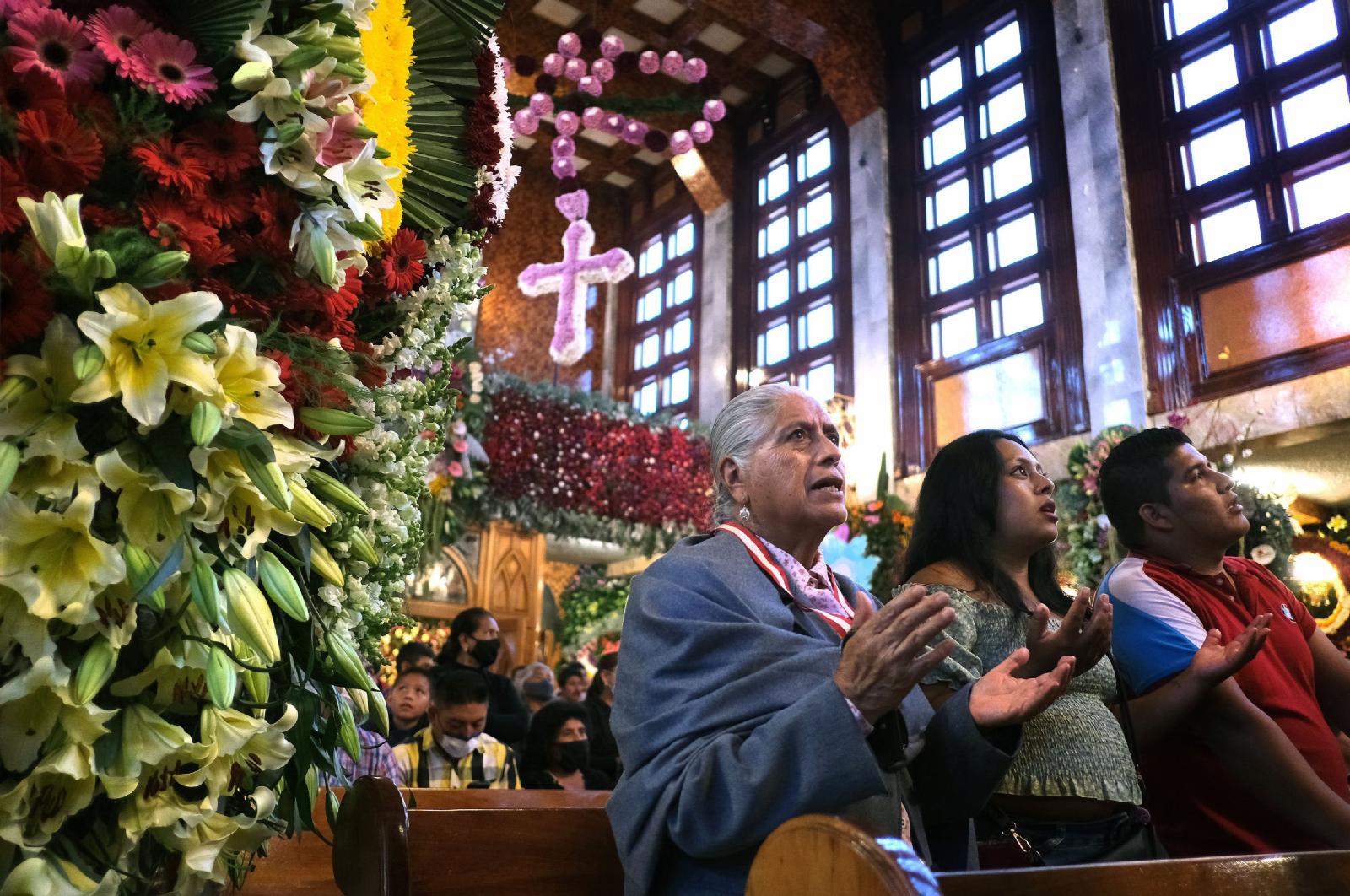
(OSV News) — A new analysis from Pew Research Center has found that Catholicism has lost more members than it has gained in most of the 24 countries surveyed, while Protestantism has seen net gains in several nations, especially Latin America.
The shifts are due to religious switching, or leaving one’s childhood religious identity for another in adulthood.
Pew published its findings April 23, based on data from its surveys of 24 countries spanning Asia and the Pacific, Europe, Latin America, North America and sub-Saharan Africa.
The center’s 2023-2024 Religious Landscape Study provided the data for the U.S., while international data was drawn from surveys conducted during the spring of 2024.
Pew noted the latter data included additional countries not referenced in the April 23 analysis, since the overall percentages of Christians in those nations was too small (1% or less) to statistically differentiate between Protestants and Catholics.
Those who leave Catholicism “tend to join Protestantism or disaffiliate from religion altogether,” said Pew, noting that “disaffiliation is especially common in parts of Europe and Latin America.”
In contrast, those who leave Protestantism “tend to become religiously unaffiliated,” said Pew, which defines “religious nones” as atheist, agnostic or “nothing in particular.”
Catholicism as majority religion
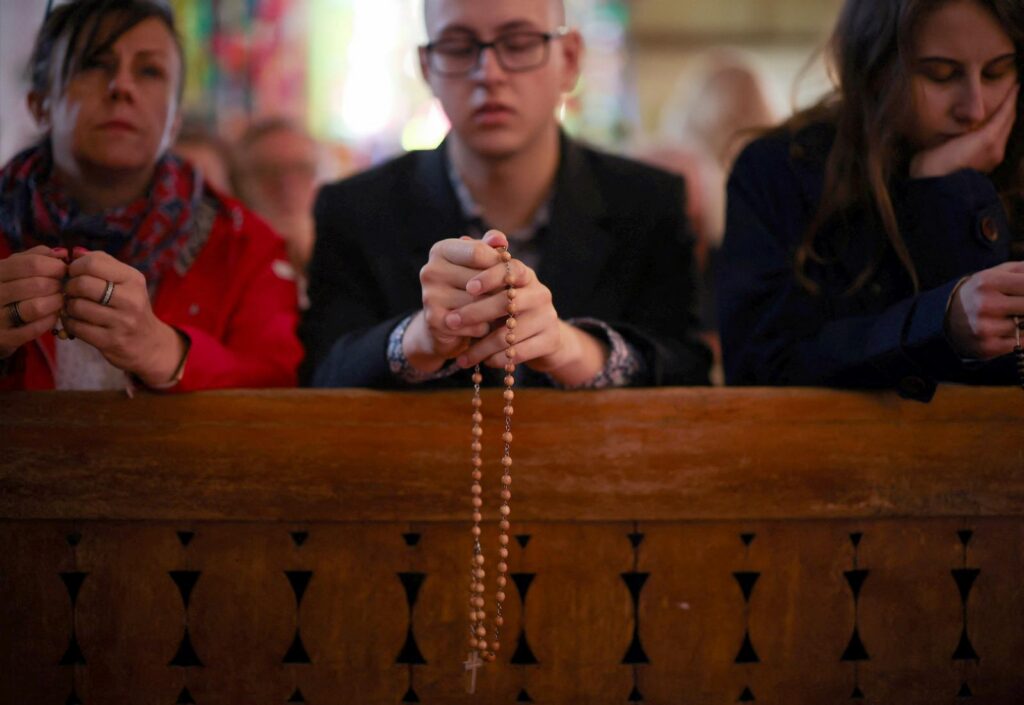
Even with the losses sustained, Catholicism remains the majority religion in eight of the 24 nations studied, with Poland, the Philippines and Italy topping the list.
Pew noted that 96% of the Polish population was raised Catholic, with 92% still identifying as such in adulthood. The Philippines, where 88% are raised Catholic, has also seen a high adult retention rate, with 78% of that nation’s adults still regarding themselves as Catholic. In Hungary, 57% of adults identify as Catholic, with 59% of the population having been raised Catholic.
Italy has experienced higher losses, with 89% of the nation’s adults raised Catholic, and 67% of them identifying as such.
In Mexico, 66% of adults regard themselves as Catholic, although 87% of the nation’s population is raised in the faith. In Peru, where 81% are raised Catholic, 63% of adults still identify with the faith.
Spain sees 80% of its population raised Catholic, but just 45% identify as such in adulthood, while in France, with 60% raised Catholic, only 34% of adults describe themselves as such.
In the U.S., less than one third (30%) are raised Catholic, and only 17% of adults describe themselves as Catholic. Those figures are slightly higher in Canada, where 39% are raised Catholic and 20% of adults identify as such.
Adults joining the Church
Pew found that in Brazil, Kenya, Nigeria and the Philippines, “former Catholics are more likely to have joined Protestantism than to have become religious ‘nones.'”
Former Catholics comprise “10% or more of the total population in 15 countries” surveyed, said Pew.
Moreover, “relatively few adults in the countries analyzed enter the church after being raised in another religion or with no religion,” Pew said.
The center cited Italy, where 22% are former Catholics, but just 1% who were not raised Catholic became so — “a net loss of 21 percentage points,” said Pew.
“Overall, more people left Catholicism than joined it in 21 of the 24 countries we analyzed,” Pew said.
Hungary ranked as “the only country surveyed where more people joined (5%) than left the church (2%),” added Pew.
In contrast with Catholicism, said Pew, “Protestantism has seen a net gain from switching in nearly as many places as it has seen a net loss.”
Sweden, the UK and Germany “are among the countries with the largest net losses,” said Pew.
In the U.S., 14% of those saying they were raised Protestant left the faith, with 8% who had not been raised as such joining.
In 16 of the 24 countries it surveyed, Pew found that “Protestants account for no more than about a quarter of the total population,” although Ghana (62%) and Kenya (55%) have majority Protestant populations.
Gina Christian is a multimedia reporter for OSV News. Follow her on X @GinaJesseReina.
