


Pope Leo XIV’s new encyclical “Magnifica Humanitas” arrives at a defining moment in human history. Artificial intelligence and digital technologies are reshaping every dimension of modern life: communication, labor, economics, medicine, education and even our relationships. “Never has humanity had so much power over itself,” the pope writes.
Nowhere is this transformation more visible than here in Arizona. Semiconductor fabrication plants, like the phoenix itself, rise from the desert while vast data systems increasingly power the digital tools of our world. These developments promise extraordinary innovation and economic opportunity. Yet they also raise profound moral questions concerning water, energy, labor and community.
Serving the common good
The Holy Father does not reject technology. Nor should we. The Church has long recognized the beauty of human creativity and scientific discovery. We are made in God’s image, which means that we are called to be a reflection of God who creates. But “Magnifica Humanitas” insists that every technological development be measured against a deeper question: Does this truly serve the flourishing of the human person and the common good?
In “Magnifica Humanitas,” the Holy Father repeatedly emphasizes that technology remains subordinate to the common good and must not become concentrated in the hands of a few powerful interests detached from local communities and ordinary families. Catholic social teaching has always defended the principle of subsidiarity: Decisions should remain as close to the local community as possible.
This concern is especially important in Arizona, where water use and technological expansion now intersect dramatically. Artificial intelligence doesn’t exist only “in the cloud.” The cloud depends upon enormous infrastructure in the real world: chip manufacturing, data centers, cooling systems and vast energy demands. In a desert environment already confronting long-term water stress, we must ask difficult, but necessary, questions about sustainability, stewardship and responsibility to future generations. Such questions are not anti-progress. They are deeply human.
Human flourishing
Indeed, “Magnifica Humanitas” calls all people of goodwill to elevate the discussion beyond politics, ideology or economics alone. The true issue before us is anthropological and spiritual: What does it mean to be human in the digital age?
The Christian philosopher Gabriel Marcel offers this beautiful definition: “To be is to be with.”
Human flourishing is not found in isolation, domination or technological mastery alone. We become fully human through communion: with God, with neighbor, with creation and with the communities that shape and sustain us.
This insight challenges many of the deeper temptations of the digital age. Technologies that isolate people, diminish authentic encounters, monitor workers excessively, manipulate attention or replace meaningful human labor entirely with AI risk weakening the social fabric itself. The digital world often tempts us to reduce human beings to productivity units — consumers and workers with patterns of behavior to be predicted and managed. The Church insists this is wrong. We are valuable not because of our utility, but because God made us in his image.
Work, after all, is not merely about income. Work is a vocation through which human beings participate in creation, express creativity and serve others. Artificial intelligence should, therefore, not simply replace human labor, but assist and empower laborers while preserving human dignity and solidarity.
Humanity’s unique calling
Humans remain unique within creation because we alone possess both intellect and will, ordered toward moral responsibility. We are not merely intelligent beings. We are moral beings. We have the capacity to discern truth, choose the good, love sacrificially, and act ethically for the sake of others and future generations. Conversely, as Pope Leo writes, artificial intelligences “do not know from within what love, work and responsibility mean.” These remain uniquely human capacities rooted in the soul itself.
For this reason, Pope Leo XIV wisely warns against allowing technological systems to shape society without moral reflection. The danger is not simply that machines may become more powerful. The danger is that we may surrender our humanity to systems driven by efficiency, profit, surveillance or control.
The Church’s voice in these matters is not narrowly political. Religion is not a private affair concerned only with interior spirituality. The Gospel necessarily speaks to the problems of the outer world: justice, peace, labor, economics and technology. The Church must continue to serve as a moral voice reminding society that technological advancement without ethical formation can quickly become dehumanizing.
Yet “Magnifica Humanitas” is a hopeful document. It calls humanity not to reject innovation, but to guide it wisely. Artificial intelligence may indeed assist humanity in addressing disease, education, communication and many pressing global problems. But technology alone cannot save us from ourselves.
The future of artificial intelligence will depend upon the moral intelligence of humanity. This makes the greatest question before us not whether machines can become more like human beings, but whether human beings will remember what it truly means to be human.
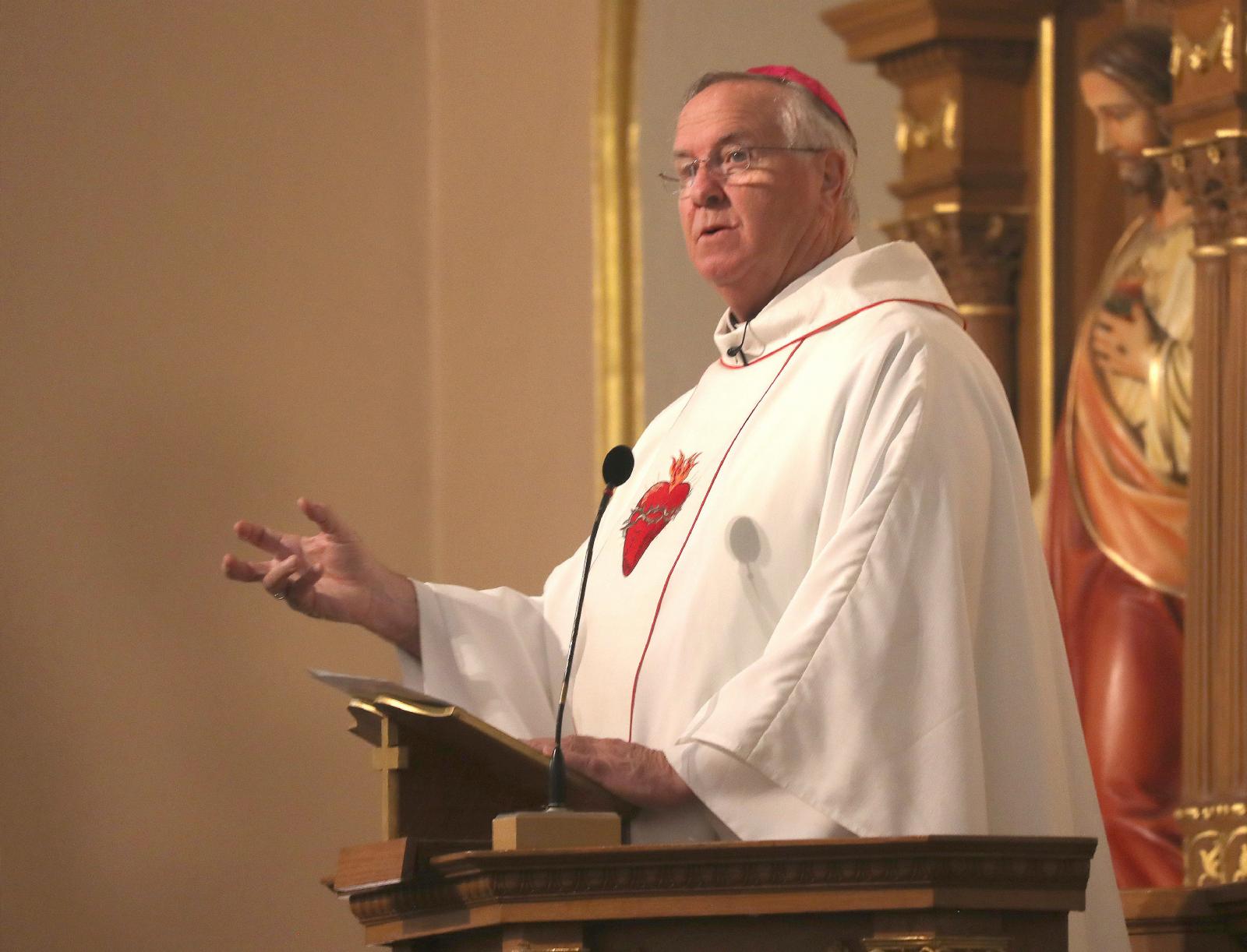
Bishop John P. Dolan was installed as the fifth bishop for the Roman Catholic Diocese of Phoenix Aug. 2, 2022. Established on Dec. 2, 1969, the Diocese of Phoenix is one of the fastest growing Catholic dioceses in the United States, ranking No. 2 overall with over 2 million Catholics. Covering nearly 44,000 square miles, the diocese consists of 94 parishes, 24 missions, 29 elementary schools, seven high schools, three universities and one seminary.
