


KRAKOW, Poland (OSV News) — The Archdiocese of Kraków has created a commission to review past and current cases involving adults who say they were harmed in situations of vulnerability or dependency within the Church.
It is among the first diocesan initiatives in Poland and the Catholic world focused specifically on adults harmed in Church settings, rather than on cases involving minors.
The “Listening and Clarification Commission” will examine historical cases dating back to 1945 while also providing a place where adults can come forward and report abuse that may never have been formally addressed.
“It is a historical commission, not an investigative one,” Jesuit Father Jacek Prusak, a psychologist, psychotherapist and member of the commission, told OSV News. “On the one hand, it will examine archival records for information about this kind of harm. On the other hand, it is meant to remain open to people who wish to come forward, identify victims and perpetrators, and offer support to those who seek it.”
Many cases involving adults have fallen into gap
For decades, the Catholic Church’s abuse-response systems have focused mainly on protecting children and addressing abuse of minors. But adults also can be harmed by priests or other Church figures, especially when there is a relationship of authority, trust or dependence. Until now, many such cases have fallen into a gap because Church procedures were designed primarily for minors.
According to Father Prusak, one of the immediate reasons for establishing the commission was the case involving the late Auxiliary Bishop Jan Szkodon of Kraków.
In 2020, after the Polish newspaper’s “Gazeta Wyborcza” report of alleged abuse, the Vatican started an investigation and in 2021, ruled that Bishop Szkodon’s guilt had not been proven, but imposed a penance on him for “imprudent behavior towards a minor.” “Some interpreted this ruling as exonerating the prelate,” Polish journalist Tomasz Krzyzak commented in the Polish Catholic media outlet Deon.
After additional women came forward following the bishop’s death in 2025, the archdiocese faced questions about how to respond when the alleged perpetrator could no longer face canonical proceedings and those reporting harm had been adults at the time.
Cardinal Grzegorz Rys, who is leading the archdiocese, decided to move forward looking for accountability, the Jesuit said.
‘Needed legal and systemic tools’
“Cardinal Rys needed legal and systemic tools, not only an individual pastoral response,” Father Prusak said.
At the same time, he said, the commission reflects a broader realization.
“There is a whole group of people harmed in the Church who simply do not fit into the category of people abused as minors,” Father Prusak told OSV News. “That does not mean their harm does not exist or that it is somehow smaller.”
Canon law does recognize the category of a “vulnerable adult,” but its legal definition is relatively narrow.
Aleksandra Brzemia-Bonarek, a canon lawyer and member of the commission, explained to OSV News that under the 2023 norms “Vos Estis Lux Mundi,” a vulnerable adult is defined as someone whose illness, physical or mental impairment, or deprivation of personal liberty limits the person’s ability to understand, choose freely or resist an offense.
Narrow legal definition ‘doesn’t mean Church ignores’ adults
“The legal concept is narrower than the one used in contemporary psychology,” she said. That does not mean, however, that the Church ignores adults who do not meet that legal definition, Brzemia-Bonarek, who is also a member of Vatican’s Dicastery for the Laity, the Family and Life and professor of Pontifical University of John Paul II in Kraków, said.
Because canon law applies universally across cultures and legal systems, Brzemia-Bonarek said, it necessarily uses a definition that can be applied worldwide.
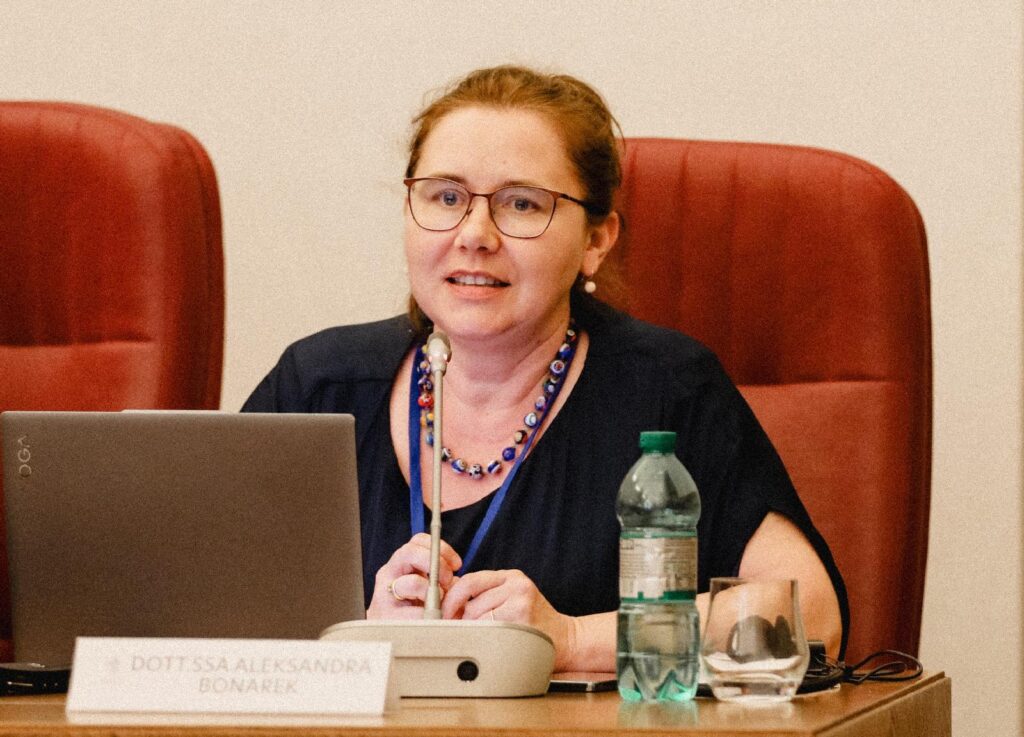
“The Church’s legal definition may seem too narrow or even too strict by today’s standards,” she said. “But for now it is the only one capable of encompassing the entire world.” The distinction between a legal definition and the broader reality of adults who become vulnerable through unequal relationships is one of the central ideas behind the Kraków commission, she emphasized to OSV News.
In practice, she said, the Kraków commission expects many of the people seeking help to be adults who may not fit the canonical definition of a vulnerable adult but who nevertheless became susceptible to abuse because of difficult personal circumstances and relationships of dependency.
Approach combining legal, psychological, pastoral expertise
Brzemia-Bonarek said many of the people the commission expects to encounter would be better described as “fragile” rather than legally “vulnerable.” Such cases often require an interdisciplinary approach, combining legal, psychological and pastoral expertise, she said. That distinction is central to the commission’s work.
From her legal experience, Brzemia-Bonarek expects that many reports will concern women who experienced sexual abuse, pastoral abuse or abuse of authority by clergy while in emotionally or spiritually vulnerable situations. She also noted an increase in reports involving spiritual abuse, abuse of conscience and psychologically harmful forms of spiritual direction affecting both women and men.
For Father Prusak, the heart of the issue is not legal terminology but the dynamics of trust.
Relationship of trust and spiritual authority
“What we are talking about are situations in which, because of a relationship of trust and spiritual authority, boundaries were crossed and another person was consciously exploited,” he told OSV News.
He added that abuse often begins in what appears to be an ordinary pastoral relationship.
“A priest gets to know a person’s weaknesses, difficulties and secrets because that person comes seeking spiritual help,” Father Prusak said. “That person opens up, trusting that what they share will be used for their good, not against them.”
Problems begin, he said, when the relationship gradually stops serving the person’s spiritual well-being and instead begins serving the priest’s own needs. “He may begin satisfying his own needs while hiding behind God and his pastoral role,” Father Prusak said.
One warning sign, he said, is when a pastoral relationship gradually shifts away from its original purpose. “The priest stops asking about God and starts asking more and more about private matters,” he said. “He begins controlling different areas of that person’s life, saying this is what God wants, isolating the person from others and gradually building dependence.”
Manipulation ‘is built step by step’
Such manipulation rarely happens suddenly. “It is built step by step,” Father Prusak said. “First trust is strengthened, and then human weakness is exploited.”
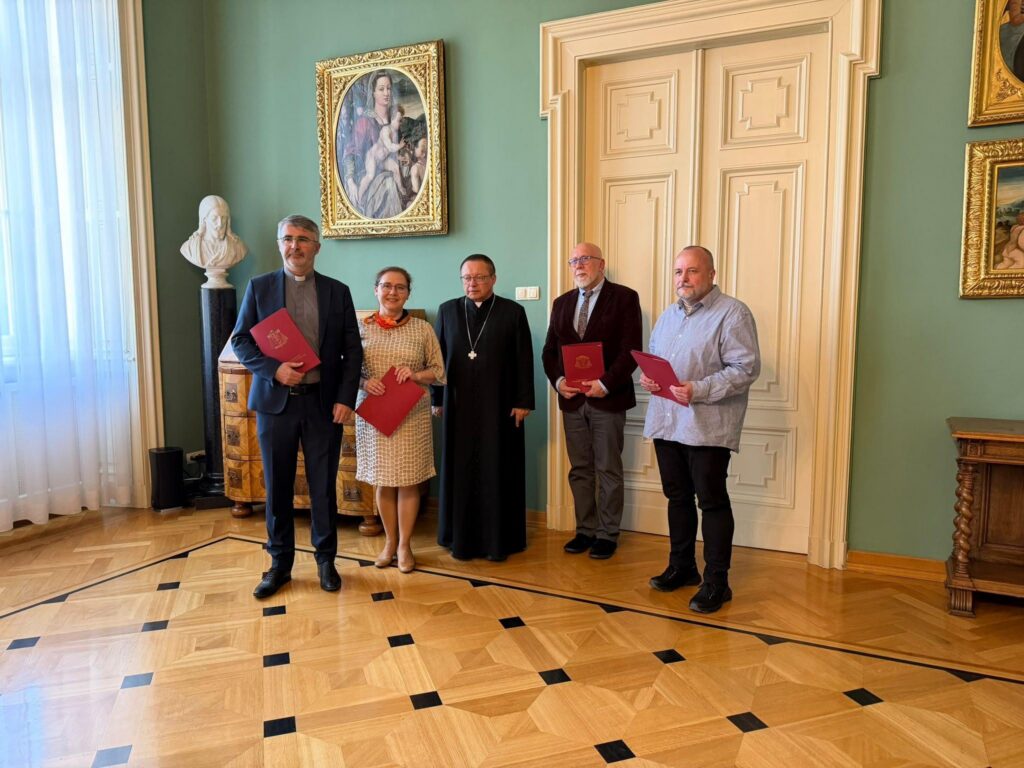
The commission will therefore examine not only allegations of sexual abuse but also the broader patterns of spiritual abuse and abuse of authority that may accompany them. “We are speaking about abuse of spiritual authority and the broad range of harm that can result from it,” Father Prusak said.
The commission’s members, who also include renowned historian Marek Lasota and investigative journalist Piotr Litka, also hope their work will encourage people who have remained silent for years.
“That is Cardinal Rys’s intention,” Father Prusak said. “He knows there are people who have experienced this kind of harm. The commission gives them a formal place where they can come with their story.” Its purpose, he added, goes beyond reviewing archives.
‘Chance to speak’ in ‘a safe way’
“It is also about giving people who are still alive a chance to speak about what happened to them in a safe way, so that the Church can respond,” he told OSV News.
Father Prusak believes the initiative also sends a broader message about accountability within the Church. “It shows that this issue has to be addressed structurally,” he said. He expressed hope that other dioceses may eventually develop similar initiatives adapted to local circumstances.
“There is a whole group of harmed people” whose stories have too often remained outside the conversation, the Jesuit priest outlined. “Their harm exists,” Father Prusak said. “And it is no less real.”
Katarzyna Szalajko writes for OSV News from Warsaw, Poland.
