


PHILADELPHIA (OSV News) — Haitian Catholics in Philadelphia are marking a half century of faith and fellowship, amid Trump administration crackdowns on immigration, uncertainty about current deportation protections and ongoing gang violence in Haiti.
“It’s 50 years of determination, 50 years of challenge, 50 years of faith,” said Father Eugène Almonor, an Oblate of Mary Immaculate and chaplain of the Archdiocese of Philadelphia’s Haitian Catholic Community.
Father Almonor spoke with OSV News ahead of an Oct. 17 Mass honoring the community’s golden anniversary at St. William Parish in Northeast Philadelphia, home to one of two “branches” — north and west — of the archdiocese’s Haitian Catholics.
Devotion to Our Lady of Perpetual Help
The liturgy, which drew a congregation of some 350 and several concelebrants, took place on the death date of Jean-Jacques Dessalines, one of the key leaders of the Haitian Revolution (1791-1804) and that nation’s first emperor.
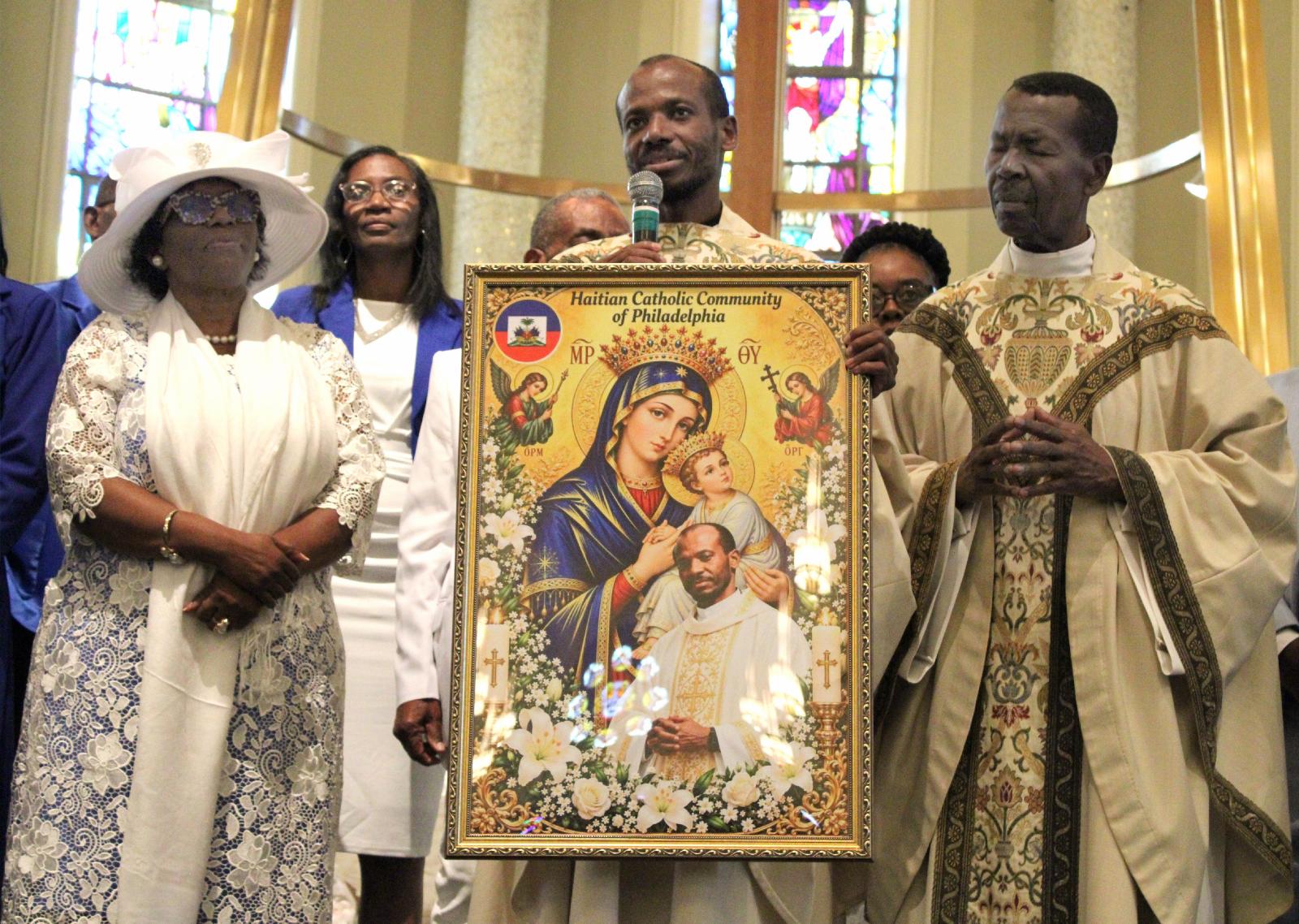
During the Mass — with its prayers in French, Haitian Creole and English — an image of Our Lady of Perpetual Help, named patroness of Haiti by Pope Pius XII in 1942, was displayed before the altar.
The Marian devotion holds profound significance for Haitians, who credit Mary’s intercession with the abatement of an 1882 smallpox epidemic. Her protection was also invoked by Pope Benedict XVI following a 2010 earthquake that devastated Haiti. The devotion’s June 27 feast day is prominently celebrated throughout Haiti and among the Haitian diaspora.
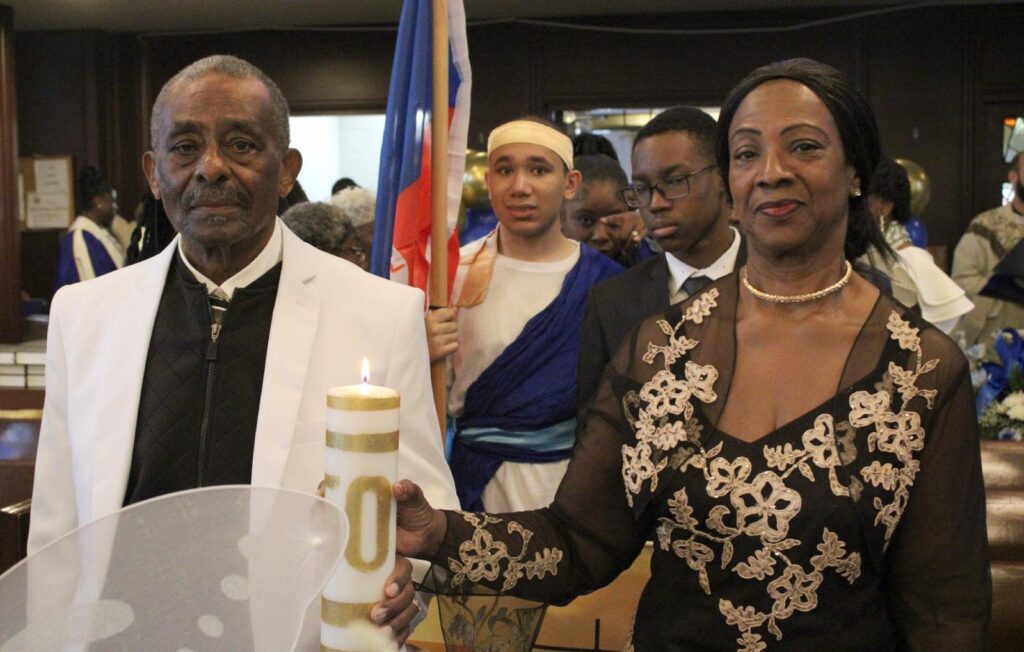
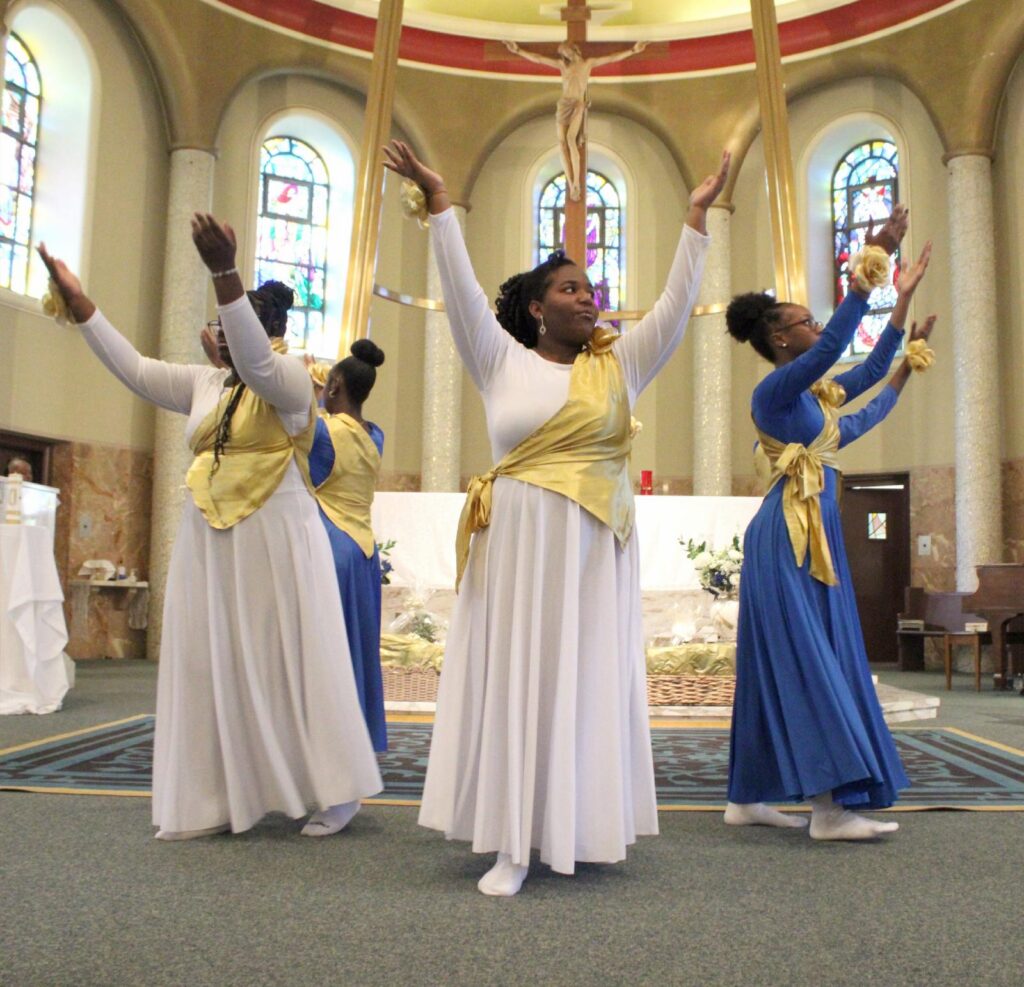
The Mass included a liturgical dance honoring Mary’s Magnificat — her song of praise found in Lk 1:46-55 — as well as a post-Communion presentation at her altar of a candle marked “50,” with the flame transferred from similar candles borne by community elders to the youth.
From a home to a community
In its welcome message for the Mass, which was printed in the liturgy’s worship aid, the Philadelphia Haitian Catholic community said the celebration “must awaken” a “sense of fraternal duty” among Haitians living in the U.S.
“We find ourselves in the midst of struggle with ourselves and confronted by an enemy determined to prevail at any cost, disregarding the most basic principles and seeking to strip us of our humanity,” said the committee, urging faith, fraternity and trust in Mary’s intercession.
“We cannot just stay in the dark,” Marie Vidala Moise, a key lay leader in the Philadelphia Haitian Catholic community, told OSV News.
Echoing Father Almonor, she recounted how the community began in 1976 — the same year as the U.S. bicentennial — at a West Philadelphia home owned by a Haitian family surnamed Cantave, with Haitian Catholics gathering for prayer, faith sharing and a sense of family.
Started with idea for prayer group at someone’s house
“We started with a couple of people who talked about having a prayer group at somebody’s house,” said Moise.
“The Catholic faith of Haiti found a home in the Archdiocese of Philadelphia through the charity and love of one Haitian family,” said Sister Gertrude Borres, a member of the Religious of the Assumption and director of the Archdiocese of Philadelphia’s Office for Pastoral Care for Migrants and Refugees.
The growing community was recognized by the Archdiocese of Philadelphia and in 1977 was first housed at the former Most Blessed Sacrament Parish, where it remained until 1986.
Over the years, Philadelphia’s Haitian Catholics have called several parishes home, with the community now based at St. William Parish and St. Barbara Parish, both in Philadelphia and forming, respectively, the “north” and “west” branches owing to their locations in the city.
But, said Father Almonor, the two branches form “one community,” with Haitian Catholics from both joining for various celebrations throughout the year in addition to their regular Sunday Masses at the two churches.
Faith in the face of deportation fears
Now, that faith and unity have become even more critical as the Trump administration seeks to expel hundreds of thousands of Haitians living in the U.S. under Temporary Protected Status, or TPS, as part of a mass deportation and immigration restriction campaign.
Created by Congress as part of the Immigration Act of 1990, TPS provides deportation protections for those from Homeland Security-designated countries experiencing ongoing crises, such as war and environmental disasters.
More than 330,000 Haitians had TPS protection as of 2025 due to Haiti’s multiyear polycrises of gang-driven conflict, political instability, natural disasters and disease.
While the Trump administration granted TPS extensions Oct. 18 for nationals from Ukraine and Sudan, Haitian TPS beneficiaries now face deportation following a Supreme Court decision allowing the end of the designation for Haiti as well as Syria.
Grave warnings from immigration advocates
Those expulsions come despite grave warnings from immigration advocates and Catholic leaders — including Archbishop Thomas G. Wenski of Miami, whose archdiocese is home to an extensive Haitian community — about the dire conditions in Haiti.
The U.S. Department of State has issued a level 4 “do not travel” advisory regarding Haiti, urging U.S. citizens not to travel there “for any reason” due to “crime, terrorism, kidnapping, unrest, and limited health care.”
Previously, Father Almonor — now a U.S. citizen who serves at St. William Parish — told OSV News that asking someone “to return to Haiti is exposing your life” to danger.
He himself has been unable to travel to visit family in Haiti for some time.
Speaking to OSV News Oct. 16, Father Almonor said the Haitian Catholics he serves “continue to come to Mass,” but “continue to be vigilant.”
“It is so difficult for the families here,” he said. “Many of them have no job.”
The community works to ensure its members have food, he said, adding, “We try to accompany them, support them.”
Youth as the new leaders
At such a moment, both the legacy of the community’s elders and the promise of Haitian Catholic youth are equally essential, said concelebrant and homilist Msgr. Pierre André Pierre, parochial vicar at St. Clare and St. Pius X churches in Rosedale, New York.
“We are here today because of the sacrifices our ancestors have made through the years,” he said, addressing the youth in attendance. “But I must tell you, this is still the beginning of the journey.”
He urged the youth to draw on God’s grace and “make your people raise their heads, and make yourself a child of God, serving God’s will everywhere.”
“The 50 years does not stop here,” said Moise, who reflected on the long tradition of her family’s Catholic faith. “The young people have to take over.”
And, said Msgr. Pierre, they will not be alone in that task.
“We know the power of God,” he said in his homily. “Things can change. Even war can be turned into peace. Even enmity can be turned into fraternity.”
Gina Christian is a multimedia reporter for OSV News. Follow her on X @GinaJesseReina.
