


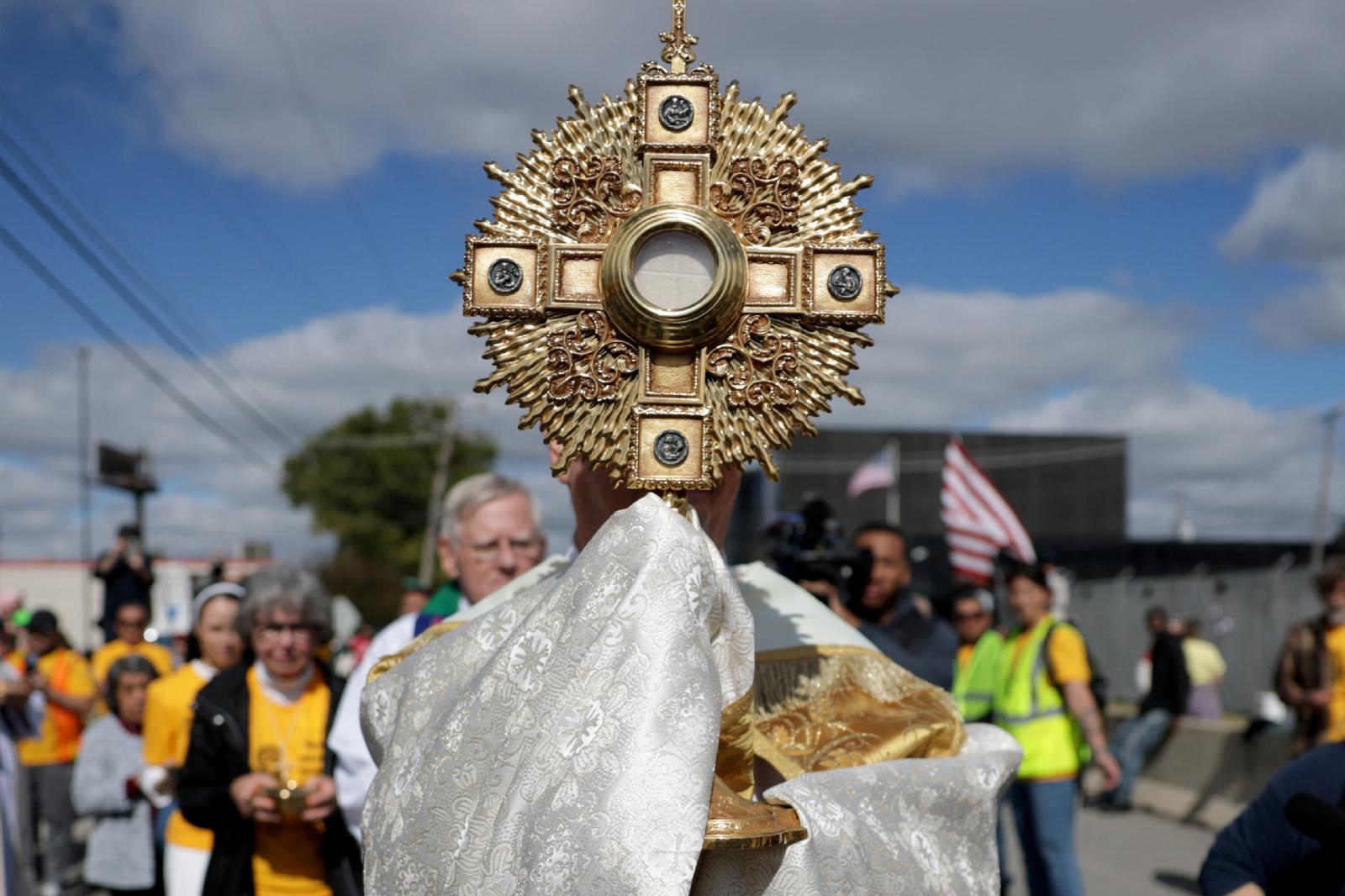
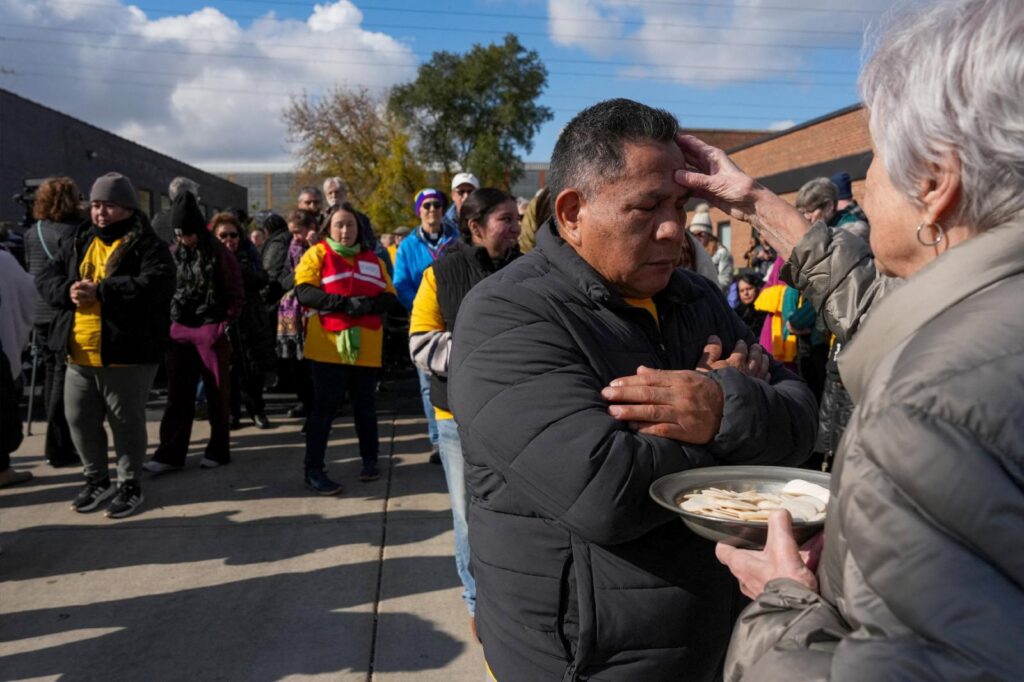
(OSV News) — A federal district judge granted a preliminary injunction Feb. 12 that will allow clergy, religious and Catholic social justice advocates to enter a Immigration and Customs Enforcement facility west of Chicago on Ash Wednesday to provide ashes and holy Communion.
The order came after the group filed a lawsuit in November against the Trump administration following several attempts to give pastoral care to migrant detainees there.
In his order, U.S. District Judge Robert W. Gettleman for the Northern District of Illinois Eastern Division found “the government has substantially burdened the plaintiffs’ exercise of religion.”
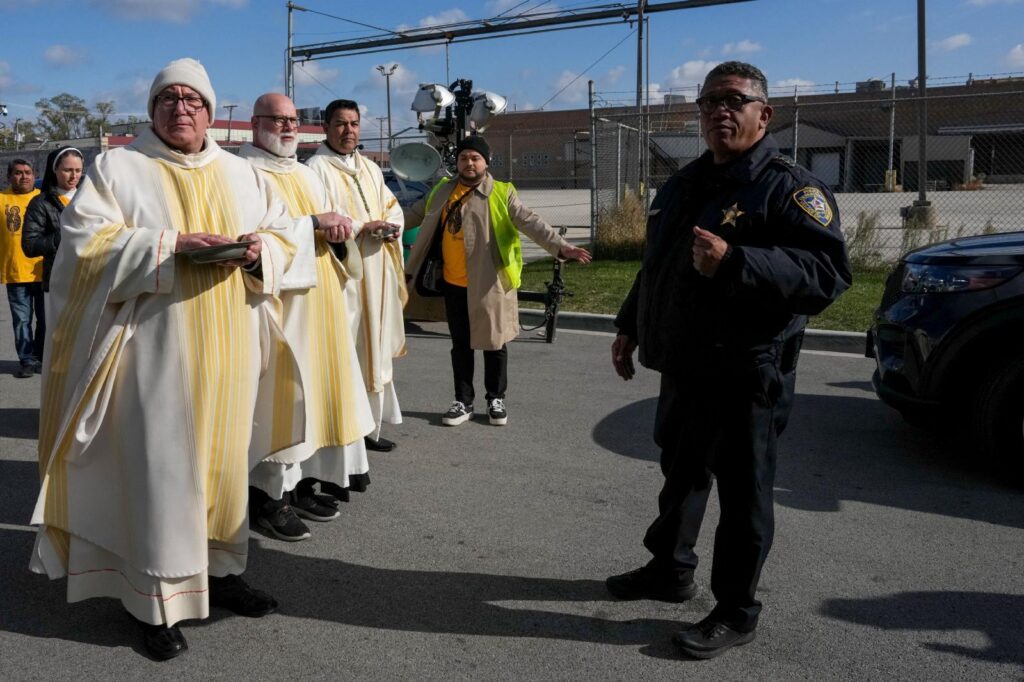
Chicago-based Coalition for Spiritual and Public Leadership, as well as several priests and a religious sister described in their lawsuit ICE’s “complete denial” of the group’s right “to practice their religion at a detention center in Broadview” 12.5 miles west of downtown Chicago, after seeking federal agents’ permission numerous times to enter the facility where fellow Catholics are detained.
Judge rules religious practice is being harmed
The group claimed their rights under the First Amendment, Religious Freedom Restoration Act, or RFRA, and the Religious Lands Use and Institutionalized Persons Act were violated by ICE when they were not allowed to give holy Communion to detainees on Oct. 11 and Nov. 1, and to give pastoral care to them.
In the order, Gettleman noted the plaintiffs said “prayer and ministry to the migrants and detainees at Broadview is an important religious practice.” He also noted the federal defendants concede that “ministering to vulnerable Catholic immigrants is part of (plaintiffs’) religious exercise,” but that they argued “doing so at Broadview ‘is itself not essential to the practice.'”
Gettleman said RFRA helps a court determine if a religious practice is being hampered by the government, “not whether the religious practice (that is being) burdened is ‘essential.'”
Eighty percent of those swept up in the immigration crackdown across the country are Christian, with the largest proportion (61%) being Catholic, according to a joint report published by the U.S. Conference of Catholic Bishops and World Relief in 2025. It found one in six Catholics (18%) are either vulnerable to deportation or live with someone who is.
Supreme Court precedent invoked
He pointed out their claim that not being able to minister and provide “spiritual consolation to those most in need of it” caused “irreparable injury.”
“Plaintiffs have lost their religious freedom by blanket denial of any opportunity to provide spiritual consolation,” wrote Gettleman.
And, he noted the federal defense asked the court to dismiss the group’s argument of “irreparable harm” and “public interest,” citing their inability “to establish they are likely to succeed in the merits” of their case.
Citing a 1976 U.S. Supreme Court ruling in Elrod v. Burns (in which Republican non-civil employees in Cook County, Illinois were fired under a new Democratic county sheriff because of their party affiliation), the judge said the high court has held the “loss of First Amendment freedoms, for even minimal periods of time, unquestionably constitutes irreparable injury.”
Gettleman also referred to the coalition’s position that with proper safety and security measures, regular religious visits to the facility were allowed for years until recently. He stated that, with reasonable notice and communication, “allowing plaintiffs to provide pastoral care to migrants and detainees does not pose any undue hardship on the government.”
Catholic Access ordered for Ash Wednesday
Gettleman directed ICE agents to allow the plaintiffs to enter the Broadview facility on Ash Wednesday Feb. 18 “to offer ashes and Communion to those who desire it.” He ordered both sides to meet about safety and security protocols for the visit.
The judge also directed them to meet about further ministry after Ash Wednesday, which would include “(1) personal interactions between plaintiffs and detainees; and (2) the ability of plaintiffs to engage in prayer outside of the Broadview facility and in view of the detainees.”
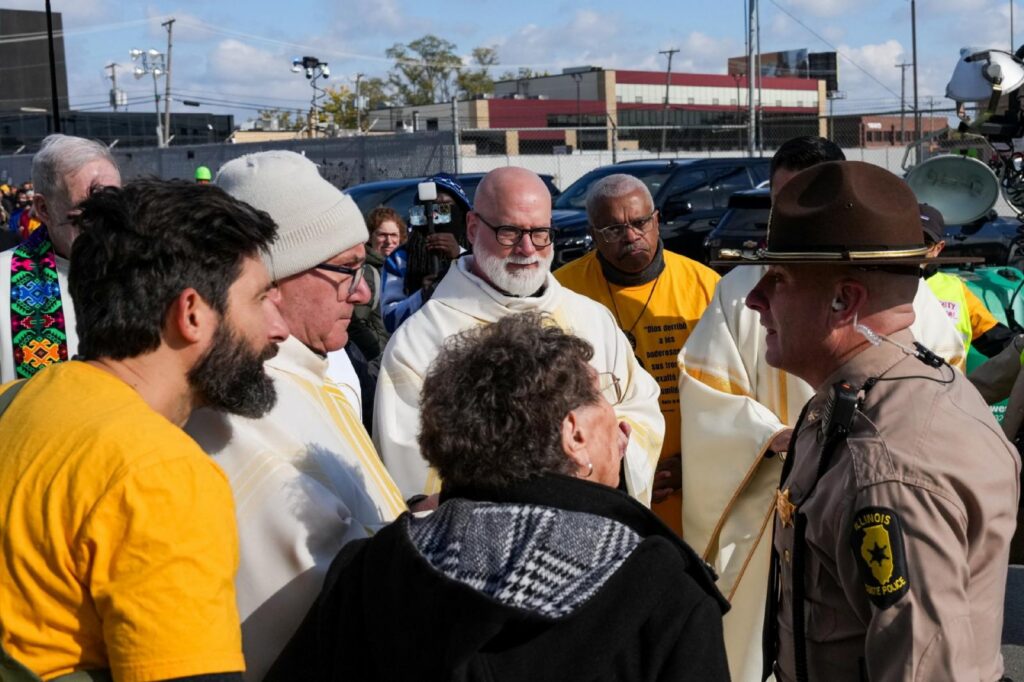
CSPL Executive Director Michael Okinczyc-Cruz told OSV News in an email the group had recently requested entry to Broadview for Ash Wednesday, before the injunction order and that both parties were trying to determine the time the group could go inside.
“We are cautiously optimistic that ICE will comply with the ruling for Ash Wednesday,” he said.
As for the rest, he said the judge “would like Ash Wednesday to be the first step” in trying to have regular pastoral care at Broadview.
The next hearing in the dispute is set for Feb. 25.
Simone Orendain is an OSV News correspondent and writes from Chicago.
