


As the pro-life movement faces tensions with previous political allies, Catholic writer Kathryn Jean Lopez, a senior fellow at the National Review Institute and religion editor at National Review magazine, recently spoke with Charles Camosy for OSV News about the loving, human encounters that can spread what St. John Paul II called “the Gospel of Life,” even in difficult times.
Charles Camosy: A new year begins in darkness. Quite literally. Even with all the resolutions and hope of ordinary times before the penance of Lent, there have been dark days of late for the pro-life movement, even coming from those who claim to be our allies. Where do you see hope right now?
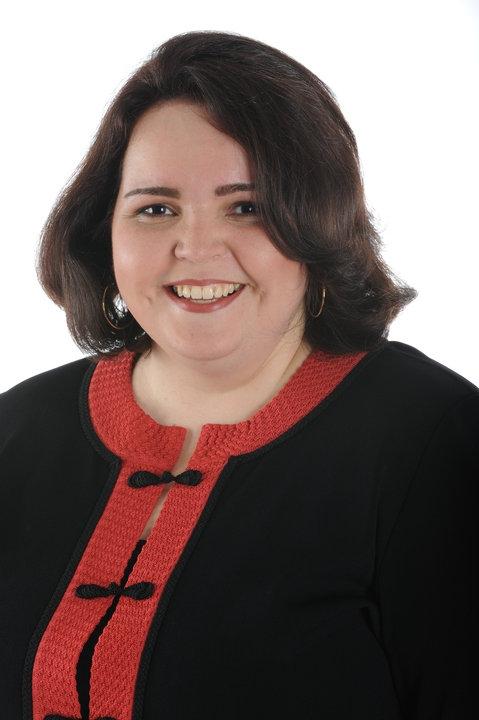
Kathryn Jean Lopez: Besides the Christ Child? Of course, he is our hope. And it is because of him and the hope he gives us that we must live differently. Pope Benedict talked about this in his encyclical on hope, “Spes Salvi,” as you know.
I try to visit as many pregnancy care centers and maternity homes as I can and listen to people. There’s a whole country out there of people doing heroic things. You know I spent a little time — albeit probably more than was healthy — regularly in front of the flagship Planned Parenthood in lower Manhattan for a time. It was formerly named after the eugenic founder of the abortion giant, Margaret Sanger, and Planned Parenthood was even pressured in recent years to take her name off the building and, eventually, even off the city street corner.
One of the things that experience — seeing and talking to women and girls in agony, absolutely exhausted and disgusted — further convicted me of is our need to make sure that we are reaching beyond the people who will read this interview.
Do the young people in our lives know that we will be there for them with unconditional love if they find themselves facing an unexpected pregnancy? And are we going to the peripheries, as Pope Francis used to say?
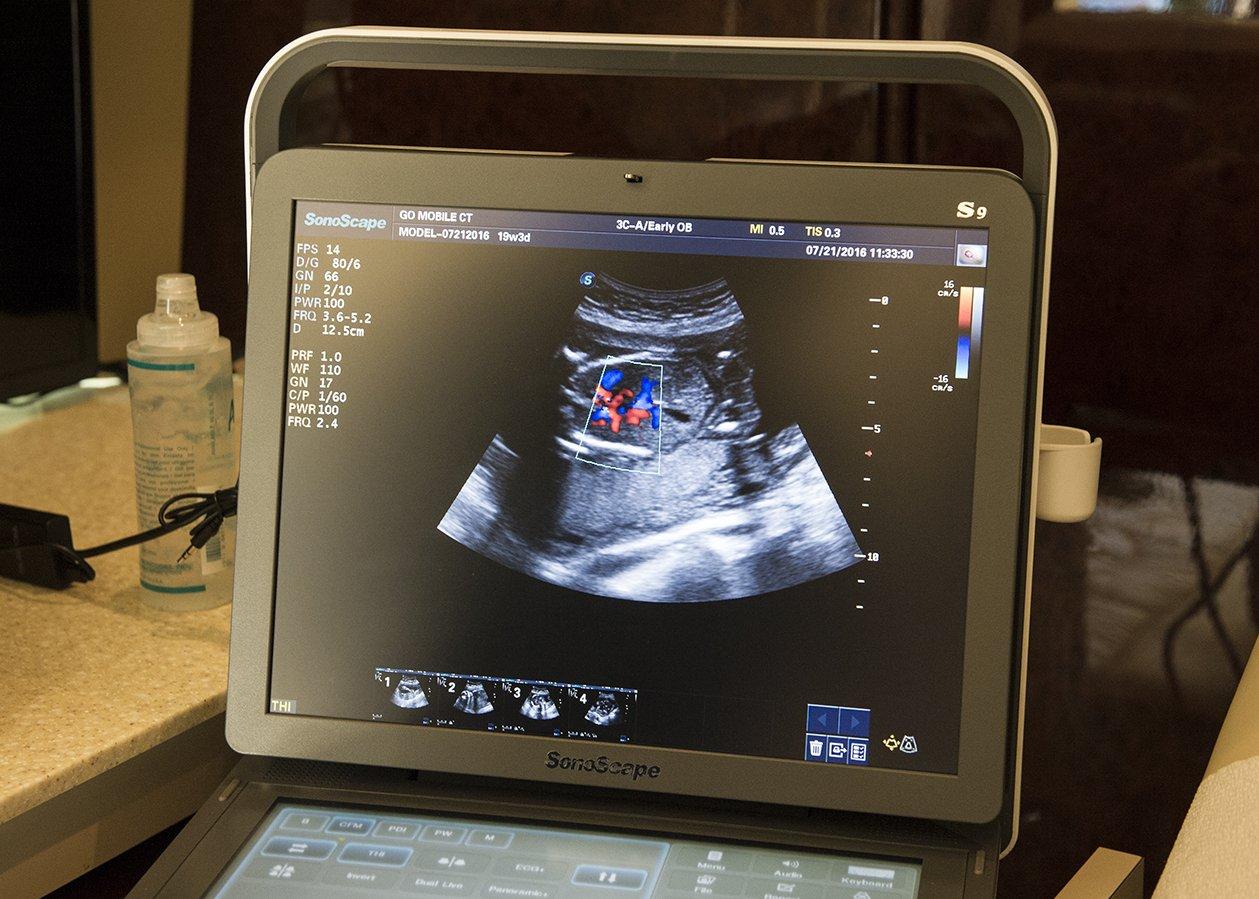
I think of Grazie Christie, a doctor friend who works in the Miami area as a radiologist and gives regular time to pregnancy care centers for sonogram readings but also teaching about healthy sexuality to young people. The girls think they have to use or be used. Or they think they must be used by boys and men if they are going to have any shot at some semblance of love. They deserve better than that. And for the boys and men to learn to be more than serial users would be transforming.
It gives me hope when I meet people on the front lines of love. They are all over the country. Some of them work formally, institutionally, some of them simply do it as a way of life.
St. Lawrence O’Toole and Sacred Heart in the suburbs of New York City give me hope because they’ve got a few pro-life projects going on. It’s exactly what the U.S. Conference of Catholic Bishops has meant with their Walking with Moms in Need program.
The parish looked around in the community at what women need. So, they started a pregnancy-resource center, named after St. Gianna, that doctor, wife and mother who is such a modern example of heroic virtue. Then they realized there are areas underserved by the pro-life movement — where the need is great, the pressures on women and their children so grave — so they bought a van to go to some of the worst neighborhoods to offer sonograms and accompaniment. Now they are at work on a maternity home because the need for housing is so great — one of the main reasons for abortion in New York, which might not surprise anyone who has tried to maintain a home of any kind here.
Camosy: One place I find hope is in your vision and storytelling, which now takes place in a weekly “The Lifeline” newsletter, which I highly recommend. In a recent edition you tell the amazing story of randomly — or providentially — meeting the brother of Adrianna Smith, the mother of Chance, the baby who was born after she suffered a catastrophic brain injury. Can you say more about this?
Lopez: I still can’t quite process that encounter. As you’ll remember, I texted you in disbelief and prayers and gratitude at some point before I boarded my flight that Sunday morning. Adrianna Smith’s older brother, Will, happened to be my Uber driver as I headed from New York to Nashville, to visit a new pro-life project from HerPlan, a non-political, super-practical spinoff of Susan B. Anthony Pro-Life America.
Will asked some questions, and before I knew it he pulled out the program from the funeral of his sister, wondering if I had ever heard her story. Now, of course, I had and had written about her and the whole agonizing situation which should never have become as political and polarizing as it did. Will shared — something that is far from shocking — that everything got worse once the media got involved.
He said someone let a local news station know there was a pregnant woman in the hospital, her mother was asked to give an interview, and soon, he said, people were coming out of the woodwork to be part of what they seemed to see as a show they wanted to be a part of — people trying to get into her room not even necessarily because they were pro-life or abortion advocates trying to make a point or advance a cause.
The thing is, of course, Adrianna — a nurse, who, I understand from her brother, was not a partisan person — should have never become the center of a storm about abortion. But there is so much anger and confusion that the doctors and lawyers (reverse order?) are getting sucked in and it’s good for no one, most especially patients and their families.
Meanwhile, the idea is to make The Lifeline newsletter one-stop shopping for pro-life news, commentary and ideas, even community. It’s still in its embryonic stage, and we tried to keep it from being painfully long, but I hope readers will find something to learn from, something that inspires them, something that encourages and maybe motivates.
Camosy: You handled the Uber driver conversation so beautifully. Is there a lesson here for pro-lifers when it comes to balancing arguments with the loving encounter of an emotionally vulnerable and often hurting person?
Lopez: I don’t know if I did. But it is a human story and human encounter, and we have to operate on that level more. Don’t make everything about politics. I remember an old project I used to work on where we’d remind people when they are in any kind of debate, remember it’s not about you, it’s about Jesus, and all we ever really need to do in the end is keep doors open to further encountering him in conversations.
I did have a young man come up to me after an event I was speaking at with the University of Dallas and he was disappointed in himself because he had encountered some dude in a coffee shop, and this student thought he really should have convinced the man that whatever slogan on his T-shirt was wrong.
You’re rarely if ever going to pull that off. And you’re not called to. Be loving. You never know what that man is encountering on a given day. How can you be an encounter with Christ? However quick the encounter might be.
My friend Justin Fatica, founder of Hard as Nails Ministry, always makes me laugh as he regularly will go up to people as he’s getting his coffee or whatever in a store and tell them “you’re amazing.” I’m an introvert, so it pains me to think of doing it, but he has some of the most amazing — forgive me — encounters from people who really needed to hear that.
Camosy: Cardinal Timothy M. Dolan is retiring as archbishop of New York. And you’ve been chair of his pro-life commission for several years. You’ve been on it since he created it toward the beginning of his time in New York, back when he was still Archbishop Dolan. I’ve been honored to serve on it for the last few years, too. What would you want people to know about that experience?
Lopez: Cardinal Dolan established the commission to be a “conscience,” to help make sure important things — threats to life and all — don’t slip through the cracks. That’s easier said than done. New York is the abortion capital of the country and there are many of those threats, including the political battles on abortion and assisted suicide we lost over those years.
We don’t live in a country, frankly, where the Church, as an institution, has the same influence it once did in civic life, in politics. For some very obvious and horrific reasons, but maybe for some other, healthy reasons. What I mean by the latter is, as much as I want to see new Mother Cabrinis and Elizabeth Ann Setons — and some of the other women religious who built our Catholic hospitals and schools — that’s work for the laity, too. Mary Ann Glendon said a number of years ago that this is the “hour of the laity,” and, well, it seems like it’s time to get on with it.
There are things we can’t say, of course, such being the nature of an advisory body.
The job of the archbishop of New York is probably impossible, with all the concerns. But Cardinal Dolan revived Cardinal O’Connor’s commitment that the Church will be a loving support for any woman who feels pressured into abortion. The Sisters of Life, of course, are a big part of the “how” of that.
We also all are. He liked to say as pertains to media, the days of “fat, balding, Irish bishops are over.” And the point, taken more universally: We are all part of the body of Christ. What more can we do? Each and every one of us, as busy as we feel and are.
Camosy: We’re just now winding down from Christmas, but I still cannot help but think of the Divine Logos, the second person of the Trinity, becoming human. The Word of God did not remain an abstract idea — but became the kind of being with whom we can have genuinely human encounter.
Lopez: It breaks my heart when the Nativity scenes go back into storage. Because there is something about casual access to the Holy Family — and Jesus, obviously, uniquely — that is such an opportunity to meditate on who we are.
Sometimes I think it is helpful to remember not only the oneness of the Trinity, but the life of Christ. You can’t have Christmas without the crucifixion and resurrection. Perhaps that’s why the rosary is so powerful: Even if you are running through them, there is this constant reminder.
I know a Sister of Life who, whenever she can, uses a book with images of each mystery. When I was hanging out with her regularly, she had been gifted with a beautiful Baltimore Catechism one. They are not hard to find. It’s not a bad idea, even if you’ve been praying the rosary daily for decades. That’s not going to work when you are driving, of course, but slow down with the truth of our faith now and again. And, please, know, I’m reminding myself here, too. We need to remember Jesus Christ, because without him, nothing makes sense.
The last time I saw Pope Benedict in the flesh, he talked about how critical it is to encounter Jesus in prayer daily, throughout the day. That’s how we can begin to have a prayer of loving like Jesus.
Charles Camosy teaches moral theology and bioethics at The Catholic University of America in Washington.
