


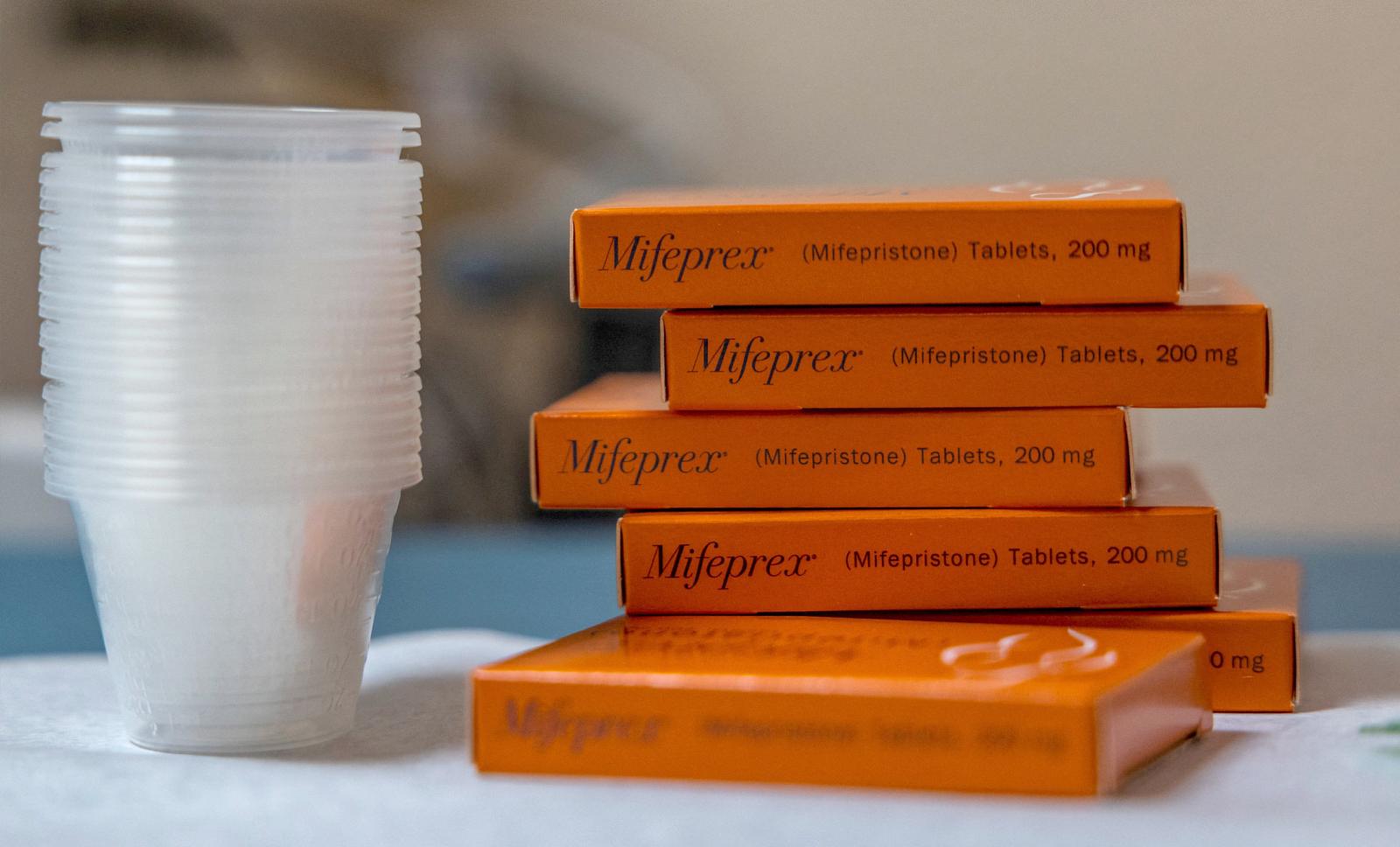
WASHINGTON (OSV News) — Sen. Bill Cassidy, R-La., chair of the U.S. Senate Health, Education, Labor, and Pensions (HELP) Committee, said in a report published Aug. 27 that while the FDA should reinstate the in-person dispensing requirement for mifepristone, its sponsors may not be “currently meeting their legal responsibilities to ensure compliance” with remaining requirements.
Cassidy said the report was the result of an investigation into abortion pill manufacturers such as Danco Laboratories, GenBioPro and Evita Solutions. The report also comes shortly after Cassidy expressed concern about President Donald Trump’s nomination of Dr. Heidi Overton to lead the Food and Drug Administration.
“Abortion drug companies are putting mothers at risk through their failure to properly oversee the prescription and distribution of their products. We are seeing that the explosion in online sales of chemical abortion drugs has opened the door to coercion and abuse of women,” Cassidy said in a statement.
‘A responsibility to the American people’
“FDA and the sponsors of these drugs,” he said, “have a responsibility to the American people to crack down on these prescribers that violate the prescribing requirements and reinstate the safeguards that keep mothers and babies safe.”
Cassidy released the report just weeks after he became the deciding vote to confirm Todd Blanche as attorney general despite his previous criticism of Blanche on subjects including the Department of Justice’s approach to state lawsuits challenging a Biden administration policy permitting the shipment of mifepristone by mail.
The Trump administration has sought to pause multiple state lawsuits seeking to roll back Biden administration-era eased restrictions on mifepristone, a drug commonly used for first trimester abortion, but which is also used in some miscarriage care protocols. The Trump administration has thus far left that regulation in effect while seeking to block those challenges, pending a promised FDA safety review, resulting in frustration from pro-life advocates.
Earlier in August, Cassidy expressed concern about Overton’s nomination due to what he called her “active role” in the president’s recent executive order on vaccines, which he called “nonsensical.”
“While I respect Dr. Overton’s experience as a physician, I have strong concerns about her nomination to be FDA Commissioner,” he wrote Aug. 19.
Confirmation path unclear for FDA nominee
Overton is an abortion opponent, but her path to confirmation is unclear in part due to her position on vaccine policies, and concerns among Trump allies about her support for the Trump administration’s decision to permit production of glyphosate, an active ingredient in some weedkillers some believe is tied to cancer.
Cassidy’s report said that “a tragic consequence of anonymous prescribing of the chemical abortion drug is evidenced by the numerous cases that have recently come to light of men ordering mifepristone online and coercing pregnant women to take the drug.”
Mini Timmaraju, president and CEO of Reproductive Freedom for All, formerly NARAL Pro-Choice America, argued in an Aug. 27 statement about the report that “Republicans are relentless in their efforts to ban abortion nationwide.”
“We will not stand for it,” she said. “No bogus report can change the facts — mifepristone is safe. Republicans have the majority and this is what they are doing with it, while families watch their health care costs climb.”
‘No way to address harms of abortion drugs’
In her own statement, Marjorie Dannenfelser, president of Susan B. Anthony Pro-Life America, said Cassidy’s report “shows there is no way to address the harms of abortion drugs since Danco, GenBioPro, and Evita Solutions’ drugs are being shipped through the mail nationwide at all stages of pregnancy, including in the third trimester in North Carolina.”
Blanche, Dannenfelser argued, “has the opportunity to protect women and save the lives of 15,000 babies every month by settling with the state of Louisiana before Sept. 9,” referring to when arguments in State of Louisiana v. Food and Drug Administration are scheduled in the U.S. Fifth Circuit Court of Appeals.
“He can end this fight with the red states, allow pro-life laws to finally take effect and stop the rise of criminals poisoning mothers with abortion drugs,” she said.
SBA is among the pro-life groups that have pushed for both the DOJ to settle the lawsuit with Louisiana and for the FDA to reinstate the in-person dispensing requirement for mifepristone.
Approval of a new generic for mifepristone
During the second Trump administration, the FDA also approved a new generic for mifepristone. The first Trump administration also approved the drug’s first generic version.
The drug was first approved by the FDA for early abortion in 2000, and is sometimes called “the abortion pill.”
The drug’s manufacturers and its proponents argue that mifepristone is statistically safe for a woman to take, and attempts to restrict it are an attempt to ban abortion outright. Opponents of the drug itself, or its use for abortion, argue there are significant risks to those who take it, particularly outside of medical settings, in addition to ending the life of an unborn child early in its development.
However, in recent years, the same drug combination of mifepristone and misoprostol has sometimes been used in some protocols for miscarriage care, where an unborn child has already passed. Catholic teaching would hold that particular instance as a morally licit use as opposed to direct abortion, which would violate the Church’s teaching on the sacredness of all human life from conception to natural death.
Kate Scanlon is a national reporter for OSV News covering Washington. Follow her on X @kgscanlon.
