

WARSAW, Poland (OSV News) — A feature film about a Polish communism-believer-turned-mystic Alicja Lenczewska exceeded all expectations after the first three weeks on screens as 200,000 Poles flocked to theaters to see it.
The success of the production comes as a Polish archdiocese begins a new, broad examination of the modern mystic’s life and writings.
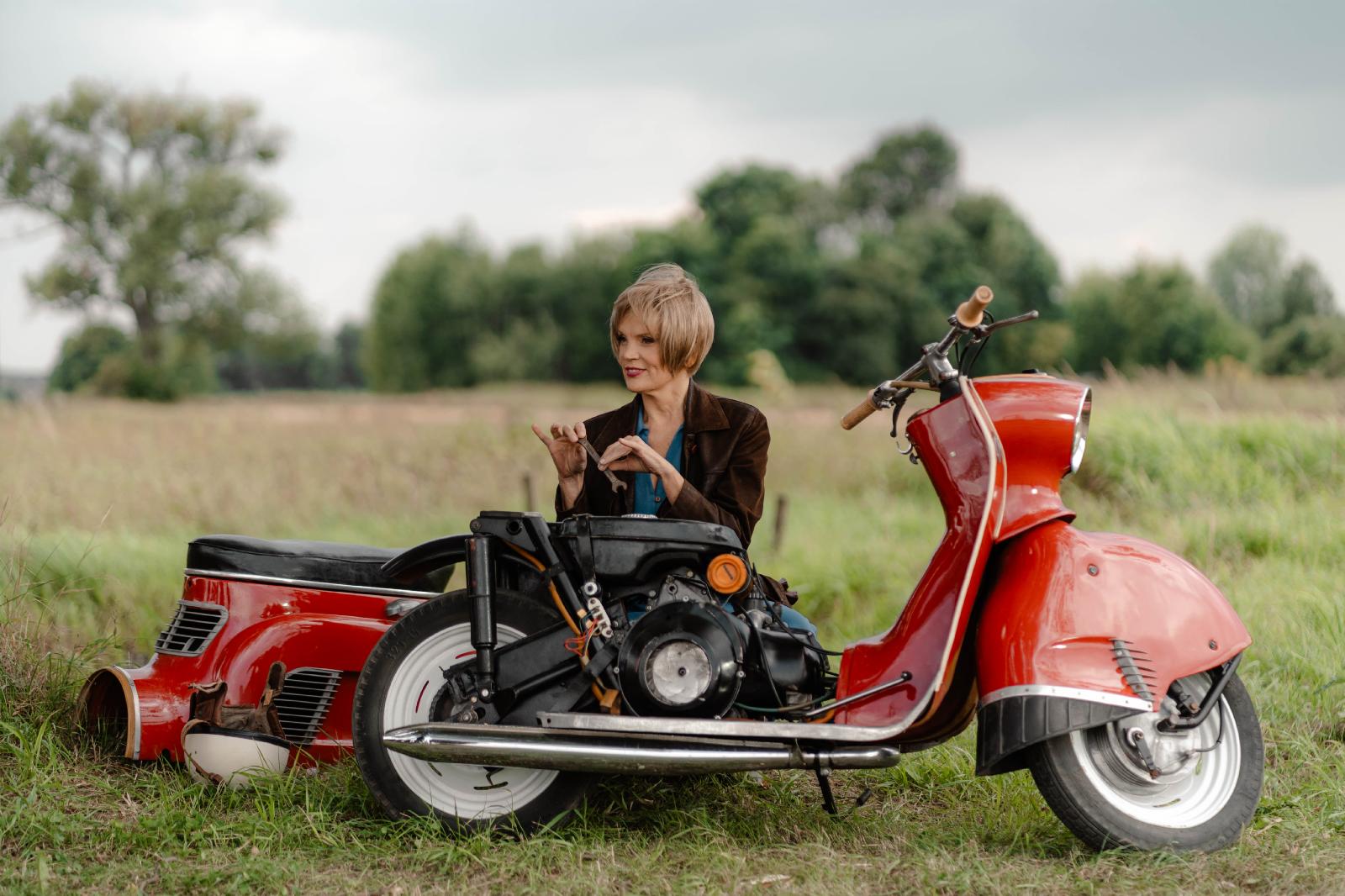
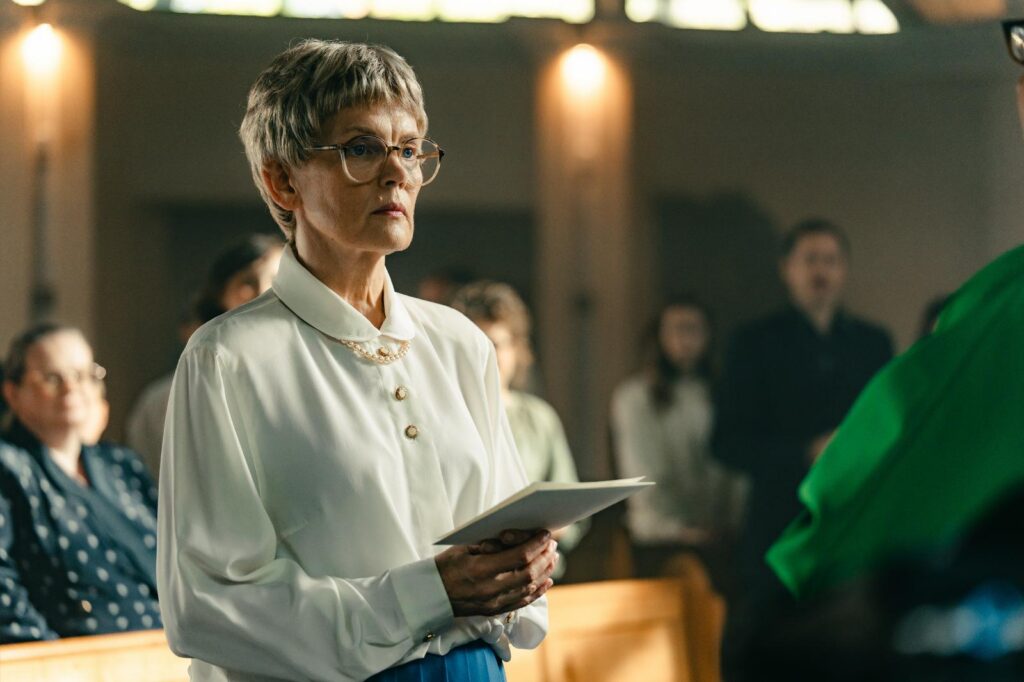
“Mistyczka” (“The Mystic”), written and directed by Jan Sobierajski and starring leading Polish actress Dorota Chotecka-Pazura, opened in Polish theaters Sept. 11.
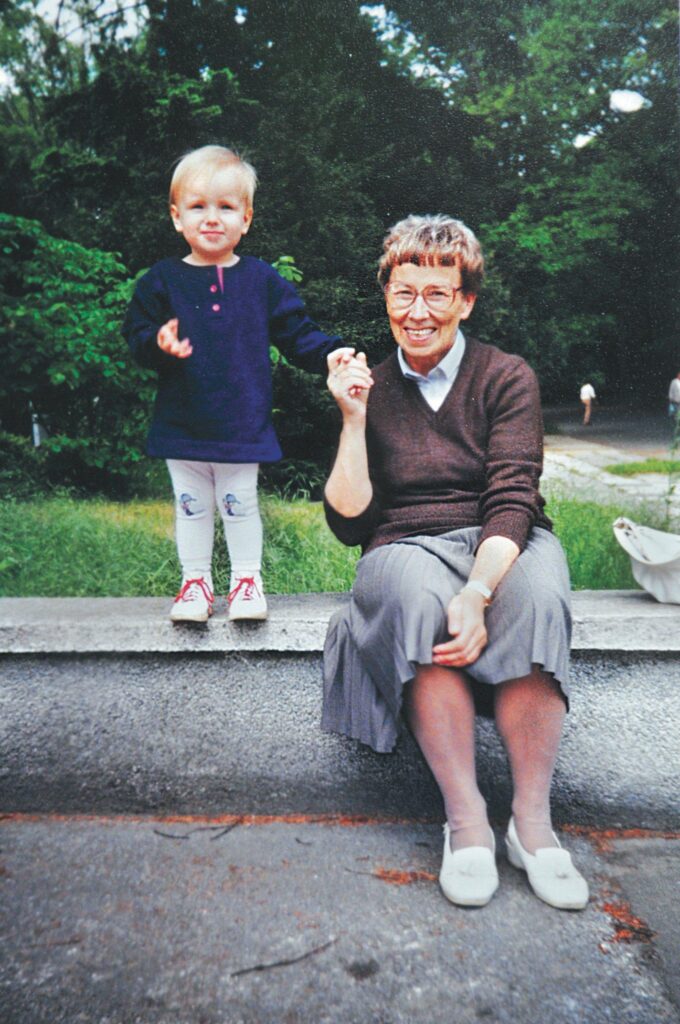
Its protagonist, Lenczewska, was a lay Catholic and longtime teacher from the northwestern Polish city of Szczecin. At 50, influenced by a deep conversion of her older brother, who brought her back to the Catholic Church, Lenczewska turned to God and started to hear Jesus’ voice. The 900 pages of her spiritual journals record what she understood as years of interior conversations with Jesus.
Captivated by her determination, consistency
Sobierajski told OSV News that the film took three years to produce and that he knew relatively little about Lenczewska when he began researching the screenplay.
“I needed many meetings and conversations with people who knew her personally before I could finally build a picture of her,” he said. “Most viewers of our film know Alicja primarily through her journals. But they are quite sparing when it comes to details of her life. In her writings, she focused mainly on her mystical relationship with Jesus,” he told OSV News.
“I can say with confidence that after reading these writings, a person does not remain the same,” Sobierajski told OSV News. “What captivated me personally was the determination and consistency with which Alicja followed God. It is an extraordinarily inspiring story that deeply moves viewers. I see it every time I attend a screening.”
Chotecka-Pazura portrays Lenczewska across several decades, not as a ready-made religious heroine but as an independent woman whose conversion does not erase her personality. The actress said that was precisely what made Lenczewska compelling.
“She was not a saint, but a normal person, like each of us,” Chotecka-Pazura said. “Only when she was in her 50s, she really saw her true self and what she wanted from life.”
She searched for real fulfillment for 50 years
Lenczewska was born in Warsaw in 1934 and spent most of her adult life in Szczecin, where she worked as a teacher and later as a deputy principal of a school. Her decisive spiritual turning point came in 1985, during a retreat, when she wrote that she experienced an encounter with Jesus.
From then on she recorded what she believed were interior conversations with Christ. Those writings eventually became two spiritual journals, “Swiadectwo” (“Testimony”) and “Slowo pouczenia” (“Word of Instruction”). Lenczewska died in Szczecin Jan. 5, 2012.
Ewa Czaczkowska, historian, journalist and author of a new biography of Lenczewska, said the timing of that conversion is one reason her story may resonate strongly today.
“Alicja returned to God when she was over 50 and already had various, sometimes difficult, experiences behind her,” Czaczkowska told OSV News. “For many years she lived outside the Church, in contradiction to the commandments. But she returned, and even became a mystic.”
There is another important difference between Lenczewska and many figures traditionally associated with Catholic mysticism: she was neither a nun nor a member of the clergy.
“She was a layperson, which can also attract people, because she lived a life similar to theirs — to ours,” Czaczkowska told OSV News. “Her journal is written in contemporary language, contemporary Polish. It is clear … it can be understood by anyone.”
For Sobierajski, that ordinariness was essential. “It is an extraordinary story of an ordinary woman who was searching for happiness and love and therefore for what every person desires,” he told OSV News. Her search, he said, continued for more than 50 years.
“Neither foreign travel, nor relationships with people, nor a professional career brought her fulfillment,” Sobierajski said. “Only a trip that happened entirely by chance to a retreat led to a supernatural encounter that changed her life.”
Church commission to examine her writings and life
Lenczewska’s spiritual writings were examined before publication and received an ‘imprimatur’ from Church authorities in Szczecin. They were published in 2016. An “imprimatur” is ecclesiastical permission for publication after a work has been reviewed in matters of faith and morals. It does not, by itself, mean that the Church has declared the reported conversations supernatural.
The Catholic Church teaches that private revelations do not belong to the deposit of faith. Now the Archdiocese of Szczecin-Kamien is looking at Lenczewska again, this time more broadly. Archbishop Wieslaw Smigiel established a commission July 1 to examine her life and writings. The archdiocese has said the study is intended to be comprehensive, including her entire life, and noted that many people who knew her personally are still alive and can give testimony.
“The commission appointed in the archdiocese is examining the life, activity and writings of Alicja Lenczewska,” Czaczkowska told OSV News. “Its task now is to gather materials about her life, testimonies of people who knew her, and to examine the materials she left behind.”
Czaczkowska stressed however that the development should not be described as the beginning of a sainthood cause. “This is not the first stage of a beatification process,” she told OSV News. “Perhaps, after the results of the commission’s work, procedures leading to the opening of such a process will be initiated. I think that in the longer term, it is realistic.”
Sobierajski told OSV News that Archbishop Smigiel attended a screening of “The Mystic” in Lenczewska’s home city of Szczecin and afterward announced publicly for the first time that the commission has been appointed.
According to the director, the archbishop said one of the impulses to create it was the strong impact of the film.
“It is a beautiful experience that shows how great the power of cinema can be,” Sobierajski said.
He said since the film’s release, he received messages from viewers who decided to begin reading Lenczewska’s journals after coming back from the theater. “The screenplay is about 90 pages long, while Alicja left nearly 900 pages of writings,” Sobierajski told OSV News. “I am glad that we can encourage people to read them, and through that, direct them toward a personal relationship with God – the same one that speaks so strongly in ‘The Mystic.'”
A life of hidden prayer and sacrifice for others
For Czaczkowska, the enduring importance of Lenczewska’s life lies less in extraordinary experiences than in what happened to her after she returned to faith. “Her life and spiritual path give people today enormous hope that at any moment in life one can return to God and enter a path of spiritual closeness with him,” she told OSV News.
Czaczkowska said Lenczewska understood her own vocation as “life in hiding and prayer combined with sacrifice for others.”
The ultimate sacrifice of Lenczewska’s life happened when her beloved brother Slawomir — who married late and at the time had a little daughter — was diagnosed with a tumor initially suspected to be cancer. Lenczewska immediately asked for Mass to be offered in a specific intention — she offered her life for her brother’s life.
Slawomir recovered and lived for another 26 years, long enough to see his daughter grow. He outlived his sister by 10 years, while Alicja died from kidney cancer that had spread to her bones and lungs, with the film showing her immense suffering in her final moments.
At the Warsaw premiere, Dorota Lenczewska, Alicja’s sister-in-law, recalled: “Alicja once told me that she wanted the words that Jesus had given her to reach people someday. I think that in Jesus’ plan, this film was meant to be made,” she said, “and thanks to it many people will be able to find those words, read them and live them.”
Katarzyna Szalajko writes for OSV News from Warsaw, Poland.
