


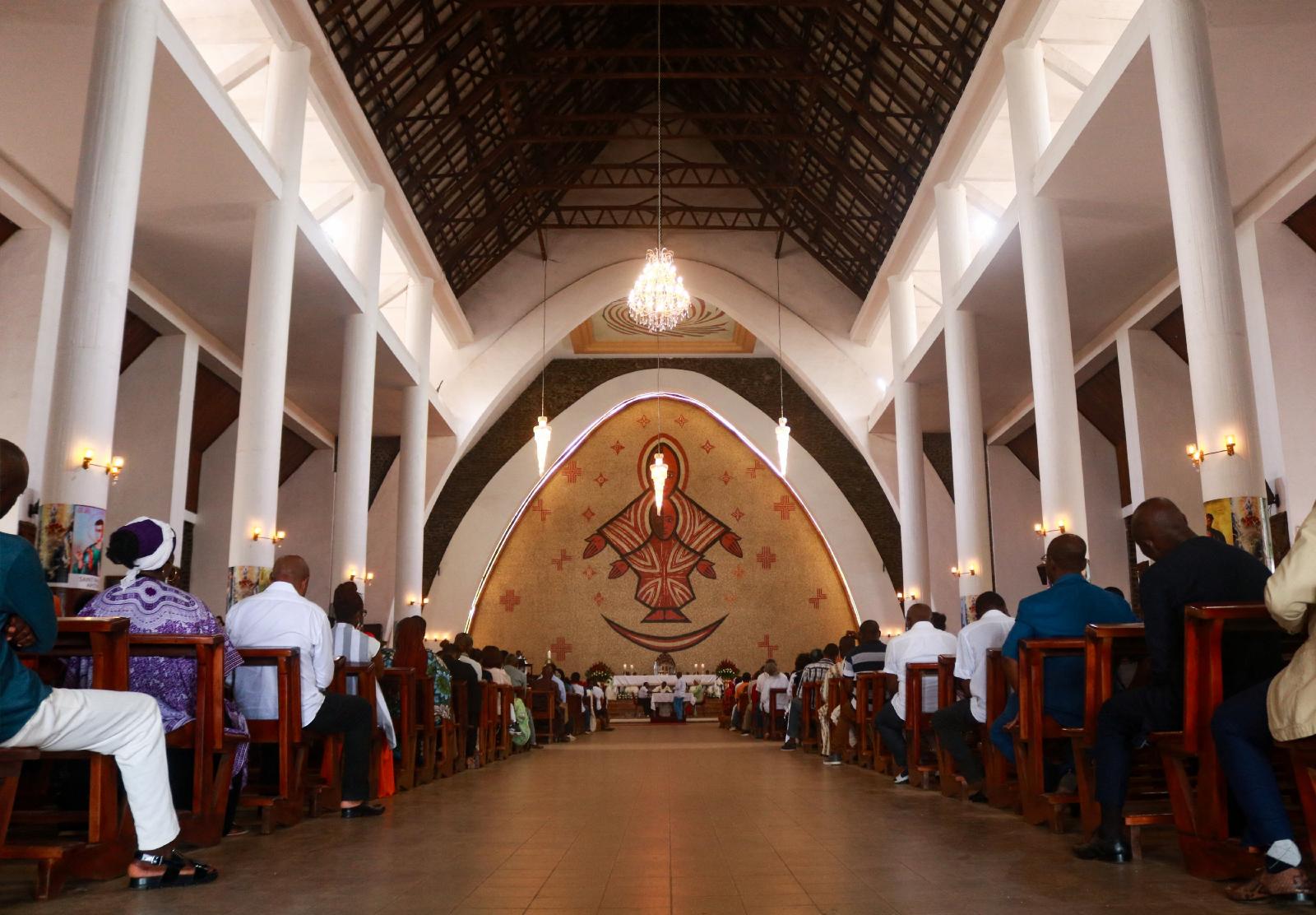
BAMENDA, Cameroon (OSV News) — Cameroon is abuzz with anticipation as the nation prepares to welcome the pontiff for the fourth time in the country’s history.
Pope Leo XIV is expected in the central African nation April 15-18, during which time he will meet with religious and political leaders, traditional chiefs, peacemakers, as well as the faithful in the country.
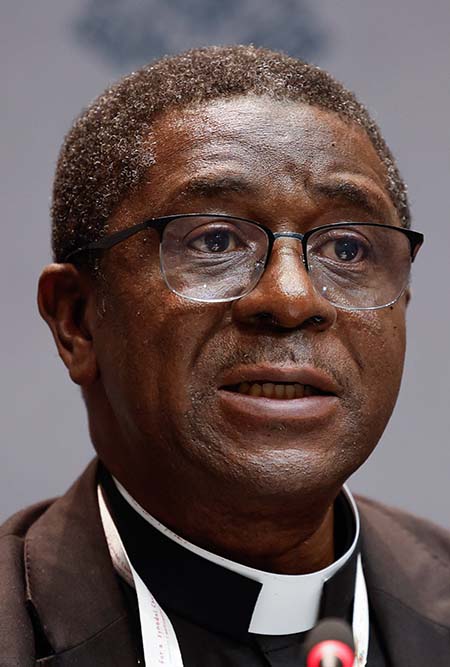
Beyond the logistics of renovated airports and multilingual choirs, Archbishop Andrew Nkea of Bamenda told OSV News the pope’s coming will bring about “spiritual revival” and marks a powerful “uniting factor” for a fractured nation.
Resulting in ‘tangible miracles’
Archbishop Nkea, who is also president of the country’s bishops’ conference, said that he believes Pope Leo’s presence will result in “tangible miracles,” especially with regard to peace and justice.
He pointed to recent infrastructure developments as early signs of transformation linked to the papal visit — including road repairs and the rapid rehabilitation of Bamenda’s airport that for the past eight years faced a major struggle to renovate.
“If that’s not a miracle for you, what is it?” the archbishop asked.
Sense of shared expectation
Archbishop Nkea also highlighted a rare sense of shared expectation across divisions, with diaspora communities, political figures and even separatist fighters expressing a common call for peace. According to the bishop, they all say with unified voice: “Welcome Holy Father. Help us to arrive at peace.”
“This is already a big miracle,” Archbishop Nkea repeated.
“Everybody in the town and in the bush, abroad and at home, we are speaking one language. For us, the pope is coming here first and foremost as a symbol of the oneness of the church,” Archbishop Nkea said.
The archbishop highlighted the vast tapestry of Cameroon’s cultural wealth as something the Holy Father will witness as he walks the streets of Yaoundé, Douala and Bamenda.
Unity in languages of songs
“If you look at the songs that are being prepared to receive the pope, in the airport in Bamenda, they will be singing songs in Bamun, they will be singing songs in French and English, and they will sing songs in Ewondo. Where else can you get this kind of unity apart from the Church?” the bishop asked.
Bamun and Ewondo are just two of the over 200 national languages spoken in Cameroon,besides the two official languages, English and French.
The itinerary for the visit was carefully chosen to address the specific needs of the country.
In Yaoundé, the country’s capital, the pontiff will meet with the political class and diplomatic community. In Douala, he will focus on the country’s youths struggling with rising unemployment and the growing temptation to move overseas in search for a better future. But it is the stop in Bamenda that carries the most emotional weight.
A ‘lot of suffering’ for 9 years
“The Bamenda ecclesiastical province has gone through a lot of suffering for the past nine years,” Archbishop Nkea told OSV News.
The province shares a border with the troubled English-speaking northwest and southwest regions.
The two regions erupted in crisis in 2016. It all started with strikes by teachers and lawyers in both regions, who were protesting the use of French in Anglo-Saxon schools and courts.
The government responded with lethal force. This resulted in the growth of a separatist fringe that took up arms against the state in an effort to secede from the rest of the country and create a new nation called Ambazonia.
6,500 killed, over 500,000 displaced
Ten years of fighting have left 6,500 people dead and displaced over 500,000. According to the U.N., 1.8 million of the Anglophone regions’ 4 million people need humanitarian support, while about 250,000 children are affected by school closures because of the conflict.
Archbishop Nkea told OSV News the pope chose to “pay a visit to the suffering people of the northwest and southwest regions.”
“We’re expecting the Holy Father to speak to us about reconciliation. We’re expecting the Holy Father to talk to us about loving one another. We’re expecting the Holy Father to speak to us about justice among our peoples,” he explained.
The archbishop emphasized that while the pope is a pastor, he can offer “humble suggestions” on how Cameroon could resolve the crisis.
Church’s message of radical forgiveness
The message the church is preparing to share, however, is one of radical forgiveness.
Archbishop Nkea criticized the “eye for an eye” mentality often propagated on social media, quoting Jesus’ teaching to turn the other cheek.
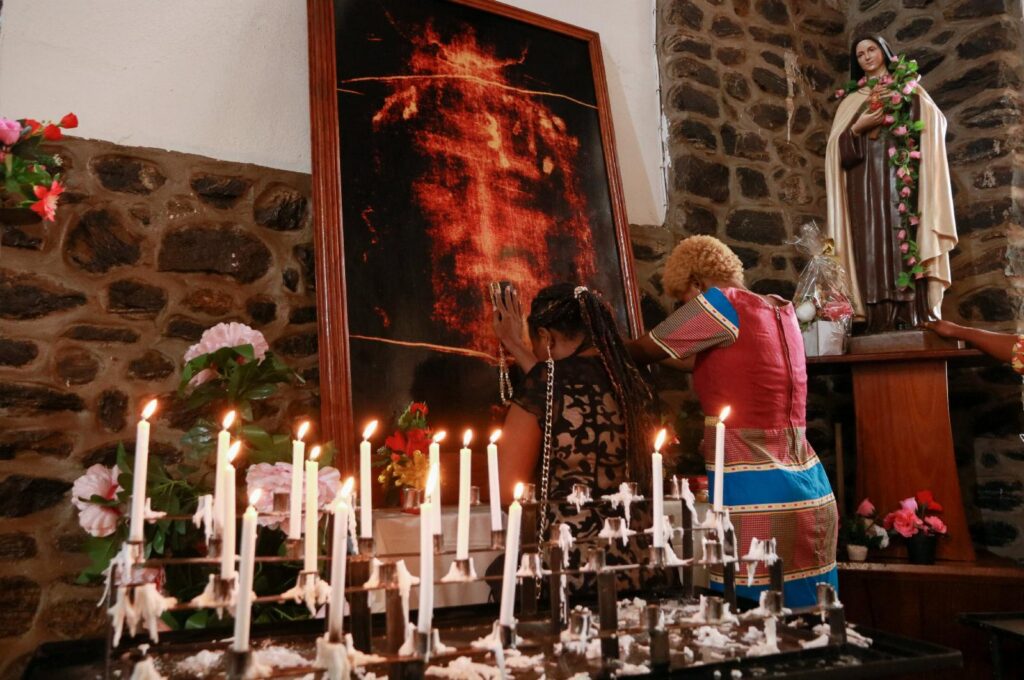
“If you want to stop a war, you don’t count corpses,” the archbishop said as he railed against the spirit of vengeance in communities.
“If Cameroonians are not ready to forgive, then they are wasting their time,” he said. “That is the only way we can have peace.”
Desire for reconciliation
To demonstrate this desire for reconciliation, the archbishop has curated a diverse group of 1,200 people to meet the pope at the cathedral of Bamenda. The list includes Protestant and Muslim leaders, traditional chiefs, bike riders who have collaborated for peace, internally displaced persons and representatives of the United Nations.
“We don’t want anything political about that meeting,” Archbishop Nkea explained.
“Our interest is in listening to what the pope has come to say to us, because he knows everything about this crisis.”
An overwhelming honor
On a personal level, the archbishop of Bamenda, who will join the pope in the papal plane and the popemobile, told OSV News it will be an honor he finds overwhelming.
“Receiving the pope at the national level, receiving the pope at the provincial level, receiving the pope in my cathedral and receiving the pope in my residence, what else can I ask God outside this?” he asked.
He confirmed that he intends to ask the Holy Father to declare the renovated Bamenda cathedral a minor basilica that would make it “one of the pope’s churches.”
Ngala Killian Chimtom writes for OSV News from Bamenda, Cameroon.
