

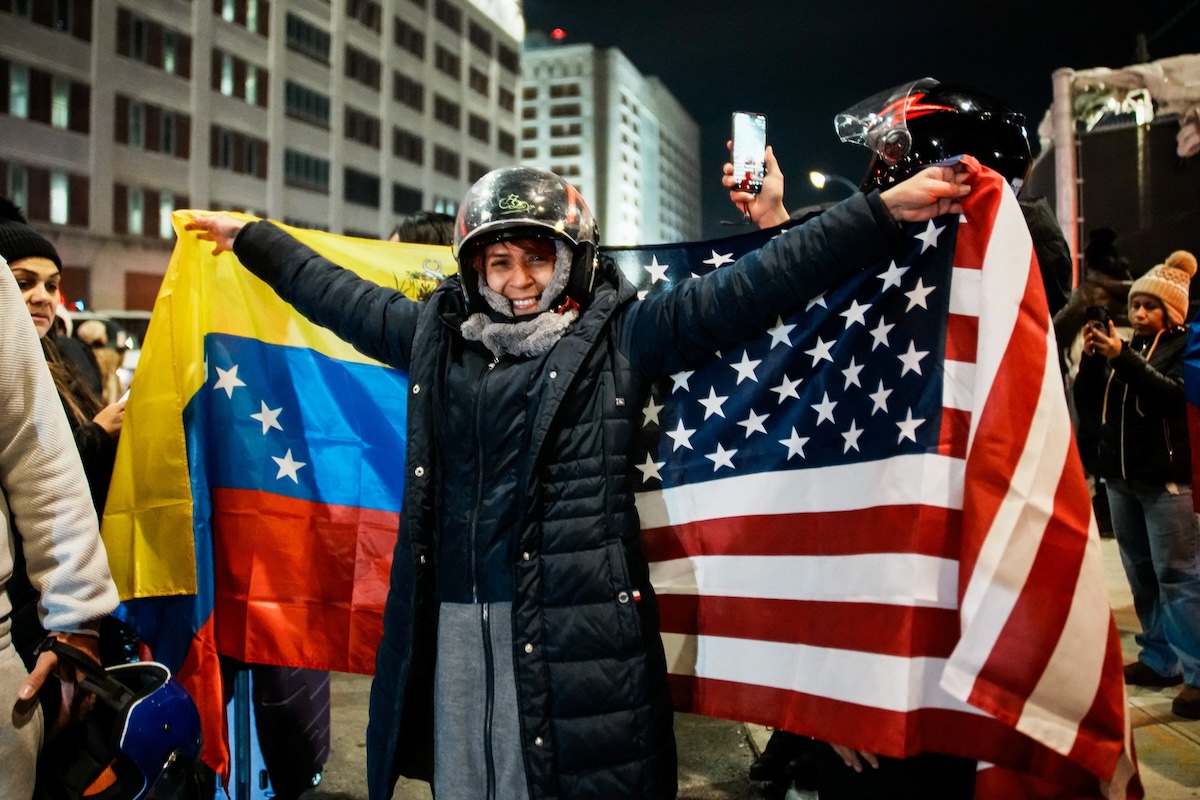
(OSV News) — As deposed Venezuelan President Nicolás Maduro made his first appearance Jan. 5 in a New York courtroom on narco-terrorism charges after the Trump administration carried out what President Donald Trump called on social media “a large scale strike against Venezuela,” uncertainty about immigration status lingered for some Venezuelan migrants in the U.S.
Astrid Liden, communications officer for the Hope Border Institute, a group that works to apply the perspective of Catholic social teaching in policy and practice to the U.S.-Mexico border region, and a Venezuelan-American, told OSV News, “In recent years, hundreds of thousands of Venezuelans have sought protection in the United States, many passing through the US-Mexico border. Millions of Venezuelans live abroad due to the situation in Venezuela, and we share their hope in the end of the reign of Maduro, whose rule led to the displacement of so many.”
However, she added, “The recent end of TPS for Venezuelans by the Trump administration sets a very dangerous precedent and puts hundreds of thousands of Venezuelans at risk.”
Maduro arraigned in Manhattan court
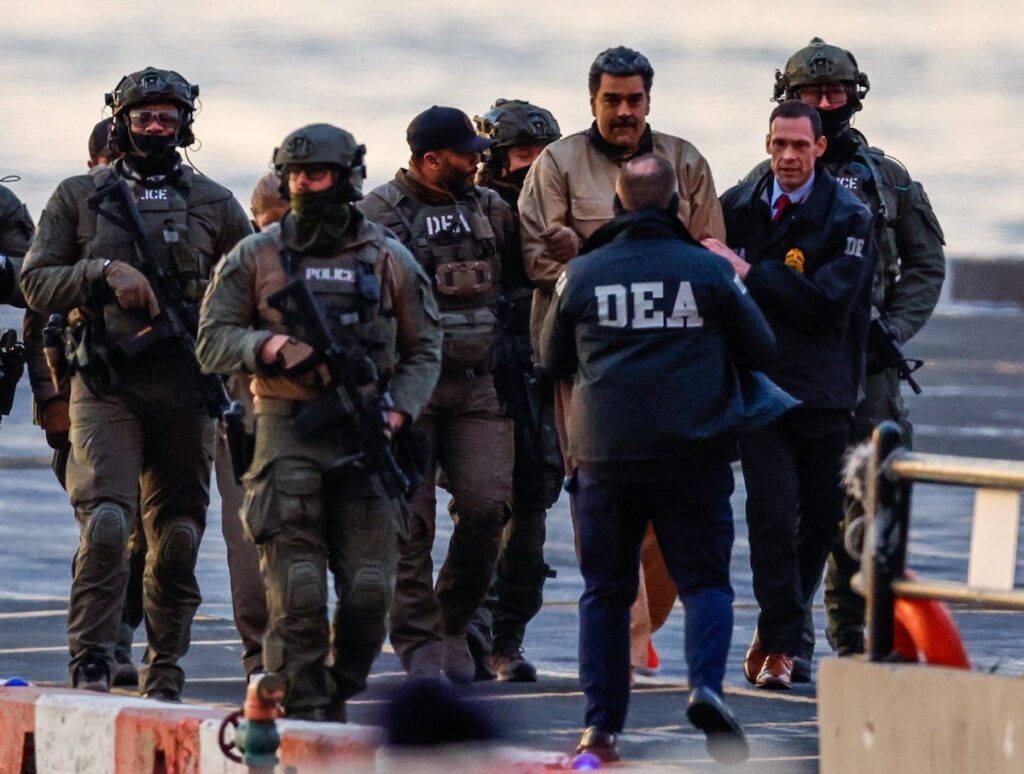
Maduro was arraigned in a Manhattan federal court by Judge Alvin Hellerstein. Cameras are prohibited in most federal court proceedings, but according to reporters, Hellerstein said, “It’s my job to assure this is a fair trial.”
At the brief hearing, Maduro said through an interpreter that he was “innocent” and “still president of my country.”
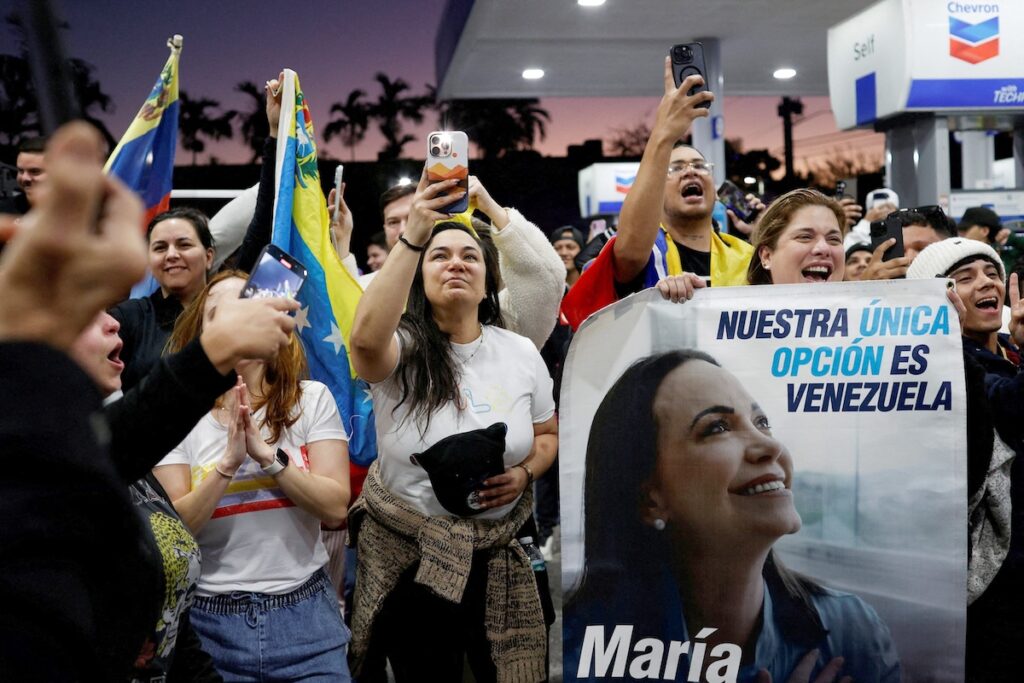
Maduro’s regime was seen as illegitimate by many countries around the world, including the European Union. Venezuela’s opposition demonstrated through collecting digitized voter tallies that their candidate, Edmundo González Urrutia, won the 2024 presidential election with 67% of the vote; but Maduro refused to cede power. The Biden administration, which recognized González as Venezuela’s rightful president-elect, in January 2025 said Maduro “clearly lost the 2024 presidential election and has no right to claim the presidency.”
World leaders concerned with international law
However, world leaders also expressed concern that the U.S. military action to remove Maduro flouted international law.
At an emergency meeting of the United Nations Security Council just prior to Maduro’s hearing, U.N. Secretary General Antonio Guterres said he was “deeply concerned that rules of international law have not been respected,” while U.S. ambassador Mike Waltz called the action a “surgical law enforcement operation.”
The previous day, Pope Leo XIV expressed “deep concern” following Maduro’s capture.
“This must guarantee the country’s sovereignty, ensure the rule of law enshrined in the Constitution, respect the human and civil rights of all, and work to build together a serene future of collaboration, stability, and harmony, with special attention to the poorest who suffer due to the difficult economic situation,” he said after reciting the Angelus prayer with pilgrims gathered in St. Peter’s Square Jan. 4.
Temporary Protected Status uncertainty continues for Venezuelans in US
At a Jan. 3 press conference, Trump said the U.S. will “run the country” of Venezuela “until such time as we can do a safe, proper and judicious transition,” but questions remained about that process.
But the action also highlighted uncertainty for some Venezuelans in the U.S.
In 2025, the Trump administration ended Temporary Protected Status for about 600,000 Venezuelans living in the U.S., stripping their legal status to remain in the U.S. TPS status is sometimes granted to countries where natural disasters or civil unrest have fueled displacement.
Asked during an appearance on “Fox News Sunday” Jan. 4 whether Venezuelans in the U.S. who were previously under TPS can apply for asylum, Homeland Security Secretary Kristi Noem suggested they can do so, but did not directly address whether deportations to that country would continue.
“Every individual that was under TPS has the opportunity to apply for refugee status and that evaluation will go forward,” Noem said, without elaborating on how those evaluations would be made.
In a comment on the subject at his press conference, Trump said, “Frankly, some wanna stay and some probably wanna go back.”
Catholic experts speak on TPS situation, legal proceedings against Maduro
Catholic immigration advocates previously urged the Trump administration to leave TPS status in place for countries including Venezuela in part because of its political instability.
“The dismantling of a corrupt autocratic regime does not occur simply through the removal of its head — we know this well,” Liden said. “This protection in the United States must be maintained until voluntary and safe return truly becomes a viable option. As Pope Leo XIV has said, we must ensure that ‘the good of the beloved Venezuelan people’ — both those in the country and those abroad — remains enshrined. We must see Venezuelans, including the leaders elected in 2024, involved in a process of democratic transition for there to be a country where Venezuelans can one day return to.”
J. Kevin Appleby, senior fellow for policy at the Center for Migration Studies in New York and the former director of migration policy for the USCCB, told OSV News, “TPS should be renewed at least until a democratically-elected government is in power, so that people feel they will not face persecution upon return.”
He added, “Moreover, the remittances that would flow to the country from half a million Venezuelans with TPS would help steady the country economically.”
In comments to reporters on Maduro’s hearing, Notre Dame Law School professor and organized crime expert Jimmy Gurulé, a former federal prosecutor and former assistant U.S. attorney general, said the hearing is likely the first part of what will be a lengthy legal process.
“While justice will ultimately be served in the Maduro case, it won’t be anytime soon,” he said.
A jury trial in the Maduro case, Gurulé said, “is unlikely to commence until sometime in 2027” in part because “the list of pretrial issues goes on and on.”
“Initially, defense attorneys will challenge the legality of the court’s jurisdiction over Maduro,” he said. “Defense counsel will argue that the U.S. military invasion of Venezuela and subsequent apprehension of Maduro not merely violated principles of international law, but constituted the crime of aggression.”
“Maduro’s defense attorneys will seek broad criminal discovery, which could include a request for the disclosure of classified evidence,” he added. He said that could involve lengthy litigation under the Classified Information Procedures Act, which “balances the government’s needs to protect secrets with a defendant’s rights to a fair trial.”
Kate Scanlon is a national reporter for OSV News covering Washington. Follow her on X @kgscanlon.
