


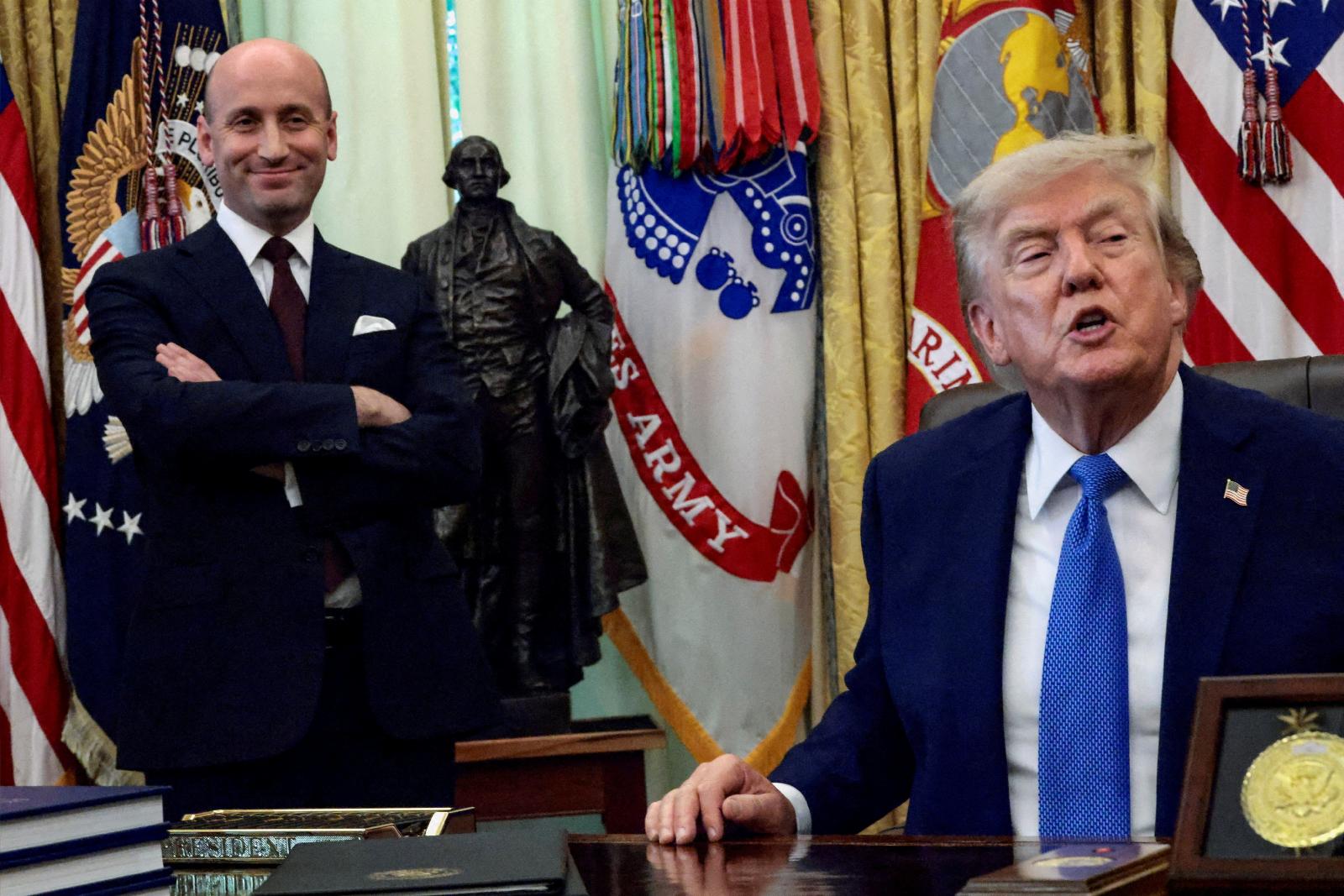
WASHINGTON (OSV News) — In the aftermath of Republicans losing control of both chambers of Congress in a Democratic landslide, President Donald Trump suggested he was open to working with Democrats on immigration policy, before his administration indicated its deportation policy would continue.
Initial exit polls of 2026 midterm voters conducted by NBC News in coordination with a group of other news organizations found 57% of voters said Trump’s immigration enforcement actions have gone too far.
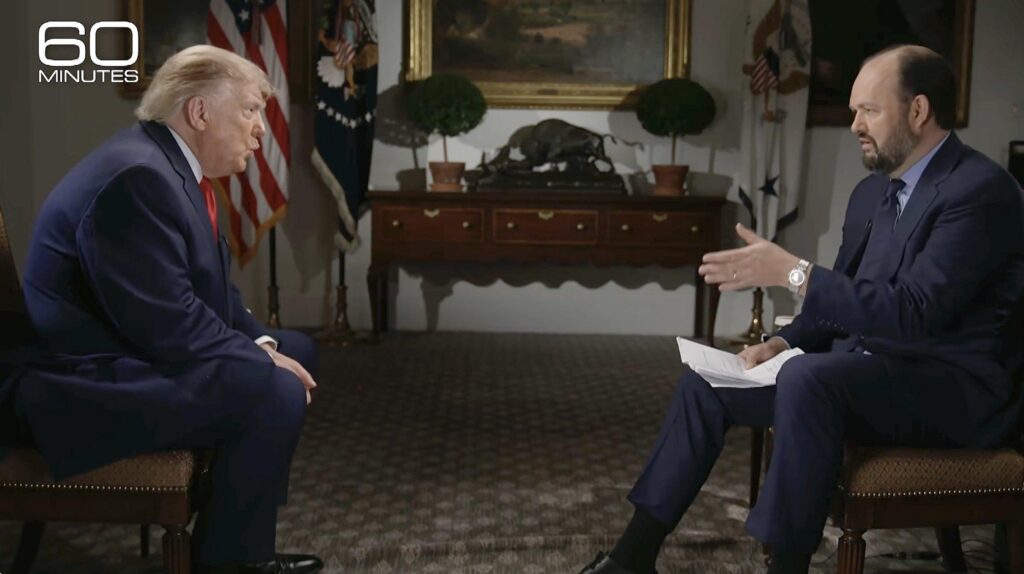
In an interview on the CBS News program “60 Minutes” that aired Nov. 8, Trump appeared to acknowledge that data, saying the results suggested his administration’s immigration crackdown was “too tough” and that he could “work something out” with Democrats when they take control of Congress.
“I think ultimately that hurt me,” Trump said on immigration, adding, “I think it both helped and hurt. I think I got an A+ for closing up the border. I get very high marks for getting the bad ones out. But I get hurt because we also took people that had good jobs, that — that created one violation, or breaking of the law, and that was that they came into the country illegally.”
Trump leans into hardline deportation policy and elevates its architects
The interview was taped on the morning of Nov. 6. Hours later, Trump named Stephen Miller, previously his deputy chief of staff and senior policy adviser, as his new White House chief of staff after the departure of Susie Wiles. Miller is seen as a key architect of many of the Trump administration’s immigration policies.
On Nov. 9, Trump told reporters at the White House, “There won’t be amnesty.”
“Somebody suggested, ‘Will there be amnesty?’ No, but — they came in. They knew the law,” he said.
Homeland Security Secretary Markwayne Mullin said in a Nov. 10 post on X, “Amnesty will NEVER be on the table.”
Kevin Appleby, senior fellow for policy and communications at the Center for Migration Studies of New York and the former director of migration policy for the U.S. Conference of Catholic Bishops, told OSV News, “It’s important to note what policies the administration are implementing, not what the president says, to measure where they are on immigration.”
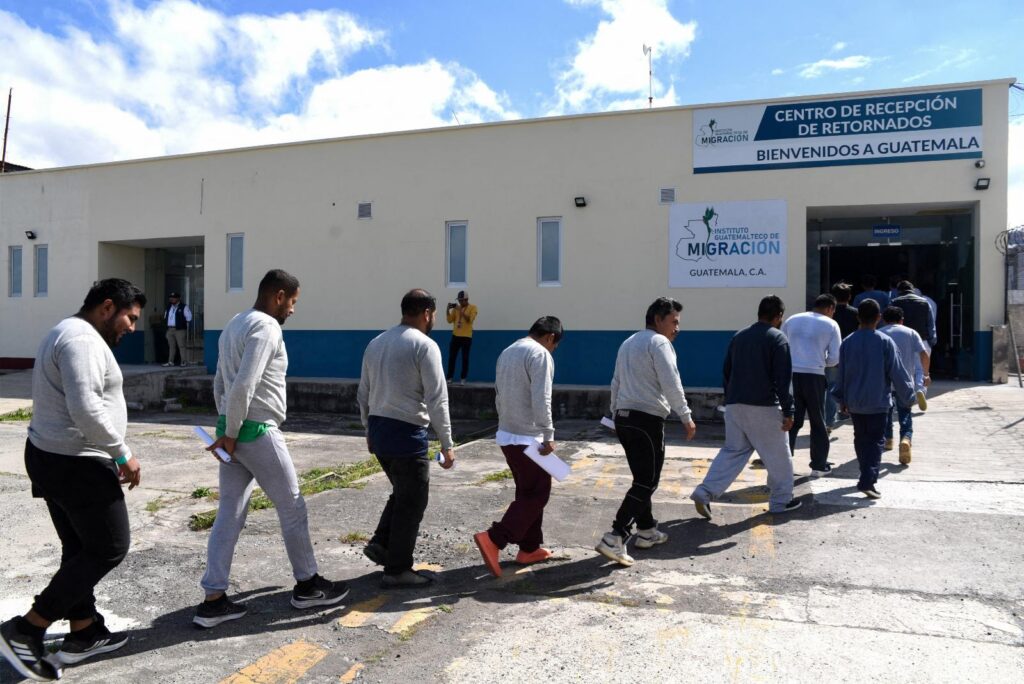
According to the Migration Policy Institute’s “Fact Sheet” report from October, domestic immigration-related arrests rose from 8,000 per month in the first three months of Trump’s term to 19,000 per month from May through July 2026. Of those deported by U.S. Immigration and Customs Enforcement, or ICE, 61% had been in the U.S. at least two years and 15% had lived in the U.S. 10 years or more. Of these immigrants, 71% had never been convicted of a crime, and 61% of those in the U.S. 10 years or more had no criminal convictions.
Catholics impacted directly by mass deportation
A joint report issued last year by the USCCB’s Migration and Refugee Services, the Center for the Study of Global Christianity at Gordon-Conwell Theological Seminary, and World Relief, found that more than 10 million Christians living in the U.S. would be vulnerable to deportation under Trump administration policies implemented in 2025. A majority of them — 61% — were Catholic followed by a sizable number of evangelicals.
It also found more than 1 in 6 Catholics are either vulnerable to deportation themselves or could see a family member deported, barring law or policy changes.
“I don’t think there can be a real bipartisan conversation on immigration reform until the administration shows it has changed its approach and moderated its enforcement tactics, consistent with the protection of human dignity,” Appleby said.
Catholic social teaching on immigration balances three interrelated principles: the right of persons to migrate in order to sustain their lives and those of their families, the right of a country to regulate its borders and control immigration, and a nation’s duty to regulate its borders with justice and mercy.
Church’s voice needed in the immigration discourse
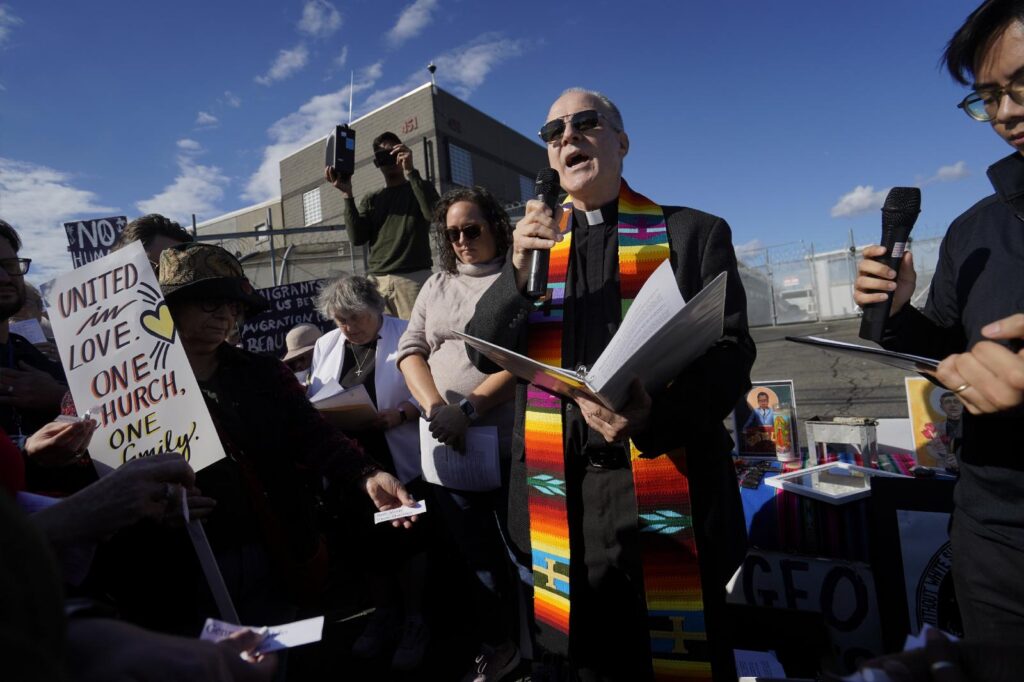
Dylan Corbett, executive director of the Hope Border Institute, a group that works to apply the perspective of Catholic social teaching in policy and practice to the U.S.-Mexico border region, told OSV News, “Even President Trump recognizes that an exclusively enforcement-driven approach to immigration remains fundamentally counterproductive and unsustainable.”
“He now possesses a pivotal opportunity to foster broad consensus by pairing meaningful legalization with addressing our nation’s critical labor needs — expanding lawful pathways for Dreamers, caregivers, and long-standing community members who have contributed to the fabric of our society for years, if not decades,” Corbett said. “A policy centered on mass deportation is not only morally indefensible and economically harmful, but also a demonstrable political liability. Now is the defining moment to champion substantive reform and for the Church to uphold the moral imperative at the heart of this discourse.”
Catholics, Appleby said, “should certainly engage the debate, but not be caught up in a race to the bottom, where we wind up with legislation which is more damaging than beneficial.”
“In other words, we must enter the dialogue with eyes wide open and not compromise our principles,” he said. “I expect that the next two years will set the parameters for the reform debate, which will happen under a new administration.”

US bishops call for Haitians to be shielded from mass deportation
Among the Trump administration immigration policies the U.S. bishops have criticized is its termination of Temporary Protected Status for Haiti earlier this year and subsequent mass deportations of Haitian nationals.
Temporary Protected Status grants the U.S. government the power to shield eligible migrants from deportation if they are from countries experiencing dangerous conditions such as war, disaster, or other unrest. The Trump administration has sought to end TPS for several countries, notably Haiti, which is racked by extreme levels of gang violence, but it also recently granted an extension to migrants from El Salvador.
In a Nov. 10 letter to members of the U.S. Senate, Bishop Brendan J. Cahill of Joliet, Illinois, chair of the USCCB’s Committee on Migration, and Bishop A. Elias Zaidan of the Maronite Eparchy of Our Lady of Lebanon, chair of its Committee on International Justice and Peace, reiterated the conference’s previous call for the extension of Haiti’s TPS status, writing, “We pray that, in its remaining weeks, the current Congress, along with the incoming 120th Congress, will devote more attention to the situation facing both Haitian families in the United States, especially those who have recently been stripped of their legal protections, and the human tragedies unfolding in Haiti itself.”
Kate Scanlon is a national reporter for OSV News covering Washington. Follow her on X @kgscanlon.
