


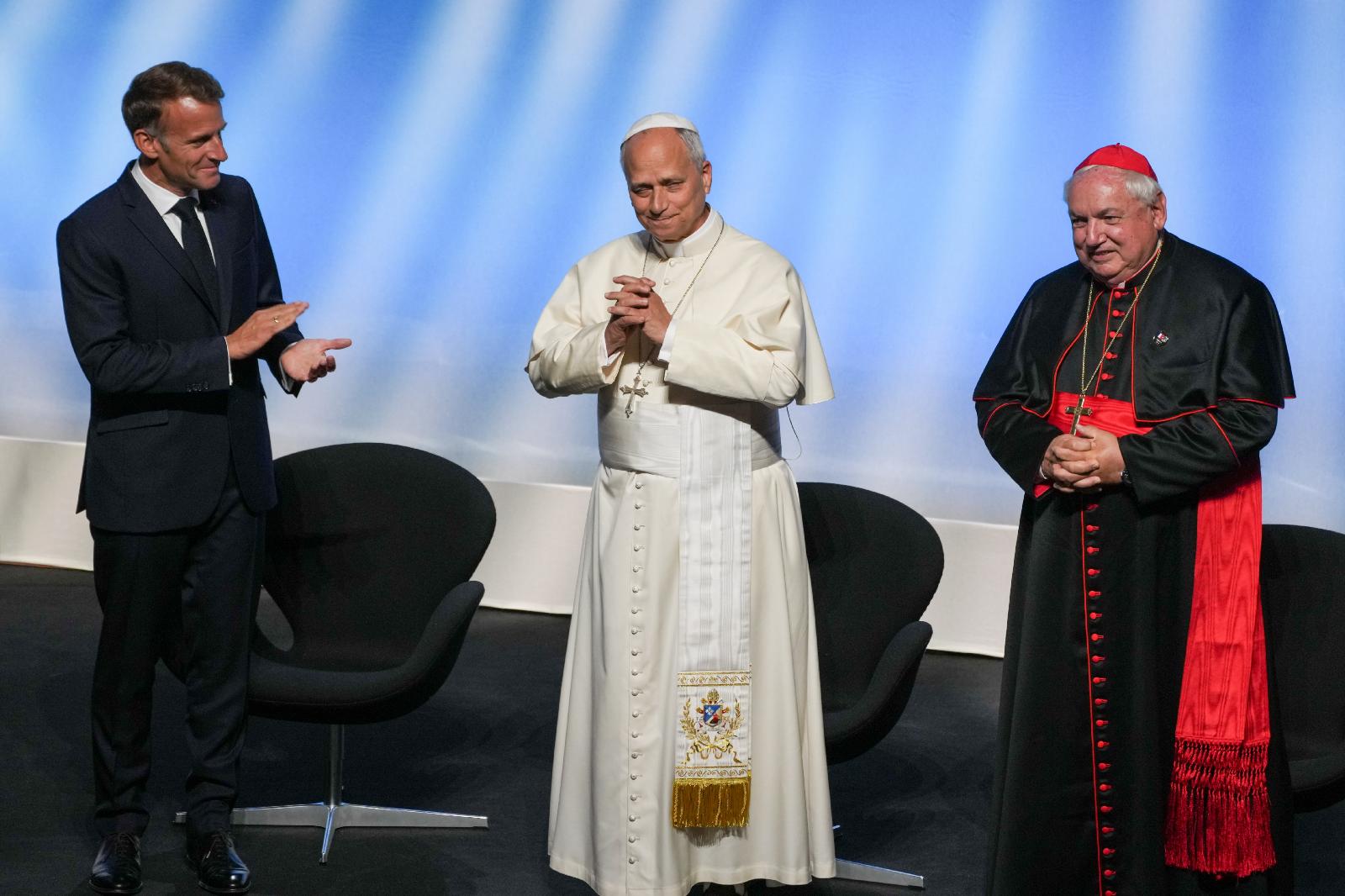
METZ, France (CNS) — In a French city that changed hands between France and Germany through two world wars, Pope Leo XIV used the final day of his apostolic journey to France to call on Europe to resist a return to nationalism and conflict and recommit itself to cooperation, dialogue and peace.
Speaking Sept. 28 in Metz, a city whose streets and architecture still bear the marks of its fraught Franco-German history, the pope repeatedly invoked Robert Schuman, the French politician and devout Catholic whose efforts to reconcile France and Germany after World War II helped lay the foundations of the European Union.
Pope Leo called Schuman a clear-sighted leader who understood the need to overcome opposition between cultural identities and build multilateral institutions after a war “which showed the depths of the evil that human beings are capable of when they believe that nothing stands in the way of their exercise of power.”
“Today, sadly, war has returned, even to Europe: a new ‘senseless slaughter,’ claiming countless civilian lives every day,” the pope said in a speech to French President Emmanuel Macron and political and clerical leaders at the Robert Schuman Conference Center Sept. 28.
Metz and the roots of European reconciliation
Metz is particularly symbolic of the reconciliation Pope Leo held up. Annexed by Germany after the Franco-Prussian War, returned to France after World War I and annexed again by Nazi Germany during World War II, the city today sits near the heart of a region where national borders once divided populations repeatedly through war.
In an address to Pope Leo in Metz, French President Emmanuel Macron described the region of Lorraine as a land “wounded by history, disputed, conquered and reconquered,” but also the place where Franco-German reconciliation was built and became a cornerstone of European integration.
Schuman’s own life reflected that history. Born a German citizen in Luxembourg, he became French after World War I and established himself as a lawyer in Metz before representing the Moselle region in Parliament. After World War II, he helped devise a plan to place French and German coal and steel production under common control, an effort intended to discourage another war between the two countries.
More than seven decades later, Pope Leo argued that the institutions created out of that experience remain an antidote to the desire for domination.
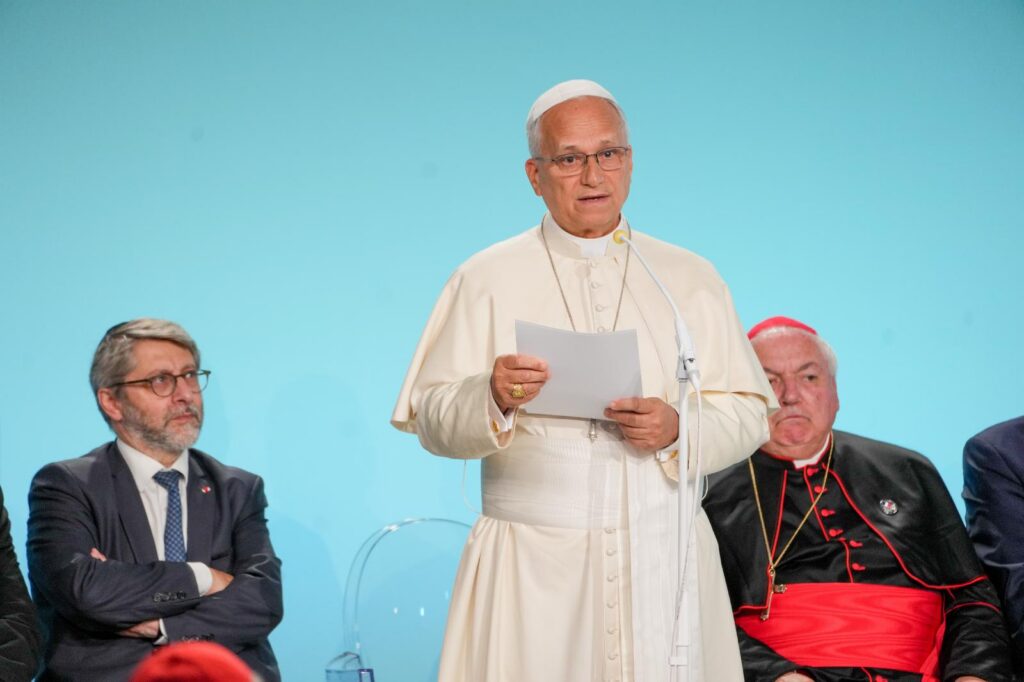
International law and multilateral cooperation offer another path, the pope said, speaking in French, especially at a time when relations between people and nations are becoming increasingly “barbares,” that is, “barbaric” or “uncivilized.” The French president agreed, saying “war has returned to our continent and our Europe is being shaken by the return of empires.”
Today, people “boast of lies and deceit,” the pope said, but Europe’s experience has demonstrated that divergent interests do not have to end in conflict.
“Europe can help to break this cycle through the respect for others that it has learned to cultivate and preserve,” he said.
The pope also argued that Christianity helped provide the moral foundation upon which that European project was built, saying Europe owes a “debt to Christianity.”
Christianity’s emphasis on the dignity of the person, work and responsibility, he said, helped make possible a culture of dialogue capable of sustaining societies and working “for peace and a reconciled world.”
For Guy Bassot, a young French Catholic who attended a prayer vigil with Pope Leo at the Stade de France Sept. 25, the pope’s message to political leaders is a logical extension of the Christian obligation to turn toward and welcome one’s neighbor.
“For that unity, we have to make an effort, and above all our political leaders have to make the effort to lead and to put in place a method so that living together can work well,” he told Catholic News Service.
Reconciliation across faiths and among individuals
But Pope Leo’s appeal for reconciliation in Metz extended beyond relations between governments.
During an interreligious meeting at the Robert Schuman Conference Center, he said religious discourse must itself work toward the “disarmament” of hearts and words.
“Indeed, to invoke God’s name in order to justify violence or oppression is to profane that name,” he said. “Nothing that disfigures human dignity can claim to be inspired by God.”
Unity, the pope stressed, does not require eliminating differences.
“Our shared responsibility as men and women of faith is to bear witness that, beyond all borders, it is always possible to meet one another, forge friendships, and seek peace,” he said.
In the face of injustice and division, Pope Leo said in his final homily in France at Metz’s Cathedral of St. Stephen that “reconciliation is only possible when one has the courage to break the chains of resentment.”
Humanity’s path forward is ultimately “a love that cares for others and seeks to give trust regardless of the circumstances, even when confronted with the most difficult behavior to accept,” he said.
