


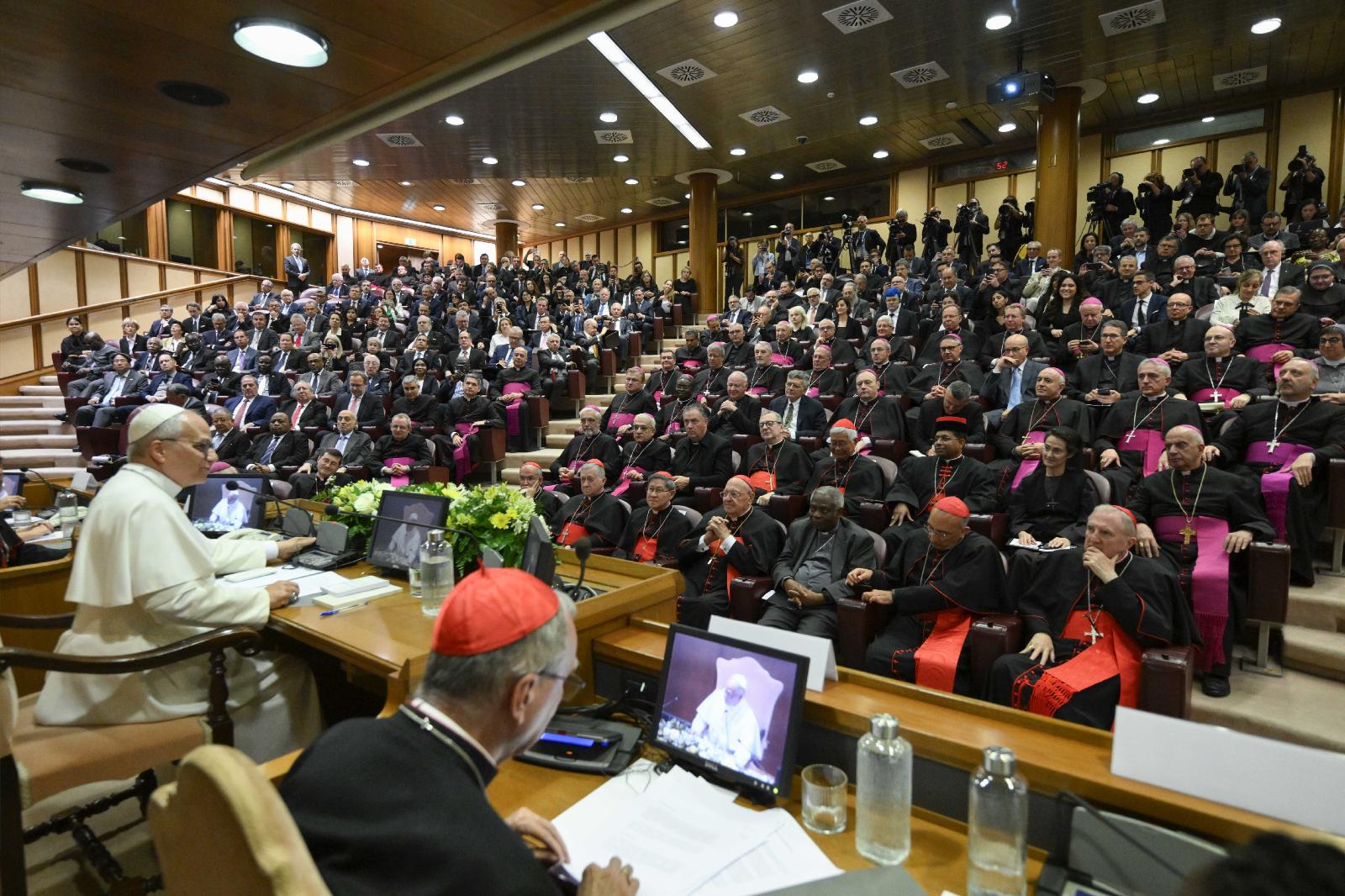
VATICAN CITY (OSV News) — Pope Leo XIV called for vigilance as he spoke at the Vatican press conference May 25 to present his first encyclical on artificial intelligence, saying his conversations with industry leaders — including “very troubling voices” who warned of autonomous weapons systems beyond effective human governance — had led him to the conviction that AI “needs to be disarmed.”
Speaking immediately after the promulgation of “Magnifica Humanitas: On Safeguarding the Human Person in the Time of Artificial Intelligence,” the pope explained that he had consulted with scientists, engineers, policymakers, educators and parents as he was working on the encyclical.
“‘Magnifica Humanitas’ was born from listening,” he said in Vatican City’s Synod Hall.
Pope Leo described how in the past year he had listened to enthusiastic tech leaders, as well as “parents and teachers who are deeply concerned for the future of younger generations.”
“Other, very troubling voices have also reached me about increasingly autonomous weapons systems practically beyond any human reach to govern them effectively,” he said.
The pope added that he had also heard troubling accounts of algorithms that can block access to healthcare, employment and security on the basis of “data tainted by prejudice and injustice.”
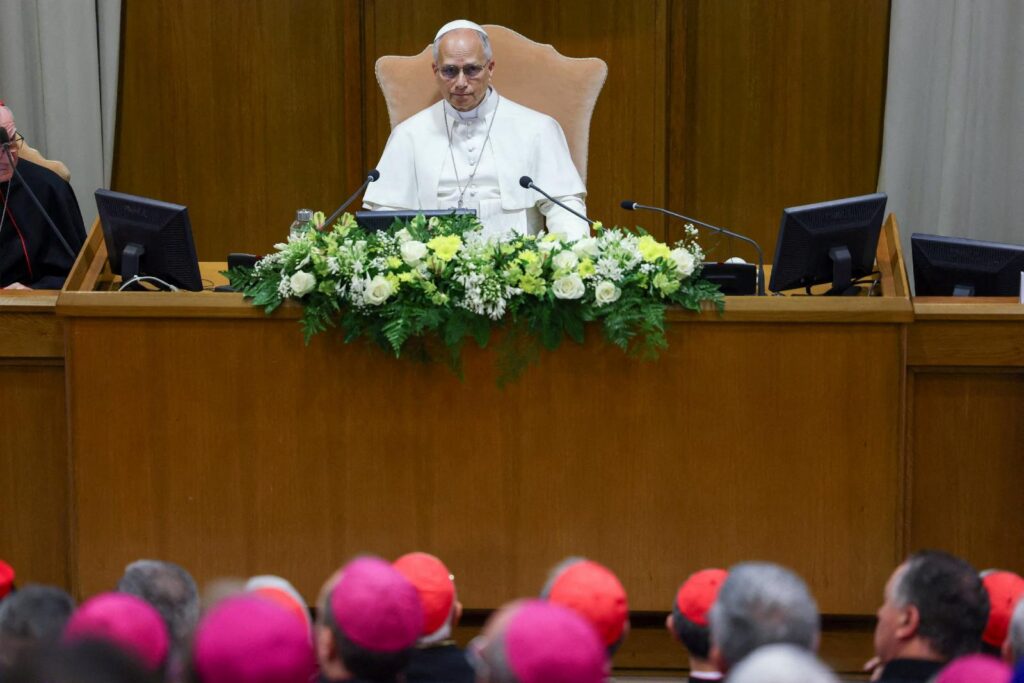
“From this listening matured a disturbing conviction expressed in ‘Magnifica Humanitas’: Artificial intelligence needs to be disarmed,” Pope Leo said.
Need to ‘curb the technological arms race’
The pope compared AI to nuclear energy, saying both must serve the common good rather than become instruments of domination. He invoked St. Paul’s first letter to the Thessalonians, “Let us not sleep as others do, but let us keep awake,” as a call for vigilance.
Pope Leo dedicated the final chapter of “Magnifica Humanitas” to AI in warfare and the need for “the most rigorous ethical constraints” and proactive peacebuilding “to curb the technological arms race.” In that chapter, Pope Leo wrote that “today, more than ever, without prejudice to the right to self-defense in the strictest sense, it is important to reaffirm that the ‘just war’ theory, which has all too often been used to justify any kind of war, is now outdated.”
The pope’s presence at the Vatican press conference presenting the encyclical was a novelty, as was the presence of the AI tech executive Christopher Olah, co-founder of Anthropic, the AI research and development firm behind the Claude AI assistant.
Olah warned that “there is a real possibility that AI will displace human labor at very large scale.” He underlined the importance of having people without the financial incentives of tech executives pay close attention to AI development as “earnest, thoughtful, critics.”
The pope thanked Olah for accepting the Vatican’s invitation to take part in the launch of the encyclical.
“What a great sign of hope that, with our differences, we can listen to one another,” Pope Leo said, adding that such an exchange “clearly bespeaks the gravity of the moment.”
A pivotal choice
Pope Leo noted that disarming AI is not enough, but “we must build.” He highlighted the opening line from his encyclical in which he wrote that humanity today faces “a pivotal choice: either to construct a new Tower of Babel or to build the city in which God and humanity dwell together.”
At the press conference, the pope drew on his missionary experience in Peru, recalling the 2017 floods that devastated communities in the country’s north and the painstaking work of rebuilding that followed.
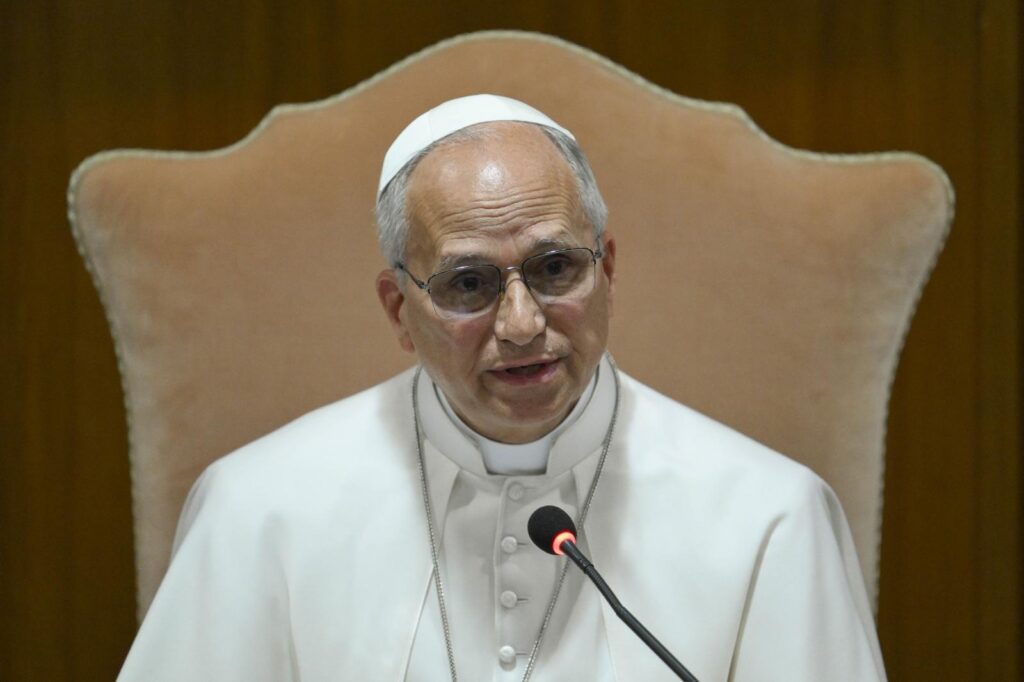
“Rebuilding does not mean simply replacing what has been destroyed,” the pope said. “It means repairing bonds, restoring trust, and reawakening hope in the future.”
He closed by inviting both Catholics and the broader public to engage seriously with the challenges AI presents, saying the Church brings “a wisdom concerning the human that our present time desperately needs.”
“Every person is unique and irreplaceable,” he said, “a free and intelligent subject with a conscience, capable of seeking God, serving one another, caring for our common home.”
Courtney Mares is Vatican editor for OSV News. Follow her on X @catholicourtney.
