


ROME (OSV News) — The Vatican’s International Theological Commission has warned that if humanity places total trust in technology in a “world ruled by machines,” it risks replacing the “living God” with a counterfeit “virtual God.”
The assessment came in a sweeping new document, published on March 4, examining how artificial intelligence, transhumanism and other technological developments can pose profound risks to human identity and dignity. The document seeks to propose a response rooted in Christian anthropology and the Gospel.
‘Quo vadis, humanitas?’
The 48-page document, titled, “Quo vadis, humanitas? Thinking about Christian anthropology in light of some scenarios for the future of humanity,” was published in Italian and Spanish after being approved by Pope Leo XIV. Its Latin title — meaning “Where are you going, humanity?” — echoes the question tradition holds was put to St. Peter before his crucifixion in Rome.
“At this juncture in the 21st century, the human family is faced with questions so radical that they threaten its very existence as we have known it,” the document says.
“The eruption of scientific and technical development unprecedented in the history of the planet must be accompanied by a corresponding growth in responsibility that directs progress toward the good of human beings, because they are today exposed to risks never imagined before.”
The document, written by a subcommission that met between 2022 and 2025 and approved unanimously at the ITC’s 2025 plenary session, was written to mark the 60th anniversary of “Gaudium et Spes,” the Second Vatican Council’s landmark Pastoral Constitution on the Church in the Modern World.
AI, social media and ‘digital spiritualism’
The commission devoted considerable attention to artificial intelligence, describing it as a technology capable of “replacing all computational and operational aspects of human intelligence” and warning that its rapid development sometimes proceeds “without the prudence born of the wise recognition that good always involves an appropriate limit and proportion.”
The document raised particular concerns about automated AI decision-making in sensitive areas, questioning the use of algorithms “when deciding whether or not to provide medical care, granting loans, or mortgages, or providing insurance, or when preparing criminal cases in court … or when deciding on military strikes.”
On social media and the profound changes in mass communications brought by the internet, the commission acknowledged benefits such as more direct and participatory information at the social and political levels, but warned that platforms too often produce contacts “without ties, functional relationships without real solidarity, in an infinite market of news and personal data, not always verifiable and often manipulated.”
Spiritual seekers and online searches
The document also warned that “spiritual seekers often place indiscriminate trust in online search engines, rendering human mediations of the sacred superfluous, replaced by digital technology,” up to and including requests for virtual blessings, exorcisms, and “digital spiritualism.”

Trends claiming to save humanity through technology ultimately impact “the relationship with the Mystery of the origin and ultimate purpose of human life,” the document states.
“When human beings reduce created nature (person, cosmos) to matter to be transformed, they no longer manifest the glory of the Creator, but replace Him. The same happens when the task of giving meaning to existence and indicating the ultimate purpose is identified with the implementation of technological potential,” it says.
“In this context, religious and spiritual traditions still have something essential and indispensable to contribute regarding the wisdom of living in relationship to God.”
Cosmetic surgery, biotechnology and the ‘cult of the body’
Advances in biotechnology, neuroscience, DNA mapping, pharmacology and robotics have brought changes to how human beings perceive and relate to their own bodies, the commission pointed out. While acknowledging the genuine health gains these advances have produced, the document warns against “the trends that reduce the body to biological material to be enhanced, transformed, and reshaped at will, with the dream of achieving living conditions that avoid pain, aging, and death.”
In the West in particular, the commission notes, advances in cosmetic surgery combined with hormone treatments and cognitive-enhancement drugs have fostered a widespread “cult of the body,” marked by “the frantic pursuit of a perfect figure, one that always stays fit, youthful, and beautiful.”
The document also discusses the concept of “human enhancement,” defined as the use of biomedical, genetic, pharmacological and cybernetic technologies to improve human physical, cognitive or sensory capabilities beyond normal levels. Its applications range from advanced prosthetics and electronic devices implanted in the body, to performance-enhancing drugs in sport, work and military contexts, to artificial fertilization techniques.
Transhumanism and posthumanism
The document’s sharpest critique is aimed at transhumanism and posthumanism, which it presents as cultural challenges to Christian anthropology.
Transhumanism, defined as the philosophical movement that believes that science and technology can and should overcome biological limitations including aging and death, is described as holding “a distinctly anthropocentric perspective, subscribing to an ideological and naively uncritical vision of scientific and technological progress.” Its utopian pursuit of individual immortality supported by technology, the document says, can be interpreted as “the existential expression of a presumption that is both naive and arrogant.”
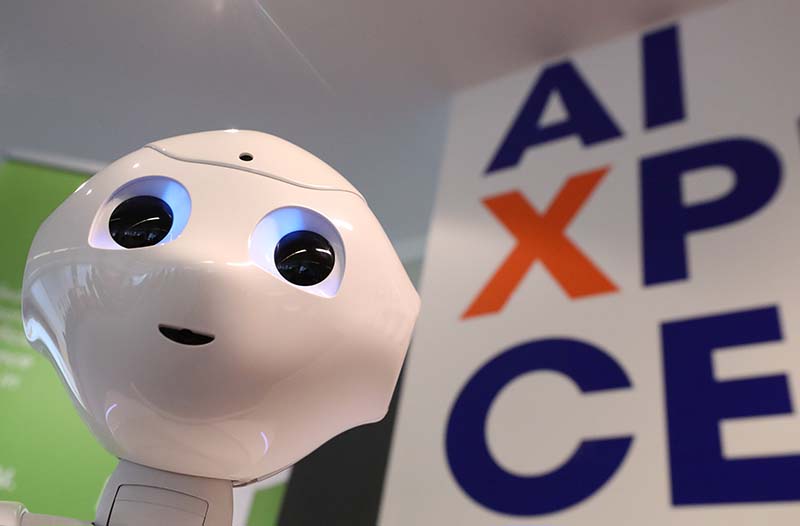
Posthumanism, which questions the distinctiveness of the human being and envisions a fluid boundary between human and machine, including a world with “cyborgs,” is characterized as “an existential expression of escape from reality, which stems from a radical devaluation of humanity.”
The document links both movements to what Pope Francis has called “neo-Gnosticism,” a mindset that seeks to free the person from the body, the cosmos, and history, reducing created nature to “matter to be transformed.”
“The dreams of transhumanism and posthumanism presume to simplify the tensions that run through human experience,” the commission writes. “But on closer inspection, this project proves to be dehumanizing.”
A Christian alternative: life as vocation
Against these trends, the commission proposes the concept of life as vocation — receiving oneself as a gift, sharing that gift with others and recognizing its transcendent source in God.
“The anthropological and cultural proposal of Christianity refers, today more than ever, to a conception of life as a vocation, which makes possible a human way of inhabiting time and space,” the document states, calling this vision “a prophetic judgment on the most disturbing aspects” of transhumanism and posthumanism.
“Man is not an atom lost in a random universe, but is a creature of God, to whom He wished to give an immortal soul and whom He has always loved,” it says.
The document insists that “the future of humanity is not decided in bioengineering laboratories, but in the ability to navigate the tensions of the present,” while remaining open to the mystery of the risen Christ.
The poor as a touchstone
The commission closes with a call to keep the poor at the center of any reckoning with technological development, warning that its benefits accrue disproportionately to the powerful and that the weakest risk becoming “collateral damage, swept away without mercy.”
Citing Pope Leo XIV, it affirms that Christ’s love shows “the dignity of every human being” and calls Christians to act as “humble sentinels” alert to the consequences new developments may hold for the lives of the least fortunate.
“What the human family needs,” the document says, “and within it every person who is searching for his or her true identity, is not an evolutionary leap that transcends the present condition, but rather a saving relationship that makes the adventure of self-realization fully meaningful and beautiful. In this sense, we speak of humanity saved, that is, respected as a gift from God and not replaced.”
“The encounter with the humanity of Jesus Christ illuminates our humanity and reveals us to ourselves,” it adds. “First of all, it restores to us the sense of our freedom in the face of the Creator’s call, precisely as He fulfills our vocation to participate in the eschatological fullness of His risen life.”
Courtney Mares is Vatican editor for OSV News. Follow her on X @catholicourtney.
