


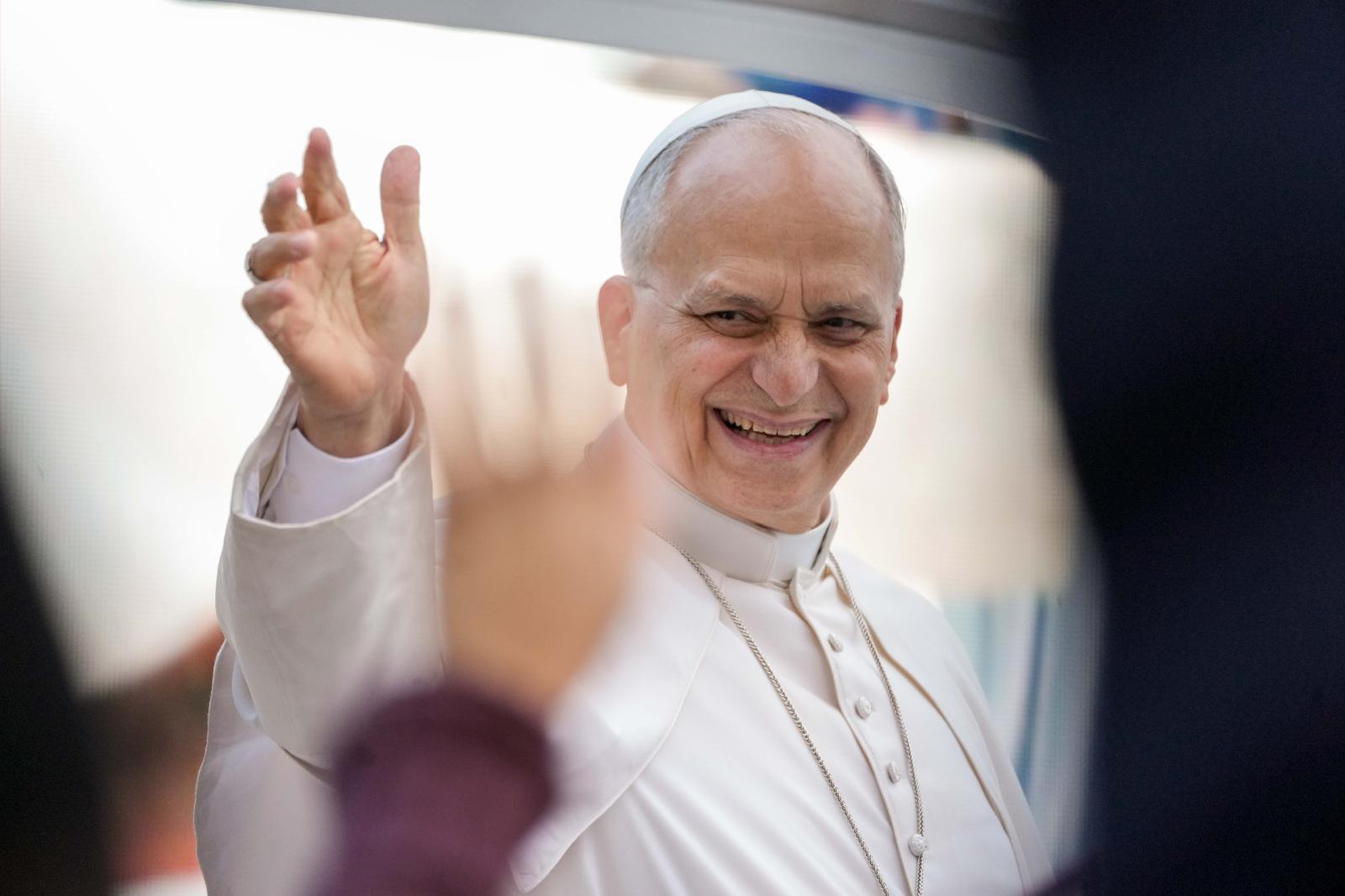
(OSV News) — Doctors have confirmed Pope Leo XIV needs “no further treatment” following his Oct. 13 surgery for lung cancer.
In an Oct. 21 message, the Holy See Press Office announced that Drs. Luigi Carbone and Stefano Margaritora said “the final histological examinations and molecular biology tests on the material removed” during the surgery confirmed the tumor was a “localized lung adenocarcinoma.”
The doctors said that “subsequent oncological evaluation confirmed that no further treatment is necessary.”
“This is really good news,” Dr. Nirmal Veeramachaneni, professor of cardiothoracic surgery at St. Louis University School of Medicine, told OSV News moments after the Vatican released the papal health update.
Although not part of the pope’s care team, Veeramachaneni — an oncology expert who also serves as medical director for lung cancer screening at SSM Health — said that based on his experience and the Holy See statement, Pope Leo’s prognosis seemed to be “excellent.”
Now, said Veeramachaneni, the pope will simply need “long-term radiographic follow-up to look for recurrence.”
Follow-up usually entails regular CT scans
Typically, he said, that entails a regular CT (computed tomography) scan, which uses multiple X-ray images to create a 3D composite of bones, organs and tissue.
He estimated the scanning intervals to range from “every six months” to “once a year for several years.”
Based on his own clinical and research experience, Veeramachaneni said the Vatican’s news was “actually what I was expecting” and “the most likely scenario.”
Veeramachaneni said that “the fact that they (Pope Leo’s medical team) proceeded straight to surgery told me a lot.”
“If they were concerned about the imaging, or if they thought this was a more advanced state of the disease, modern care would have meant chemotherapy up front,” he said.
The Vatican has not disclosed whether Pope Leo received any presurgical, or “neoadjuvant,” cancer treatment before entering Rome’s Gemelli Hospital Oct. 13 and undergoing a 90-minute video-assisted surgery that same day.
Pope underwent several diagnostic procedures prior to surgery
Vatican spokesman Matteo Bruni said Oct. 14 that prior to surgery, Pope Leo had undergone several diagnostic procedures — a robotic bronchoscopy with biopsy, a chest CT scan with contrast and a PET scan — which indicated the need for the operation.
The pope announced after leading the Oct. 11 Angelus prayer in St. Peter’s Square that doctors had found a “small, localized nodule” in his lung and had recommended intervention.
Following the video-assisted surgery — which saw the removal of the lower lobe of the pope’s right lung — Carbone, the pope’s personal physician, and Margaritora, chief thoracic surgeon at Gemelli, “confirmed the diagnosis of lung adenocarcinoma, as suspected by the preoperative tests.”
Veeramachaneni noted that cancer was at an “early stage.”
Chemotherapy would normally be advised “if this tumor was greater than four centimeters in size or the lymph nodes were involved,” he said.
“As part of a standard oncological examination, the surgeon would have either sampled or dissected out the lymph nodes that hug the central airway, as well as taking out the lymph nodes in the lobe itself,” he said.
Adenocarcinomas begin in glands lining body’s organs
Adenocarcinomas are cancers that begin in the glands lining the body’s organs, according to the Cleveland Clinic.
Lung adenocarcinoma is “the most common subtype of lung cancer,” and “falls under the non-small cell category,” said Dr. Stephen Liu, associate professor of medicine, director of thoracic oncology and director of developmental therapeutics at Georgetown University’s Lombardi Comprehensive Cancer Center.
Almost 9 out of 10 lung cancers are of the non-small cell type, growing more slowly than its small cell counterpart, which typically attacks the airways and spreads rapidly, according to the National Foundation for Cancer Research.
Liu added that lung adenocarcinoma is also “the most common” type of lung cancer “in people without a strong smoking history.”
Gina Christian is a multimedia reporter for OSV News. Follow her on X @GinaJesseReina.
