


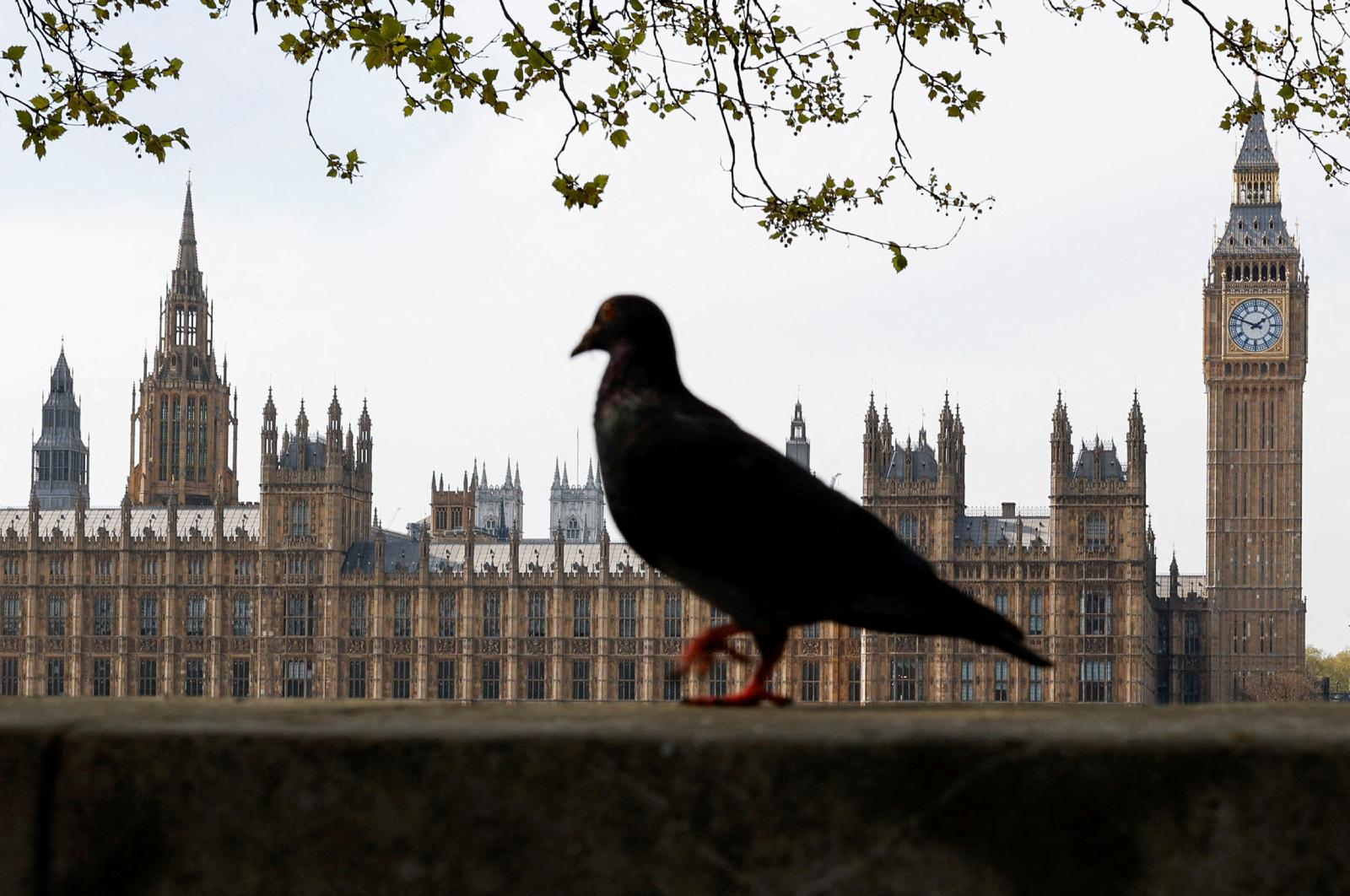
(OSV News) — As the U.K. Parliament debates legislation to allow assisted suicide and abortion up to birth, the country’s Catholic politicians are struggling on to defend pro-life values.
“There are many Catholics in today’s modern Parliament — and while some understandably don’t talk about their personal faith, their presence is fully accepted,” explained Sir Edward Leigh, a member of the House of Commons and the U.K.’s longest-serving member of Parliament.
“I compose a daily blog with sonnets based on the Mass readings, and I’m perfectly relaxed about proclaiming myself a Catholic — it’s never held me back.”
Possible delay past spring deadline
The veteran Conservative Party MP spoke as a controversial “assisted dying” bill was debated in the neighboring House of Lords, amid threats by supporters to use a rarely invoked 1949 Parliament Act if it risks being delayed beyond a spring deadline.
In an interview with OSV News, he said members of the upper house were doing a “constitutionally appropriate job” in carefully scrutinizing the bill, which was “far too complex” to be rushed through without adequate debate. The bill cleared the House of Commons in June 2025.
He added that he and other Catholic MPs had tabled “practical objections” to the bill, along with legislators of other faiths, and said it would “totally inappropriate” to use emergency powers to force its final enactment.
An ‘extremely badly drafted’ bill
Meanwhile, an independent Catholic member of the House of Lords told OSV News the “extremely badly drafted” bill had caused “deep concern” among medical experts and disability groups, and predicted it would fail in the face of a record 1,150 amendments.
“As a Catholic, I believe we should be doing all we can to support life — our National Health Service exists to help people live, not to kill themselves,” said Baroness Nuala O’Loan, a former law professor and police ombudsman for Northern Ireland. “The large number of amendments reflect the bill’s poor quality, not any sabotage attempt. It would be totally unacceptable to bypass Parliament’s democratic mandate by forcing through a measure with so many flaws and dangers.”
The Terminally Ill Adults (End of Life) Bill, tabled by an MP from the governing Labour Party, would permit physician-assisted suicide for those terminally ill who are over 18 with six months or less to live, who evidence a “clear, settled and informed wish to end their life.”
Condemnation from churches, faith communities
Narrowly approved by MPs in November 2024, despite condemnation from churches and faith communities, it would make the U.K. the ninth European country after Austria, Belgium, Germany, Luxembourg, the Netherlands, Portugal, Spain and Switzerland to allow assisted suicide, which is also now legal in 13 of 50 U.S. states and the District of Columbia.
However, while personally supported by Prime Minister Keir Starmer, the bill is opposed by his health and justice ministers. On Jan. 28, its House of Lords sponsor, Labour peer Lord Charles Falconer, conceded there was now “absolutely no hope” of securing upper house approval before a current legislative agenda ends in early May.
In his OSV News interview, Leigh said the bill’s backers had falsely claimed people were “dying in agony” because of a lack of provision for assisted suicide, while relying on opinion polls when society had “not been told the full story.”
Safeguards have become ‘meaningless’
He added that experience abroad suggested proposed safeguards soon “became meaningless,” and said the bill should have been preceded by a royal commission and “months and months of debate.”
Meanwhile, Baroness O’Loan said the bill’s sponsors had cut many corners, by failing to define terminal illness or provide for family consultation, professional training and effective scrutiny against coercion.
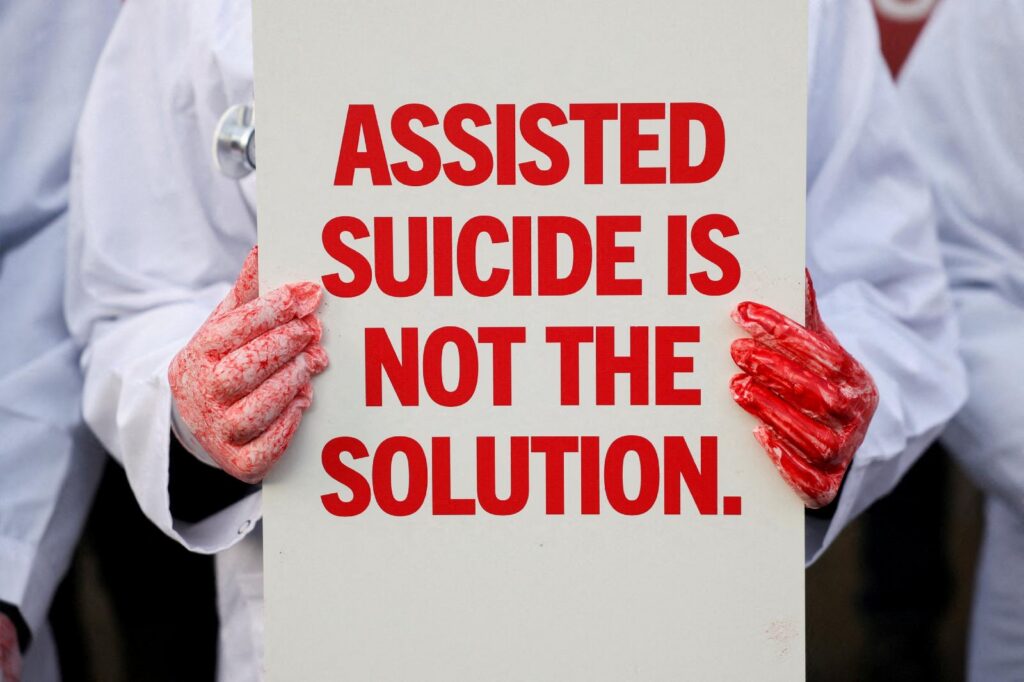
“Today’s secular emphasis on personal autonomy — my rights, my choice, my body — is now widely accepted, making it difficult to resist measures like this,” said the Catholic peer, a former marriage counselor. “But we should never see this as a lost cause. While people sometimes reject what we say as Catholics, our voice carries across the legislative community. It’s also supported by humanist peers, who may not use the language of sacredness but still believe human life should be protected.”
Abortion up to birth
A separate amendment to decriminalize abortion up to birth when “committed by a woman acting in relation to her own pregnancy,” was also debated Feb. 2 in the House of Lords, seven months after being tabled by a Labour Party MP and passed without public consultation after a brief debate.
The amendment coincides with mid-January government data showing a record 299,614 abortions, currently allowed up to 24 weeks, across the U.K. in 2023, about 11% up from the previous year.
Baroness O’Loan, who lost an unborn child in a 1977 terrorist bombing in Northern Ireland, told OSV News most peers had opposed the amendment during the five-hour debate, suggesting it could also be blocked.
Abortion pills by mail still allowed
Meanwhile, Leigh described the abortion amendment as “outrageous,” adding that he was also shocked a COVID-era rule allowing abortion pills by mail had been maintained since the pandemic ended.
“All safeguards have been stripped away — abortion isn’t policed properly, and the latest decriminalizing amendment is gravely retrograde,” said the Catholic MP, who attends Mass daily and chairs an All-Party Parliamentary Group on the Holy See.
“The abortion limit should be tightened rather than extended. Yet when it comes to votes of abortion, we always lose heavily,” he added.
Catholics and history of Parliament
Catholics were barred from the U.K. parliament until an 1829 Catholic Emancipation Act, but are now believed to make up at least 10% of the 650 MPs and 840 voting members of the House of Lords, with many belonging to an interdenominational group, Christians in Parliament.
However, a dozen Catholic MPs voted for the July abortion liberalization, while Humanists-UK said a record 40% of MPs had taken secular oaths after the U.K.’s July 2024 election, including Starmer and half his 22-member Cabinet.
Britain’s Catholic bishops have vigorously opposed the assisted suicide and abortion measures, and have also worked with Leigh, O’Loan and other legislators in tackling child poverty and other moral and social issues.
In a November statement, the bishops said 2025 had been “marked by an assault on the value of human life,” and commended the work of parliamentarians and “those who endeavor to rebuild a culture of life.”
Jonathan Luxmoore writes for OSV News from Oxford, England.
