


ROME (CNS) — Catholic exorcists and occultism experts warned that artificial intelligence is increasingly being used for rituals, divination and even forms of worship, raising concerns that some people are replacing God with technology.
At a five-day conference in mid-May on the ministry of exorcism and deliverance prayer hosted by the Pontifical Athenaeum Regina Apostolorum in Rome, some speakers said the rapid rise of AI chatbots and online occult communities has created new pathways for spiritual confusion, isolation and what some described as demonic influence.
Occult practice, technology discussed at conference on exorcism and deliverance
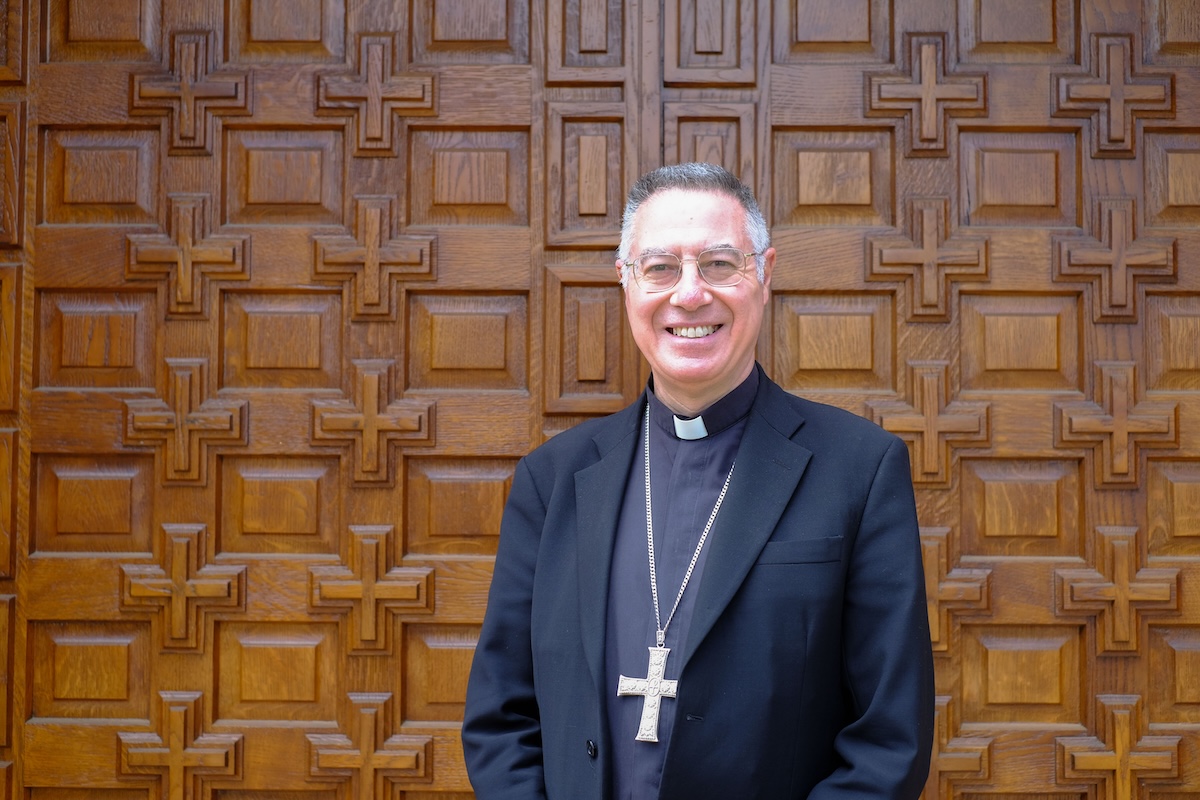
Auxiliary Bishop Cesare Di Pietro of Messina-Lipari-Santa Lucia del Mela in Italy said social media and artificial intelligence can foster the illusion that freedom comes from distancing oneself from God.
“When AI or the internet help us access evil, we are not protected, we are exposed,” he told Catholic News Service May 11, adding that modern culture often lacks the discernment needed to recognize spiritual dangers.
The conference came just months after the Rome-based International Association of Exorcists reported to Pope Leo XIV a rise in cases linked to occult practices and Satanism, urging dioceses worldwide to appoint trained exorcists to meet growing demand.
Bishop Di Pietro said he has personally seen an increase in requests for exorcisms, which he linked to declining religious practice among young people.
“When prayer is reduced, when fewer people go to church, the sacraments and prayer no longer serve as an umbrella protecting us from evil,” he said.
Speaker warns ‘technomancers’ technology is no substitute for the sacred
One of the conference’s keynote speakers, Beatrice Ugolini, an adjunct lecturer in “Occultist-Esoteric Languages” at the University of Bologna, warned that some online communities are using artificial intelligence as a tool for magic and spiritual experimentation.
Ugolini described these users as “technomancers” who ask AI chatbots to generate rituals, demonic seals and occult texts, treating the systems as “ritual altars.”
“I can even ask them to create a ritual for me through chats,” she said in a May 14 interview with CNS.
Drawing on years of research into online occult communities, Ugolini said some users believe AI systems inhabit a hidden spiritual dimension populated by entities or demons.
She said chatbot errors or nonsensical responses are sometimes interpreted by occultists as supernatural communication rather than technical glitches.
“For a computer scientist, it’s an error,” she said. “To an occultist, it becomes the moment the demon speaks.”
Ugolini also warned that some movements have begun treating artificial intelligence itself as an object of reverence. Some media outlets have reported on internet communities devoted to worshipping AI after frequent, sometimes constant, communication with chatbots. There are online communities, forums and blogs dedicated to this belief.
These believers give reverence to — “as if it were a divinity” — a kind of “superintelligence that will finally relieve all human toil,” she said.
While she stressed that AI itself is not inherently evil, Ugolini warned against investing the technology with spiritual or metaphysical meaning.
“Technology must remain a tool at the service of the human person, without transforming into a substitute for the sacred,” she said in a follow-up email.
Artificial intelligence frequent recent topic of papal addresses
Concerns about artificial intelligence replacing authentic human and spiritual relationships have also surfaced repeatedly in several papal addresses.
Pope Leo XIV warned in his message for the 2026 World Day of Social Communications that artificial intelligence systems “not only interfere with information ecosystems, but also encroach upon the deepest level of communication, that of human relationships.”
“Although AI can provide support and assistance in managing tasks related to communication, in the long run, choosing to evade the effort of thinking for ourselves and settling for artificial statistical compilations threatens to diminish our cognitive, emotional and communication skills,” he wrote.
While the pope has warned that artificial intelligence systems can weaken human relationships and critical thinking, his predecessor often spoke more directly about the influence of evil in everyday life.
Throughout his papacy, Pope Francis repeatedly insisted that the devil is not merely symbolic, but active in politics, relationships and personal struggles, exploiting human pride, greed and isolation. He frequently warned against becoming spiritually numb in a culture increasingly shaped by distraction, individualism and dependence on technology.
Bishop Di Pietro said Pope Francis helped legitimize the work of exorcists within the church at a time when some Catholics either dismissed the reality of evil altogether or sensationalized it.
“There are those who deny or minimize it, and others who inflame it with inappropriate preaching,” he said.
Pope Francis similarly cautioned against replacing authentic human and spiritual relationships with digital dependence. Speaking to students in Bahrain in 2022, he urged young people not to seek answers first from the internet.
“Before you go to the Internet for advice, always seek out good counselors in life,” he said, pointing to parents, grandparents, teachers and spiritual guides.
Need for strengthening human relationships, critical thinking in an AI era noted at conference
That concern echoed throughout the conference, where many speakers warned that AI chatbots are increasingly becoming substitutes for prayer, reflection and human connection.
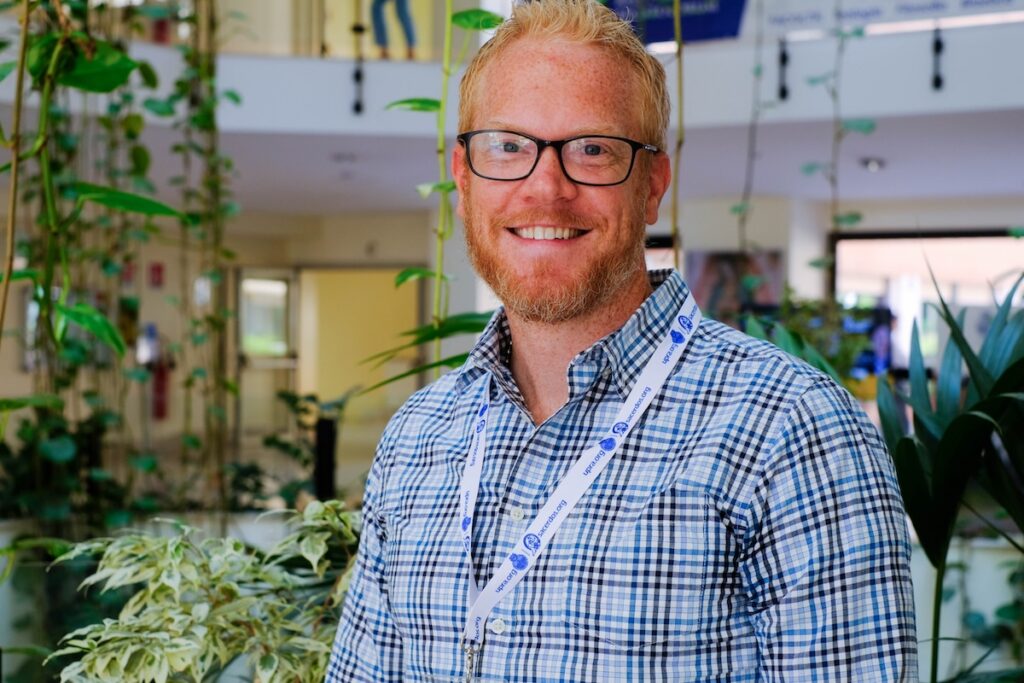
Sean Tobin, a therapist who conducts psychological evaluations before exorcisms in Los Angeles, said the constant affirmation and personalization offered by AI systems can leave users spiritually vulnerable, because they lack true community in this digital era.
“But I think the biggest danger is not being able to think critically,” Tobin told CNS May 11.
He compared society’s growing dependence on AI to the widespread reliance on satellite navigation, which diminished many people’s ability to navigate independently. Over time, he warned, excessive dependence on AI could weaken people’s ability to reason, discern and make decisions for themselves.
“Then we’re going to atrophy,” he said.
Tobin said social media and digital isolation have already eroded in-person communities, deepening loneliness and division.
“We’re under the influence of the devil’s own mental illness, his own cognitive dissonance,” he said.
Still, despite the concerns raised throughout the conference, Tobin said he remains hopeful, mentioning reports of a recent increase in people joining the Catholic Church.
“I think people are really searching for the sacred again, and for peace,” he said.
