


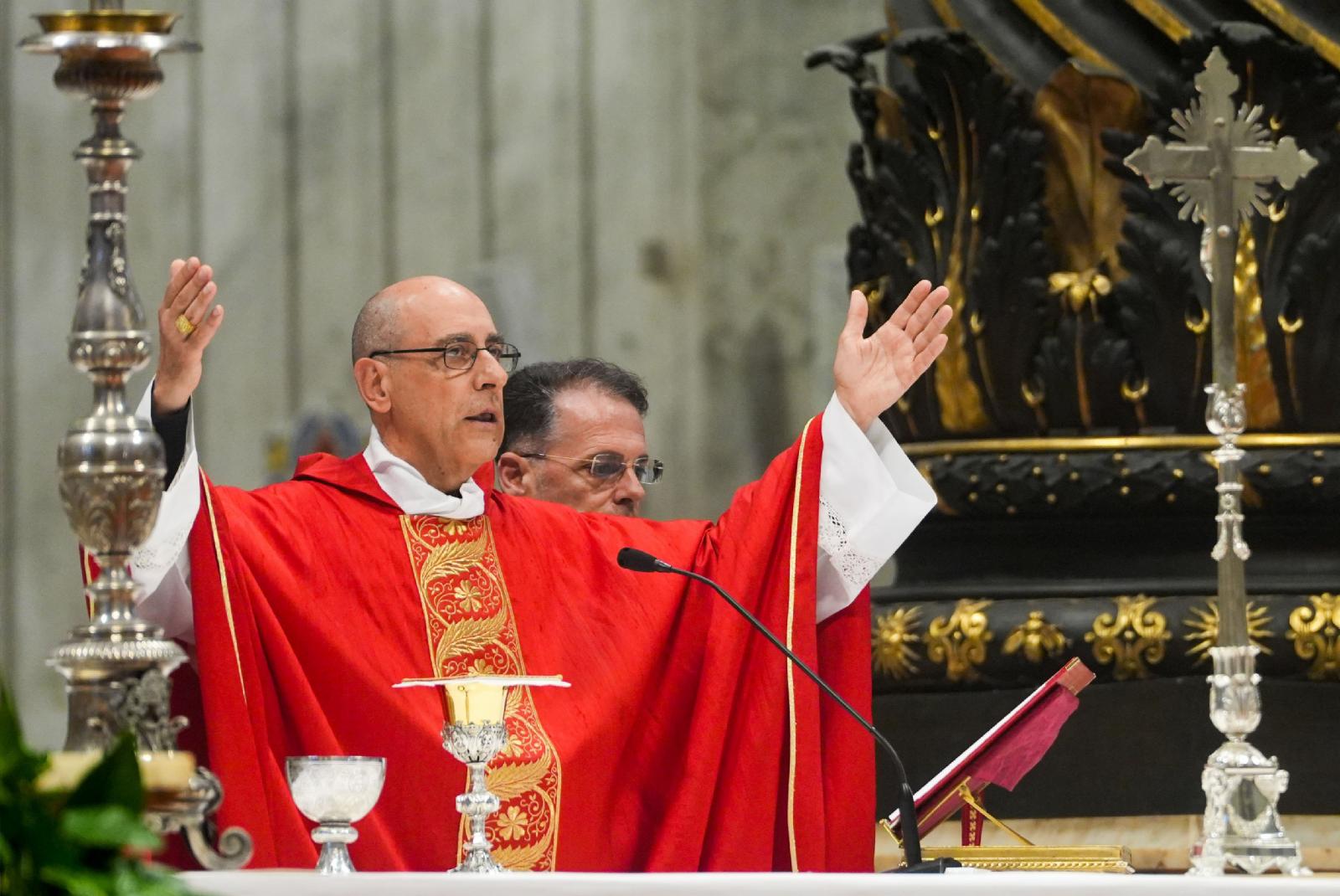
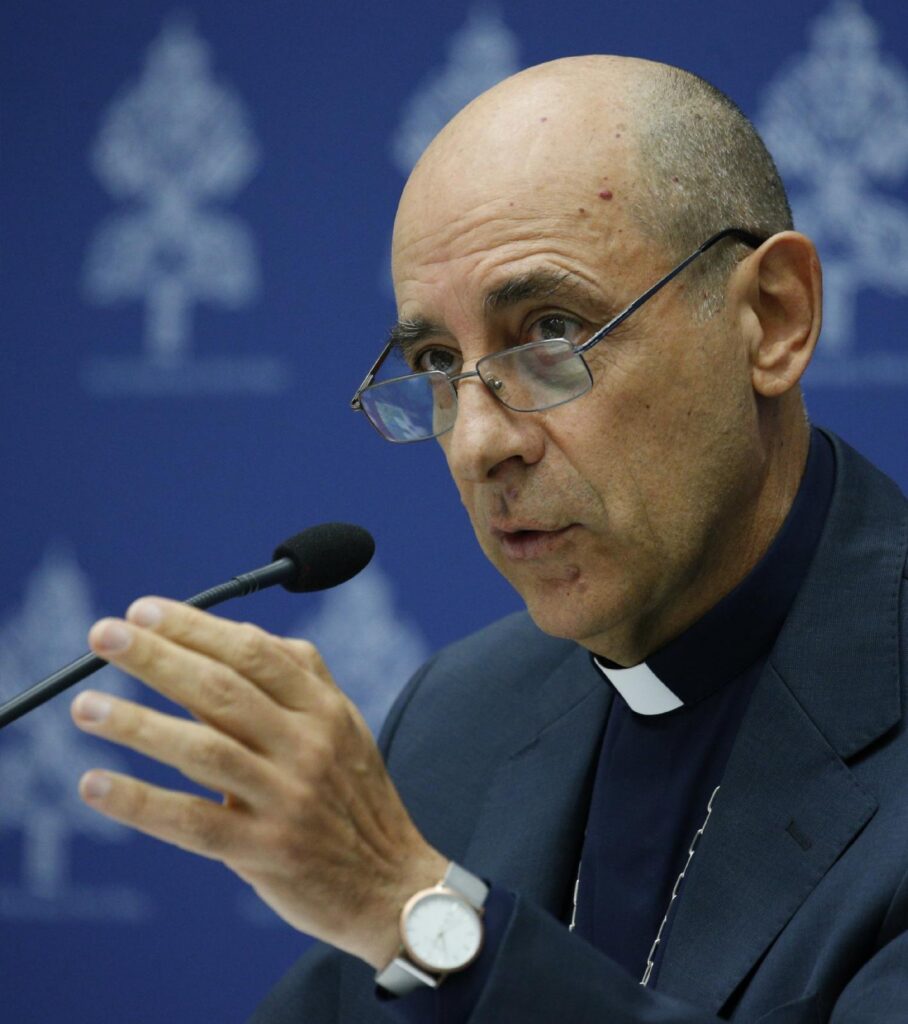
ROME (OSV News) — The head of the Society of St. Pius X will meet with Cardinal Víctor Manuel Fernández, the prefect of the Dicastery for the Doctrine of the Faith, Feb. 12 after the traditionalist group announced plans to consecrate bishops without papal approval, raising fears of a renewed schism.
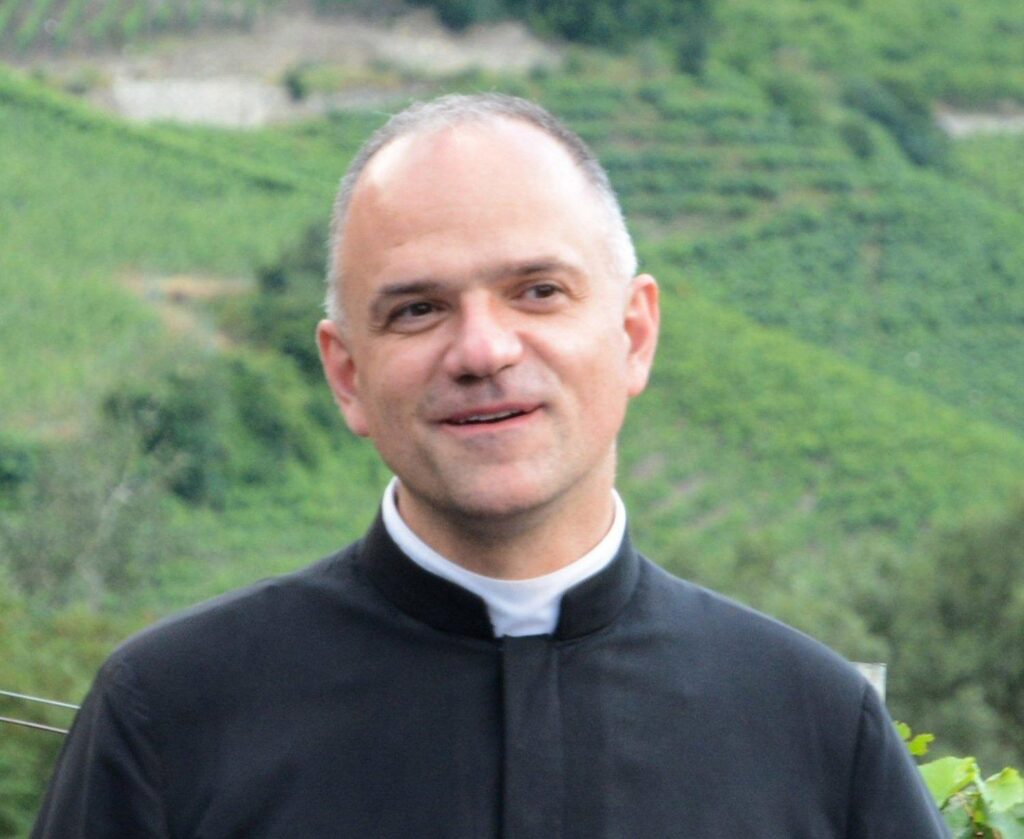
Father Davide Pagliarani, superior general of the society, commonly known by its acronym SSPX, will meet with Cardinal Fernández in Rome. The meeting comes after the society announced its plans to proceed with episcopal consecrations scheduled for July 1 without a papal mandate, a move that could trigger automatic excommunication.
“Following the announcement, on 2 February, of future episcopal consecrations for the Society of Saint Pius X, His Eminence Cardinal Fernández wrote to the Superior General to propose a meeting in Rome. The Superior General accepted this proposal,” SSPX announced in a statement on Feb. 5.
An informal dialogue to avoid rifts between SSPX and the Vatican
Vatican spokesman Matteo Bruni said Feb. 5 that the meeting “will be an opportunity for an informal and personal dialogue, which will help identify effective tools for discussion that can lead to positive results.” He emphasized the Holy See’s desire “to avoid rifts or unilateral solutions with regard to the issues that have emerged.”
The society’s threat of a schismatic act represents a significant challenge to Pope Leo XIV in the first year of his pontificate in which the pope has repeatedly emphasized the importance of Christian unity. Vatican officials have sought for decades to fully reintegrate SSPX members into the Catholic Church.
The planned consecrations echo a similar crisis in 1988, when the society’s founder, Archbishop Marcel Lefebvre, ordained four bishops without papal mandate. St. John Paul II declared the act schismatic and excommunicated Lefebvre and the four newly ordained bishops.
In an interview posted on the SSPX website on Feb. 5, Father Pagliarani said he had written to Pope Leo last summer requesting an audience but received no reply. After a second letter, he said, a recent response from Cardinal Fernández “took no account whatsoever of the proposal we put forward, and offers nothing that responds to our requests.”
The history of the Society of St. Pius X
The Society of St. Pius X was founded in 1969 by Archbishop Lefebvre in opposition to reforms enacted by the Second Vatican Council in the 1960s. The group rejects the council’s liturgical changes and its approaches to religious freedom and ecumenism, with its priests celebrating the traditional Latin Mass.
Archbishop Lefebvre died in 1991 while excommunicated, though Pope Benedict XVI lifted the excommunications of the four bishops in 2009 as part of reconciliation efforts. The society itself, however, remains in an irregular canonical status.
Talks between the Vatican and the society began under St. John Paul and continued throughout the papacies of Popes Benedict XVI and Francis.
St. John Paul established the Pontifical Commission “Ecclesia Dei,” with the “task of collaborating with the bishops, with the Departments of the Roman Curia and with the circles concerned, for the purpose of facilitating full ecclesial communion of priests, seminarians, religious communities or individuals” who were associated with SSPX and “who may wish to remain united to the Successor Peter in the Catholic Church.”
Special provisions under Pope Francis
During the 2015-2016 Year of Mercy, Pope Francis made special provisions to validate the absolution offered by SSPX priests through the sacrament of confession and later extended that provision. In 2017, he allowed SSPX bishops to ensure the validity of marriages celebrated in the traditionalist communities.
In 2019, Francis suppressed the Pontifical Commission “Ecclesia Dei,” which St. John Paul had established to facilitate reconciliation with traditionalists, transferring its responsibilities to the Dicastery for the Doctrine of the Faith.
Two groups that celebrate the traditional Latin Mass and remain in communion with the Holy See expressed concern about the SSPX announcement. Una Voce International and the Latin Mass Society issued a joint statement on Feb. 3 saying their “ardent wish, shared by many Catholics of good will, is for the canonical regularisation of the SSPX, which would enable its many good works to bear the greatest possible fruit.”
SSPX’s announcement, they said, “is an indication that this outcome is a more distant prospect than it has seemed for many years.
While acknowledging that many Catholics can attend the traditional Mass with proper permissions, the groups noted that “for others, attending the Traditional Mass has been made very difficult” in some places. “This creates an environment in which the SSPX argument of a ‘state of emergency’ gains sympathy,” the statement said.
The groups urged bishops and Pope Leo XIV “to be mindful of these pastoral realities, which are at this moment precipitating a crisis whose consequences no one can foresee,” adding, “The time to act is now.”
Courtney Mares is Vatican editor for OSV News. Follow her on X @catholicourtney.
