


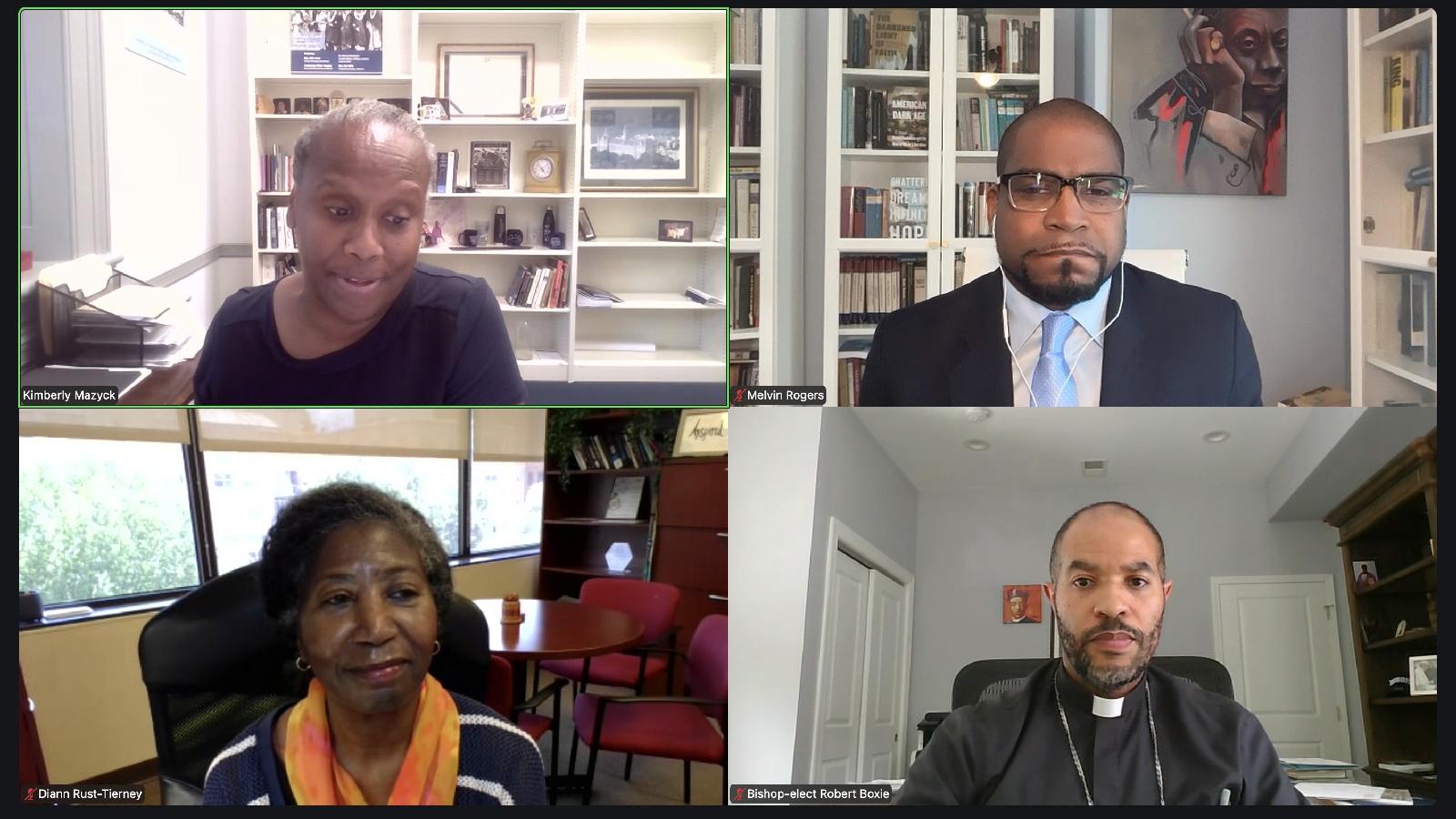
WASHINGTON (OSV News) — Juneteenth and the 250th anniversary of the Declaration of Independence provided the context for a June 15 online discussion on the importance of acknowledging the nation’s racial history honestly so the work of justice and equality can continue.
“We actually have to have the courage to be truth tellers and to tell the full truth, the full story of who we are as Americans, and not be afraid to do so. … We have to make sure that in the story of America, all those who have contributed to this country are included, because all of it makes up who we are,” said Bishop-designate Robert P. Boxie III, an African American priest who on May 1 was appointed by Pope Leo XIV to become a new auxiliary bishop of Washington.
Bishop-designate Boxie — who will be ordained a bishop July 7 — was among three panelists in a dialogue on “250 Years Towards Racial Justice: Progress, Promise, and Challenges,” sponsored by the Initiative on Catholic Social Thought and Public Life at Georgetown University.
Painful aspects of U.S. history
Presenting the “true truth” about the painful aspects of U.S. history is important, he said, because avoiding those realities “prevents us from healing. It prevents us from appreciating the richness of this country in order to solve the real challenges we face as a nation and a society, so as to realize the promises that were enshrined in these founding documents.”
The bishop-designate has served as chaplain at the Sister Thea Bowman Catholic Student Center at Howard University in Washington,
The other panelists were Melvin Rogers, the Edna and Richard Salomon distinguished professor of political science and associate director of the Center for Philosophy, Politics, and Economics at Brown University in Providence, Rhode Island; and Diann Rust-Tierney, an associate professor of law at the University of the District of Columbia’s David A. Clarke School of Law.
Moderator Kimberly Mazyck, associate director for engagement at the Initiative on Catholic Social Thought and Public Life at Georgetown, provided the context for the conversation, noting the Juneteenth holiday marking the end of slavery in the United States and preparations for the 250th anniversary of the signing of the Declaration of Independence on July 4.
Enslavement in U.S. did not end until 1865
“While the Declaration of Independence states, ‘We hold these truths to be self-evident, that all men are created equal,’ enslavement did not end in this country until 1865, 89 years after the signing of this founding document,” she said.
Mazyck also pointed out how “it is important for us to acknowledge that Georgetown University exists in part because of the proceeds from an 1838 sale of 272 enslaved women, men and children,” a sale by the Maryland Society of Jesus, the Jesuits, to Louisiana sugar plantation owners that helped sustain the financial survival of Georgetown College, now the university.
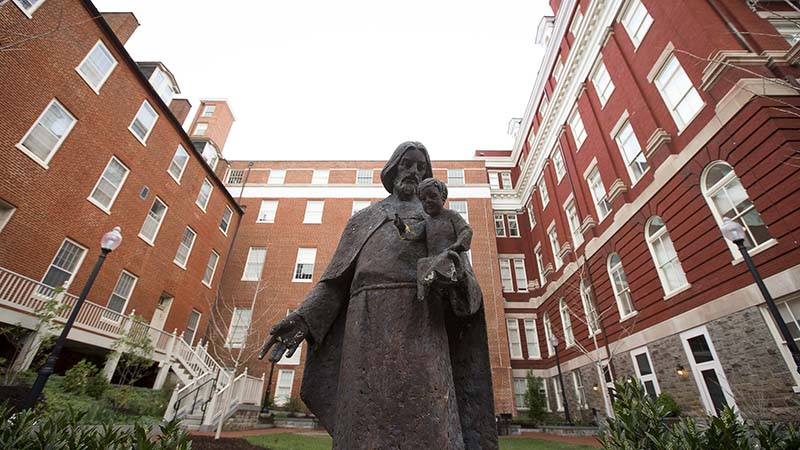
The conversation was held four days before Juneteenth, which every year commemorates June 19, in 1865, when, more than two months after the Civil War ended, U.S. Major Gen. Gordon Granger issued an order informing the people of Texas that all enslaved people there were now free.
“To my mind, the 250th anniversary and Juneteenth, these things don’t stand in opposition, they’re not in competition,” said panelist Rogers. “The 250th, it is us acknowledging the ways in which the founders put in circulation these wonderful ideas of liberty, equality and self-government. And Juneteenth, it seems to me, is a reminder that we struggled and in some instances failed to extend those principles to all.”
‘Part of our shared civic inheritance’
He added that “these two moments should go together as part of our shared civic inheritance. … It seems to me a healthy, mature democracy should be able to do both of these things simultaneously, both acknowledge its achievements and be very honest about where it has fallen short, so it is clear the work it has to do going forward.”
In her introductory remarks, Mazyck said recent judicial and legislative actions have undermined landmark legislation promoting racial justice like the Civil Rights Act and the Voting Rights Act.
She also noted how the Trump administration has taken steps against diversity, equity and inclusion programs across the country and has “taken steps to change the way schools and museums teach the history of racial injustice in this country.”
“Catholic teaching teaches us that racism is a sin, it’s a national moral failure and it’s a fundamental test of our faith,” she said.
The U.S. historical narrative is problematic when the role of African Americans in building the country is not acknowledged, Rust-Tierney said.
‘What to the Slave is the Fourth of July?’
She noted how Frederick Douglass – in a famous 1852 speech to the Ladies Anti-Slavery Society of Rochester, New York, titled, “What to the Slave is the Fourth of July?” — said, “The blessings in which you this day rejoice are not enjoyed in common.”
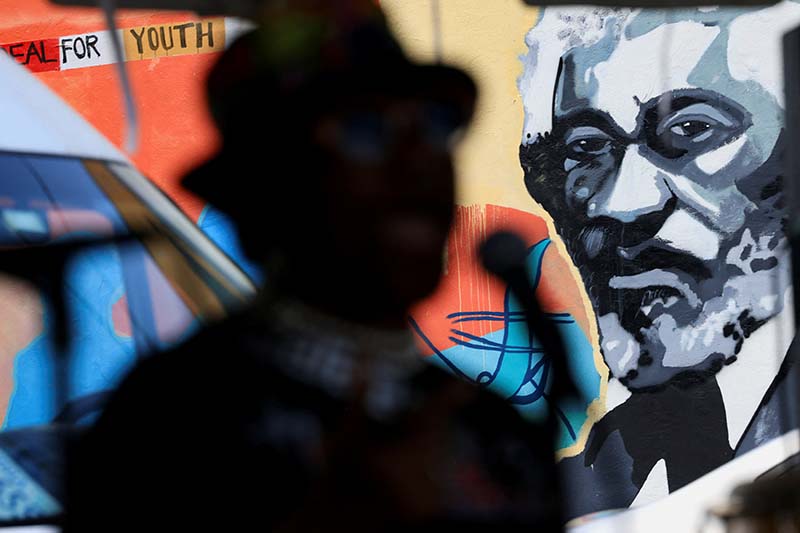
Rust-Tierney expressed concern that amendments to the U.S. Constitution offering the promise of a multiracial democracy, including the 15th Amendment, guaranteeing the right to vote will not be denied by race, now seem to be “under attack,” with similar historical arguments being made to erode those protections.
Asked about his reaction to the apology for the Church’s involvement in slavery that Pope Leo offered in his recent encyclical, “Magnifica Humanitas,” Bishop-designate Boxie said, “I’m overjoyed, I’m relieved, and honestly, it’s about time. … Really, it’s a watershed moment for the Church, and) the whole world. So many countries benefitted from the transatlantic slave trade.”
Bishop-designate Boxie noted “how symbolic and meaningful that this pope has done this — Pope Leo, who has Black ancestry, who has African blood running in his veins.” The maternal grandparents of the Chicago-born pontiff were listed in census documents as Black or mulatto.
‘Church can lead in healing’
The pope’s apology can also spur “bishops and lay leaders to make similar acknowledgements and efforts toward reconciliation in their dioceses and parishes and their organizations. … The Church can lead in healing,” Bishop-designate Boxie said.
He noted how three of the “Saintly Seven” African American Catholics being considered for sainthood were once enslaved. Venerable Augustus Tolton from Chicago, who in 1886 became the first U.S. Catholic priest publicly known to be Black, was born in slavery, as were Venerable Pierre Toussaint from New York City and Servant of God Julia Greeley from Denver, who were known for their works of charity.
“While the Church and her members participated in this great evil of society, it did not deter these heroic and courageous men and women from staying and believing in the Church. And you can’t tell me that that’s not the stuff of holiness or sainthood,” Bishop-designate Boxie said.
The panelists also discussed how African Americans historically worked for racial justice and how that work can continue today.
African Americans have relied on ‘social courage’
Rogers — author of “The Darkened Light of Faith: Race, Democracy and Freedom in African American Political Thought” — noted that African Americans have relied on “social courage,” understanding that “one is able to bear the burden of injustice in part because you don’t bear it alone, you bear it with those who are standing beside you.”
Diann Rust-Tierney echoed that point, adding that “when you look at the secret sauce, the secret ingredient of our progress, it was the empathy that the broader society developed when they understood or saw what was happening … (it’s) the empathy that we develop that helps push our movements forward.”
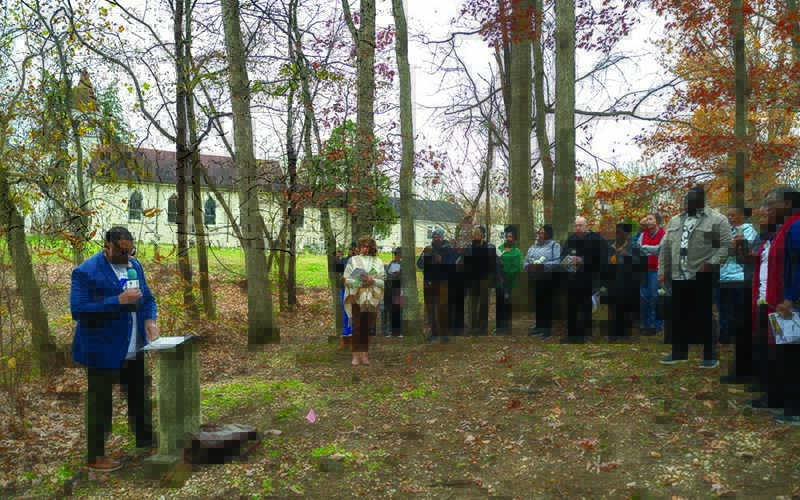
Bishop-designate Boxie said, “The Church must and has to be on the side of racial justice and reconciliation in all of its forms. The Church is pro-life, and the USCCB (U.S. Conference of Catholic Bishops) has labeled racism as America’s original sin, and this is the original pro-life issue in the United States.”
‘Prophetic voice, social teaching, moral authority’
He said that advocacy for racial justice “means that the Church must use her prophetic voice, her magisterium, her social teaching, her moral authority, to bear on all of these issues, and use her ministries, her outreach, her teachings in the Church to dismantle these systems that perpetrate inequality inside and outside the Church.”
Confronting racism and working for racial justice, the bishop-designate said, “starts with us, within our own hearts, a personal conversion of heart. We need to pray that we become aware of these issues, that we are sensitive to the demands of justice and the dignity of every human person. That starts with us, in our own hearts.”
Bishop-designate Boxie said people need to educate themselves “on the history, the consequences, the causes, the harms of racism and injustice and not be indifferent or oblivious to them.”
Mark Zimmermann is editor of the Catholic Standard, the news outlet of the Archdiocese of Washington. This story was originally published by the Catholic Standard and distributed through a partnership with OSV News.
