


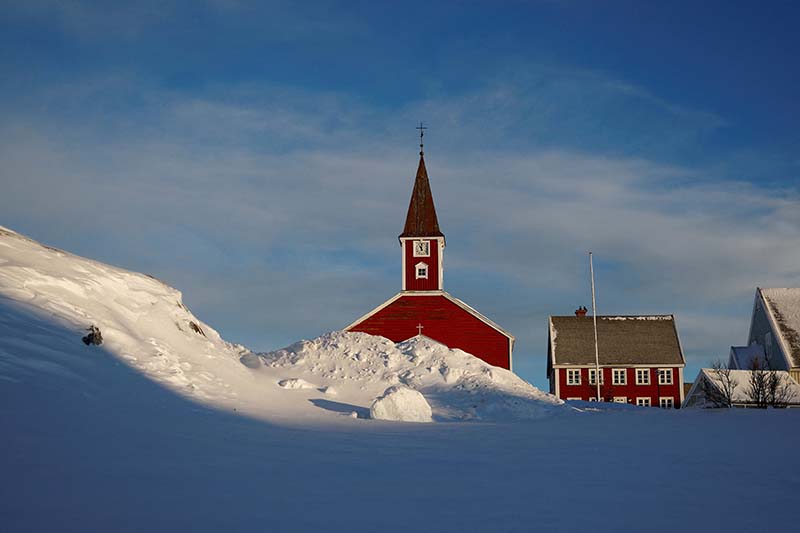
NOTRE DAME, Ind. (OSV News) — As President Donald Trump boosts his rhetoric on the United States acquiring Greenland, whether by sale or force, ahead of a gathering of political and business leaders in Davos, Switzerland, Catholic social teaching has something to say to the situation, said a political scientist at the University of Notre Dame in Indiana.
Michael Desch directs the Notre Dame International Security Center and teaches in Notre Dame’s political science department. Desch spoke with OSV News about Greenland and other U.S. foreign policy concerns in light of Pope Leo XIV’s recent address to members of the diplomatic corps accredited to the Holy See. The interview has been edited for length and clarity.
OSV News: On Jan. 9, Pope Leo made a statement condemning “diplomacy by force” as he addressed diplomats to the Vatican. Do you think Greenland was one country that he was concerned about?
Desch: It’s possible, but the Trump administration has been rattling that saber (about taking over Greenland) since before Pope Leo was elected. It’s probably a broader sort of statement. It likely also addresses concerns about Israel and Gaza, about Russia and Ukraine, and maybe China in the South China Sea in the Taiwan Straits. In 2016, the Trump campaign complained about endless wars. But now, it seems like it is planning to start endless wars in a lot of places. The people of Greenland have said that they do not wish to be bought and don’t want to become a 51st state for the United States. They want their independence.
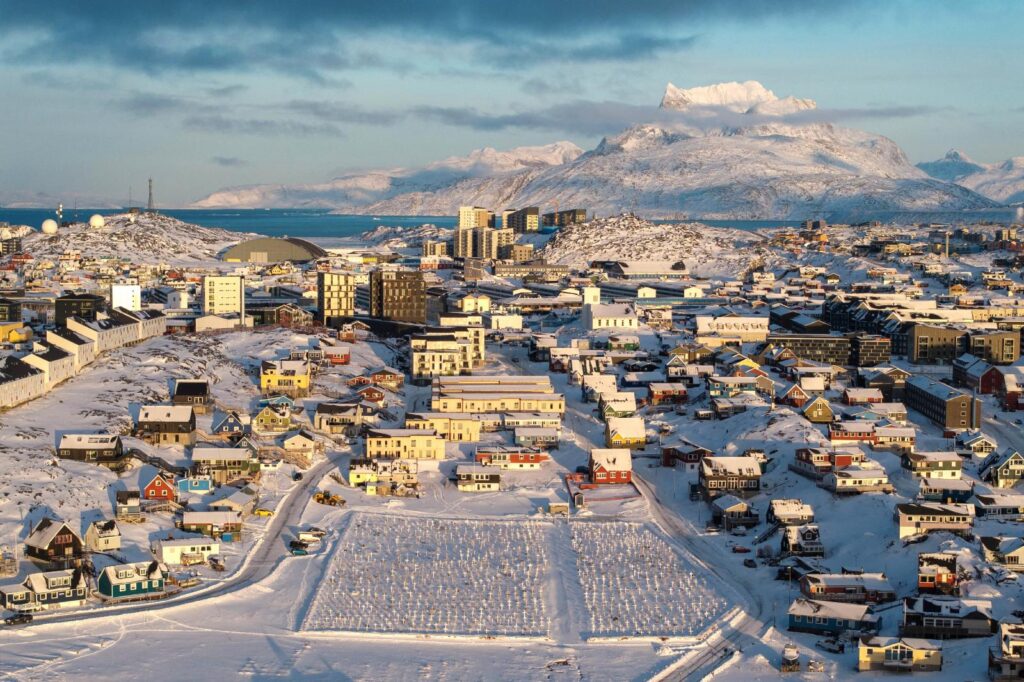
OSV News: How concerned should Americans be about threats to world peace due to our government’s continuing statements about taking over Greenland, an autonomous territory within the Kingdom of Denmark with great natural resources and population of around 56,000 people?
Desch: I don’t think that even if the Trump administration takes the most extreme measures that we’re going to be in World War III over Greenland. The problem is that the administration hasn’t thought carefully enough about what it needs in the immediate area around it — in the Northern Hemisphere — to secure American security. I would be more concerned about the war in Ukraine and the possibility of a war between the U.S. and China over Taiwan than I would be about a war over Greenland.
I think that the problem with Greenland and with Venezuela as well is that these are unnecessary things. And I don’t think that the Russians and the Chinese are coiled to attack over Greenland. Up until now, the Danes have been happy to let us do what we thought we needed to do in Greenland. So, why are we rocking the boat? And most Americans are clearly opposed to any U.S. moves against Greenland.
OSV News: As a political scientist and historian, have you been concerned about the current administration’s foreign policy statements, including those about Greenland?
Desch: The Trump administration has behaved in a maladroit and counter-productive way, although great powers are often doing that. I think that the Trump administration has not thought carefully about what it needs in the Western Hemisphere to secure American security. They concluded that if we don’t control Venezuela or annex Greenland that the U.S. will be strategically disadvantaged. I think that’s wrongheaded. During the Second World War, we had access to Greenland for air bases, and during the Cold War it was used as a site for early warning radars. We still have a military base there. But that doesn’t require us to take over the place. We’ve been given some access to Greenland, and I don’t think that we were in any danger of being booted out. To argue now that we need to control the place is a bridge way too far.
OSV News: You work closely at Notre Dame with undergraduate and graduate students — young people coming of age. Do they feel particularly nervous and threatened about their future?
Desch: Yes, but that’s not new. That really began with the global economic crisis of 2008 and was then accelerated by the COVID crisis of 2020. Since then, there has been deep pessimism in young people. Things are changing in ways that they don’t understand. They see that the world that their parents grew up in — one of opportunity and progress — may not be the world that they live in. And I’m not sure that international issues are really plaguing them. Since 9/11, the United States has been almost constantly at war. So, that’s sort of normal for this generation. Most of these young people see that there are so many more immediate problems that touch their lives. International crises are the least of their worries, I guess.
OSV News: One of the seven themes of Catholic social teaching deals with solidarity, teaching that we are one human family and promoting justice and peace for all. Are there new ways that Catholics should be reflecting on this call to solidarity?
Desch: I think that the American bishops have consistently tried to articulate those principles. I think that most American Catholics — and most Americans — share those aspirations to promote justice and peace. But the question then arises: “How do you advance peace and security in the world?” And that leads you to consider America’s role in the world. Since the end of the Cold War, the U.S. has tried to prevent or stop ongoing conflicts. In Yugoslavia in the 1990s and in other parts of the world, we discovered that it’s not easy. In my mind, there is a disconnect between aspirations for what a just world could look like and what the world really does look like. There’s nothing wrong with lofty aspirations. But if you confuse lofty aspirations with reality, you’re likely to be disappointed.
OSV News: Where do you find your greatest spiritual resources for hope and for a peaceful, healthy, and relatively prosperous future?
Desch: I find that the fifth-century wisdom of St. Augustine to be continually relevant. Augustine taught in his masterwork, “The City of God,” that it’s incumbent upon us to live in the earthly city as justly as we can. However, it’s impossible for the perfect, completely secure and just world to exist in our daily lives in this earthly city. Most American Catholics do understand that. That would be Utopia.
I also think that the Catholic tradition contains a lot of very good thinking about many of the challenges of living on Earth. So, the tradition has a lot of resources in it, for sure. I would say that despite the pessimism that I see in the young people I teach as college and graduate students at Notre Dame, I think that our national future looks good. Many of them are very bright and talented. They are ready to pull up their socks and move forward. There are enough young people who are committed to the faith that the future will be as well and justly run as it can be.
Catherine M. Odell writes for OSV News from Indiana.
