


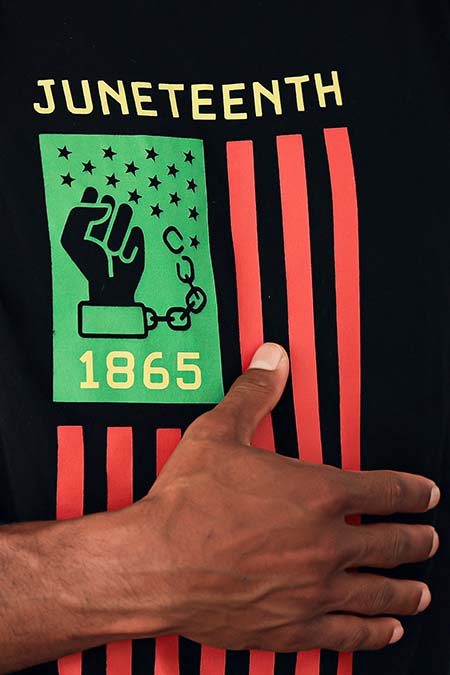
(OSV News) — Juneteenth “calls us forward,” while providing a moment to atone for past sins of racism, including in the Church, and to reaffirm the human dignity of all, said several bishops.
Observed every June 19 and known as the nation’s second Independence Day, Juneteenth — declared a federal holiday in 2021 — commemorates the June 19, 1865, announcement of the 1863 Emancipation Proclamation to more than 250,000 enslaved Black people in Galveston, Texas.
The proclamation, an executive decree by President Abraham Lincoln that freed those enslaved in the rebelling Confederate States, was followed by the 13th Amendment, which was ratified by Congress in December 1865 and formally abolished slavery.
‘Painful legacy of racism in our nation’
“Juneteenth invites us to confront the painful legacy of racism in our nation,” said Bishop Daniel E. Garcia of Austin, Texas, who chairs the U.S. Conference of Catholic Bishops’ Subcommittee for the Promotion of Racial Justice and Reconciliation.
In a video message posted for the observance by the USCCB, Bishop Garcia said “the institution of slavery, often called America’s original sin, continues to cast a long shadow.”
He added, “Its effects are still present today, especially in the ongoing reality of systemic racism.”
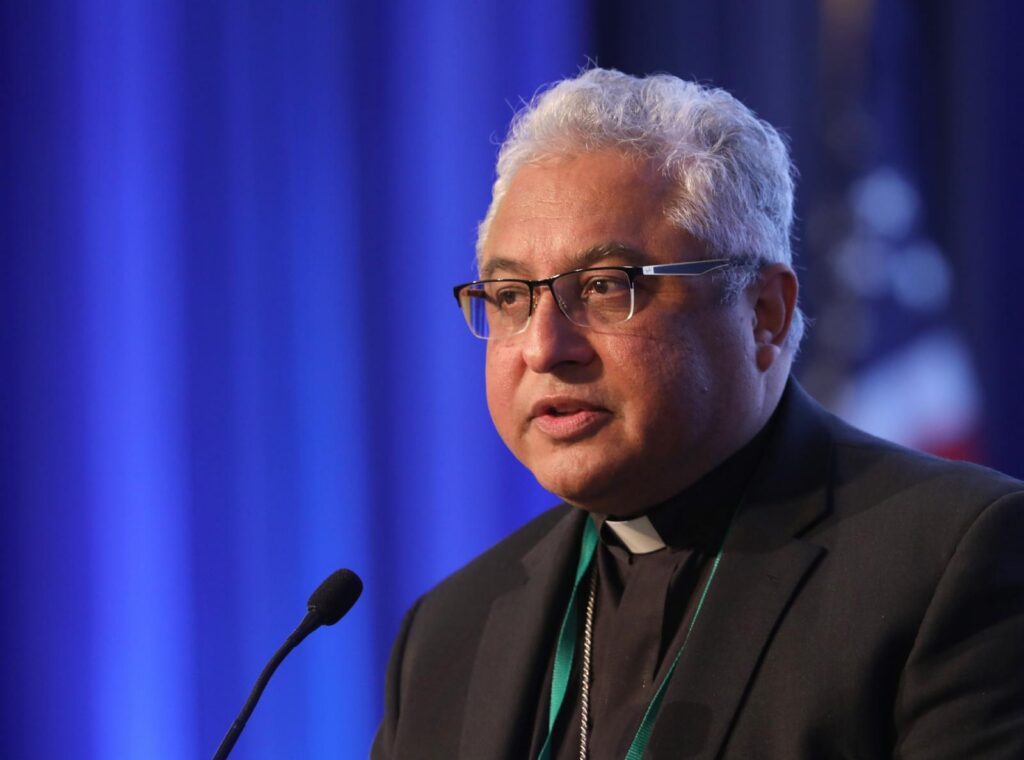
Bishop Garcia and Bishop Roy E. Campbell Jr., recently retired auxiliary bishop of Washington and chairman of the USCCB Subcommittee on African American Affairs, posted a joint reflection on Juneteenth to the USCCB website.
In that reflection, they encouraged the faithful to read the USCCB’s 2018 pastoral letter on racism, “Open Wide Our Hearts: The Enduring Call to Love,” also available on the USCCB website.
Called to work together to pursue ‘true justice for all’
“This important pastoral letter highlights foundations for understanding both the historical and moral dimensions of racism in our society, and why we, as Catholics, are called to work together in pursuit of true justice for all people,” the bishops said.
In a June 18 message, Archbishop Nelson J. Pérez of Philadelphia described Juneteenth as “a day of celebration and hope for the black community and all Americans.”
At the same time, he said, the observance is “also an occasion to reflect on the fact that it took 89 years for the foundational principle outlined in the Declaration of Independence to be extended to black America.”
Noting that his see of Philadelphia — where the declaration was signed, and where a number of key events in the nation’s founding took place — is known as the “Cradle of Liberty,” Archbishop Pérez said Juneteenth is “a stark reminder that the promises outlined in our primary founding document should rightfully be enjoyed by all those who call America home.”
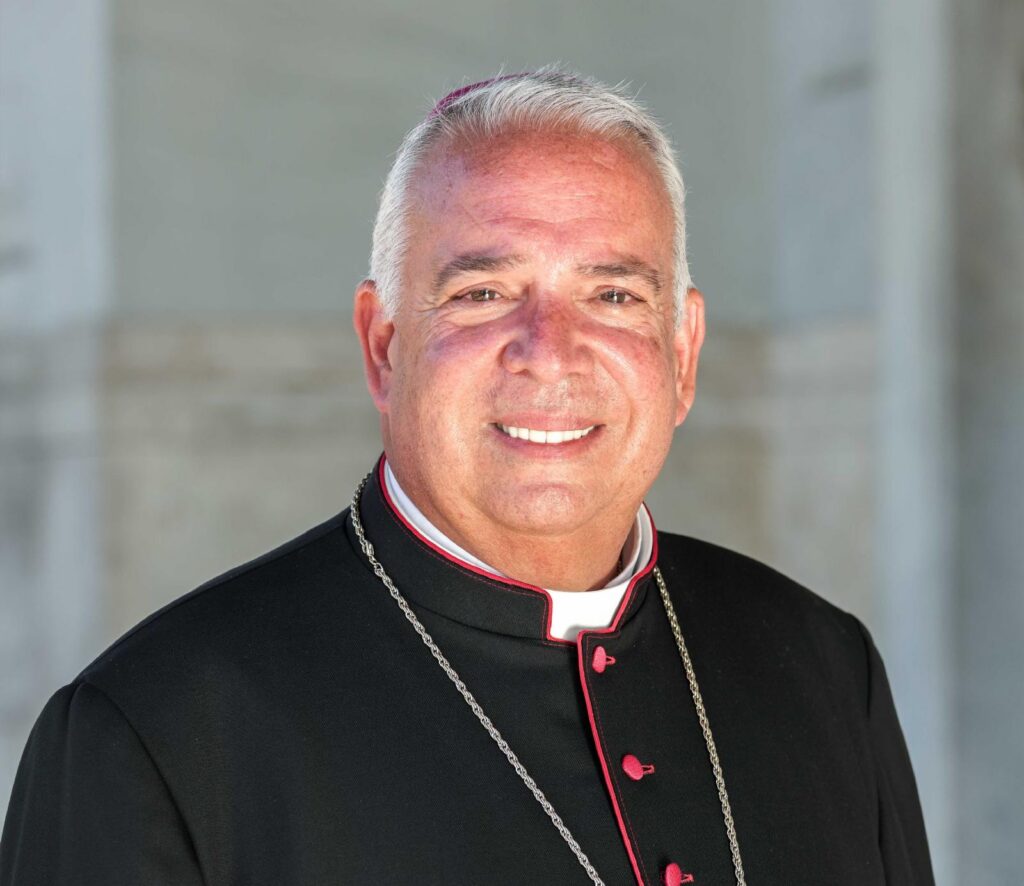
“The assertion that all men are created equal is rooted in Natural Law and the inherent dignity of every human being,” he said in his message. “We hold a common responsibility to uphold that dignity and ensure that it is respected.”
Denouncing ‘the scourge of slavery’
The archbishop quoted from Pope Leo XIV‘s encyclical, “Magnifica Humanitas,” in which the pope lamented and apologized for “the delay with which both society and the Church came to denounce the scourge of slavery.”
Pope Leo has “boldly acknowledged the complex and often tragic role that the Church historically has played with regard to slavery and the treatment of enslaved people in the United States,” said Archbishop Pérez.
The transatlantic slave trade saw some 12 million to 20 million Africans enslaved in various Western nations, including the U.S., over a period of four centuries.
Archbishop Pérez acknowledged that “our local Church bears such suffering in her own memory.”
He noted that “some clergy in the 19th century held pro-slavery views, which perpetuated unjust treatment of free and enslaved Blacks.”
Candidates of color ‘denied’ seminary admission
Such attitudes “also led to candidates of color being denied admission” to St. Charles Borromeo Seminary in the Archdiocese of Philadelphia, and to “segregated reception of the Sacraments, and other measures of racial inequality,” said Archbishop Pérez.
“Those practices are long gone, but the pain they created still resonates,” said Archbishop Pérez. “With deep sincerity, I echo the Holy Father’s sentiments and ask for pardon on behalf of the Catholic Church of Philadelphia.”
Along with such renunciations of racism, “Juneteenth also calls us forward,” said Bishop Garcia. “For Catholics in particular, we have an opportunity to call others to recognize the inherent human dignity of each person,” he said.
The observance “challenges us as individuals, as a society, and as the church, to renew our commitment to human dignity, racial justice, reconciliation, and peace,” the bishop added.
‘More than a historical milestone’
In a message on its website, the Archdiocese of Washington described Juneteenth as “more than a historical milestone,” and “a sacred opportunity to affirm our shared humanity, celebrate the rich heritage of African Americans — including Black Catholics, and continue the journey toward true freedom and unity in Christ.”
“On this Juneteenth, I reaffirm the commitment of our Church to continue working for racial healing and supporting opportunities for reconciliation and repair,” said Archbishop Pérez, stressing in particular efforts led by the Archdiocese of Philadelphia’s Office for Black Catholics and his own Archbishop’s Commission for Racial Healing.
Quoting from his 2023 pastoral letter, “We Are One Body,” Archbishop Pérez said, “We must work to build a just society, seeking policies that dismantle structural injustice, supporting those who work for racial justice, and aligning with all who seek to unite our human family in a manner that is peaceful and respects the dignity of all.”
Gina Christian is a multimedia reporter for OSV News. Follow her on X @GinaJesseReina.
