

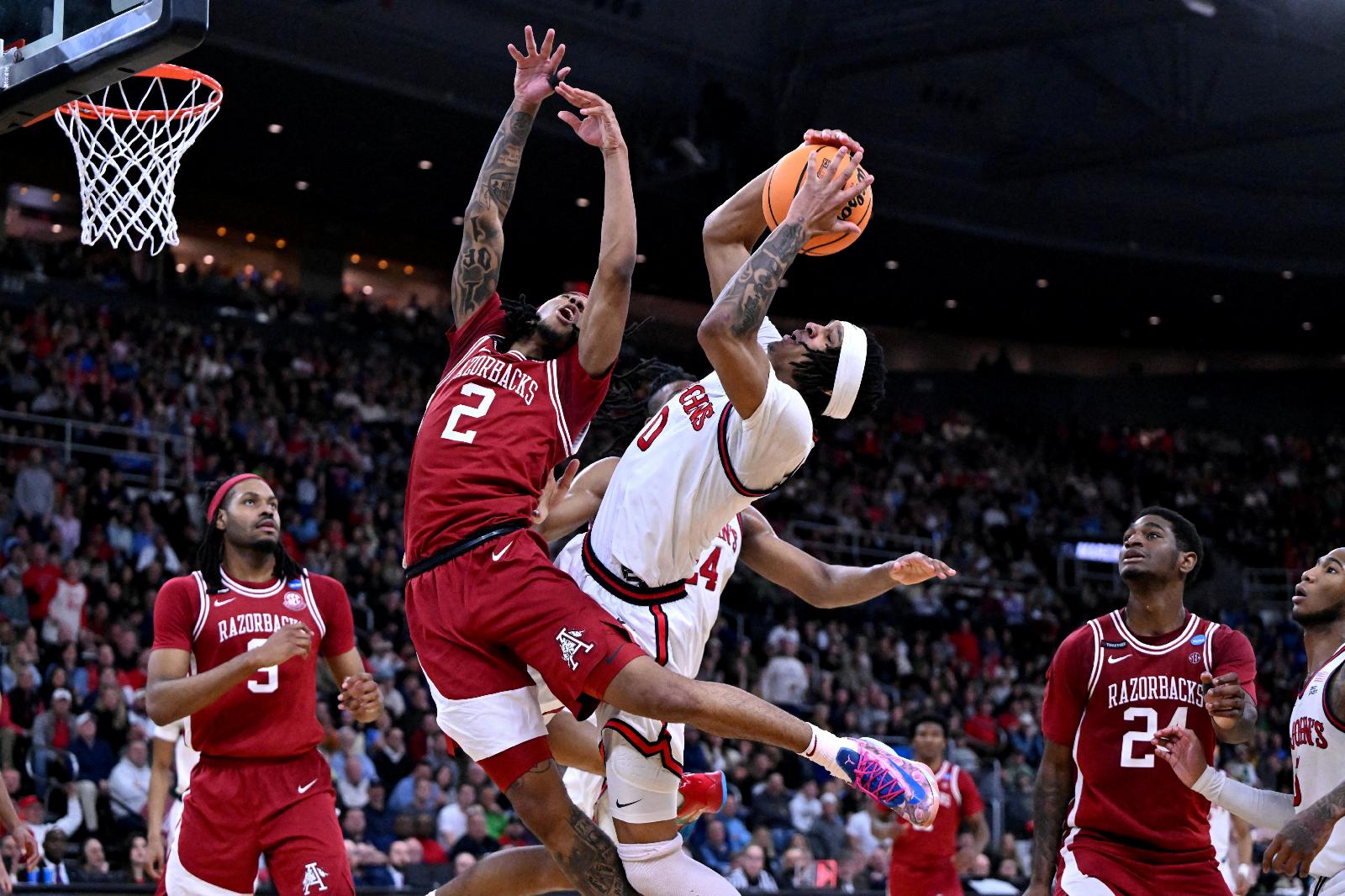
PHILADELPHIA (OSV News) — Several Catholic universities are expressing concern and pledging cooperation with federal authorities, after 26 individuals were charged in a large-scale scheme to fix NCAA Division 1 and Chinese Basketball Association men’s basketball games.
The conspiracy lured players to intentionally underperform while fixers raked in profits from sports betting, authorities said.
“The stakes here are far higher than anything on a bet slip. The criminal charges we have filed allege the criminal corruption of collegiate athletics through an international conspiracy of NCAA players, alumni and professional bettors,” said U.S. Attorney David Metcalf of the Eastern District of Pennsylvania during a Jan. 15 press conference in Philadelphia announcing the indictments.
Several of those charged had played for teams at Catholic universities, with three former DePaul University players — Micawber Etienne, Da’Sean Nelson and Jalen Terry — named in the indictment.
DePaul ‘deeply disappointed’
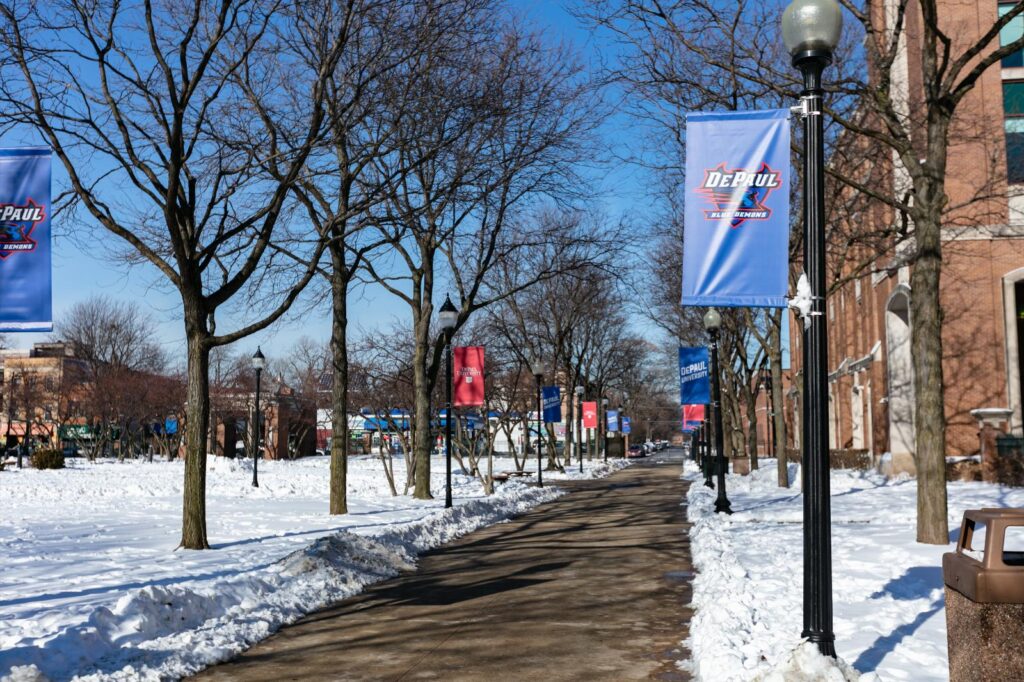
In a statement emailed to OSV News, DePaul University said it is “deeply disappointed that former student-athletes were named in the indictment for alleged gambling activities during the 2023-2024 men’s basketball season,” and stressed that “no current student-athletes were members of the 2023-2024 team.”
The Chicago university said it “participates in comprehensive sports wagering monitoring” through a service provider for the Big East Conference, and “maintains a robust compliance education program and annually engages EPIC Risk Management, the NCAA’s official sports gambling education partner, to provide independent, accredited training for student-athletes, coaches and staff.”
DePaul also said it will “cooperate fully with any investigation.”
St. Louis University told OSV News that Bradley Ezewiro, another player named in the indictment, “was a student at the University during the 2023-24 academic year before transferring to another institution.”
“Consistent with our Jesuit identity, we educate students to adhere to the highest level of integrity and ethics in the classroom, in competition and in life,” said the university in its statement.
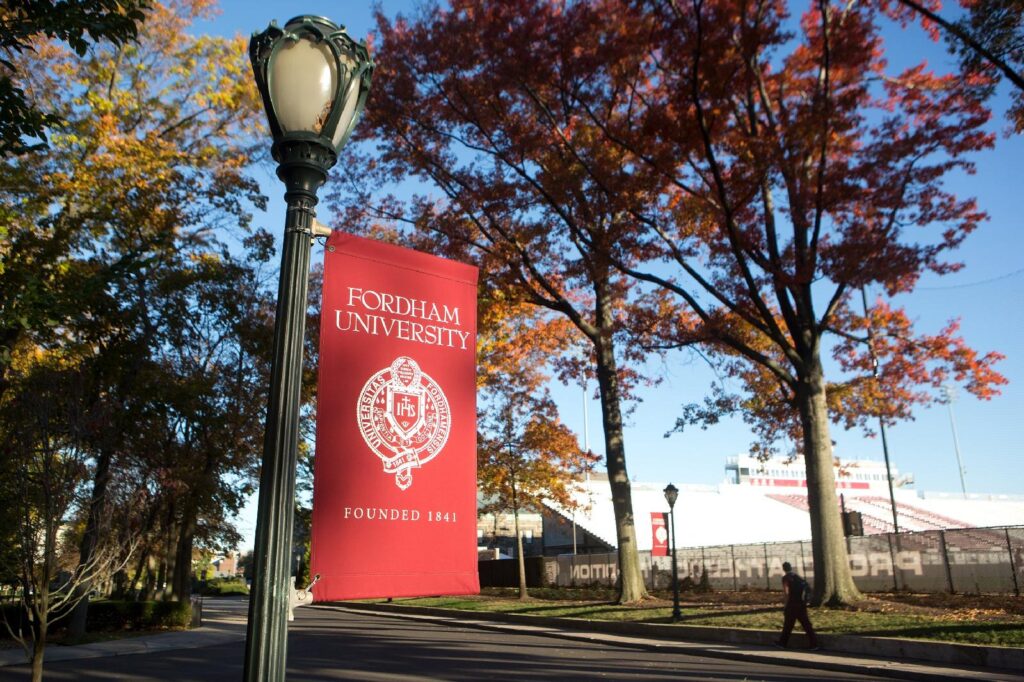
Fordham University has not yet responded to OSV News’ request for comment regarding former player Elijah Gray, who was also charged.
Other Catholic university teams whose games may have been compromised by the point-shaving conspiracy include Georgetown University in Washington, Duquesne University in Pittsburgh, La Salle University in Philadelphia and St. John’s University in New York.
St. John’s not ‘cited for wrongdoing’
Brian Browne, spokesperson for St. John’s University, clarified to OSV News while “investigators list St. John’s University as a school affected by the scheme,” the school’s team only “played in a road game on March 5, 2024, in which our opponent (DePaul University) is alleged to have had players involved in point-shaving.”
“Neither St. John’s University nor any current or former student-athlete is cited for wrongdoing in the indictment unsealed today,” Browne told OSV News by email, adding, “St. John’s will fully cooperate with law enforcement on any investigations.”
In a Jan. 15 statement posted to its X account, La Salle University said it was aware of the indictment, which involved “an alleged point-shaving scheme in a men’s basketball game that La Salle won against St. Bonaventure” on Feb. 21, 2024.
“Neither the university, current student-athletes, or staff are subjects of the indictment,” said La Salle, promising it would “fully cooperate as needed with officials and investigations.”
Duquesne University athletics vice president Dave Harper said in a statement provided to OSV News that the university is “not aware of” and has “not been informed of any of our players being involved.
“Duquesne is extremely diligent with gambling education and the perils associated with gambling activities,” said Harper. “Gambling has become very pervasive in college sports, and our department will continue its commitment to protecting and educating our student-athletes.”
Georgetown will ‘continue to monitor’
The Hoya, Georgetown University’s largest student-run newspaper, noted that Ezewiro had played for the university during the 2022-2023 season, but had transferred out of the school after former head coach Patrick Ewing was fired.
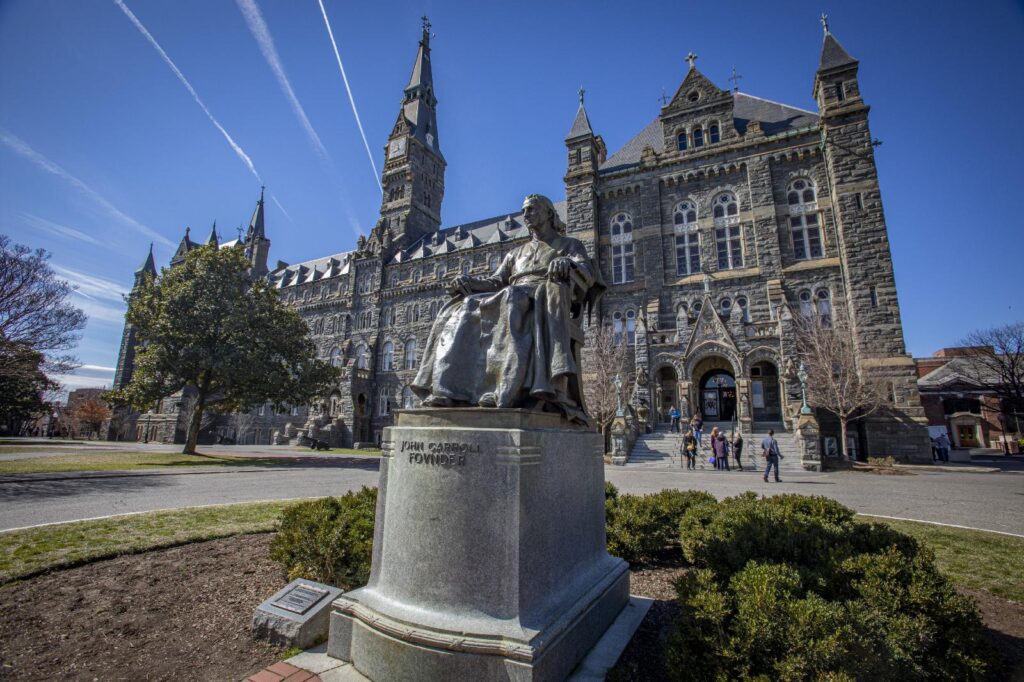
The newspaper quoted a statement from Georgetown’s athletics division, which said that while the school was “aware of indictments made against a player who previously attended Georgetown” and of indictments “against members of an opposing team during an away game, we are not aware of any misconduct or allegations of misconduct against former players while they were playing for Georgetown.”
“We will continue to monitor this matter and continue to review our practices to ensure that Georgetown Athletics is in full compliance with all relevant laws and regulations,” the division said in its statement.
In his announcement of the federal charges — which if proven could result in sentences ranging from five to 20 years, plus six-figure fines — Metcalf explained that the six named fixers in the scheme “would bribe NCAA basketball players to the tune of $10,000 to $30,000 per game.”
“The player would then deliberately underperform in the game in which his team was favored to lose by a certain amount of points,” with bribed players striving to “lose the game by more than that amount,” said Metcalf.
Target choice tied to NIL compensation
According to the Department of Justice press release, the indictment alleges that “the fixers specifically targeted college players for whom the bribe payments would meaningfully supplement, or exceed, the student-athletes’ legitimate opportunities for ‘Name-Image-Likeness’ compensation.”
The NCAA permits student-athletes to pursue such third-party compensation — which can take the form of money, products or services — under specific guidelines.
In addition, said authorities, “the fixers also generally targeted for their scheme players on teams that were underdogs in games and sought to have them fail to cover the spreads in those games.”
The conspiracy relied on “carefully orchestrated FaceTime calls to obscure and prevent their communications from being intercepted and recorded,” Metcalf said.
Once players had been bribed, fixers would place bets of “hundreds of thousands of dollars per game to enrich themselves,” leading to “an aggregate loss of millions of dollars in fraudulent sports bets on bribed and fixed games,” he said.
Some involved players recruited teammates
Fixers also “had players recruit their teammates, and this scheme and this conspiracy eventually mushroomed,” Metcalf said.
The scam “eventually enveloped 17 NCAA Division I programs, 39 players and 29 games that we allege were either fixed or attempted to be fixed,” he said. “It enveloped the world of college basketball.”
Affected conferences included “the Big East, the Atlantic 10 Conference, the Sun Belt, the Horizon League,” he said, noting that “games in the playoffs of conference championships” had been impaired.
“It was a significant corruption of the integrity of sports,” said Metcalf.
According to a Jan. 15 press release from the Department of Justice, those who believe they may have information about the case can contact the FBI’s Philadelphia field office at 215-418-4000 and reference “NCAA point-shaving.”
Gina Christian is a multimedia reporter at OSV News. Follow her on X @GinaJesseReina.
Updated on Jan. 16, 2026, at 6:01 p.m. ET
