


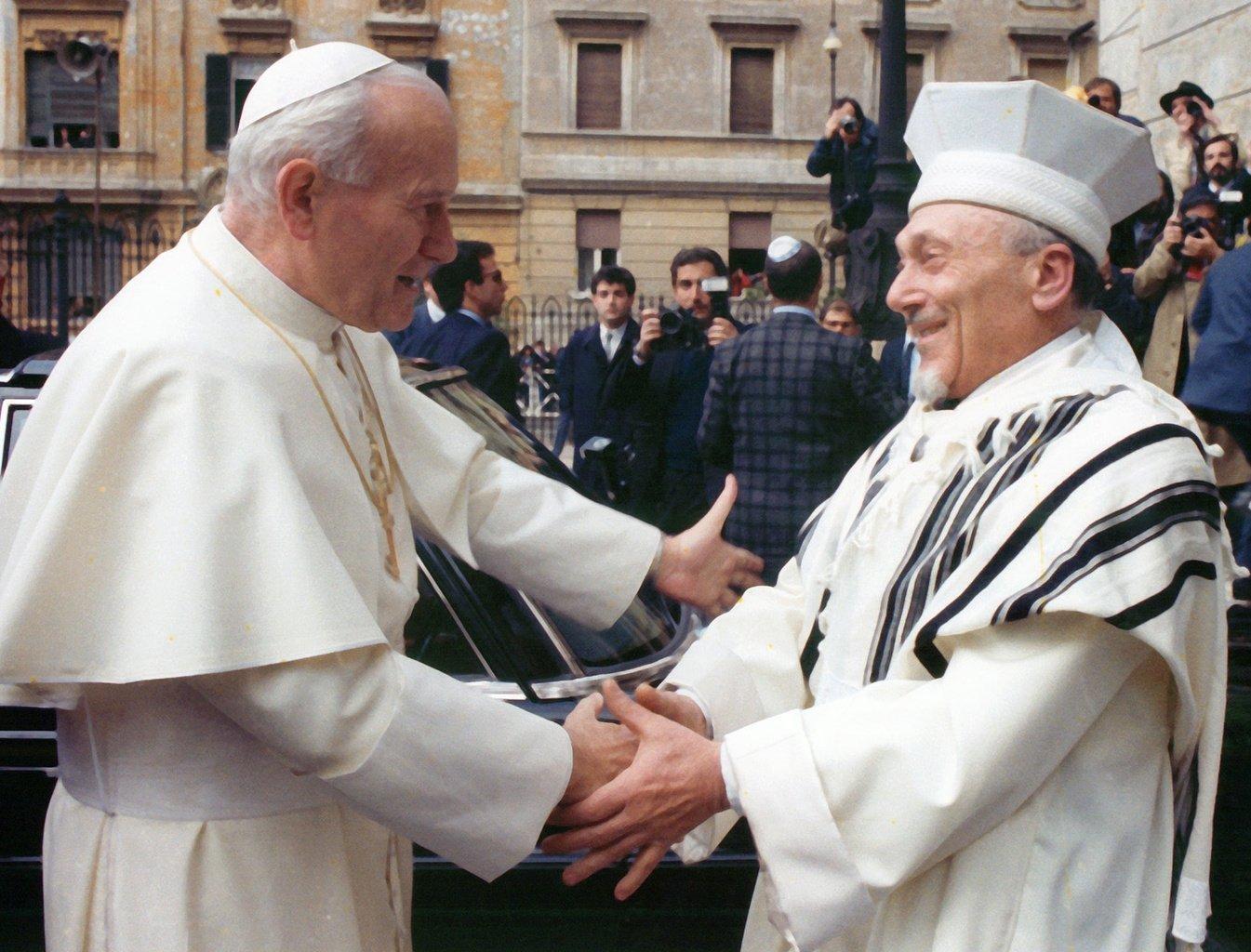
PHILADELPHIA (OSV News) — Experts in Jewish-Catholic relations told OSV News that some current public debates about Zionism, including among Catholics, are at odds with the Catholic understanding of the term — which itself has an array of meanings, as does the word “Israel” itself.
And, they said, broad catechetical education about Jews and Judaism for Catholics is more needed than ever.
Recent clashes invoking Israel and Zionism have seen Holy Land patriarchs and Church heads denounce Christian Zionism as among the “damaging ideologies” that ultimately harm the presence and unity of Christians there.
Tense exchange over Zionism
In February, conservative influencer Carrie Prejean Boller initiated a tense exchange with Jewish American witnesses at a U.S. Religious Liberty Commission hearing on antisemitism in the U.S., stating — without defining the term — “Catholics do not embrace Zionism, just so you know. So are all Catholics antisemites?”
The incident led to her removal from the commission, with its chair, Texas Lt. Gov. Dan Patrick, stating in an X post that Prejean Boller had sought to “hijack” the hearing for a “personal and political agenda,” although Prejean Boller has claimed Patrick lacks the authority to remove her.
“‘Zionism’ has become linked, on the one hand, to the ‘Christian Zionist’ religious readings of the Scriptures without regard for context, and, on the other hand, the equation of Zionism with later European colonialism as if Jews were not indigenous to the land in biblical times,” said Philip Cunningham, professor of theology and co-director of the Institute for Jewish-Catholic Relations at St. Joseph’s University in Philadelphia.
“Neither (view) represents Catholic thought as expressed in Vatican and papal statements,” he emphasized.
Spiritual patrimony between Christians, Jews
In its 1965 declaration “Nostra Aetate,” the Second Vatican Council affirmed the spiritual patrimony between Christians and Jews, while denouncing “hatred, persecutions, displays of anti-Semitism, directed against Jews at any time and by anyone,” and rejecting the view of Jews as “rejected or accursed by God.”
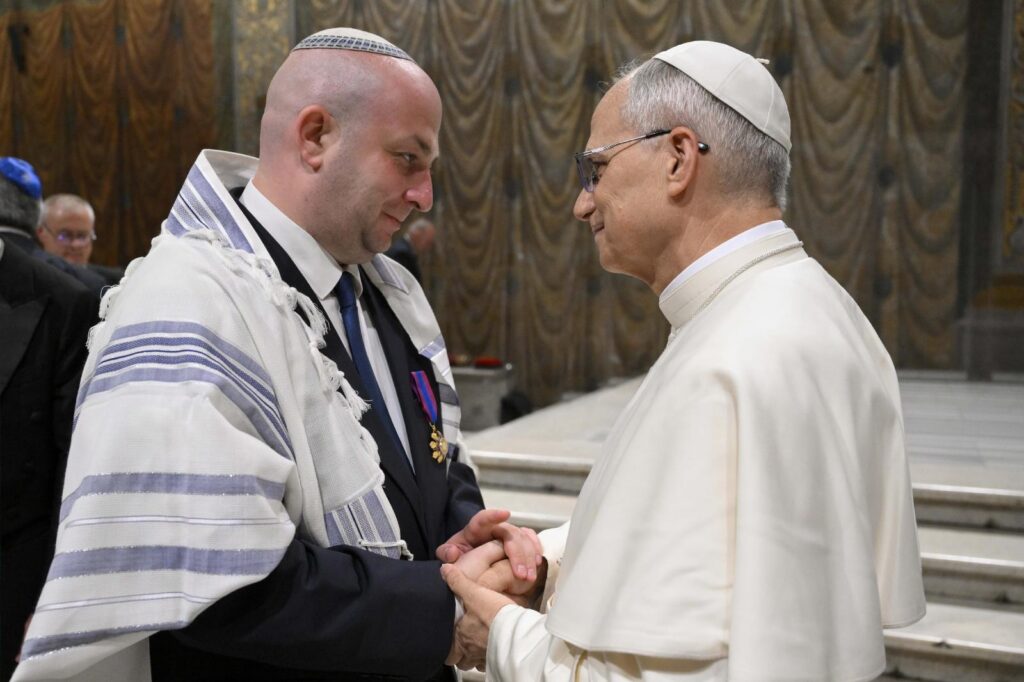
As Jewish-Catholic dialogue has steadily advanced since the council — emphasizing mutual understanding and respect for both faith traditions — the Church has issued several documents explaining in greater fullness the application of “Nostra Aetate.”
Speaking to OSV News, Holy Cross Father Russell McDougall, executive director of the U.S. Conference of Catholic Bishops‘ Secretariat of Ecumenical and Interreligious Affairs, cited two key post-conciliar documents: a set of guidelines issued in 1974 by the Vatican’s Commission for Religious Relations with the Jews, and a set of 1985 notes on how to correctly present Jews and Judaism in Catholic preaching and catechesis.
‘Memory of their forefathers’ land’
Quoting the 1985 document, Father McDougall said, “The history of Israel did not end in 70 A.D,” when Jerusalem fell to Roman forces, but “continued, especially in a numerous diaspora that preserved both fidelity to God and the memory of their forefathers’ land.”
“Christians are invited to understand this religious attachment which finds its roots in biblical tradition, without however making their own any particular religious interpretation of this relationship,” Father McDougall said, quoting the document further.
It also states that “the existence of the State of Israel and its political options should be envisaged not in a perspective which is in itself religious, but in their reference to the common principles of international law.”
Signifies a number of realities
As Jewish-Catholic dialogue has made clear, the single word “Israel” actually signifies a number of realities, explained Cunningham and IJCR co-director Adam Gregerman, professor of theology at St. Joseph’s University.
In Hebrew, the word “Israel” can mean “something like to ‘wrestle/grapple with God,’ as in the story of Jacob wrestling with a spiritual being in Genesis 32:22-32,” said Cunningham.
In addition, Israel is “the primary self-designation of the Jewish people, especially biblically and liturgically,” as in the Hebrew “am Israel” (“the people of Israel”) or “b’nai Israel” (“the children of Israel”), he said.
“Eretz Israel” refers to “the homeland of the people of Israel,” while “medinat Israel” indicates “the modern nation-state of Israel,” Cunningham said.
Be ‘clear’ in what sense name is used
“One simply should be careful to make clear in what sense they are using the name,” he stressed.
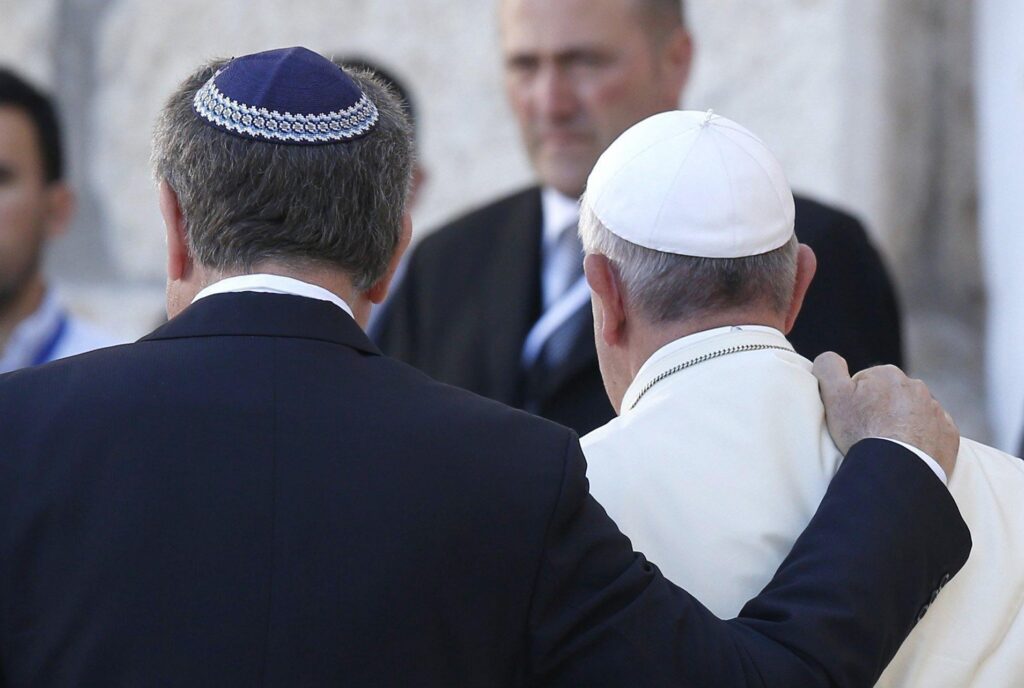
“I think from our perspective as Catholics, when we speak about Israel in general, it’s the term we use to refer to a people, to the children of Abraham, Isaac and Jacob, whom God has called to live in friendship with himself,” said Father McDougall.
But he added, “When it comes to the emergence of modern Zionism, that’s a complex issue, because historians can trace the emergence of modern Zionism back several centuries.”
Emergence of Zionism in 19th century
The emergence of Zionism in 19th century should be situated in the broader context of “key trends taking place in Europe,” specifically “enlightenment and emancipation in Western and central Europe and state centralization and enlightened absolutism in Eastern Europe,” Liora Halperin, a University of Washington historian of Israel and Palestine, noted in a January 2015 article for the Foreign Policy Research Institute think tank. “Both of these would lead some Jews toward Zionism, though not always for the same reasons.”
Father McDougall said that “more practically for us today, ‘Zionism’ is the term that we use to refer especially to the nationalist political movement that emerged in the 19th century alongside other nationalist movements.”
A national consciousness
“This was the time of German unification, Italian unification; there was agitation for the reemergence of a Polish state after Poland had been carved up by Prussia, Austria and Russia,” said Father McDougall. “National consciousness was part of the air people breathed in the late 19th century, and a growing Jewish national consciousness was part of that.”
That same consciousness also extended to what would become Arab-majority nations in the Middle East, following the parceling of the former Ottoman Empire between Britain and France after World War I, and the Muslim independence movements that subsequently ousted colonial forces.
Halperin noted in her FPRI article that along with a broader emergence of nationalism in Europe, centuries of antisemitic persecution, marked by expulsions and pogroms, was also a determining factor in the development of Zionism.
U.N. approved partitioning of Palestine
After the Shoah, or Holocaust— the systematic murder of 6 million Jews by Germany’s Nazi regime and its allies and collaborators during the World War II — the United Nations approved the partitioning of the British-mandated Palestine into two states, one Jewish, one Arab — ultimately leading to the modern state of Israel, Father McDougall noted.
The Vatican formally recognized the state of Israel in 1993, reiterating the Church’s condemnation of antisemitism — with Church officials, including the U.S. Catholic bishops, often using the working definition of antisemitism adopted in 2016 by the International Holocaust Remembrance Alliance.
The Vatican formally recognized the state of Israel in 1993, reiterating the Church’s condemnation of antisemitism.
That condemnation, reaffirmed in several Church documents since then, was restated in 2024, when the U.S. Conference of Catholic Bishops and the American Jewish Committee teamed up to release “Translate Hate: The Catholic Edition,” a resource that confronts antisemitism by cataloging anti-Jewish slurs, while providing Catholic teaching that counters such hatred.
In his foreword to the guide, Bishop Joseph C. Bambera of Scranton, Pennsylvania, chairman of the USCCB’s Committee on Ecumenical and Interreligious Affairs, noted that “the scourge of antisemitism shows itself whenever the Jewish people are treated merely as a collective — whether it be racial, ethnic, national, or cultural — that deserves contempt, disparagement, diminishment, or destruction.”
He added, “When this attitude leads an individual or group to mistreat, discriminate against, or harm Jews in speech or act, it is a sin that contradicts Catholic teaching on the unity of the human race and the dignity of all peoples.”
In 2018, the retired Pope Benedict XVI wrote that “the Vatican has recognized the State of Israel as a modern constitutional state and sees it as a legitimate home of the Jewish people, the rationale of which cannot be derived directly from Holy Scripture. Yet, in another sense, it expresses God’s faithfulness to the people of Israel.”
Father McDougall said that politicians and polemics have tended to frame the debate as “whether the Jewish people have a right to a national homeland” — but the question, from a Catholic perspective, is in a way “a moot point.”
National homeland in state of Israel
“They do have a national homeland now in the state of Israel,” said Father McDougall.
Gregerman also used the word “moot” in his assessment of Zionism.
“Zionism is the name for the movement for Jewish national self-determination and sovereignty in the land of Israel,” he said. “It is actually moot in the present and a largely useless term, since that’s over, unless one is contesting whether the movement’s accomplishments are currently illegitimate,” which he said “is a whole other discussion, and not about Zionism but about morality and the lives of Israelis today.”
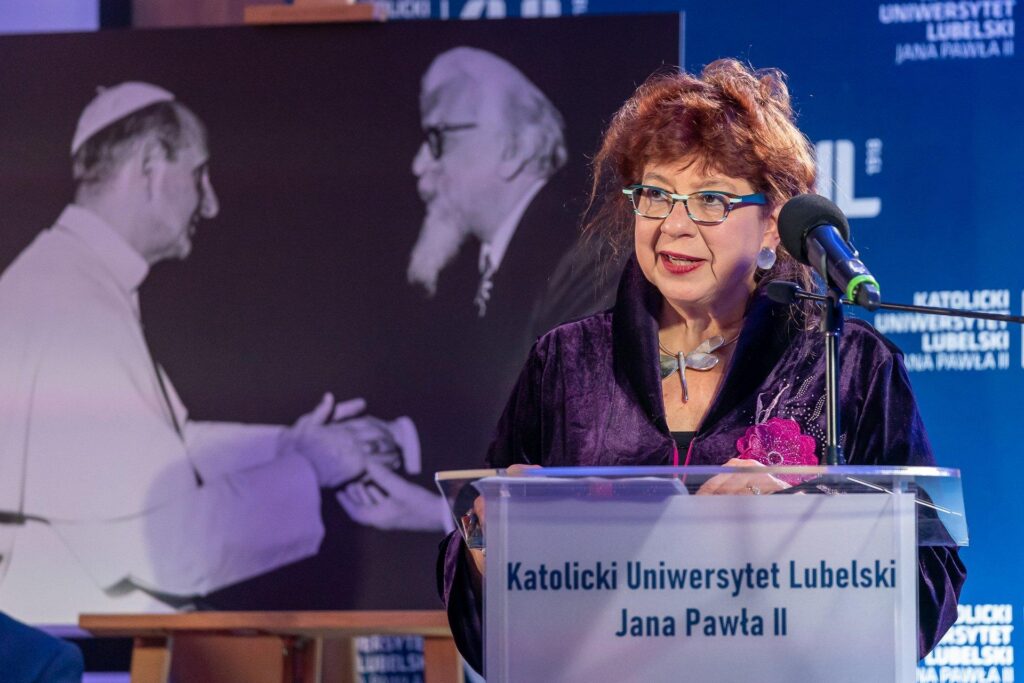
“Nearly everything else dealing with views of the state is mostly just politics,” Gregerman added, noting that “whether some Jews and/or Christians assign religious significance to that event is separate from the event itself. In that case, it’s then just religious politics.”
Practical, secular legitimacy
“Most Jews don’t care if non-Jews give religious legitimacy to the state of Israel,” said Gregerman. “Practical and secular legitimacy is enough, almost all would say, and thus the Catholic position would meet with near universal approval.”
Ultimately, said Cunningham, “I don’t think education on these terms can be conducted apart from the larger educational and catechetical project of teaching about Jews and Judaism generally.”
He pointed to a 2022 survey of American Catholics co-sponsored by the IJCR, which showed that “most Catholics do not know much about Catholic post-Nostra Aetate teachings” regarding Judaism. This includes the ongoing Jewish covenant with God, Cunningham said, “even though relevant education was explicitly called for in Vatican documents beginning in 1974.”
He added, “Addressing this lacuna is urgently needed today, especially in seminaries, theologates, and in preaching and catechesis on New Testament texts.”
Gina Christian is a multimedia reporter for OSV News. Follow her on X @GinaJesseReina. Kate Scanlon, national reporter for OSV News from Washington, contributed to this report. Follow her on X @kgscanlon.
Updated 12:28 p.m. ET March 3, 2026.
