

(OSV News) — In March 1991, a young Canadian-born Ukrainian Catholic priest named Father Kenneth Nowakowski boarded a chartered flight from Rome for a trip that would make headlines around the world — and history.
The prelate for whom he worked, Cardinal Myroslav Ivan Lubachivsky, was returning home for the first time since 1938, having spent most of his life barred from the land of his birth — modern Ukraine, soon to declare independence after decades of brutal Soviet repression that had driven the Ukrainian Greek Catholic Church underground.
The cardinal — who previously served in the U.S. as the Ukrainian Catholic Archbishop of Philadelphia — oversaw that church in exile, succeeding Cardinal Josyf Slipyj, who had spent some 18 years in Soviet prisons for his faith.
His predecessor, Metropolitan Andrey Sheptytsky, had also been arrested multiple times by czarist Russian authorities.
As the Aeroflot jet carrying Cardinal Lubachivsky and his delegation touched down in the western city of Lviv — still part of the former Soviet Union at the time — “we were not really sure what would be happening,” now-Bishop Nowakowski of London told OSV News.
In fact, the group was “shocked” as they headed to their destination.
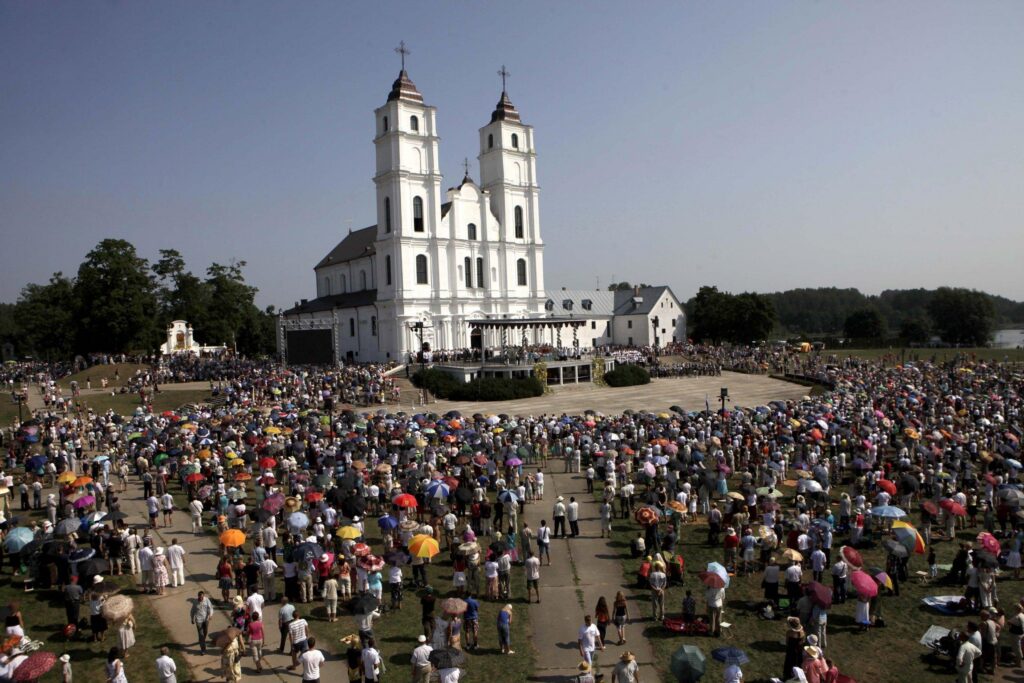
“There were hundreds of thousands of people lining the road from the airport to St. George’s Cathedral” in Lviv, said Bishop Nowakowski. “It was lined with people just waiting to see the head of the church. … It was clear that this was something exciting.”
In the years since Ukraine’s 1991 declaration of independence, the UGCC — the visible structures of which had been formally “liquidated” by Soviet authorities in 1946 — has become the largest of the 23 Eastern Catholic churches, now representing some 12% of Ukraine’s population.
And, said Major Archbishop Sviatoslav Shevchuk, who now leads the UGCC, that resurrection has been due in part to the generosity of U.S. Catholics, who have steadily supported the Church in formerly communist European nations through an annual collection.
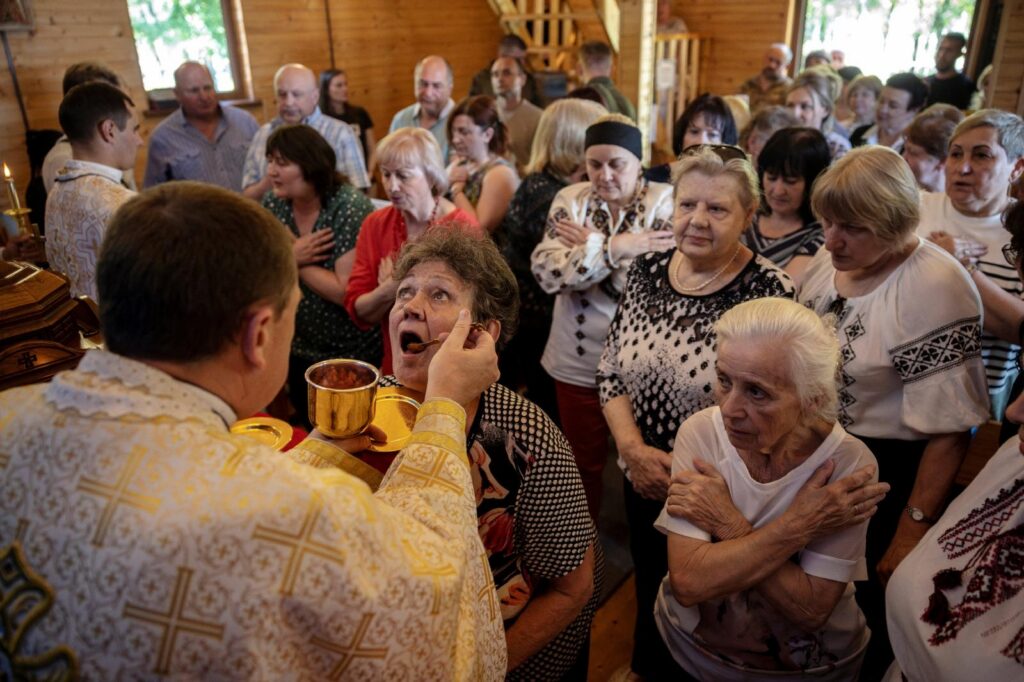
Since 1991, the U.S. Conference of Catholic Bishops has held an annual Collection for the Church in Central and Eastern Europe, with funds supporting the Catholic Church in the former Czechoslovakia, Soviet Union and Yugoslavia — a total of 28 current nations.
Launched under St. John Paul II as communist regimes collapsed throughout Europe, the appeal — which will take place in many U.S. dioceses on Ash Wednesday (Feb. 18) — has, to date, provided an estimated total of more than $230 million in funding for thousands of projects.
Donations can also be made directly online at https://www.igivecatholic.org/story/USCCB-CCEE.
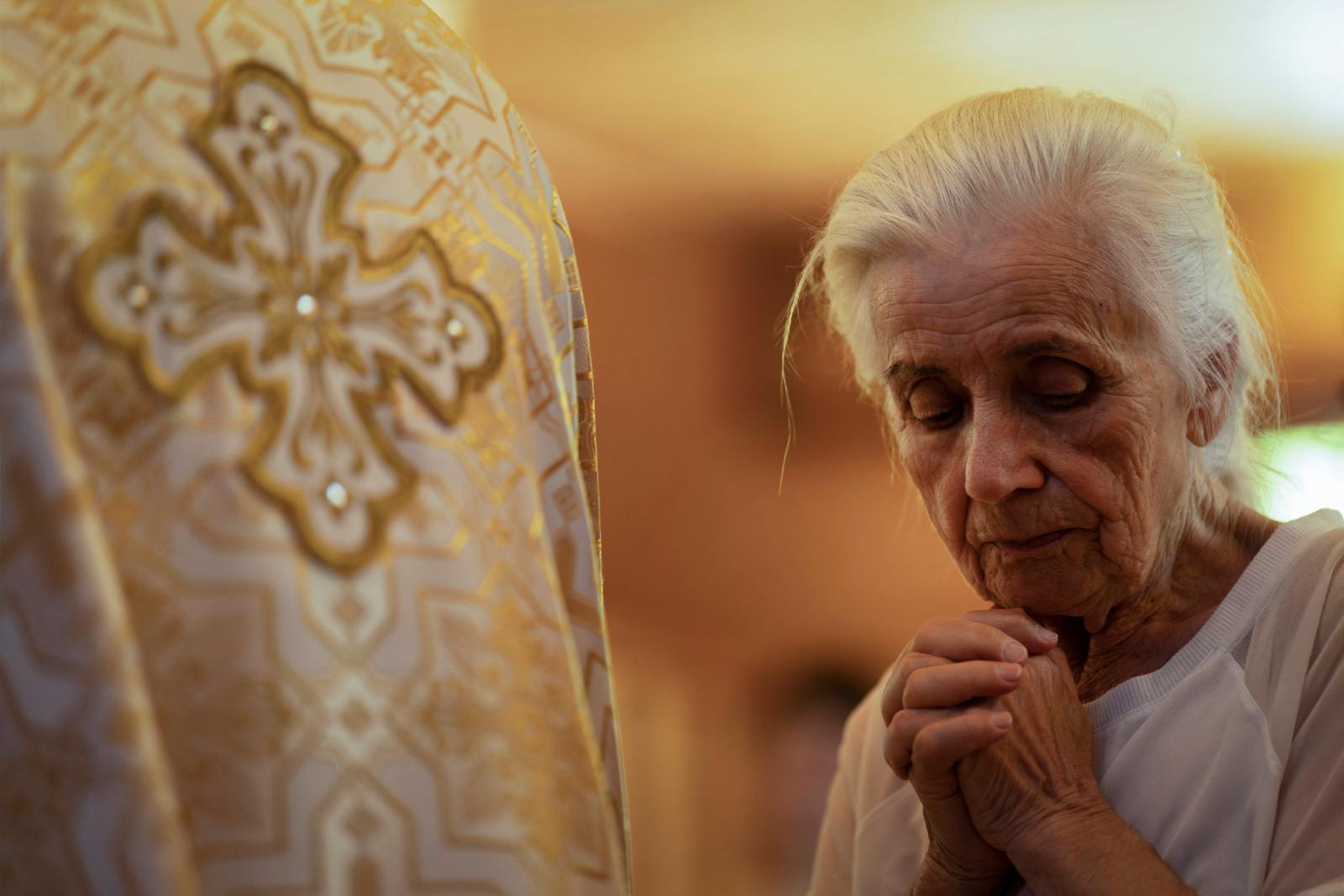
“I’m a child of the underground Church (in Ukraine),” Major Archbishop Shevchuk told OSV News. “Because of this worldwide solidarity, because of this specific act of mercy, you helped us not only to come forth from the catacombs, but to rebuild our very presence in Ukrainian society.”
The program’s reach is ‘immeasurable’
Bishop Gerald L. Vincke of Salina, Kansas, chairman of the USCCB Subcommittee on Aid to the Church in Central and Eastern Europe, told OSV News he feels “very privileged” in that role.
“I see the incredible good that is happening,” said Bishop Vincke. “Just to be in solidarity with our brothers and sisters — and they are our brothers and sisters — it means the world to them, to know that they can count on us to help them, to care for them and really just be a presence in their life.”
The program’s reach is “immeasurable,” said Jennifer Healy, USCCB director of Aid to the Church in Central and Eastern Europe and associate director for the USCCB’s national collections office.
Healy explained the grant program awards an annual average of $7.6 million to support some 300 projects.
Grants support a range of initiatives, such as church “infrastructure formation and pastoral programs for families and youth, Catholic education and media, seminaries and priests, evangelization and pro-life ministries,” along with building projects for churches and pastoral centers, she said.
“The USCCB responds to the needs of the local bishops,” Healy noted.
Bishop Nowakowski said donations to the collection helped the UGCC in Ukraine open a television studio for the production of “good, quality” religious programming.
Another crucial project aided by the collection was “the training of men for the priesthood,” he said.
That effort required everyday items such as meals, bedding and books for seminarians — and supplies for religious orders who had “all of their properties confiscated under Soviet repression,” Bishop Nowakoski said.
The U.S. bishops and their charitable partners “came, listened and helped us achieve those dreams,” he said.
‘Solidarity among brothers and sisters in Christ’
Auxiliary Bishop Jeffrey M. Monforton of Detroit — a former chair and current member of the USCCB Subcommittee on Aid to the Church in Central and Eastern Europe, who last visited Ukraine in 2023 amid Russia’s current war on the nation — said the collection “comes down to solidarity among brothers and sisters in Christ.”
“We’re in a unique position here in the United States to assist others who are trying to rebuild from the damage and oppression that communism did to the 28 countries in the (former) Soviet bloc,” Bishop Monforton, who also visited Ukraine in 2001 with St. John Paul, told OSV News. “And this is our time to step forward and step up and assist them.”
He stressed that “it takes longer than just a couple of years to rebuild a country devastated by seven decades of oppression, especially when it comes to a church.”
Bishop Monforton observed that “most of the churches” seized by communist officials in some countries “were never returned to the Catholic Church when the Soviet bloc dissolved, so they had to build their own churches” again.
He pointed to Belarus — to which he’s traveled “about half a dozen times” — as one example.
Bishop Vincke said that during a visit in recent years to Bulgaria, he observed that the effects of communism “still linger,” noting “it felt like I was still in the Cold War in many ways.”
During his visit to Albania in 2019, Bishop Monforton found that not only the Church, but the nation itself continued to grapple with the impoverishing effects of communism, as do Armenia, Slovakia and Romania in several respects.
In contrast, “Poland does not receive assistance from us anymore,” said Bishop Monforton. “Poland now gives assistance to some of the countries. It made a remarkable turnaround.”
Now, the collection aims to complete that turnaround in all of the other nations it serves, said the bishops.
The collection makes hope a reality
Reflecting on Bulgaria, Bishop Vincke said there remains “a lack of hope” among the people.
“It’s not like the communists are in Bulgaria persecuting them or killing them, but it’s the effects of it, that godless society that in a way destroyed a lot of their hope,” said Bishop Vincke. “So we’re there to give them hope and to bring Jesus to them.”
One of the ways the collection reaches Bulgarians is through a Catholic radio station, “so people can hear the Good News to give them hope,” he said.
Many of the former communist nations — especially Ukraine, where Russia’s ongoing war continues attacks first launched in 2014 — are also wrestling with trauma, with the Church working to train clergy, religious and pastoral staff to care for those affected.
The collection makes hope a reality, said Bishop Vincke.
“One bishop from Eastern Europe told me, ‘Through you, the Church in America, we feel the power of the whole Church helping with us and being with us,'” Bishop Vincke said. “In all these places, it’s one building at a time, one stepping stone at a time that’s helping them, and giving them hope — one day at a time.”
Gina Christian is a multimedia reporter for OSV News. Follow her on X @GinaJesseReina.
Updated on February 17, 2026, at 10:37 a.m. ET
