


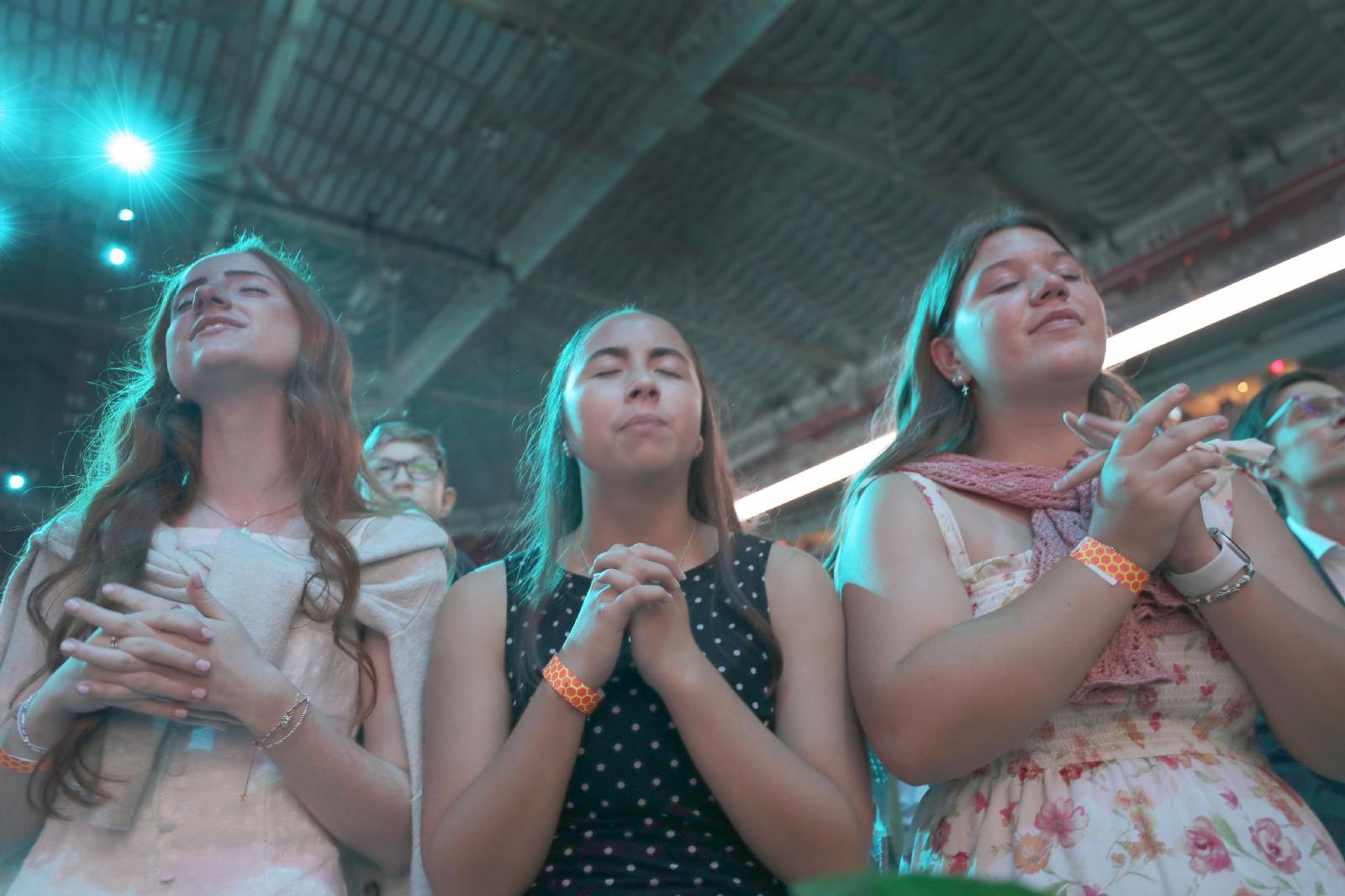
(OSV News) — Data points to “signs of strength and stability” in religious behavior in the U.S. — but there are “mixed signals” among young adults, and demographers advise taking a “long view” of any shifts, according to Pew Research Center.
On Oct. 28, Pew and the Knight Foundation released an analysis of several surveys to provide an updated look at the latest trends in religion among U.S. residents, with an additional focus on young adults.
Data was drawn from Pew’s 2026 National Public Opinion Reference Survey and its 2025 Cross-Sectional Engagement Survey. The aggregated data was compared with previous data — including Pew’s 2007, 2014 and 2023-2024 Religious Landscape Studies — with other data drawn from a phone survey conducted May 26-June 1.
The Pew-Knight report said following “a prolonged decline” in religion in the U.S., since 2020 “steady percentages” of the nation’s adults have said they identify with, value and, in some form, practice religion.
Since the COVID-19 low point, when houses of worship were closed or had very limited accessibility due to pandemic protocols, more Americans say they have attended religious services within the past month: 34% in person, and 45% either in person or by some form of broadcast, according to a June survey cited by the report.
‘Mixed signals’ when it comes to young adults
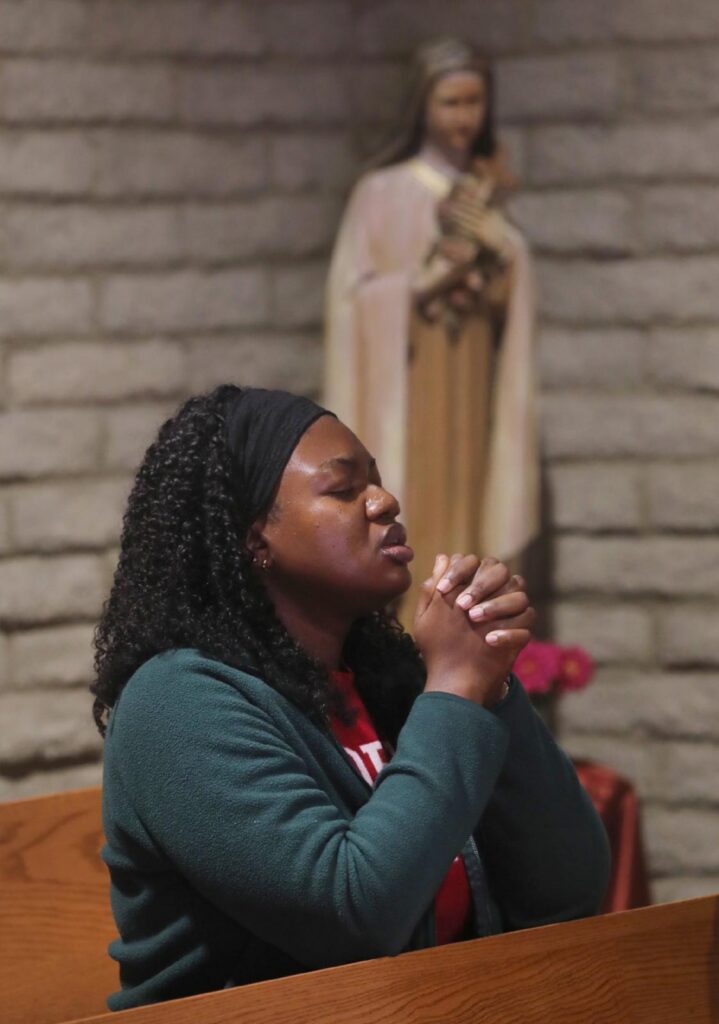
But, researchers cautioned, Pew’s “latest surveys contain mixed signals about what is happening among young adults.”
Those born from 2004-2008, who are now about ages 18 to 22, are “reporting relatively high rates of attendance at religious services,” said the report.
Of that group, 41% attend a service at a house of worship at least once or twice a month — higher than the overall national average of 33%, the Pew-Knight report found.
Yet those who are just a few years older — about 23 to 26 — “are the least religious age group” in terms of prayer frequency as well as valuing and identifying with a religion, said the report. In contrast to their younger peers, 27% say they attend religious services at least monthly.
More broadly, said the report, the 18-22 year old cohort members “are no more religious today than young adults in this age range were in 2014.”
In addition, the report said, “young adults between 23 and 26 today are less religious than people in this age range were in 2014.”
Overall, both age groups “are significantly less religious than young adults of the same ages were in 2007,” the Pew-Knight report said.
Researchers added, “We have no clear evidence that any birth cohort we can track over time has become more religious in recent years.”
Political affiliation, narrowing gap between men and women
They also noted that the youngest Republican adults reported attending religious services more often than their Democrat counterparts.
However, said the report, the former “are not solely responsible for the high levels of religious attendance among the youngest adults,” since “the youngest Democrats also attend services at relatively high rates” compared with fellow Democrats in some older age groups.
Researchers highlighted that recent Pew surveys have seen a kind of gender reversal in religious practice, with the youngest men reporting more frequent attendance at religious service than their female peers.
Previously, “American women have tended to be more religious than American men,” said the report.
While “that’s still true today,” at least regarding prayer frequency and the valuation of religion, the gender differences “are less stark than they used to be,” the report said.
The gap is narrowing not due to increased religiosity among men, said the report.
Rather, “both women and men in the U.S. have become less religious over time” in terms of regular prayer, religious identification and religious valuation, the report said.
Long view needed to understand ‘complicated picture’

The Pew-Knight report also noted that earlier studies have also showed “the youngest Americans entering adulthood with relatively high rates of religiousness,” only to have it “fade with time.”
“We have no way of knowing whether today’s youngest adults will follow that pattern or break it,” said researchers.
Ultimately, the report described religion among the nation’s young adults as “a complicated picture,” with the findings among several other major polls yielding variation in results.
The Pew-Knight report also stressed that “Americans who have just recently become adults are a difficult group to study in surveys.”
Spread between childhood homes, college and new employment, “they can be hard to reach in surveys,” said the report, noting the risk of biased findings if samples are not representative.
Sample sizes themselves are small, said the report, “since the nation’s youngest adults make up a relatively small share of the country’s population,” and the pool becomes even smaller when additional variables, such as political party affiliation, are factored in.
Ultimately, said the report, “it’s prudent to take a long view,” as religion scholars typically examine “religious change over decades.”
“Time will tell whether the relatively high religiousness of today’s youngest adults is a turning point or a blip in the data,” said the report.
Gina Christian is a multimedia reporter for OSV News. Follow her on X @GinaJesseReina.
