


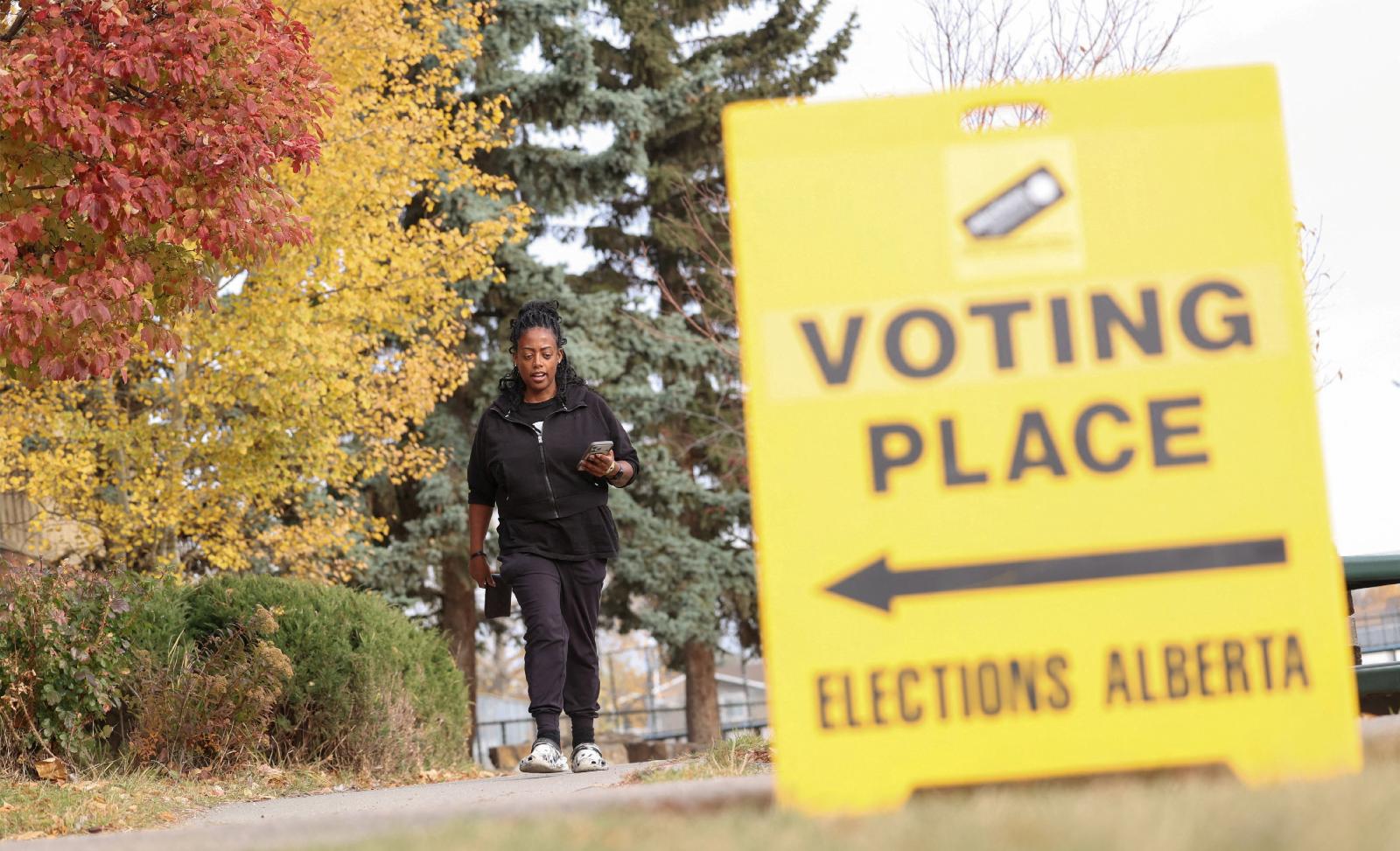
Paul Schratz / Canadian Catholic News
(OSV News) — Alberta voters have decided against starting the process toward a binding referendum on separation from Canada, but their support for other questions on the Oct. 19 ballot could leave the province with deep divisions that need to be healed.
“Things are very polarized right now, and the road to healing will be a long one,” said Glen Argan, a columnist for The Catholic Register in Edmonton and former editor of the Western Catholic Reporter.
While the question of political independence for Alberta received most of the headlines, the results of the provincial referendum revealed disagreements over federal-provincial powers, voting rights and immigrant access to public services.
More than 2 million Albertans, about 64% of eligible voters, cast ballots in the provincial referendum on Alberta’s relationship with the federal government and its future in Canada.
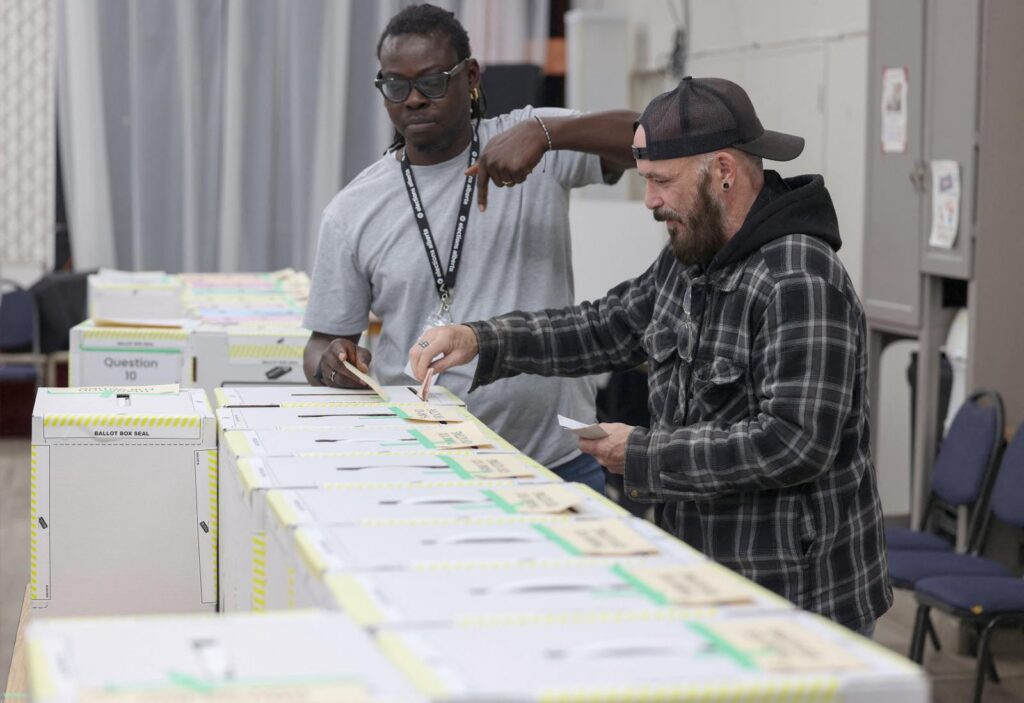
With 95% of voting locations reporting by Oct. 21, about three-quarters had voted against beginning the legal process toward a future binding referendum on separation.
Official results are expected Oct. 29
Unofficial results showed majority support for seven of the other nine proposals, including all five questions related to immigration policy, access to provincial services for nonpermanent residents, and proof of citizenship to vote in provincial elections. Official results are expected Oct. 29.
Alberta Premier Danielle Smith announced the referendum in a Feb. 19 televised address, saying Albertans had identified immigration as a major concern. But behind the announcement was a longstanding rift between Alberta and Ottawa over federal energy and environmental policies, which many Albertans believe have benefited other parts of Canada to Alberta’s disadvantage.
Although relations between Smith and Prime Minister Mark Carney have improved on energy issues, they are still clashing over immigration and provincial powers.
Separation was not initially on the referendum ballot, but after two competing petition campaigns — for and against independence — gathered substantial support, Smith said she added it out of respect for Alberta’s citizen-initiated referendum process.
In a televised statement late Oct. 20, she pledged not to hold another referendum on separation, saying the results gave her a mandate from Albertans. At the same time, she acknowledged that Alberta’s grievances with the federal government had not been resolved and said her government would pursue the measures supported by voters.
5 referendum questions on immigration and citizenship
Preliminary results showed Albertans supporting all five referendum questions concerning immigration and citizenship: more provincial control over immigration; limiting eligibility for provincially funded programs to citizens permanent residents and those with Alberta-approved immigration status; imposing a 12-month residency requirement for social supports for some nonpermanent residents; charging fees to nonpermanent residents for health care and education; and requiring proof of citizenship to vote in provincial elections.
Argan said the tensions that arose in the referendum debate reminded him of attitudes he saw during the COVID-19 pandemic lockdown.
“The divisions exposed here are similar to those that flared up during the pandemic,” Argan said, “basically over the extent of autonomy a person or the province should have in relation to the larger whole.”
In both cases, he said, a significant number of people were feeling oppressed by the long arm of a remote federal government, which is based in Ottawa, Ontario, the Canadian capital.
In Alberta’s case, there was an added economic dimension, he said. Oil-rich Alberta is Canada’s richest province, and a significant number of Albertans believe their economic interests are being sacrificed to serve those of a Central Canadian elite.
Concerns about resources, access to public services
Alberta’s Catholic bishops acknowledged concerns about resources and access to public services in their Oct. 1 pastoral letter, while emphasizing human dignity and the needs of vulnerable people.
“A person’s worth does not depend on citizenship, income, ability or contribution to society,” they wrote. They also asked voters to consider particularly how the referendum proposals might affect children, people living in poverty, the sick and those who are isolated.
Quoting the Catechism of the Catholic Church, the bishops said, “More prosperous nations are obliged, to the extent they are able, to welcome those seeking safety and the means of livelihood.”
At the same time, they noted that public authorities “have a responsibility to regulate immigration for the common good. Newcomers, in turn, have duties towards the society that receives them.”
“Legitimate concerns about resources and access to public services merit careful consideration,” they wrote. “They must be addressed in ways that respect human dignity and avoid making any segment of our population the object of resentment or blame.”
The letter does not suggest how voters should answer the referendum questions.
How best to advance the common good
The Alberta bishops acknowledged that Catholics may reach different judgments about how best to advance the common good.
“Differences of judgment must not become occasions to demean another person or call their faith into question,” they wrote. “Our families and parishes should be places where difficult questions can be discussed with charity.”
“Whatever the outcome, our responsibilities to one another will endure.”
Argan said reconciliation will require more than accepting the result.
“Reconciliation doesn’t occur without a common understanding of the main facts,” he said. “When you have hundreds of thousands of people disagreeing over major, longstanding issues, it becomes a monumental task to achieve reconciliation.”
The problem is compounded by political leaders who are “not the best reconcilers. Reconciliation should be spearheaded by moral leaders,” he said.
“Our main current responsibility to our neighbors who voted differently than us is not to inflame things further,” Argan told Canadian Catholic News. “I don’t know that we are yet at the point where we can have discussions that are both healing and productive.”
Argan said Catholics should welcome the newcomer the way they should greet any person. “That is, make friends, try to understand the stories of immigrants and provide whatever material aid we can.”
He pointed to Catholic Social Services, which has long worked with newcomers in central and northern Alberta.
“But solidarity needs to happen on a person-to-person level as well.”
Paul Schratz, former editor of The B.C. Catholic in Vancouver, writes and edits for Canadian Catholic News. This article was published by CCN and distributed in partnership with OSV News.
