


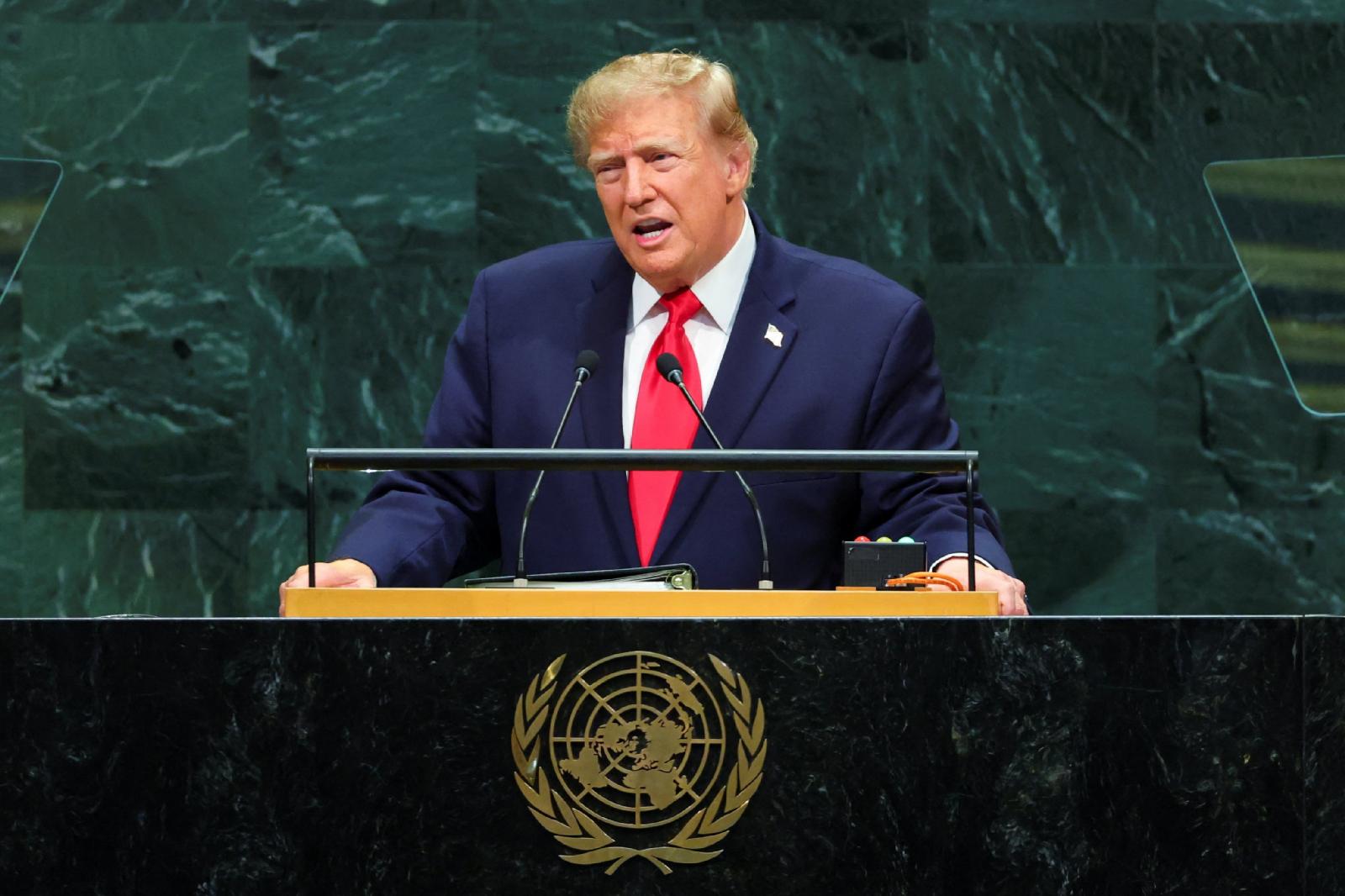
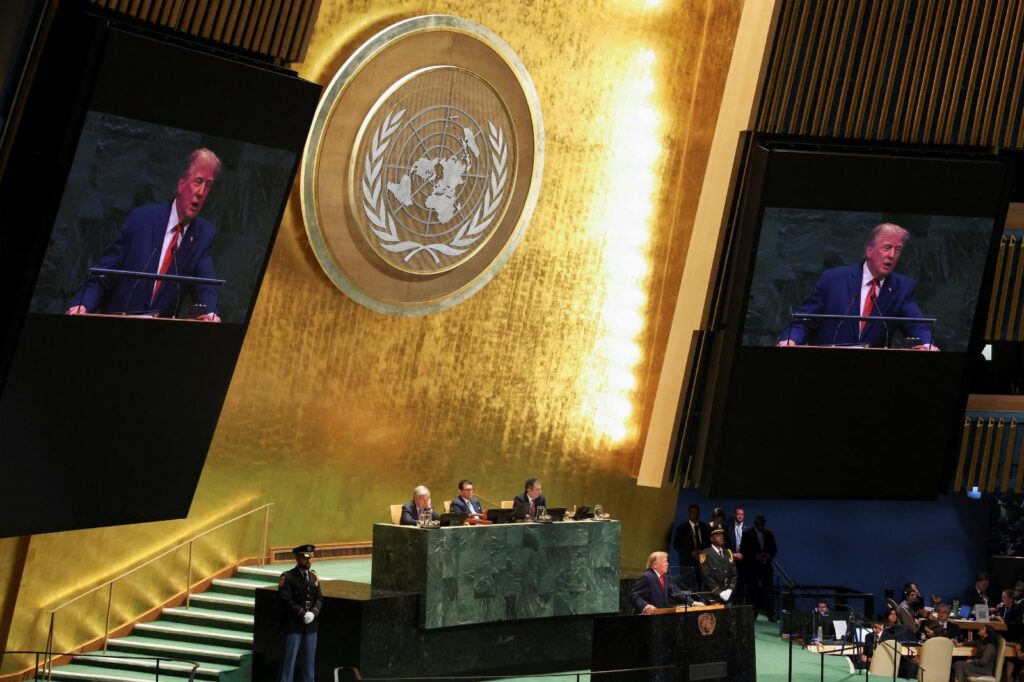
(OSV News) — President Donald Trump said Sept. 22 during a speech to the United Nations General Assembly that he has a decision to make on Iran: to make a deal or to “annihilate the Islamic Republic.”
Trump’s comments — repeating a threat Pope Leo, Catholic bishops and other world leaders denounced as morally unjustifiable — came as he reached his lowest-ever approval rating on foreign affairs in a CNN/SSRS survey. Just 29% of U.S. adults said they approve of his performance on foreign affairs, with pollsters attributing the downturn to the Iran war.
“But I have a big decision to make: Will a deal be made with Iran that lets them rebuild and create a far greater country than it ever was before?” Trump said during the speech. “Maybe one of the greatest in the Middle East, or even the world? Or do I annihilate the Islamic Republic, and do it quickly, never giving them a chance to kill and destroy people and countries again? Do I drive them into hell with no chance of survival and no hope of future greatness or generations?”
Trump speculates Iran deal to come after midterms
Trump said he believes “we’ll make a deal right after the election.”
“They’re waiting to see how I do in the midterm election. What they don’t realize is that I’m not running,” he said. “I did that already and won in a landslide. We won in a giant landslide, and I’ll be here for 2 1/2 years. The Republican Party is running, and I’ll be helping them. But I am not running. I gave absolutely no credence, and will not give credence to the election when it comes to Iran. It doesn’t even enter my mind. The only thing that does is that Iran will never have a nuclear weapon.”
Trump’s remarks that he is not on the ballot come just a few weeks after he urged his fellow Republicans at their midterm convention to “pretend” he is on the November ballot.
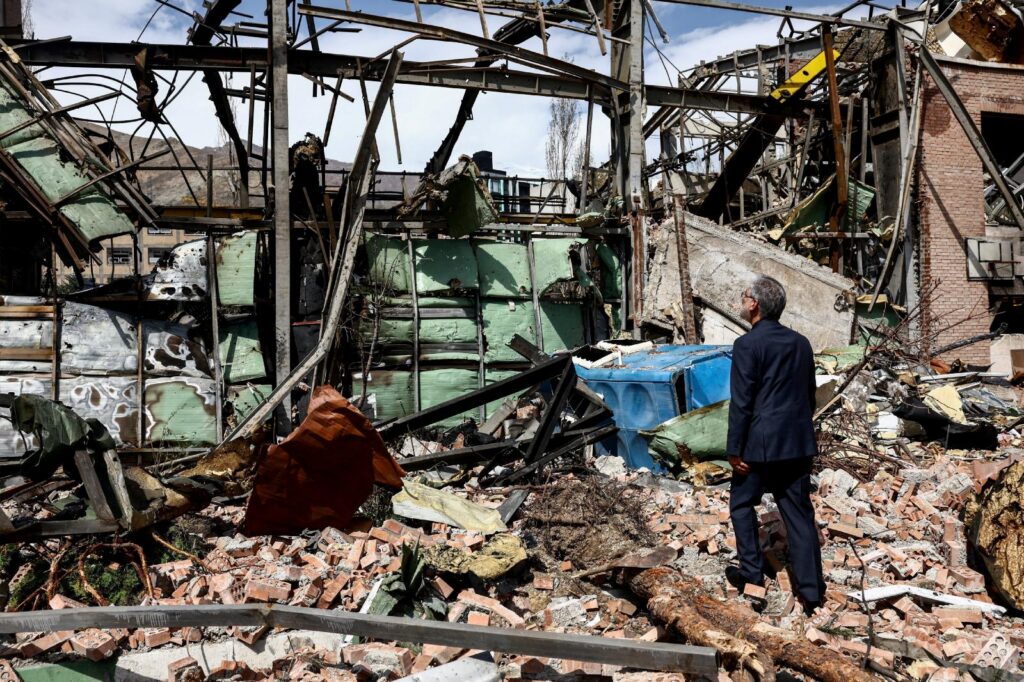
After the U.S. and Israel initiated war with Iran in February, arguing as they did so that the Iranian regime presented grave nuclear threats, Iran effectively shut down the Strait of Hormuz, a key oil shipping route, by striking ships there. The closure of the strait has led to a significant global spike in energy costs, which is among the factors driving opposition to the conflict among most U.S. adults, polls show.
Comments echo earlier threats condemned by Church
Trump said during his speech he first sought a diplomatic resolution to prevent Iran from acquiring a nuclear weapon but claimed “they absolutely refused.”
“That was a big mistake,” he said.
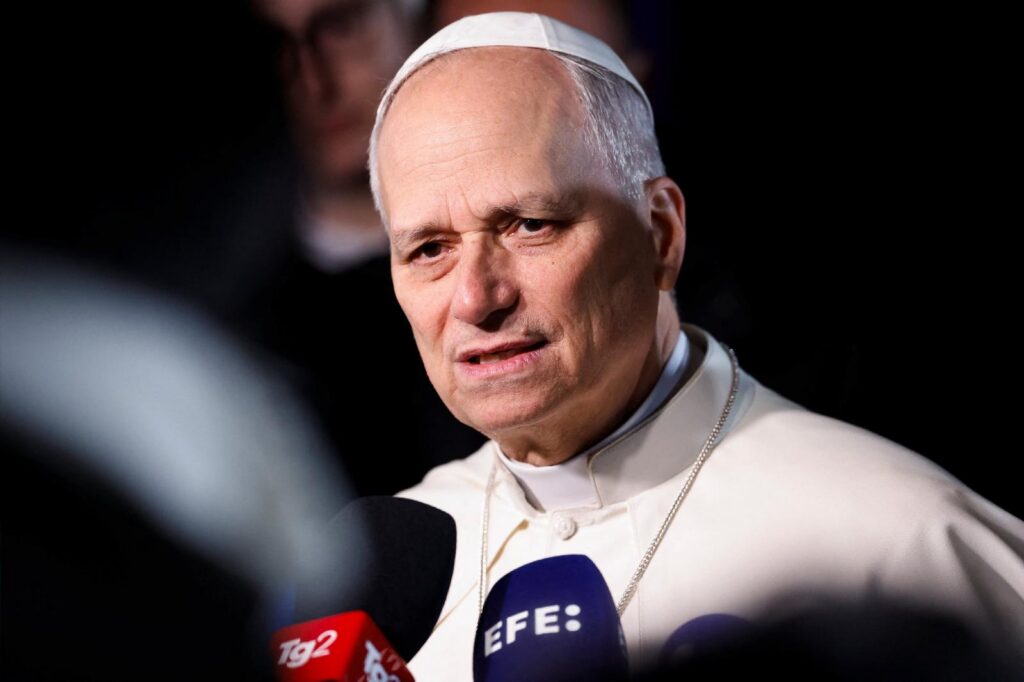
Trump previously threatened in April to wipe out Iran’s “whole civilization,” but later backed down, citing negotiations with Pakistani mediators. Catholic leaders, including Pope Leo XIV, were among those who condemned the threat at the time. Archbishop Paul S. Coakley of Oklahoma City, president of the U.S. Conference of Catholic Bishops, echoed Pope Leo, emphasizing, “The threat of destroying a whole civilization and the intentional targeting of civilian infrastructure cannot be morally justified.”
Pope Leo has objected to the U.S.-Israeli war with Iran as unjust, and called for a return to diplomacy. Trump lashed out repeatedly at Pope Leo in response, claiming he supported Iran having nuclear weapons; however, the pope never made any such statement. Pope Leo has consistently called for the rejection of nuclear weapons, and for peace and dialogue in the region.
Trump rebrand of AI as ‘superintelligence’
Elsewhere in Trump’s speech, he sought to rebrand artificial intelligence, or AI, as “superintelligence,” saying that the technology would be referred to as such in official U.S. documents.
“Let’s see if I have any power. Maybe I do, and maybe I don’t. We’re going to find out pretty soon. Superintelligence,” he said as he urged other countries to follow suit.
Multiple tech leaders have recently called for a slowdown in AI development to establish safety guardrails, prompting debate on Capitol Hill about how to respond.
The U.S. Catholic bishops’ administrative committee also met with tech leaders earlier in September and formed a task force to safeguard human dignity as AI rapidly evolves in line with Pope Leo XVI’s encyclical on AI, “Magnifica Humanitas.” The pope called for “adequate regulatory tools capable of upholding justice and curbing the distorting effects of technological power,” and a dozen U.S. bishops met with members of Congress on Sept. 16 to urge lawmakers to enact effective safety guardrails on AI.

Trump opposes calls to rein in AI
Trump, however, has largely rejected these concerns around AI, taking a bullish position on the advancement of the technology, a position he reiterated in his UN speech.
“We’re going to encourage it, not rein it in,” he said.
Also during his time in New York for the U.N. General Assembly, Trump and the leaders of Greenland and Denmark signed an agreement Sept. 22 permitting a larger US military presence on Greenland.
Trump had previously stated the U.S. would seek to acquire Greenland, even by use of force, before later backing down.
Kate Scanlon is a national reporter for OSV News covering Washington. Follow her on X @kgscanlon. Additional OSV News staff also contributed to this report.
