

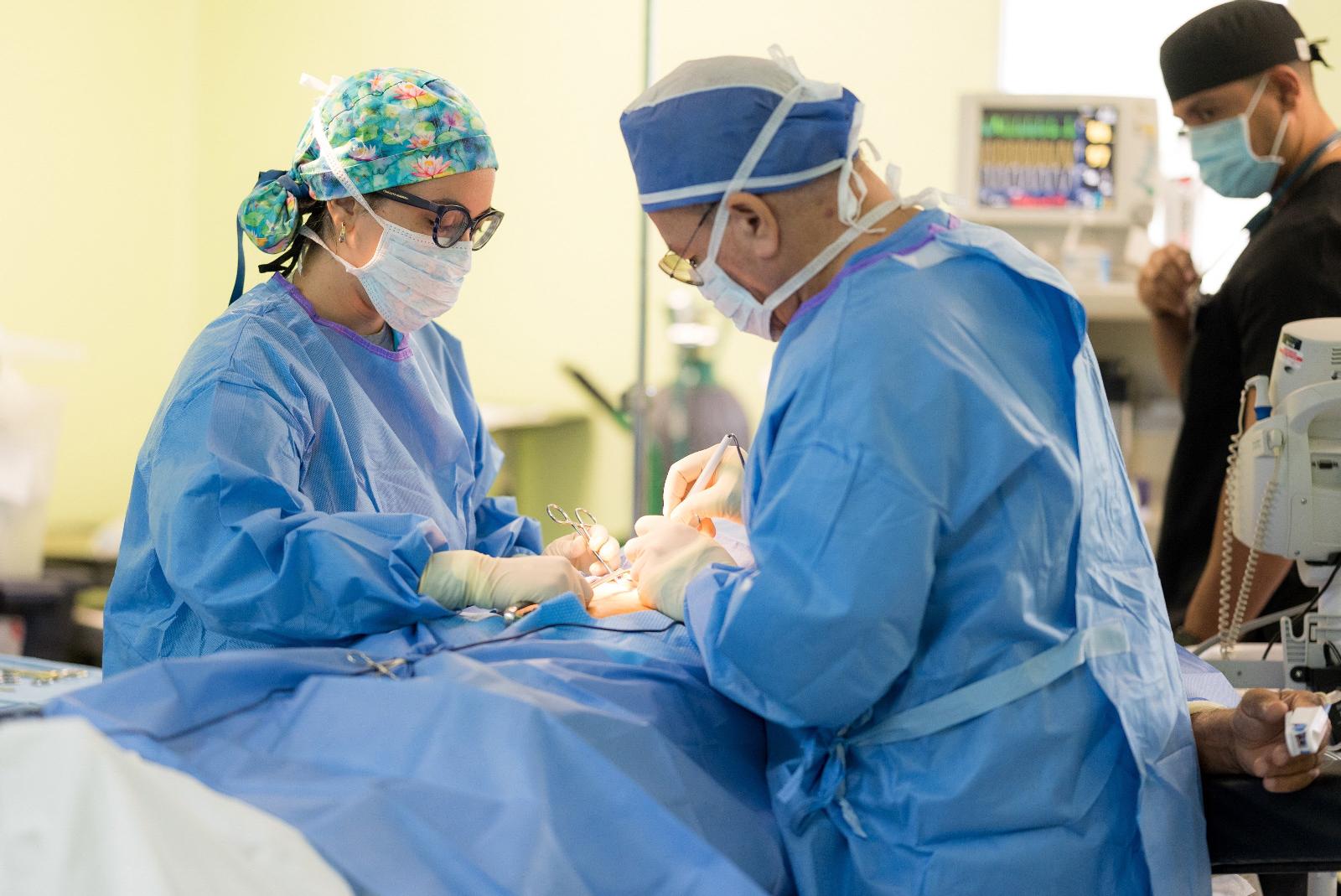
SANTIAGO DE LOS CABALLEROS, Dominican Republic (OSV News) — When Benedictine Father James Raber asked last year if he could bring three or four student volunteers along to an annual medical mission in the Caribbean he got a nice surprise.
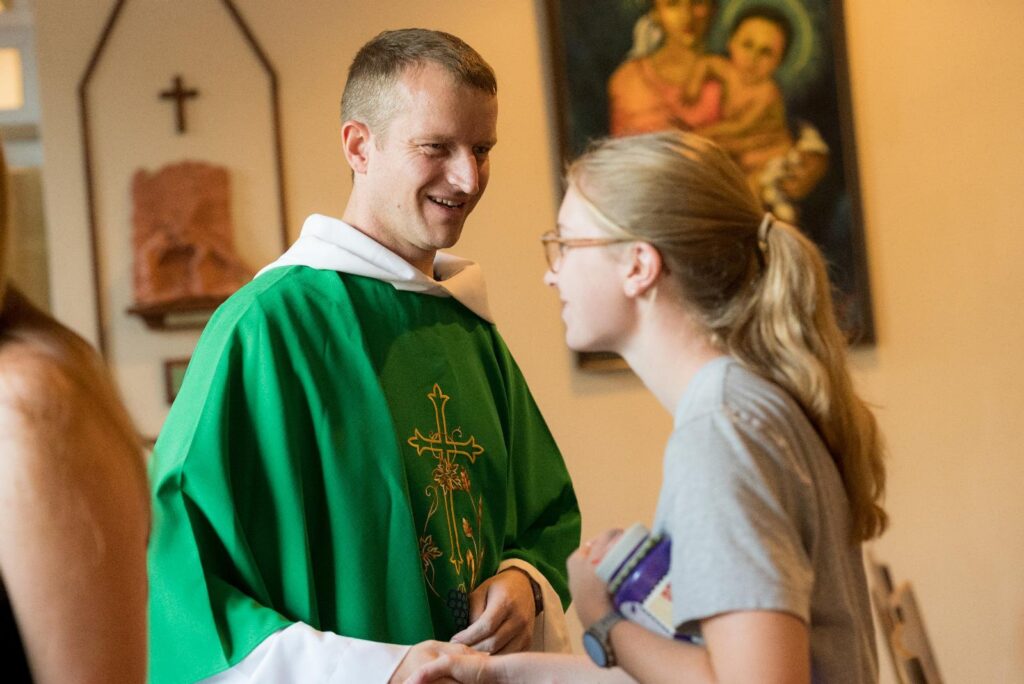
“I thought it would be great if I could bring several Belmont Abbey (College) students here as part of a mission trip — and they offered me a dozen spots,” said Father Raber, chaplain at Belmont Abbey College in North Carolina.
“And one thing I absolutely love to do is see the students interact with the patients,” he added.
The priest and his students joined up with a larger U.S, medical volunteer delegation last year operating out of the expansive campus of the Institute for Latin American Concern, or ILAC, in Santiago de los Caballeros.
Retreat-style property founded by 2 Jesuit missionaries
A four-decades old Catholic-affiliated retreat-style property founded in the 1970s by two Jesuit missionaries originally from Cuba, teams of volunteer medical specialists, surgeons, dentists and support staff integrate with local Mission ILAC staff and medical volunteers in their care for hundreds of patients in the context of Ignatian spirituality.
“It is a wonderful thing to be able to work with people who help with the mission: I am saying Mass for them, leading ecumenical reflections and hearing confessions often in the evening when there is some down time,” Father Raber told OSV News, adding that he enjoys being a priestly presence in the pediatric clinics and interacting with young families who have registered months in advance to see a medic.
“There are also people who are going to be going under for surgery who need anointing of the sick and that is offered as well,” the priest said.
Although the Belmont Abbey delegation only stayed less than a week, Mission ILAC operates year-round as a global gathering point for international medical volunteers and as a resource for often neglected rural northern reaches of the Dominican Republic and its proximity to Haiti’s border.
Reaching remote mountain villages
There are remote mountain villages with communities of Haitians living there without documents and other rural villages throughout the northwestern Dominican Republic. Consequently, Mission ILAC center coordinates medical outreach to those places where no governmental or private organization reaches.
Over the years, volunteer medics and students from Ivy League and other U.S. institutions have utilized the ILAC campus for Spanish-language courses, medical training and enrichment programs, including most notably Jesuit-run Creighton University, which earlier this year opened a 3,000-square-foot, high-tech classroom and communal space.
The Creighton facility will reportedly increase opportunities for its student engagement in research, economic development and environmental sustainability across the Dominican Republic’s communities where Creighton has health partnerships.
Student doctors, nurses and medics on overseas medical mission experiences often work alongside world-class medical professionals and are rewarded with hands-on experiences, cross-cultural patient interaction and career changing inspiration.
ILAC helped focus educational decisions
Katherine Calvet, a Florida resident and one of the Belmont Abbey College students who has made several mission trips to Santiago de los Caballeros, said ILAC helped her focus her educational decisions early on while still a freshman at Belmont.
“I thought it would be an opportunity to serve the people of the Dominican Republic and share my passion for helping others,” said Calvet, who is now an undergraduate at Florida State University.
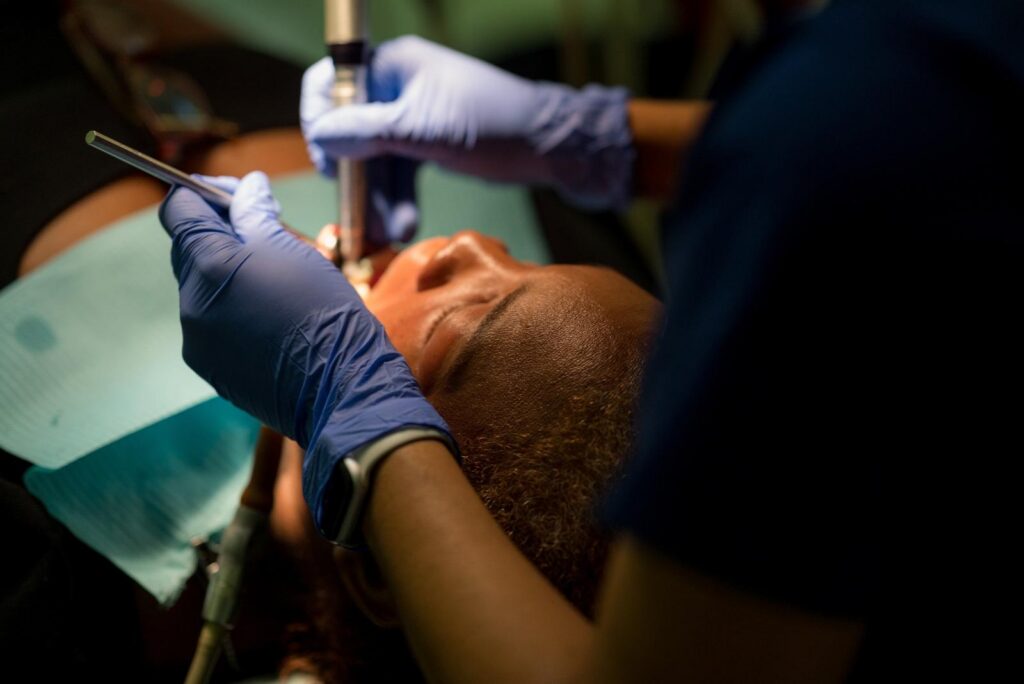
Her trips to ILAC were in concert with the Miami-based Cuban Association of the Order of Malta, which makes twice annual ILAC missions providing outpatient surgeries, pediatrics, family medicine, cardiology, dentistry and more.
“I fell in love with medicine very quickly within the first two hours of working with one of the doctors and I definitely have passion for medicine now,” Calvet told OSV News. “In triage we saw very high blood pressures and very high blood glucose levels.”
One of the senior doctors helping staff the Malta-sponsored mission in 2025 was Dr. Grant Phillips, associate director of a residency program at Altoona Family Physicians Residency Program at University of Pittsburgh Medical Center.
Pittsburgh doctor joining mission for last 10 or 15 years
“I’ve been coming here for about 10 or 15 years,” said Phillips, who participated in an end-of-day ecumenical debriefing at ILAC’s on-site chapel following a long day. He also trains student volunteers during his consultations.
“I have a lot of gratitude both to the patients — because they carry the burden of the disease — and the people who brought me down here and allowed me to get fulfillment by helping the people here. This is a life changing experience.”
Some of the medics will venture into the nearby mountain communities.
Mission ILAC maintains a network of community leader “cooperadores de salud” (“cooperators of health”), composed of men and women from their own rural communities who promote better healthcare access along with improvement of agricultural techniques as a way of maintaining rural community wellness and reducing mass migration to the cities.
Most of Dominican population in urban areas
It is now estimated that four-fifths of the Dominican population now live in one of several urban centers, creating a strain on infrastructure. Many others have left the country altogether in recent decades.
Making her 31st trip to ILAC with the Order of Malta was Dr. Jane Cohen, a primary care physician at Mount Sinai Medical Center in Miami Beach and a veteran volunteer at ILAC who said she comes at her own expense.
“I have met people from all over the U.S. and all over the world who have improved my life and taught me things I couldn’t have learned elsewhere,” Cohen said.
Cohen makes a point of attending ILAC ecumenical sessions where she shares her experiences with colleagues. She expressed gratitude to her husband back home who allows her to take vacation time and even go off the grid into the village communities.
“I decided I wanted to go out into the campos three hours by car up a rickety mountain pathway to see people who either couldn’t get to us or needed our help there and they were so welcoming,” she said.
Seeing 56 people in one community for medical help
There were 56 people in that particular community and the medical team saw about half of them as patients. On a second day they stopped at two communities of Haitians, living there without documents.
“I was trying to teach some of the medical students to see the ‘progression of disease'” and not overreach for solutions, she said, noting that many patients in the U.S. are shuffled off to the emergency room or sent out for time-consuming testing.
“For years I was coming here speaking to other internal medicine doctors like myself who realized that our services are better rendered in the office preventing people from getting admitted to the hospital,” Cohen added.
Tom Tracy, who writes for OSV News from Florida, traveled to the Dominican Republic last year with the Cuban Association of the Order of Malta.
