


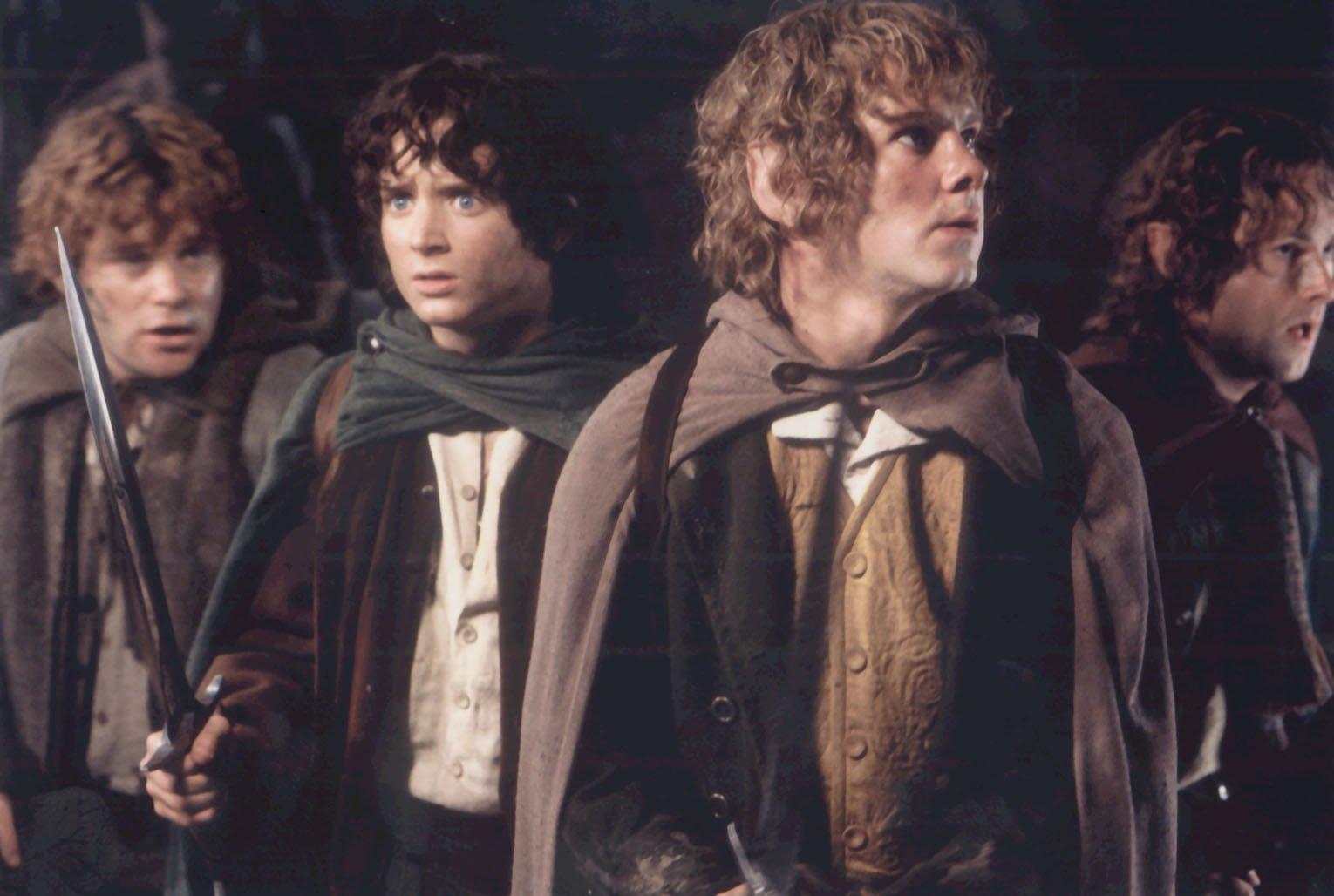
(OSV News) — Because J.R.R. Tolkien was a serious Catholic, one might assume that religion would be evident in his literary masterpiece. Yet, there is no religion in “The Lord of the Rings.” There is magic and even glimpses of the demonic, but the world Tolkien creates is a world wholly contained within itself. It is a large world, an old world, even a mythological world in its own way, but everything is within that world.
This is not unintentional, nor is it evidence of some kind of disclaiming of religion in general or of Tolkien’s own Catholicism in particular. To the contrary, as Tolkien himself confessed to a (priest-)friend in a letter from 1953: “‘The Lord of the Rings’ is of course a fundamentally religious and Catholic work; unconsciously so at first, but consciously in the revision. That is why I have not put in, or have cut out, practically all references to anything like ‘religion,’ to cults or practices, in the imaginary world. For the religious element is absorbed into the story and the symbolism.”
Although “The Lord of the Rings” trilogy was first published in the mid-1950s, its author’s Catholic worldview is getting renewed attention due to “Magnifica Humanitas,” Pope Leo XIV’s first encyclical, which addresses safeguarding the human person in the age of artificial intelligence.
In paragraph 213, Pope Leo mentions Tolkien in the context of mankind’s responsibility to embrace “small and steadfast acts of fidelity that serve as a bulwark against dehumanization.” The pope quotes the wise wizard Gandalf in the “The Return of the King” to illustrate this point: “It is not our part to master all the tides of the world, but to do what is in us for the succour of those years wherein we are set, uprooting the evil in the fields that we know, so that those who live after may have clean earth to till.”
While there may not be religion in “The Lord of the Rings,” Tolkien’s Catholicism, as he himself noted, is “absorbed into the story.” There are four key elements of the narrative characteristic of a Catholic worldview, which Tolkien embeds within the tensions and choices of his characters: disarming power, abiding hope, discernment and responsibility, and elevating the weak.
Disarming power
The tale of the great Ring of Power is a wholly unexpected journey. The journey goes against the expectations of worldly power. The Ring is borne by the least likely. It is carried toward its own undoing. Its power is not employed but resisted, leading thus not to domination but to fellowship.
Were the Ring leveraged according to the wisdom of the world, the quest would be doomed from the start. The great power of darkness anticipates those who would seek to elevate themselves and has armed himself against their advancements. Those who lust after power always expect others to lust after it, too, and so the only chance for truly casting down the mighty from their thrones is not to outmuscle them but to outwit them. That means not seeking to take their place.
As Mary sings in her Magnificat, the undoing of worldly power means casting down the mighty from their thrones and dispersing the arrogant in the imaginations of their minds and hearts. It does not mean meeting worldly power with more worldly power, just to replace whoever’s in charge. This journey is unexpected because it confounds the expectations of the mighty and the proud.
Elsewhere, Tolkien unfurls this strange logic in the choice of one of the most powerful figures in his created world: Galadriel, Lady of the woods of Lothlórien. She reveals that the duty of the mighty who are endowed with the power to sway events and move both mind and hearts is, in the end, to yield. Ones such as her must give their might in service of a mission they themselves do not design. She and those like her stand in the place of John the Baptist, who, though drawing throngs of people to himself in the wilderness, simply walked away when the time came to order his mission to the one he was called to serve: “He must increase; I must decrease” (Jn 3:30).
Hope abides
Amid the encircling gloom of the powers of the world that appear all too often irresistible and inevitable, hope abides. Hope’s abiding is at times but a whisper, a small crack of light, the hint of some other way, the rumor of dawn. And yet, hope remains so long as one draws breath, and even thereafter so long as there are others to abide in hope. Hope’s resilience is proven by the gloom that threatens to snuff it out. The more the shadows persist and grow, the longer hope endures as the possibility and the promise that this too shall pass.
For Théoden, King of Rohan, the darkness was not so much outside of him as it was in his own mind. He had been imprisoned by the counsel of the wicked. At some point, he went along willingly to some degree, but later his own agency had been reduced so severely that he could not even control his own thoughts. In due time, though, another counselor came to his aid, one unlooked for whose arrival always surprises. And so, in discourse with Gandalf, a new way is opened to the weary king.
Théoden’s sickness is that he has given control over himself to the beguilements of another; when his healer appears, this healer will not simply exchange one enchanter for another. No, Gandalf shows Théoden that the king is not the passive recipient of hope. Théoden must choose to see and accept another way. And he does.
Even if he is firm with Théoden, Gandalf will not seek to dominate the king. That, again, would be a trick of the Enemy. Hope is the power to wait with and act for those in captivity, to help restore them to their rightful dignity, and to empower them to break free of the chains that hold them. Hope builds upon those who tend to the wounds of others and who cling to one another in friendship, refusing to make enemies out of friends.
Discernment and responsibility
It is the responsibility to one another and the commitment to serve the needs of those that lack power that combine to create some of the sharpest tension in “The Lord of the Rings.” This tension is felt most acutely when characters must discern their own path. They are often pulled by competing desires, rarely though occasionally with one side clearly seen as the way of darkness.
To those entrusted with a mission or a share in a mission, the need is great for patient pondering, deliberations about priorities, and repeated sacrifices. This all becomes stunningly apparent when Aragon, the rightful heir as King of Gondor, gazes upon his long-awaited destiny, which he must now delay for the sake of friendship and his more pressing duty.
The path of the heart’s desire is the one from which it is most difficult to turn aside. There is nothing dark in what Aragorn sees away to the South: It is arrayed in splendor and bursting with light. And yet, for the one who discerns not just by passion or even by the allure of destiny but also deliberates with reason, the freedom to forgo for a time a beautiful path such as this becomes the hard-chosen desire. Instead of pursuing his throne, Aragorn goes in search of his small friends who have been captured by the Enemy.
It is again the chords of friendship that complicate the choices of another member of the fellowship, who now finds himself all alone and standing over what he believes to be the dead body of his closest companion. Samwise Gamgee’s task was to accompany Frodo, the Ringbearer, all the way to the end of the journey, or until death. But death, it seems, has come first for Frodo, and so Samwise must choose whether to remain with his now lifeless friend, to flee back to his own home, or to pick up the burden of the Ring himself and venture forth to complete the journey alone.
Before and after his decision, Samwise must reckon with the pull of competing loyalties. He alone can choose, and he alone must reckon with the consequences. It is his responsibility that hangs in the balance. In the conclusion of this episode, Samwise finds himself eventually pursuing both ends: seeking after Frodo and carrying the Ring, since Frodo is shown to still be alive and has been taken captive in the direction Samwise must go anyway to bring the Ring toward its destruction.
But, Sam still had to make a choice. Such is the plight of the small and meek who weigh the choices of kinship and valor, who are burdened with the weight of fidelity, whose actions, even when errant, are not in vain, for they seek the right end in the right way and add to their own load the responsibility of wielding their own freedom and their love for others.
Such is the plight of the small and meek who weigh the choices of kinship and valor, who are burdened with the weight of fidelity, whose actions, even when errant, are not in vain, for they seek the right end in the right way and add to their own load the responsibility of wielding their own freedom and their love for others.
Elevating the weak
The entire journey to destroy the Ring of Power is unexpected because the greater part belongs not to the strong but to the weak, not the wise but the foolish, not the mighty but the meek. It is a journey against all odds, but to not make the journey would be tantamount to despondency bound for utter despair.
The greatest power of evil is the power to disempower those who are good, convincing them that there is nothing to do, nothing to try, nothing to hope for. But evil eyes — even the Evil Eye — cannot see the courage of the meek and humble who make the effort and carry on the work of the world’s hope despite the appearance of futility.
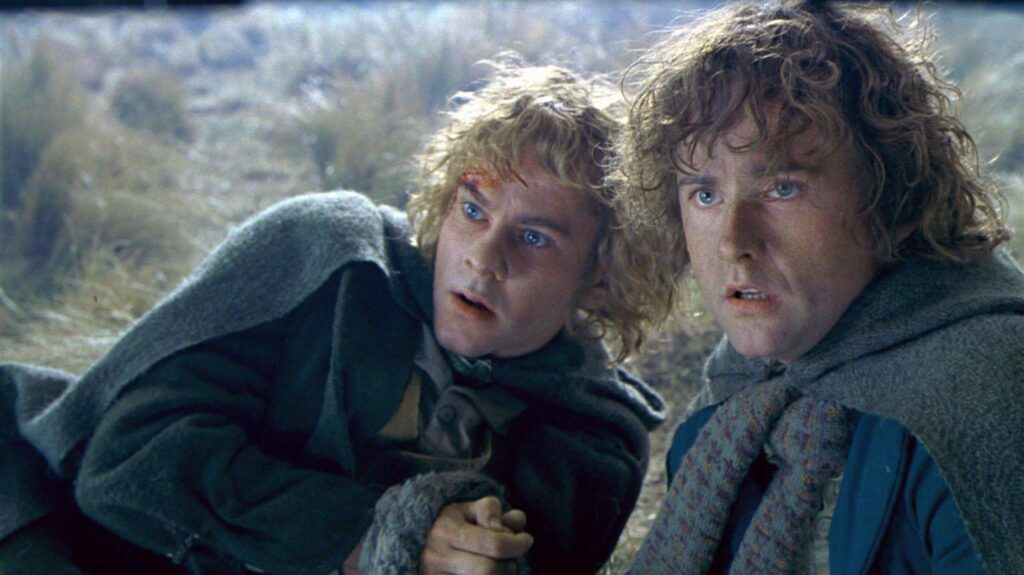
The prize for those who make the effort — who attempt great deeds and hope great hopes, in spite of or maybe even because of the sometimes overwhelming darkness that envelopes them — is not to flee into flights of fantasy or to rest on the laurels of great feats accomplished or attempted, but rather to discover within themselves a greater responsibility and love for the small and oftentimes very ordinary worlds from which they have come. It is what the small and meek hobbits realize themselves when, after the great journey to Mount Doom is complete. They return to their own humble Shire and are inflamed with passion for that which has been entrusted to them personally.
The ones who made the unexpected journey became the bearers of hope, the heralds of friendship, and the beacons of light of others. They may have been meek, but the meek did not merely inherit Middle Earth: They redeemed it.
Leonard J. DeLorenzo, Ph.D., works in the McGrath Institute for Church Life and teaches theology at the University of Notre Dame.
