


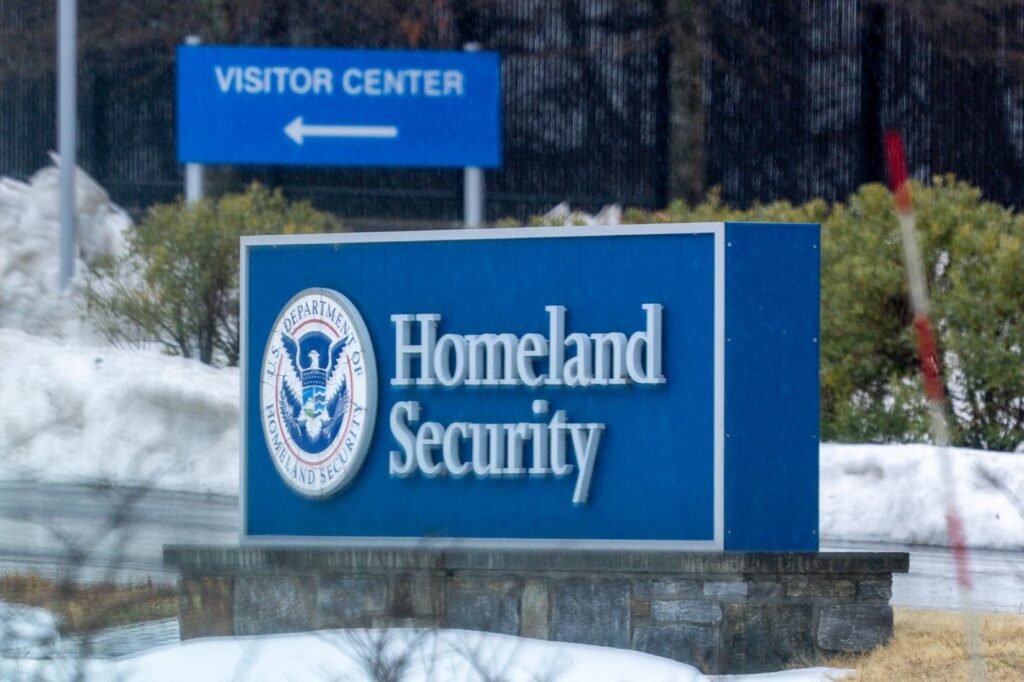
WASHINGTON (OSV News) — The U.S. Senate passed legislation early in the morning March 27 that would fund most of the Department of Homeland Security except for Immigration and Customs Enforcement or Border Patrol as negotiations over new constraints on those entities continue. However, the bill was later rejected by House GOP leadership, leaving the funding lapse unresolved.
The same week, Markwayne Mullin was confirmed by the U.S. Senate March 23 to lead the DHS, and polls showed most Americans disapprove of U.S. military action in Iran as Trump reportedly told aides he wants to wind down the conflict.
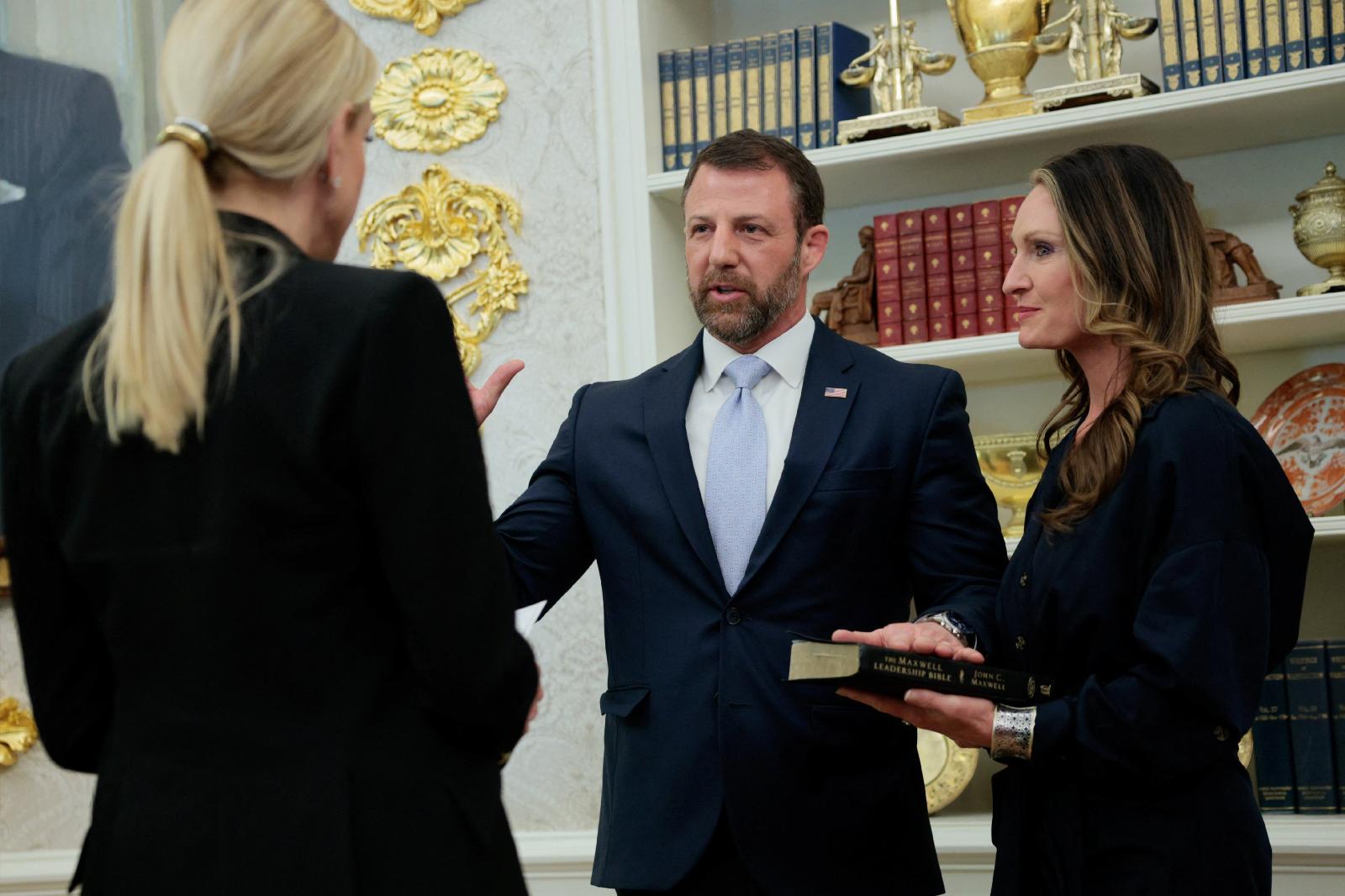
Mullin confirmed as DHS secretary
Mullin was confirmed in a 54-45 vote, with Sens. John Fetterman, D-Pa., and Martin Heinrich, D-N.M., breaking with their party to support his confirmation, and Sen. Rand Paul, R-Ky., broke with his party to oppose it. Mullin and Paul clashed in a tense exchange at Mullin’s confirmation hearing.
“I want to thank President Trump and my Senate colleagues for trusting me with this crucial role,” Mullin said in a March 24 statement. “As the Secretary of Homeland Security, I look forward to continuing President Trump’s mission to safeguard the American people and defend the homeland.”
Noting his confirmation came amid a still-ongoing funding lapse for the department, Mullin said his “first priority is to get the Department funded so the incredible patriots that support our 22 critical agencies receive a paycheck and can continue their critical work of keeping our nation safe.”
Mullin‘s confirmation to lead DHS came after President Donald Trump announced earlier in March he was removing Kristi Noem from the post.
The day after Mullin’s confirmation, Alan S. Armstrong, an energy executive, was sworn in as the new Republican senator from Oklahoma. The state’s Gov. Kevin Stitt, a Republican, appointed Armstrong to temporarily fill the seat vacated by Mullin until the expiration of the seat’s term next year.
Referring to still-lapsed DHS funding, Mullin said, “DHS is bigger than any political party. It’s time to end the partisan bickering that threatens our national security and put the American people first.”
Senate passes DHS funding after weeks of gridlock
The funding bill’s Senate passage after weeks of gridlock came as something of a surprise, even to House GOP leadership. A few hours after the Senate passed its bill around 2:30 a.m., House Speaker Mike Johnson, R-La., told reporters at the Capitol that Republicans would meet that morning to “decide next steps.” However, Johnson later dismissed the Senate package, telling reporters, ”This gambit that was done last night is a joke.”
Senate Majority Leader John Thune, R-S.D. told reporters shortly after the Senate’s passage of their bill that the House was “aware” of the Senate plan but he did not know what the other chamber would do with the bill.
Both chambers were scheduled to hold two-week recesses, leaving the funding lapse without an end in sight.
Senate Minority Leader Chuck Schumer, D-N.Y., said the legislation funds entities like the TSA and the Coast Guard, does not provide a “blank check” for immigration enforcement without constraint, citing the deaths of Renee Good and Alex Pretti, two American citizens in Minnesota killed by federal agents in separate incidents.
In January, lawmakers ended a brief, partial government shutdown, agreeing to pass most outstanding appropriations bills but only a two-week extension for DHS to allow negotiations for reforms regarding federal immigration officers after the deaths of Pretti and Good. However, they have yet to come to an accord on what those constraints would entail.
Catholic immigration advocates are among those who have called for change at the department after Noem’s controversial tenure.
As funding for DHS remains stalled, employees within the DHS agency, which also includes entities like the Transportation Security Agency and the Coast Guard, are left to work without pay. A lapse in TSA funding has resulted in chaos at airports as lines at security checkpoints could take several hours amid staff shortages. Some major airports, including Houston’s William P. Hobby Airport, advised travelers to arrive four to five hours before their flights.
Trump later on March 27 signed an executive order directing TSA agents be paid during the funding lapse. However, House Appropriations Committee Ranking Member Rep. Rosa DeLauro, D-Conn., argued the executive order shows the Trump administration “made the conscious decision” to withhold pay from the agents during the shutdown and they could have paid them earlier.
Polls show most Americans disapprove of U.S. military action in Iran
Multiple polls released March 25 showed most U.S. adults oppose recent U.S. military action against Iran.

In a March 25 survey from The Associated Press-NORC Center for Public Affairs Research, 59% of U.S. adults said the conflict has gone too far, while 26% said it has been just right, while only 13% said it has not gone far enough.
Pope Leo XIV is among the world leaders who have called for a ceasefire in the region.
The same AP-NORC survey also found 65% said it is extremely or very important to prevent Iran from obtaining a nuclear weapon, and 67% said it is important to prevent U.S. oil and gas prices from rising.
Secretary of Defense Pete Hegseth — who uses the moniker “secretary of war” since Trump last year signed an executive order adding the “Department of War” as a secondary, ceremonial title for the Department of Defense — said at a March 26 Cabinet meeting that “we pray for a deal” with Iran but “the Department of War will continue negotiating with bombs.”
But citing talks with the Iranian government, Trump said later in the day March 26 that he would pause Iranian energy plant strikes for another 10 days.
A Fox News poll found 58% of registered voters oppose the military action in Iran, while 42% support it.
The Fox News poll also found a 59% disapproval rating for Trump, the highest level it has recorded to date in either of his terms in the White House.
Amy Coney Barrett discusses scrutiny of her faith during confirmation hearings
In an interview with former Sen. Ben Sasse and the American Enterprise Institute’s Chris Stirewalt, Supreme Court Justice Amy Coney Barrett discussed navigating the “pressure” of some of the scrutiny of her faith during her Senate confirmation hearings.
In the discussion on their podcast “Not Dead Yet,” a reference to Sasse’s announcement of a terminal cancer diagnosis, Barrett acknowledged “it was really, really hard” as her faith was scrutinized.
“I think it was hardest in 2017 when I went on the Seventh Circuit, and was in that confirmation process, because that was ‘the dogma lives loudly,'” Barrett said.
Barrett was nominated to a federal appeals court in 2017 and rose to national prominence after the late Sen. Dianne Feinstein of California, then the top Democrat on the Senate Judiciary Committee, questioned Barrett about whether she could differentiate her religious views from her legal ones, telling her, “The dogma lives loudly within you and that’s of concern.”
That quote became a rallying cry for some who said Feinstein’s remark about the Catholic Barrett was a religious litmus test of sorts. Barrett, who is also a mother of seven, was later confirmed to the 7th U.S. Circuit Court of Appeals.
“Lots of things that were said about my faith or about the particulars of my faith were untrue, but the basic fact of the depth of my faith is true, so I regarded it really just as an opportunity to grow in humility,” Barrett said of that time.
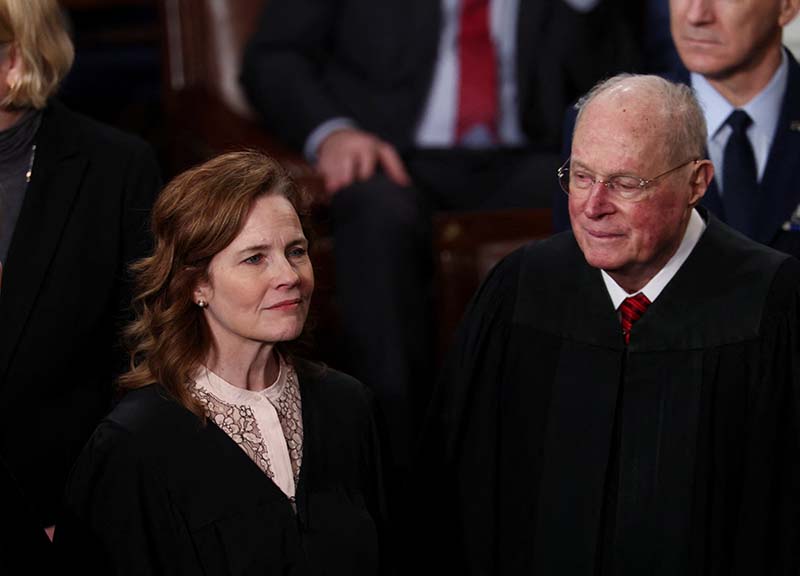
Barrett was nominated to the U.S. Supreme Court in 2020 by Trump to fill a vacancy left by the death of Justice Ruth Bader Ginsburg. That contentious confirmation process came after Sen. Mitch McConnell, R-Ky., then the majority leader, previously declined to confirm Merrick Garland, nominated by then-President Barack Obama in 2016, to the court, arguing such appointments should not take place in election years. Barrett was confirmed by the Senate in 2020, just weeks before that year’s election.
Sasse, who said the podcast is not intended to be a political one, called himself a “founding member of the ACB fan club,” and said Trump used to associate him with his enthusiasm about putting Barrett on the high court.
“Sometimes the president would call me,” Sasse said, “He was the one calling me, and he’d say, ‘Are you calling about that Catholic lady again?'”
During his time as a Republican senator from Nebraska, Sasse was notably among the seven Senate Republicans who voted to convict Trump on an impeachment charge after the Jan. 6, 2021, riot at the U.S. Capitol building, the day 2,000 supporters of then-President Donald Trump attempted to block Congress’ certification of President Joe Biden’s 2020 election victory.
Kate Scanlon is a national reporter for OSV News covering Washington. Follow her on X @kgscanlon.
This story was updated March 28, 2026, at 12:11 p.m.
