


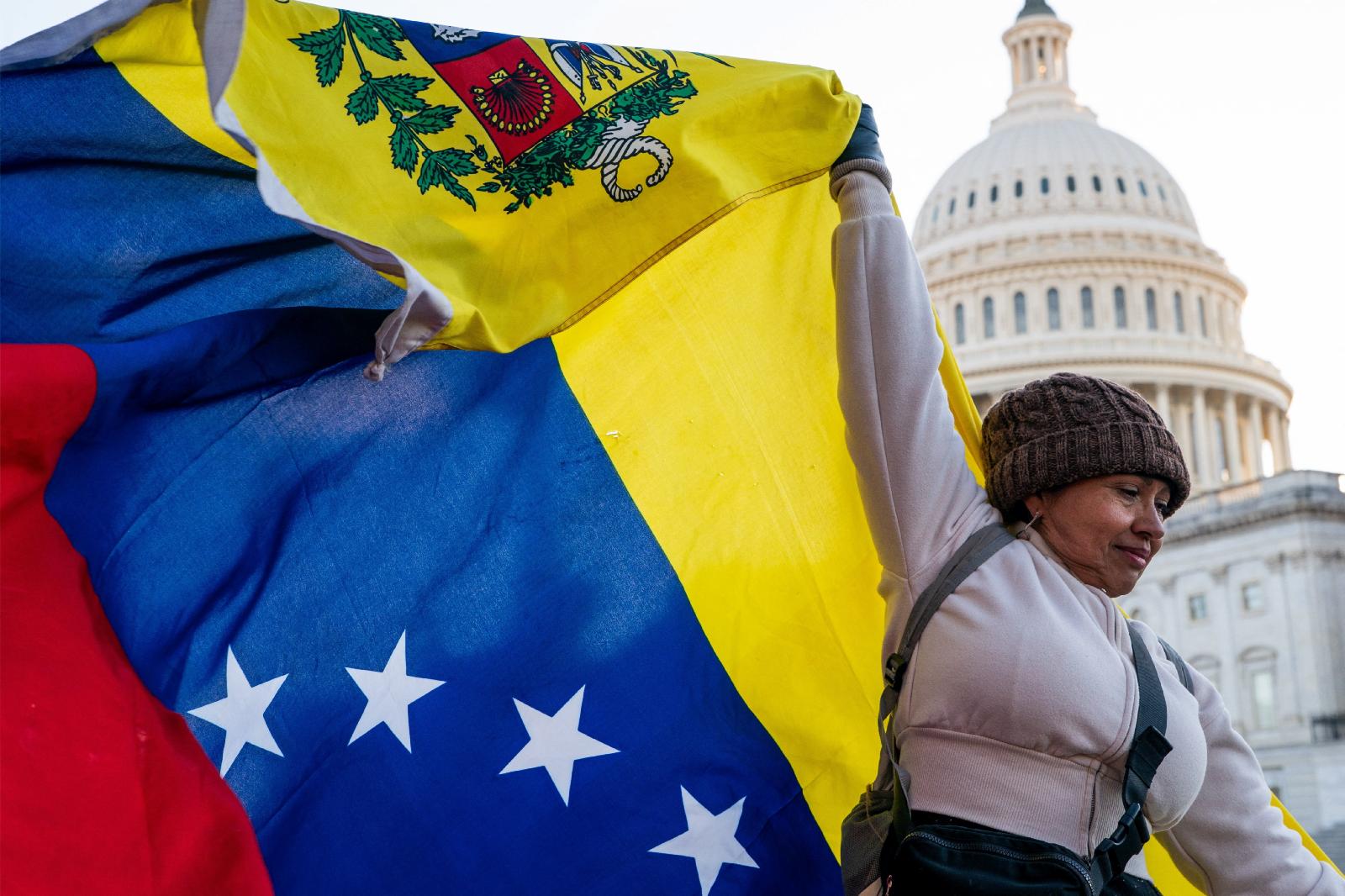
WASHINGTON (OSV News) — The Senate Jan. 14 blocked a bipartisan measure that aimed to limit President Donald Trump from taking further military action in Venezuela after two Republicans dropped their earlier support.
The same week, officials from Greenland and Denmark met with Trump administration officials as Trump said he would seek to acquire the island, and the White House released a health care plan that made no mention of the Hyde Amendment, which prohibits public funding for elective abortion.
Senate blocks war powers resolution
The U.S. Senate blocked the resolution in a tied vote on Jan. 14, after Vice President JD Vance voted to break the 50-50 tie in his capacity as president of the Senate.
The Senate previously advanced the war powers resolution in a procedural vote Jan. 8, following the Trump administration‘s recent strike to remove now-deposed Venezuelan President Nicolás Maduro from power.
But Sens. Josh Hawley, R-Mo., and Todd Young, R-Ind., two of the Republicans who previously voted in favor of advancing the bill, did not repeat that support Jan. 14.
In a Jan. 14 statement, Young said, “I support President Trump’s decision to bring Nicolás Maduro to justice, but I am deeply skeptical about sending American troops to stabilize Venezuela. I strongly believe any commitment of U.S. forces in Venezuela must be subject to debate and authorization in Congress.”
“After numerous conversations with senior national security officials, I have received assurances that there are no American troops in Venezuela,” Young said. “I’ve also received a commitment that if President Trump were to determine American forces are needed in major military operations in Venezuela, the Administration will come to Congress in advance to ask for an authorization of force.”
Previously, Trump publicly took aim at the members of his party who voted in favor of the war powers resolution in a social media post, writing on his website Truth Social that Hawley and Young, as well as Sens. Susan Collins, R-Maine, Lisa Murkowski, R-Alaska, and Rand Paul, R-Ky., “should never be elected to office again.”
“This Vote greatly hampers American Self Defense and National Security, impeding the President’s Authority as Commander in Chief,” Trump wrote of the Jan. 8 vote.
Collins is seen as the incumbent Senate Republican who is most vulnerable in this year’s midterm elections.

Trump meets with Venezuelan opposition leader
María Corina Machado, who met with Trump at the White House Jan. 15, was barred from running against Maduro in the 2024 presidential election, but her opposition party demonstrated through collecting digitized voter tallies that their candidate, Edmundo González Urrutia, won the election with 67% of the vote. Maduro, however, refused to cede power.
Maduro’s regime was seen as illegitimate by many countries around the world, including the European Union.
After removing Maduro from power, Trump left in place other officials from his regime, such as Venezuela’s acting president Delcy Rodríguez, who was previously vice president.
At the White House, Machado, in an unusual gesture, presented Trump with her Nobel Peace Prize in what she said was recognition for his efforts for her country.
“María presented me with her Nobel Peace Prize for the work I have done,” Trump wrote on social media. “Such a wonderful gesture of mutual respect. Thank you María!”
Norway’s Nobel Institute has said the Peace Prize is not transferable.
Machado previously met with Pope Leo XIV Jan. 12.

‘Working group’ established on Greenland
A meeting between some of Trump’s top aides and officials from Denmark and Greenland revealed “a fundamental disagreement,” Lars Lokke Rasmussen, the top Danish diplomat, said about the future of Greenland Jan. 14.
The officials reportedly agreed to form a working group as a result of their meeting, which came after the president and other White House officials escalated their rhetoric about acquiring Greenland for national security, while refusing to rule out military force to take the Arctic island. The semiautonomous territory is part of the Kingdom of Denmark, a NATO ally, and the comments set off alarm in Europe’s capitals.
Multiple polls show large majorities of Americans oppose taking Greenland by military force.
A Jan. 14 Quinnipiac University national poll of registered voters found 86% said they would oppose the United States trying to take Greenland by military force, while 9% said they would support such action.
A Reuters/Ipsos poll released the same day found 4% of Americans said it would be a good idea for the U.S. to use military force to take possession of Greenland from Denmark, while 71% said it would be a bad idea.
Both polls found majorities opposed acquiring Greenland by purchase, although by much smaller margins.
But Trump said Jan. 16 he would consider placing tariffs on countries that oppose U.S. acquisition of Greenland, arguing, “We need it for national security.”
No mention of Hyde Amendment in health care plan
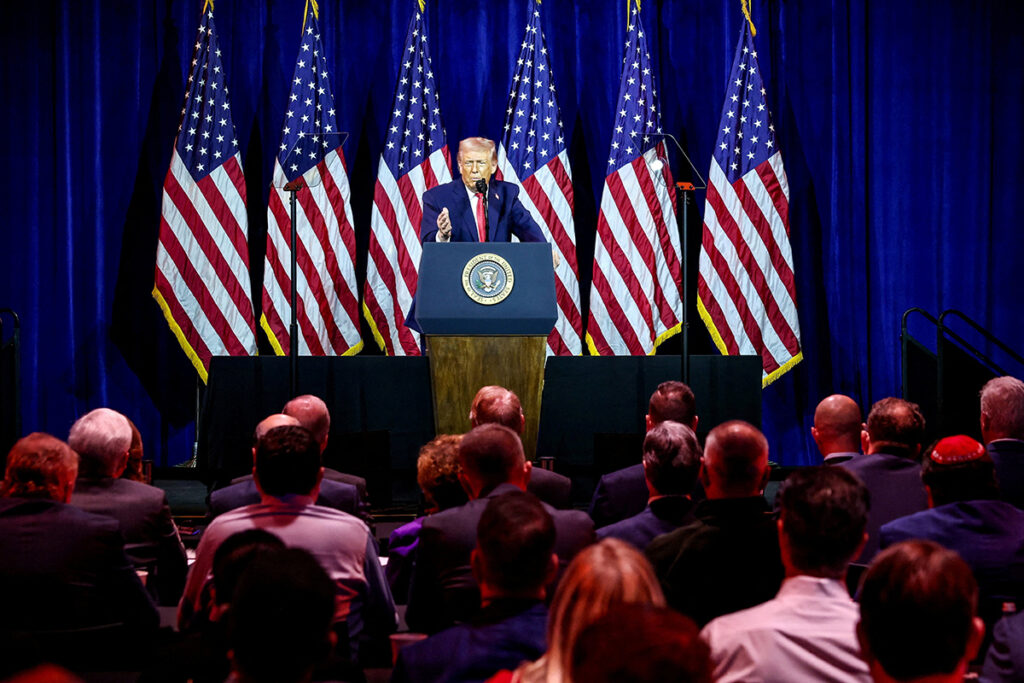
The White House on Jan. 15 released a framework for what it said would lower health care costs, such as drug prices and insurance premiums.
Dubbed “The Great Healthcare Plan,” the framework included proposals like establishing what it called “the ‘Plain English Insurance’ Standard” that would require health insurance companies “to publish rate and coverage comparisons upfront on their websites in plain English — not industry jargon — so consumers can make better insurance purchasing decisions.”
Mercy Sister Mary Haddad, president and CEO of Catholic Health Association of the United States, said in a statement that the group welcomes the White House’s “engagement in the vital work of expanding access to quality, affordable health care.”
“Ensuring that individuals and families can obtain the care they need is central to the mission of Catholic health care,” she said. “An urgent step Congress can take now is to advance a bipartisan solution to restore the enhanced premium tax credits that millions of working Americans depend on. Renewing them would immediately ease financial pressures on households while helping ensure people maintain their health coverage. We will continue to work with the Administration and with Congress to strengthen health care access for communities across the country.”
The White House released the plan shortly after Trump told House Republicans to be “flexible” on the Hyde Amendment amid ongoing health care negotiations. Some pro-life activists expressed concern the plan did not specify preservation of the Hyde Amendment as part of the White House’s health care goals.
In comments on X, Marjorie Dannenfelser, president of Susan B. Anthony Pro-Life America, which works to elect pro-life candidates to public office, said the Hyde Amendment is “very simple to commit to, as most Hill GOP have.”
“Unless ‘flexible’ means you can’t,” she said.
The Catholic Church teaches that all human life is sacred from conception to natural death, and as such, opposes direct abortion.
Kate Scanlon is a national reporter for OSV News covering Washington. Follow her on X @kgscanlon.
