


ROME (OSV News) — A newly released book is urging the Catholic Church to rethink how it communicates during clergy sexual abuse crises.
In “Truth Heals: Clergy Sexual Abuse and the Catholic Church’s Response,” author Paulina Guzik argues that communications must be treated as a central part of safeguarding, not an afterthought.
Drawing on examples of both effective and failed communication from around the world, the book’s author, who is international editor for OSV News and professor of media studies and communications at the Pontifical University of John Paul II in Kraków, Poland, said she wanted to fill the gap between existing safeguarding elements and one element that is visibly still pending — communications.
“From John Paul II to Francis, popes have helped transform — although slowly and quite often urged by external pressure — the Church’s law and culture. But clear guidance on what to communicate, how to communicate it and when to do so in cases of sexual abuse was lacking,” Guzik said during the press presentation in Rome Sept. 10.
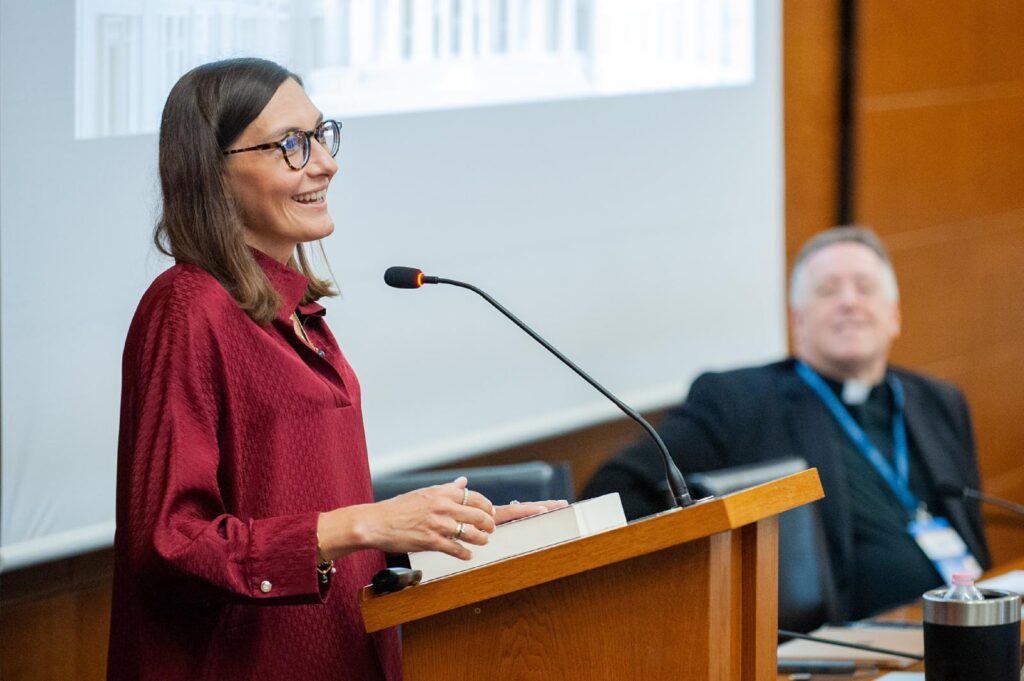
Communication, she argues, is not a cosmetic addition to safeguarding. “It must be part of the Church’s response from the very beginning: part of how leaders listen, make decisions, accept responsibility, restore justice and reform structures.”
In her book, released by EDUSC — publisher of the Pontifical University of the Holy Cross — Guzik provides a practical framework for Church leaders, communicators and journalists working to rebuild trust in the wake of abuse and institutional failure.
The book proposes 10 principles for crisis communications, including putting victims first, embracing transparency, listening carefully and engaging the media fairly.
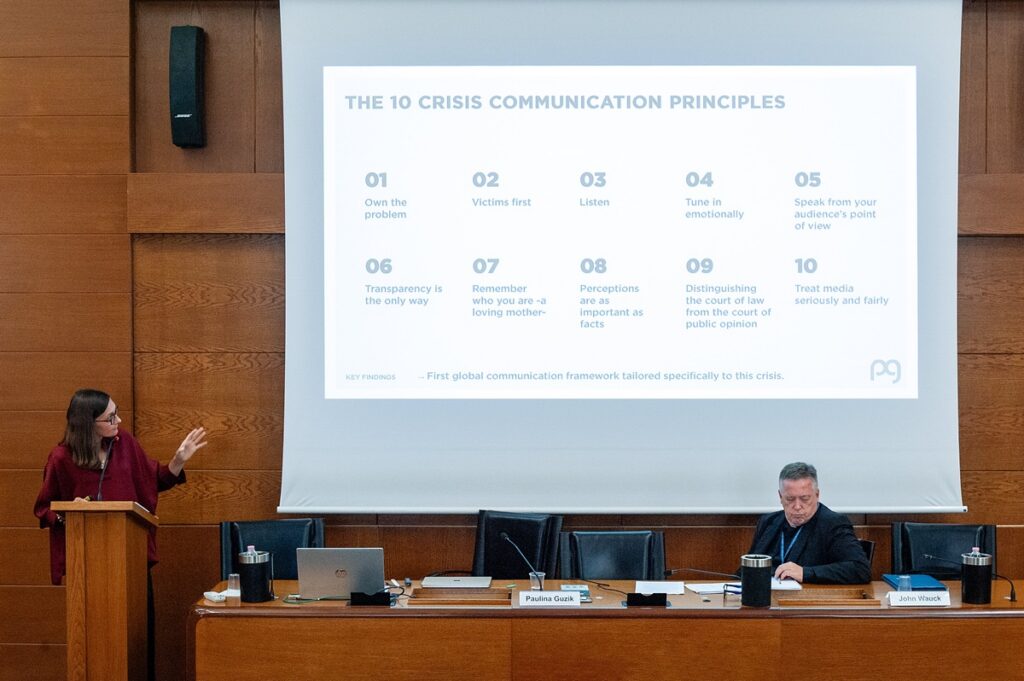
According to Guzik, the principles outlined in the book complement the Church’s progress in developing legal procedures, safeguarding policies and a culture of accountability.
“Before apologies, compensation, or legal strategies, there must be listening,” Guzik writes in her book. “The first duty of a Church that calls itself a mother is to hear those who were harmed, believe the seriousness of their suffering, and respond with compassion, justice, and sustained care.”
A book for bishops in the hands of the bishop of Rome
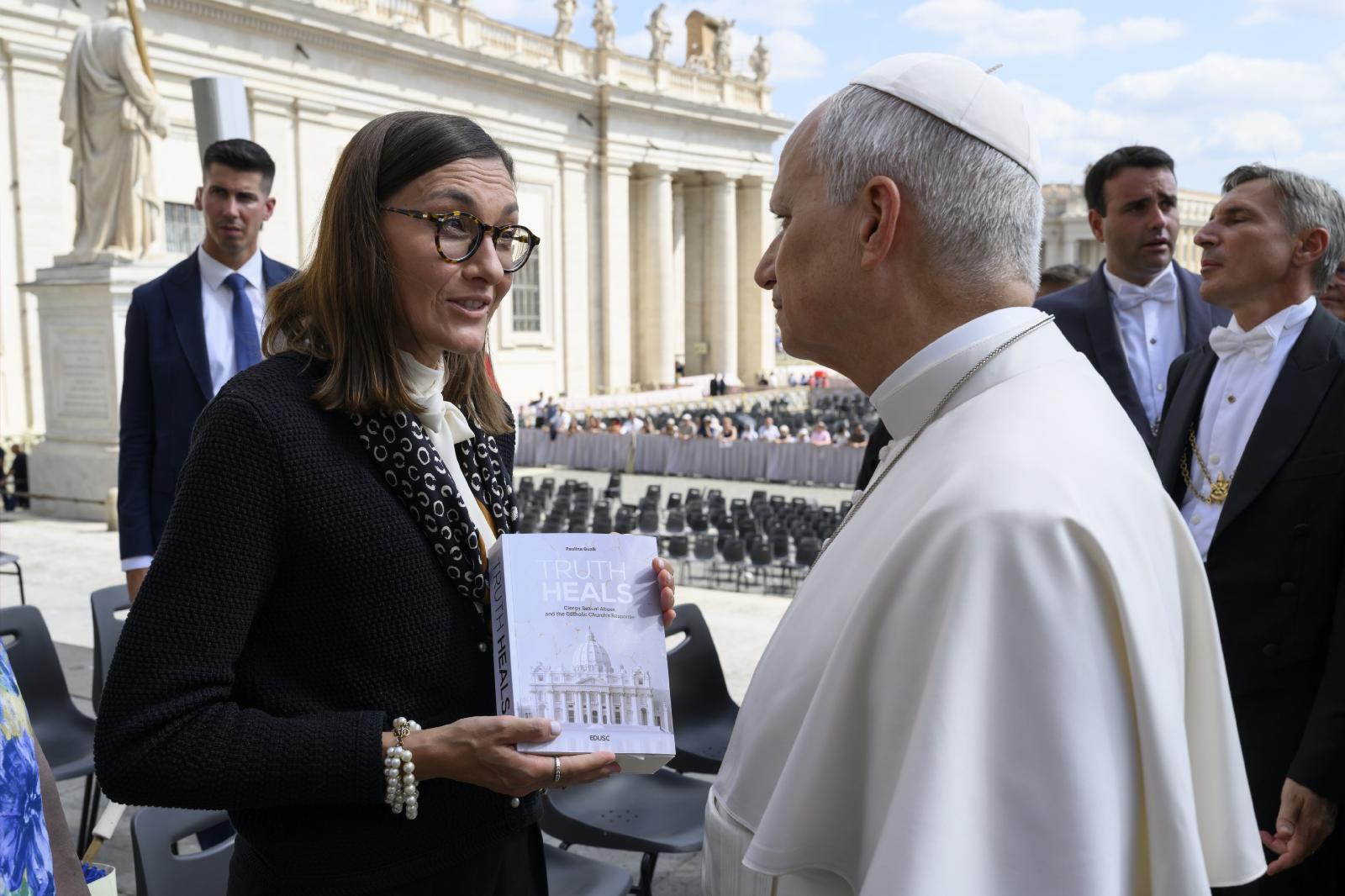
During the Sept. 9 general audience, Guzik gave a copy of the book to Pope Leo XIV.
“It’s a book for decision-makers in the Church. To be able to hand it to the bishop of Rome as a starting point — that made me tremendously happy,” Guzik told OSV News. “And while Pope Leo was listening with a very serious face hearing about ‘Truth Heals,’ his face lit up with a huge smile when I handed him homemade chocolate chip cookies made by my daughter,” she recalled.
“After so many years of dealing with the topic on many different levels in the Church, the new pontificate of Pope Leo XIV is a perfect time to reinforce this branch of crisis management, and a crucial one — communications,” Guzik emphasized after the audience with Pope Leo.
In her book, Guzik challenges the assumption that public relations, legal approach or institutional silence can protect the Church’s credibility — something many local churches still think is the case.
How the research started
“The way I started this research was really simple — I saw my own Church, in Poland, struggling with the answer to the abuse crisis — at the time almost two decades after the iconic 2002 Spotlight investigation in the U.S.,” Guzik told OSV News.
The Spotlight team investigation by The Boston Globe in January 2002 uncovered sexual abuse cases and cover up in the Archdiocese of Boston and was the first major media report on the matter that led to tectonic changes in the Church in the U.S., including issuing the Dallas Charter six months afterwards and followed by first independent John Jay report.
“To see, in 2020, bishops in my country answer the crisis like children lost in the forest was painful to watch. Best practices were out there, it was enough to reach for them. This book is putting those best practices in crisis management and communications in one volume so no one is able to say anymore, ‘Oh we did not know this is what should be done’!” Guzik said.
She added a “huge inspiration” was for her a speech by veteran Vatican journalist Valentina Alazraki on Feb. 23, 2019, during the safeguarding summit organized by Pope Francis.
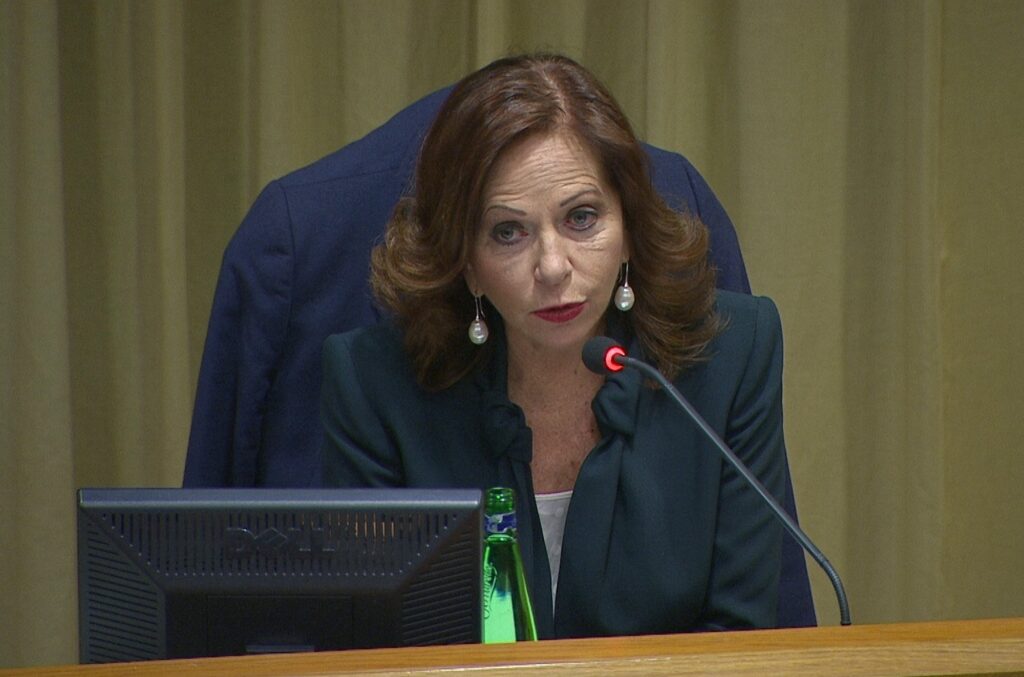
Alazraki got a standing ovation from her fellow journalists in Sala Stampa, the Vatican press room, after she told the bishops to stop “playing the ostrich” and transparently communicate the abuse scandal.
Guzik said her book is a practical guide on how to do that.
Alazraki said that “having sat beside Pope Francis at the February 2019 summit and urged the world’s bishops to embrace transparency in responding to the abuse crisis, I can think of no greater gift to the Church on this vital issue than Paulina Guzik’s ‘Truth Heals.’ … It is essential reading for anyone seeking to understand how effective communication must be integrated into the Church’s response.”
A useful and needed resource
Father Jordi Pujol, associate professor of media ethics and media law at the Pontifical University of the Holy Cross in Rome, added, “This book arrives after 25 years of painful experience in handling sex abuse cases” and is “an excellent handbook for leaders and Church communicators and practitioners.”
Kim Daniels, director of the Initiative on Catholic Social Thought and Public Life at Georgetown University in Washington, said in a recommendation on the book cover that with “Truth Heals,” Guzik “has made an essential and comprehensive contribution to our understanding of the scourge of clergy sexual abuse in the Catholic Church.
“This book should be required reading not only for bishops, priests and Catholic communications professionals, but for all committed to justice and healing for survivors of clergy sexual abuse,” said Daniels.
Make wounds meaningful, and be transparent, author says
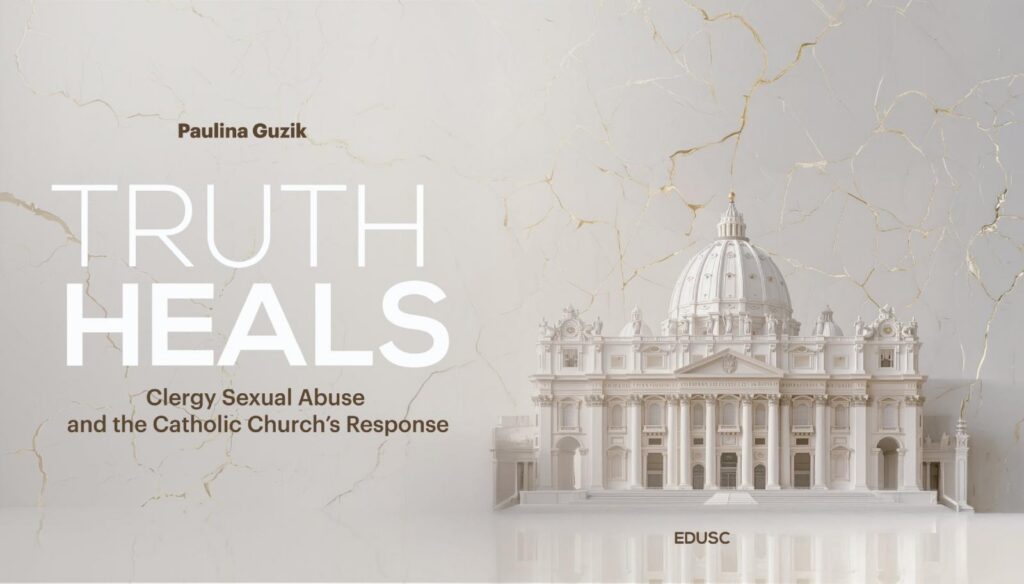
A cover concept in “Truth Heals” is the Japanese art of “kintsugi,” in which broken pottery is repaired visibly rather than hidden. Guzik applies this image to the Church: The wounds of survivors “should not be denied or concealed, but acknowledged and repaired with truth, accountability and a commitment to justice,” the author said.
“Thanks to survivors and their testimonies, the Church, who is still full of brokenness, may be transformed into a beautiful witness. Of supportive community. Of repairing broken trust. Of a safer place where every child is protected. An indispensable part of that process is communications,” Guzik said during the press presentation.
OSV News’ international editor argues for proactive disclosure when serious failures are discovered. Rather than waiting for leaks or investigations to define the story, Church institutions should tell the truth themselves, acknowledge what is known, explain what action is being taken and remain available for legitimate questions.
“Silence rarely protects the Church,” Guzik writes. “Defensive silence rather gives an impression that the institution still cares more about itself than about those harmed.”
Survey results from six continents
An academic journey on researching the topic started when Guzik went to the U.S. and as visiting scholar at The Catholic University of America’s Catholic Project in Washington talked to 30 people: cardinals, bishops, communicators, survivors, victim assistance coordinators and safeguarding delegates — for in-depth interviews. Several European research trips were also part of the project.
“I underlined in the book that I stand on the shoulders of giants who managed the crisis for the past decades and helped the Church transform,” Guzik said. “And many victims of abuse are involved in that process — given what they’ve been through, this is somewhat heroic strength,” she told OSV News.
Three global surveys were also conducted among bishops’ conferences’ delegates of child protection, local delegates of child protection in the U.S. and among Vatican journalists to assess the state of communicating the abuse crisis.
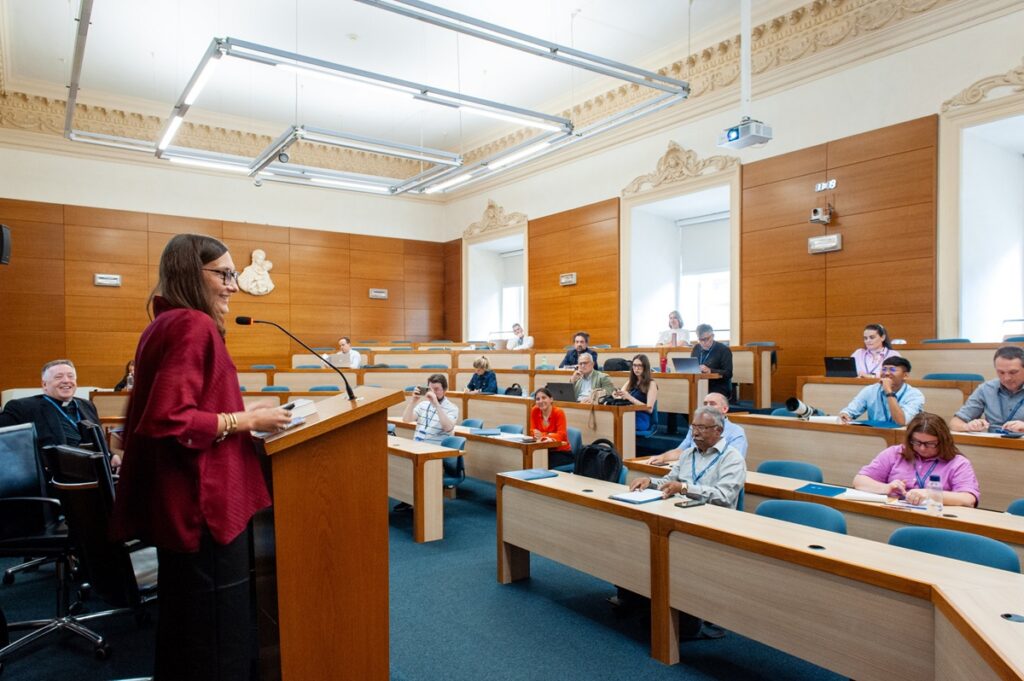
“A comparative study between the in-depth interviews and the survey gave really telling results — to give you one example, the indispensable rule in crisis management is to put victims first. According to my survey, only 23% of bishops on a global level meet survivors on a regular basis, in most of the dioceses. Either this changes, or we’ll never get out of this crisis,” Guzik said during the Sept. 11 lecture as part of “The Church Up Close” seminar in Rome, organized by Pontifical University of the Holy Cross and supported by Our Sunday Visitor Foundation.
At the same time, 83.33% respondents of the survey for global episcopal delegates of child protection said meeting victims of abuse “encouraged me to a more intense commitment in safeguarding.”
Asked what the most effective element is to end the crisis of clerical sexual abuse, 73.33% of respondents in the survey for bishops said: “Courageous leadership from the bishops.”
While the response to the crisis is still uneven on a global scale, Guzik said she was “really impressed how seriously many bishops in Africa, South America or Asia treat safeguarding, which gives me hope.”
“Truth Heals” is intended for bishops, religious superiors, safeguarding professionals, Church communicators, journalists, scholars, seminarians and all those working to ensure that the Church’s response to abuse is “truthful, accountable, survivor-centered and pastorally credible,” the author emphasized.
The research was supported by Renovabis Foundation, Aid to the Church in Need, the Knights of Columbus and the U.S. Conference of Catholic Bishops.
