


(OSV News) — After Jeanine Thomas was diagnosed with Stage 4 lung cancer, she knew she needed to create a film about her friend Herbert Heller, a Holocaust survivor.
“When you’re faced with really wondering if you have tomorrow, when you do have tomorrow, you make tomorrow matter,” Thomas, producer of “The Optimist,” said.
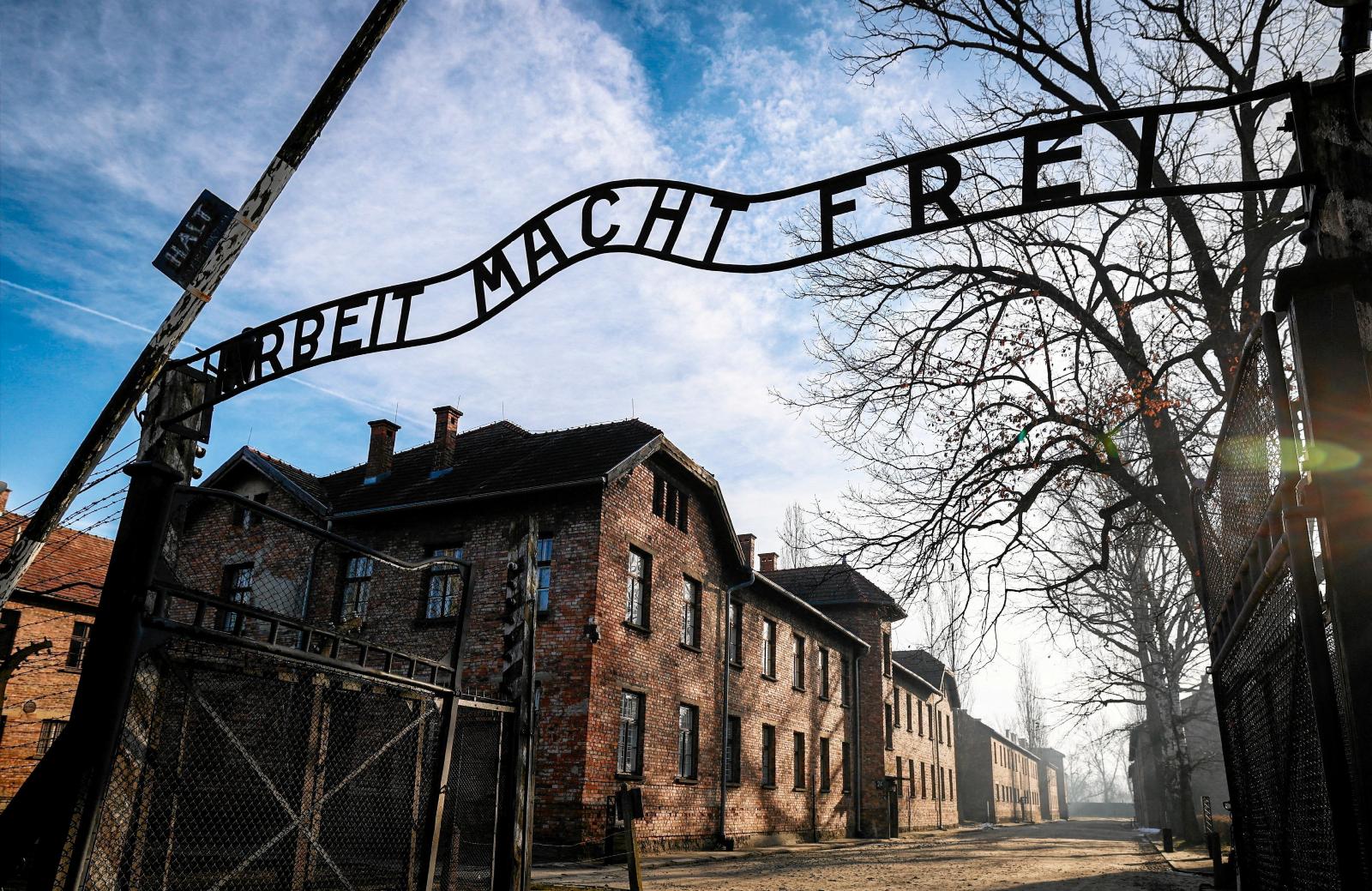
Released in theaters nationwide on March 11 and March 15, “The Optimist” brings to life the incredible story of Heller (1929-2021), who escaped the Nazi concentration camp at Auschwitz as a teenager before pursuing a successful life in the United States. The nearly two-hour film follows an elderly Heller (Stephen Lang) as he shares his past with a troubled teenager named Abby (Elsie Fisher). Their surprising friendship transforms their lives and the lives of those around them.
Along the way, the film explores the meaning of suffering, the purpose of life and the importance of connection.
“With ‘The Optimist,’ I wanted to explore trauma from two generational vantage points: Herbert’s hidden memories of the Holocaust and Abby’s struggles as a young person in contemporary America,” Thomas says in a statement on the movie’s website.
Thomas spoke with OSV News about Heller and her new film, which takes place in Northern California in 2004. In real life, as the film suggests, Heller only began sharing his story later in life, when he was in his 70s.
Drawing inspiration from a ‘lucky man’
Thomas first heard about Heller more than 10 years ago, in 2014. She met him through his grandson and remembered showering him with questions. Afterward, she began visiting Heller every other week to spend time with him.
He became like a grandfather to her. She described him as a sweet man with a sense of humor who considered himself lucky.
“Here’s someone who was taken at 12 by the Nazis; escaped Auschwitz at 15,” she said. “The initial working title of this film was ‘Lucky Man,’ because Herbert would always be saying, ‘I just got lucky. I’m just lucky.'”
Later on, Heller asked Thomas to help him share his story with students. A mother of four, Thomas began by asking administrators at her son’s school if they were interested in hearing from a Holocaust survivor. From there, Heller went on to speak at other schools in the area.
“He was 88 at the time,” Thomas said. “Talking to these kids that were the same age that he was when he was taken away by the Nazis. And they all listened.”
That’s when Thomas first thought about making a movie about his life.
In the Holocaust, angels of mercy versus the ‘angel of death’
With “The Optimist,” Thomas invites viewers into Heller’s life. One of the scenes shows the moment Heller meets Josef Mengele, a Nazi physician infamous for his experiments on prisoners at Auschwitz. In real life, as in the film, a young Heller tells Mengele that he can work so that Mengele — dubbed “the angel of death” by his victims — will let him live.
Heller had nightmares of Mengele for the rest of his life. If he walked into a room where someone wore black boots like Mengele had, his face would turn white, Thomas said.
“That was really what stuck with him — just the type of person (Mengele) was, and what he did to a lot of the prisoners,” she said.
After his escape from Auschwitz, the movie shows Heller hiding with family friends. According to different news reports, Heller identified that family as Catholic. The film shows the important role they played in his and his family’s life. Heller spoke about them when sharing his story for the first time in 2004.
“They answered the doorbell, and they took me in,” he says of them. “They took me in and they bathed me and got me some clothes.”
‘I’ve got to make this film’
Thomas said she had been working on the script for “The Optimist” with a screenwriter for three years when the COVID-19 pandemic hit. They shelved the project. Then, in 2021, Thomas began experiencing vertigo. Doctors found several tumors and told her she needed immediate surgery. They also told her she had a 50% chance of surviving the surgery.
The night before, Thomas said she heard a voice saying, “If you’re ready to go, you can go during this surgery — or if you stay, you have to do what you came here to do.”
“I was like, ‘I’m coming back. I’ve got to make this film,'” Thomas remembered.
Today, Thomas hoped the film impacts people in a tangible way. Among other things, “The Optimist” is partnering with KAVOD SHEF (Survivors of the Holocaust Emergency Fund), an initiative that helps Holocaust survivors in need, and Bring Change to Mind, a nonprofit dedicated to empowering young people to talk about mental health.
“It was important to me to bring on these awareness campaigns and really, beyond the film, work on changing and making the world better for everyone,” she said.
On her own, Thomas said she is giving 20% of her proceeds from the film to Kavod and 20% to Bring Change to Mind.
“It’s kind of my kickoff back into my purpose (in) life,” she said. “It’s the beginning.”
Katie Yoder is an OSV News correspondent. She writes from Maryland.
