


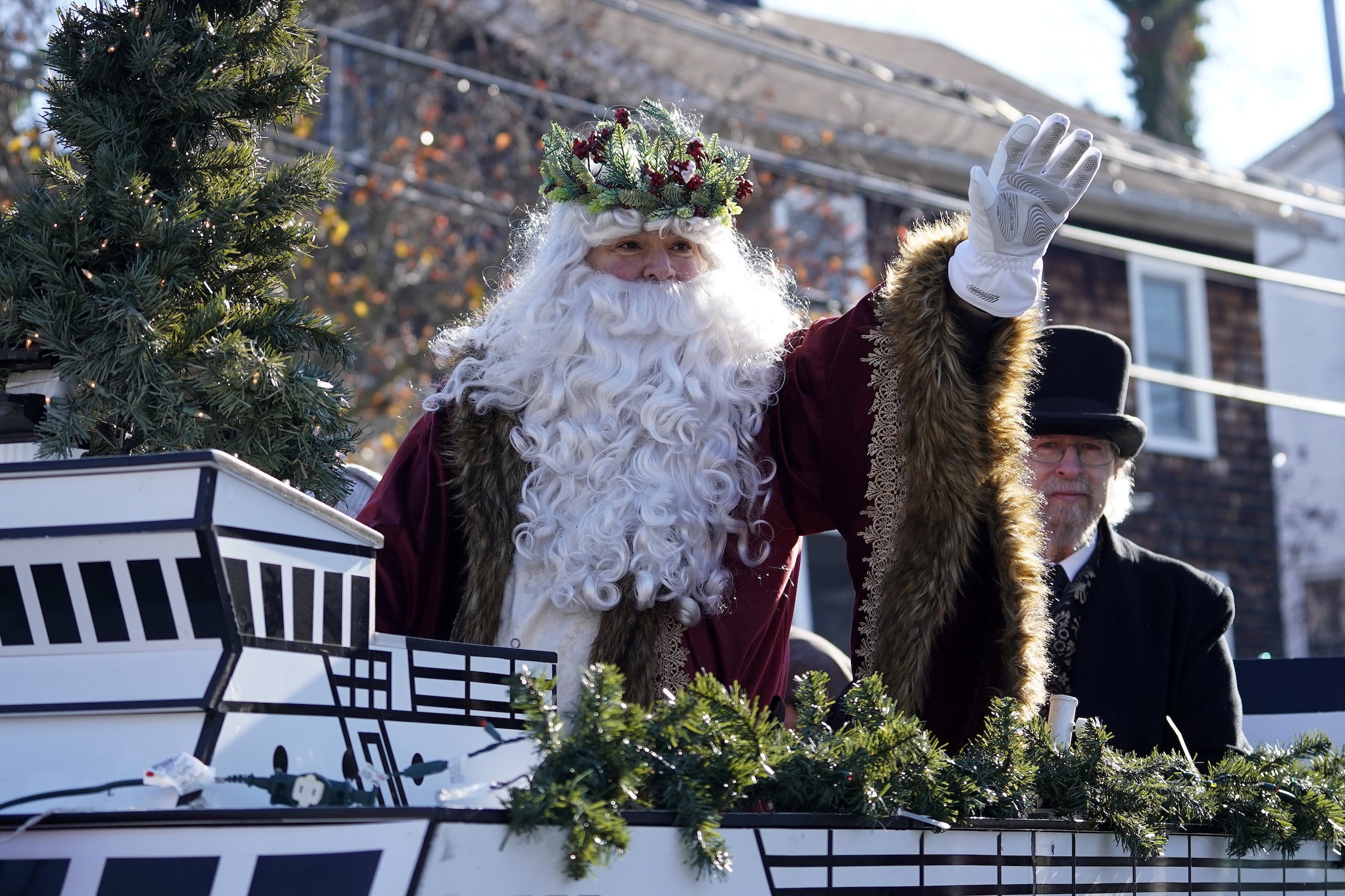
“A merry Christmas, Bob!” said Scrooge, with an earnestness that could not be mistaken, as he clapped him on the back. “A merrier Christmas, Bob, my good fellow, than I have given you, for many a year! I’ll raise your salary, and endeavour to assist your struggling family, and we will discuss your affairs this very afternoon, over a Christmas bowl of Smoking Bishop, Bob!”
This closing exchange of Charles Dickens’ “A Christmas Carol” shows a repentant Ebeneezer Scrooge pouring his long-abused employee Bob Cratchit a steaming mug of Smoking Bishop, a citrusy spiced red wine concoction that takes its name from the color of the beverage — one that matches a bishop’s hat or “miter.”
“Its whimsical name [also] recalls its medieval origins when it was sometimes served at guildhalls and university banquets in bowls that resembled the shape of a bishop’s miter,” Andrea Broomfield explains in her book “Food and Cooking in Victorian England — A History.”
Cedric Dickens, Charles Dickens’ great grandson, talks about the significance of the hot, boozy beverage and its place in the closing scene of “A Christmas Carol” in the introduction of his book “Drinking with Dickens”:
“People love talking about [Charles Dickens], possibly because he was the champion of the ordinary man….Take, for example, The Christmas Carol….Yes, even poor Bob Cratchit, earning a pittance, compounded his punch at Christmas. The Bob Cratchits, and indeed all the characters of Dickens’ world, live on in our imagination and in fact still exist.”
Between Broomfield and Cedric Dickens’ commentaries on the Smoking Bishop, as well as the many video tutorials on the festive beverage, it’s easy to conclude that while these mulled wines were already common in Victorian England prior to the publication of Dickens’ 1843 Christmas masterpiece, the hot, citrusy, clove, wine and port-infused beverage became even more of a popular holiday staple, showing up at parties and outdoor fairs in the years that followed.
Long before then, though, the English traditions of mulling wines and ciders made their way to many European countries. The Dutch still brew Bisschopswijn or Bishop’s Wine, as a way to mark “Sinterklaas Eve,” the night before St. Nicholas Day, which is celebrated on Dec. 6.
The holiday marks the death of the historical “Santa Claus,” the fourth century Bishop of Myra who famously fought heresy at the Council of Nicea and whose lasting legacy is one of giving generous gifts to children.
The St. Nicholas Center exists to promote devotion to this beloved saint and is a rich resource full of historical facts, anecdotes and creative ways to celebrate the upcoming feast day. Their recipe for Bisschopswijn is almost identical to the ingredients in the Smoking Bishop recipe Cedric Dickens’ outlines.
I have a feeling the recipe below is a brew his great-grandfather would have definitely approved of. Be sure to enjoy it in moderation, good health and a spirit of thanksgiving!
Bisschopswijn (Dutch Bishops’ Wine, a recipe similar to Dickens’ Smoking Bishop)
Courtesy of The St. Nicholas Center
Traditional beverage for the eve of St. Nicholas Day, Dec. 6
1 liter red wine
1 lemon
1 orange
20 cloves
2 tablespoons sugar
1 cinnamon stick
a pinch of mace and saffron (optional)
Wash and dry the lemon and orange. Insert 10 cloves into each. Put the wine, sugar, lemon, orange and cinnamon (and the mace and saffron tied in muslin, if you are using them) into a pan. Cover and bring slowly to the boil. Turn down the heat and allow the wine to simmer very gently for approximately 1 hour. Remove the spices and the fruit. Heat the wine again, but do not let it boil. Serve in heat-resistant glasses. Enjoy!
Sarah Robsdottir is a Catholic convert and homeschooling mom to seven sons. Her latest novel, “Joan of Arkansas,” was released by Voyage Publishing earlier this year. Visit Sarah at www.sarahrobsdottir.com.
