


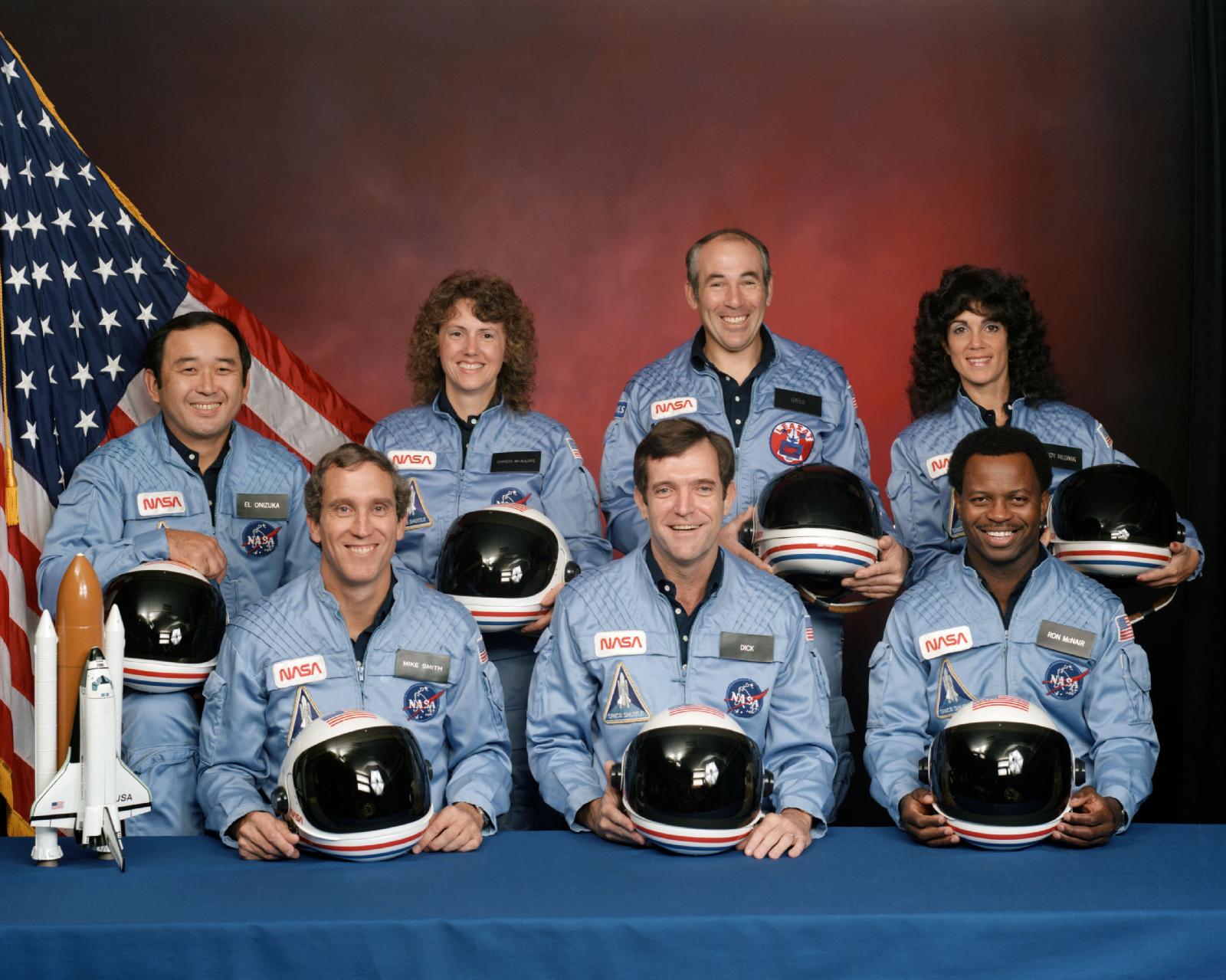
HOUSTON (OSV News) — A Houston-area Catholic school science teacher said the Challenger disaster remains one of the most defining moments of her early understanding of science and human exploration, shaping both her worldview and her vocation as an educator.
Cheryl McCoy, a middle school science teacher at St. Anne Catholic School in Tomball, was a college freshman studying biology when she first learned of the explosion on Jan. 28, 1986. Sitting in her campus cafeteria at lunchtime, she watched live coverage on the televisions mounted on the walls.
‘Sense of shock and disbelief’
“I remember the sense of shock and disbelief as we all started to process what had happened,” she said. All seven of the astronauts aboard the Challenger died when the shuttle exploded shortly after launch.
Witnessing the tragedy forced her to confront the risks of spaceflight. The later discovery that a frozen O-ring had caused the failure initially made her question engineering competence.
“It was almost like, who made the mistake?” she said. But with time, she said she came to understand the limitations of human preparation, the complexity of space missions and the fragility of human life.
“There will always be unexpected curveballs in our plans,” she told the Texas Catholic Herald, newspaper of the Archdiocese of Galveston-Houston. “Everyone involved in the program is necessary to the overall success.”
A love for science
Although the Challenger accident did not immediately set her on a path toward teaching, the experience stayed with her. She originally planned to pursue pharmacy, but by her senior year she had begun taking education courses and discovered that she was more drawn to inspiring students with a love for science.
“Maybe not directly, but my path in life is influenced by experiencing the event,” she said.
Forty years after the tragedy, McCoy said, the courage of the seven astronauts continues to resonate, especially that of high school teacher Christa McAuliffe, a Catholic, who was the first teacher in space.
Sending teacher to space
“Sending a teacher up in space really helped draw attention to the need to have solid science and math programs for all students,” she said.
McAuliffe, 37, was an active member of St. Peter Parish in Concord, New Hampshire, where she taught religious education in addition to her work as a high school social studies teacher. Her commitment to service, both in her classroom and in her parish, was woven deeply into her identity as an educator.
McAuliffe saw the Challenger mission as a chance to bring space exploration directly to students nationwide.
“I want students to see and understand the special personal side of space,” she said in her application materials.
‘The Ultimate Field Trip’
Her planned lessons, “The Ultimate Field Trip” and “Where We’ve Been, Where We’re Going,” would have reached millions of schoolchildren watching from their classrooms.
Her dual calling as a teacher and a Catholic parish catechist continues to resonate with educators today, especially at Catholic schools around the Archdiocese of Galveston-Houston, who see science and faith not as at odds, but as complementary pursuits rooted in awe, curiosity and service.
McCoy believes McAuliffe’s planned experiments for students watching at home could have sparked a new generation of scientists. As a Catholic educator, she also reflects on the faith dimension of such sacrifice.
“I hope they, along with all future astronauts, had faith in God,” she said. “Having a strong faith will allow us to continue to learn about God’s amazing creation.”
‘Never be afraid to follow your dreams’
Today, McCoy openly discusses the Challenger disaster with her middle school students, presenting the facts while encouraging empathy, prayer and resilience. “They gave their all doing what they were called to do in life,” she said. “Never be afraid to follow your dreams.”
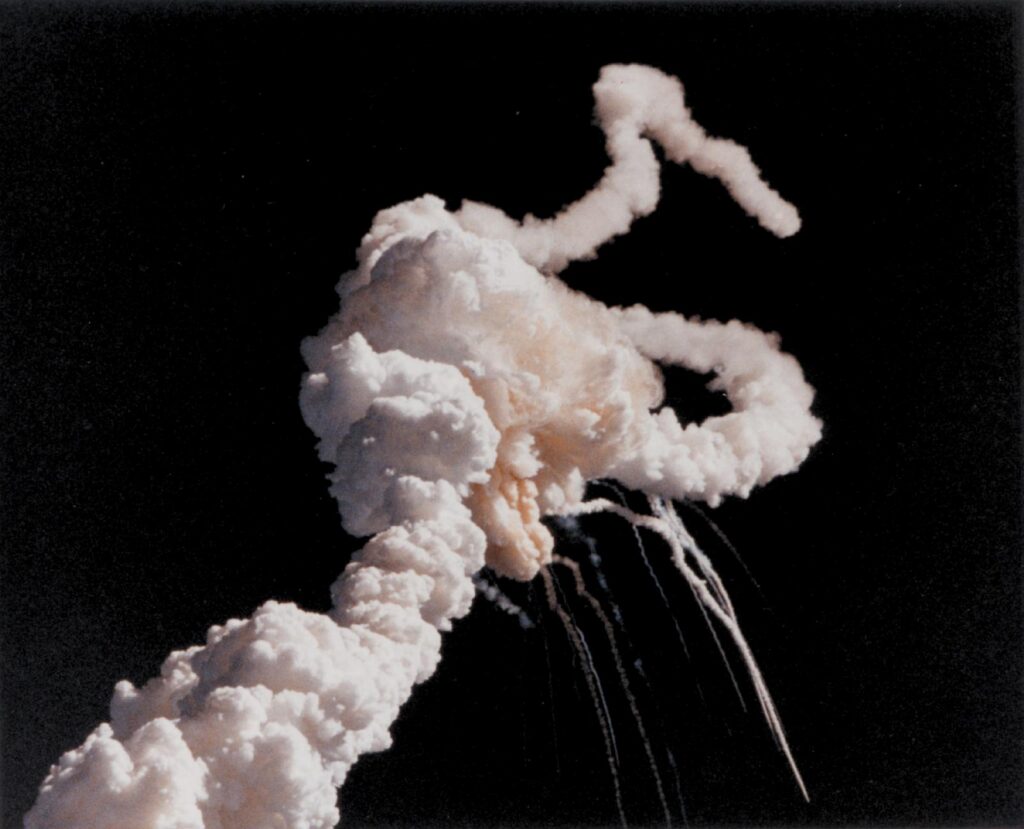
Her reflections echo those of another Houston figure who remembers the day with equal clarity: Gene Kranz, the legendary NASA flight director known for leading the Apollo 13 recovery effort. Kranz was the director of Mission Control at NASA’s Johnson Space Center on the day Challenger broke apart in 1986.
Now 92 and a parishioner at Shrine of the True Cross Catholic Church in Dickinson, he continues to honor the memory of crews lost in service to the nation’s space program.
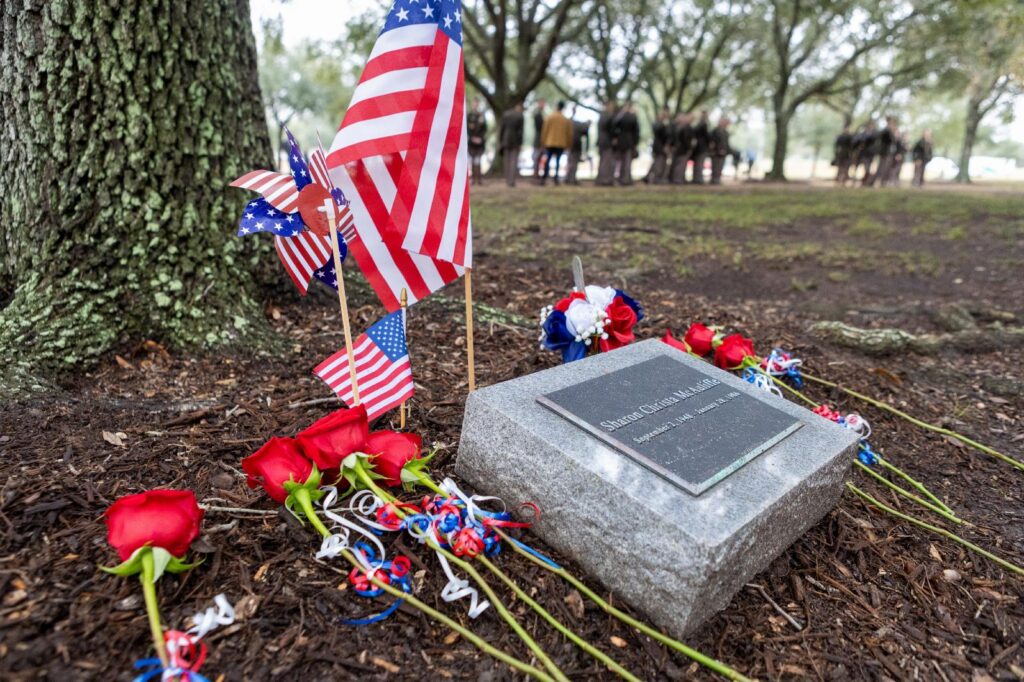
Astronaut Memorial Grove
On Jan. 22, Kranz joined hundreds at the Astronaut Memorial Grove at Johnson Space Center for NASA’s agency-wide Day of Remembrance. This year’s observance featured remarks by Cheryl McNair, widow of Challenger astronaut Ron McNair.
Like McNair, Kranz walked quietly through the memorial grove, its trees now towering decades after they were planted in 1996. He paused before several markers and made the Sign of the Cross at a wreath honoring Apollo 1 astronauts Gus Grissom, Ed White and Roger Chaffee.
Together, McCoy’s memories and Kranz’s presence illustrate two sides of the same legacy.
One speaks for the generations whose lives were shaped by watching the Challenger accident unfold on television. The other represents the NASA leaders who bore the responsibility of guiding space exploration through tragedy, reform and renewal. Both share a deep respect for the crew and for the lessons their loss imparted.
Upcoming Artemis II mission
Looking ahead to NASA’s upcoming Artemis II mission, scheduled to carry astronauts around the moon for the first time in more than 50 years, McCoy sees clear connections between Challenger’s legacy and the future of exploration. Today’s missions still depend on people across many fields who commit themselves to advancing knowledge and protecting crew members.
“Not everyone must become an astronaut, but each role plays a vital part in the success of space programs,” she said.
She tells her students that the future will require innovators who ask difficult questions and push for deeper understanding. Mistakes and setbacks are an inevitable part of exploration, she said, but they should not paralyze progress.
Decisions based on facts, data
“We cannot let that stop us,” she said. “Fear of failure should guide us in making decisions based on facts and data.”
The day after the Challenger tragedy, Kranz courageously said: “We will fly again.”
McCoy said she honors the memory of the Challenger crew by encouraging curiosity, resilience and faith in her classroom.
“Our universe is expanding and changing,” she said. “We need to learn about how these changes will affect us and all life on Earth.”
James Ramos is content editor for the Texas Catholic Herald, newspaper of the Archdiocese of Galveston-Houston. This story was originally published by the Texas Catholic Herald and distributed through a partnership with OSV News.
Updated on Feb. 2, 2026, at 1:44 p.m. ET
