


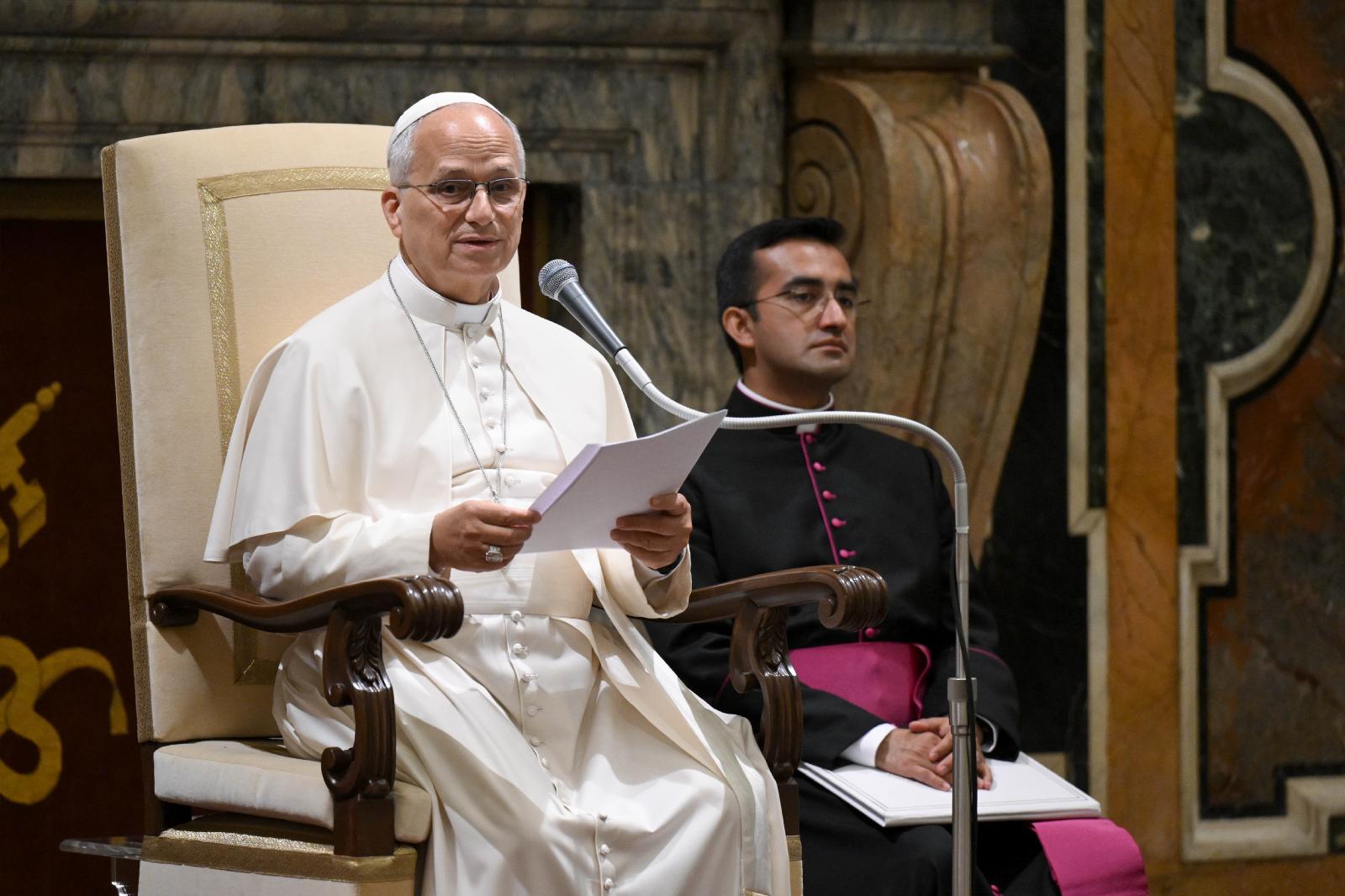
(OSV News) — Pope Leo XIV reminded Latin American bishops that true shepherds go out and care for their flock rather than lead from behind a desk.
In a letter dated Sept. 8 and addressed to the bishops of Latin America and the Caribbean, the pope cited the example of St. Turibius of Mogrovejo, the Spanish missionary bishop who evangelized Peru in the 16th century, and urged them to place the good of the faithful above all else.
“Certain aspects of a diocese are hard to grasp from behind a desk,” the pope wrote. “For this reason, we must ensure that pastoral visits retain their vitality: let us personally go out to meet our communities, listen to our flock and seek out those who seldom have the opportunity to approach the bishop.”
A bishop’s ministry, he added, “demands living with our heart in heaven and our feet on the road.”
Heart in heaven, feet on the road
The pope’s letter, sent to mark the third centenary of St. Turibius’ canonization, was released by the Vatican Sept. 19.
In his message, Pope Leo expressed his gratitude for his episcopal ministry in Peru, noting that there he “came to know first-hand the faith of a people from whom I received so much, and I came to understand better what it means to be a shepherd.”
“That experience brought me particularly close to Saint Turibius, who also came from afar to a land that he eventually made his own through pastoral charity,” the pope wrote.
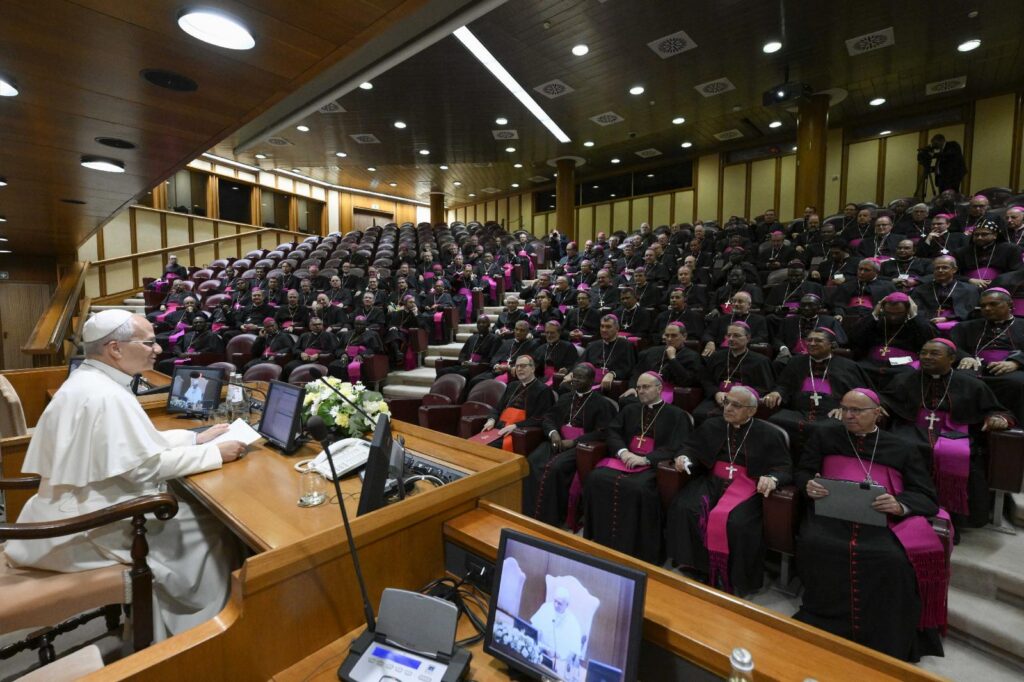
Drawing a parallel between the life of the Spanish missionary and the liturgical rite of welcoming a new bishop to his cathedral church, the pope said that what “the liturgy expresses in a few gestures, the Apostle of the Andes brought to life throughout his years as a shepherd.”
“Saint Turibius arrived in a land whose peoples and customs were largely unknown to him,” the pope explained. “In order to shepherd them, he had to immerse himself in that culture by traveling throughout the region. His pastoral visits and his desire for the Gospel to be proclaimed in the local languages gradually strengthened his bond with that land and its people.”
Remain with the flock when difficult times come
Recalling the rite in which a bishop receives a crucifix and kisses it at the entrance of the cathedral, Pope Leo said the gesture “holds a promise of self-sacrifice,” including the possibility that the episcopal ministry “may lead him down paths he had not anticipated and require sacrifices he may never have imagined.”
“The cross reminds him that he must remain with the flock when difficult times come, and that protecting the sheep may come at a price for the shepherd himself,” he wrote.
St. Turibius, he continued, embraced that aspect through “his travels and hardships as he defended the indigenous peoples, corrected abuses and remained close to the poor and those who suffered.”
Exhorting the bishops to “return frequently to the school of the cross,” Pope Leo warned that abandoning one’s flock can happen “long before any visible flight,” especially when “comfort, fear or self-interest take precedence over the good of the faithful.”
“The hired hand calculates what he might lose; the shepherd knows that he must give something of himself to remain faithful,” he said.
Continuing his explanation of the rite, Pope Leo said the act of a bishop sprinkling himself and the congregation with holy water brings him “back to the common source of Baptism.”
Pope Leo: before being a shepherd, the bishop is a disciple
“Before being a shepherd, he is a disciple; before presiding over the People of God, he counts himself among the baptized who are made children in Christ. The holiness of the shepherd cannot be taken for granted,” he wrote, urging bishops to nurture their interior life and “remain aware that we are disciples in need of conversion.”
Additionally, he added, the rite includes the bishop kneeling before the Blessed Sacrament, which serves as a reminder that while “bishops come and go, Christ always remains.”
“Pastors change, new challenges arise, and projects unfold, but the Church lives in the Lord,” the pope wrote. “For this reason, I would invite you to make Eucharistic adoration a pastoral priority.”
Noting St. Turibius’ love for the Eucharist, which was “expressed in his concern for bringing everyone closer to Jesus,” Pope Leo asked bishops to offer the faithful time and space before the Blessed Sacrament and “encourage prolonged adoration.”
“I am convinced that the Lord’s holy presence, faithfully welcomed and adored, sustains what our own strength cannot achieve and opens paths that no plan can conceive. It will be his love that transforms our dioceses,” he wrote.
Pope Leo also called on bishops to be in communion with the universal Church and “united to the Successor of Peter and to the College of Bishops,” reminding them that the teaching they deliver “does not derive from a word of his own that must be imposed.”
“At a time when so many voices claim authority over the consciences of the faithful, it is the bishop’s duty to offer a clear teaching that is patient and rooted in this communion, in order to help his people recognize the voice of the one Shepherd,” the pope said.
Drawing from St. Turibius’ pastoral ministry to priests and his awareness that “the life of the clergy has an impact on that of the people,” Pope Leo told the Latin American bishops “to stand by our priests,” as well as those preparing to enter the priesthood in seminaries and those in their first years of ministry.
“Let us foster genuine brotherhood and ensure that no priest feels that he can only approach his bishop when there is a problem to be resolved,” he wrote. “Episcopal fatherhood is often recognized when a priest knows that he can confidently knock on the door of the bishop’s residence.”
After drawing parallels between the rite and St. Turibius’ life, Pope Leo concluded his letter by noting that the “spiritual geography of the Church in Latin America has been shaped by shepherds who have visibly made manifest the union that exists between the altar and one’s life.”
Urging the bishops to delve deeper into the ministry and writings of saintly bishops in Latin America, the pope said their lives “reveal how the same mission can take different forms according to times and circumstances and they form a school of shepherds born of our ecclesial history.”
“Indeed, the saints continue to form saints,” he said.
– – –
Junno Arocho Esteves is an international correspondent for OSV News. Follow him on X @jae_journalist.
