


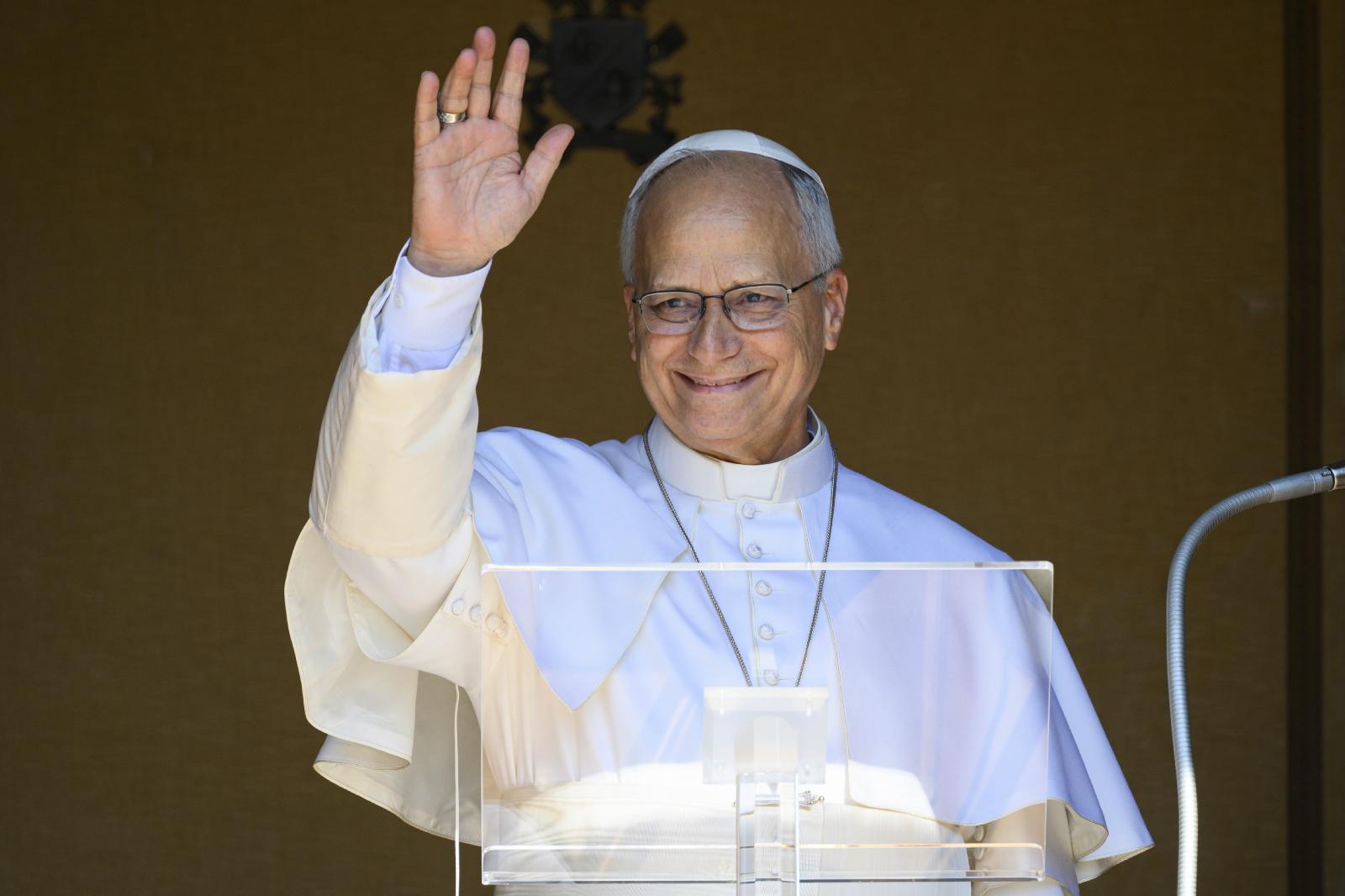
(OSV News) — An apostolic letter in the form of a motu proprio by Pope Leo XIV, “Mutua concordia,” published Aug. 29, amends Canons 106 and 126 of the Code of Canons of the Eastern Churches and grants the Synod of Bishops the power, through “an orderly procedure,” to remove a patriarch from office should their relationship be irreparably compromised for serious reasons.
Without prejudice to the prerogatives of the Apostolic See, therefore, the Synods of Bishops in such cases are called upon “to restore the wounded communion” through a procedure which, in accordance with the norms, guarantees the patriarch “the right to a full defence before the Synod.”
It will, however, remain for the pope to “grant his assent to the synodal decision, to ensure that the Fathers’ full freedom to express their choice is guaranteed, free from any possible undue internal or external pressure”.
The pontiff has ordered that a new paragraph, §3, be inserted after §2 of Canon 106, specifying that “should the Patriarch fail to fulfil the obligations” laid down by the Code itself “the Synod of Bishops of the patriarchal Church may be lawfully convoked by the Bishop who is the most senior in terms of episcopal ordination and who is entitled to vote; and if he too fails to proceed with the convocation, this power passes to the subsequent Bishops, who are more senior in terms of episcopal ordination, who are available to do so and who are entitled to vote”.
Canon 126 is also modified by the addition of a new paragraph stipulating that “for a grave cause recognized as such by the Synod of Bishops of the patriarchal Church, that same Synod — convoked in accordance with Canons 106 § 1, no. 3, and 108 § 3 — may request the Patriarch to resign from office.”.
The following paragraph establishes that if, following such a request, “the Patriarch does not resign from his office, the Bishop who is the most senior in terms of episcopal ordination, and who is entitled to vote, shall arrange for the election of a new President by the Synod, which shall submit the removal of the Patriarch to a secret ballot of at least two-thirds of the members of the Synod entitled to vote, whilst respecting [the Patriarch’s] right to defend himself before the Synod itself.” It is also the president’s responsibility to inform the pope, who must give “his assent to the removal, which renders the patriarchal see vacant.”
Given that in the Eastern Churches there exists a close relationship uniting the patriarch — who presides over his patriarchal Church as father and head, tamquam pater et caput (CCEO, Canon 55) — and the Synod of Bishops, which he himself convokes and leads, a harmonious relationship between them is essential for a fruitful ecclesial life, in the unity of the Spirit and in the sole interest of the Church itself, the motu proprio says.
However, the Code of Canons of the Eastern Churches, which governs the functioning and duties of the Synods of Bishops, made no provision for the event that “the sacred bond between the Pater et Caput and the other Bishops should be irreparably compromised”, resulting in “a grave wound requiring remedy, as also urged by numerous Eastern Prelates.”
With the Motu Proprio, therefore, a set of rules comes into force to be followed in the event of an irreconcilable rift between the patriarch and the synod, should the patriarch fail to resign. It is established that it is the responsibility of the synod to set out the serious reasons that led to the rift, to determine who is to convene the synod in such a situation and how this is to be done, to specify the majority of votes required to bring the patriarch’s term of office to an end, and to ensure that the patriarch’s rights of defence are safeguarded.
The pope’s provisions are intended to enhance the prerogatives of the Synod of Bishops of the Eastern Catholic Churches, endowing them with a new power consistent with their nature as Churches sui iuris and restoring to them that which originates within them, since they are better placed to understand and assess the situation, whilst reserving for the Roman Pontiff a role of guarantor. The provisions set out in the Motu Proprio also apply, by their very nature, to the major archiepiscopal Churches (Canon 152).
A version of this story was originally published by Vatican News and distributed through a partnership with OSV News.
