


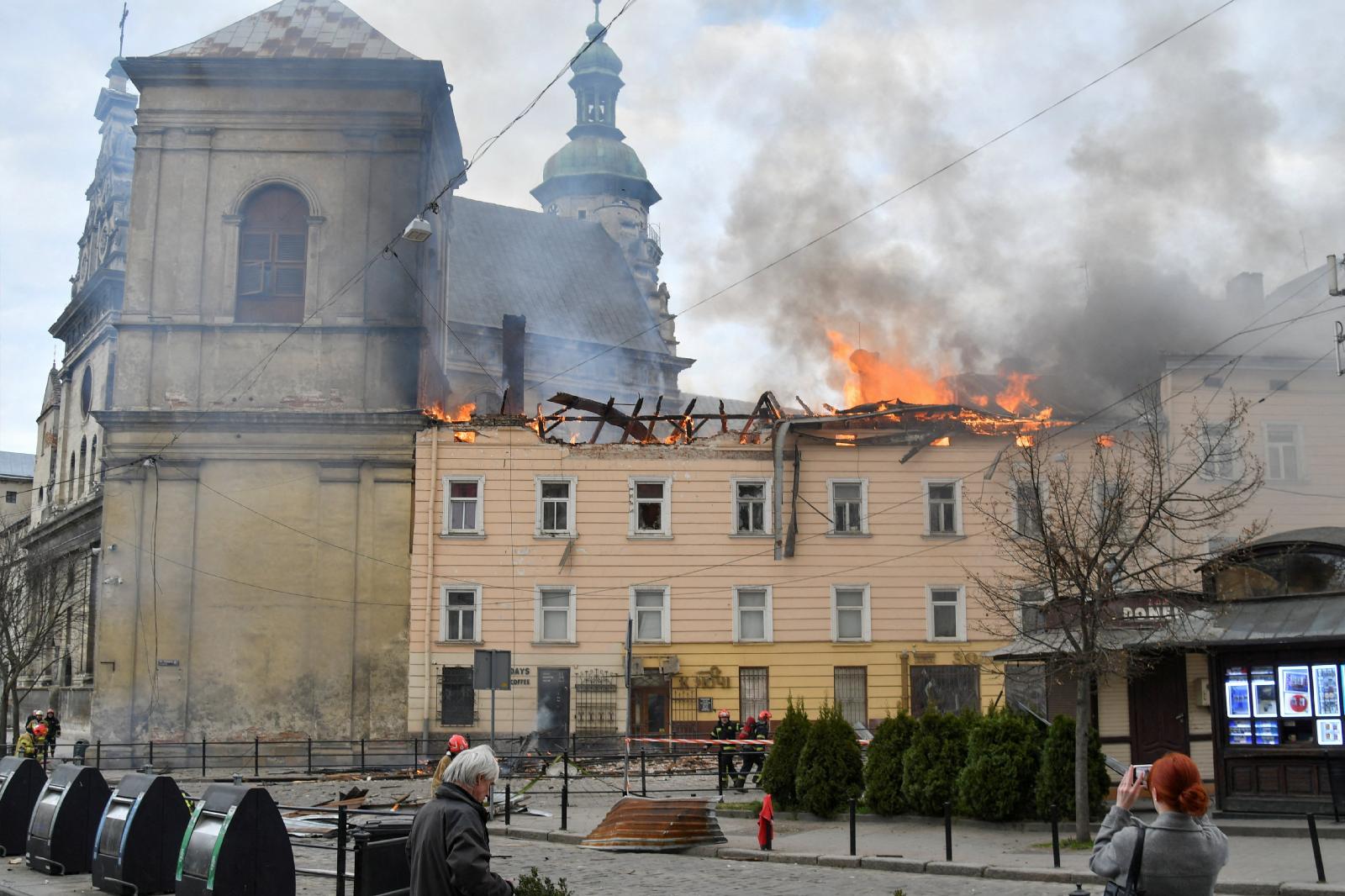
JENKINTOWN, Pa. (OSV News) — Basilian Sister Sevastiana Karvatska “can’t fall asleep peacefully” at night until she does one thing.
“I give into God’s hands every Basilian sister in Ukraine when I go to sleep, so that God would take care of and protect every one, especially those sisters who are so close to the front line,” Sister Sevastiana told OSV News.
And, she said, since her election as provincial superior of the order’s Lviv-based Most Holy Trinity Province, that prayerful insomnia has only intensified.
As Russia’s war in Ukraine rages on, Sister Sevastiana and two of her fellow Basilians, Sister Inokentiia Brattsiv and Sister Lucia Murashko, shared with OSV News their experiences of ministering in a nation both ravaged and resilient — a place where faith is tested to the extreme, and proven.
Service in wartime
The trio spoke with OSV News as they traveled to the U.S. in early March, meeting with Metropolitan Archbishop Borys A. Gudziak of the Ukrainian Catholic Archeparchy of Philadelphia, and with Ukrainian Catholic parishioners in the Philadelphia, New York and Chicago areas.
In their presentations, which included a video showing their outreach throughout Ukraine, the sisters thanked donors for their support — spiritual as well as material — of a wartime ministry they never envisioned would be theirs.
They also admitted their own fears and fragility as they navigate a conflict that is now one of many in a strife-torn, rapidly shifting geopolitical landscape.
The Basilian Sisters trace their roots to the fourth century, with its women religious serving in Ukraine for some 1,000 years. Now present in 12 countries, they have traditionally focused on providing catechesis and works of charity, centered in a life of prayer and liturgy.
But since Russia’s 2022 full-scale invasion of Ukraine — which continues attacks initiated in 2014, and which has been classified as a genocide in several human rights reports — the Basilians’ life of prayer and service in that nation has expanded to encompass everything from frontline humanitarian aid to trauma support for soldiers and war-weary Ukrainians.
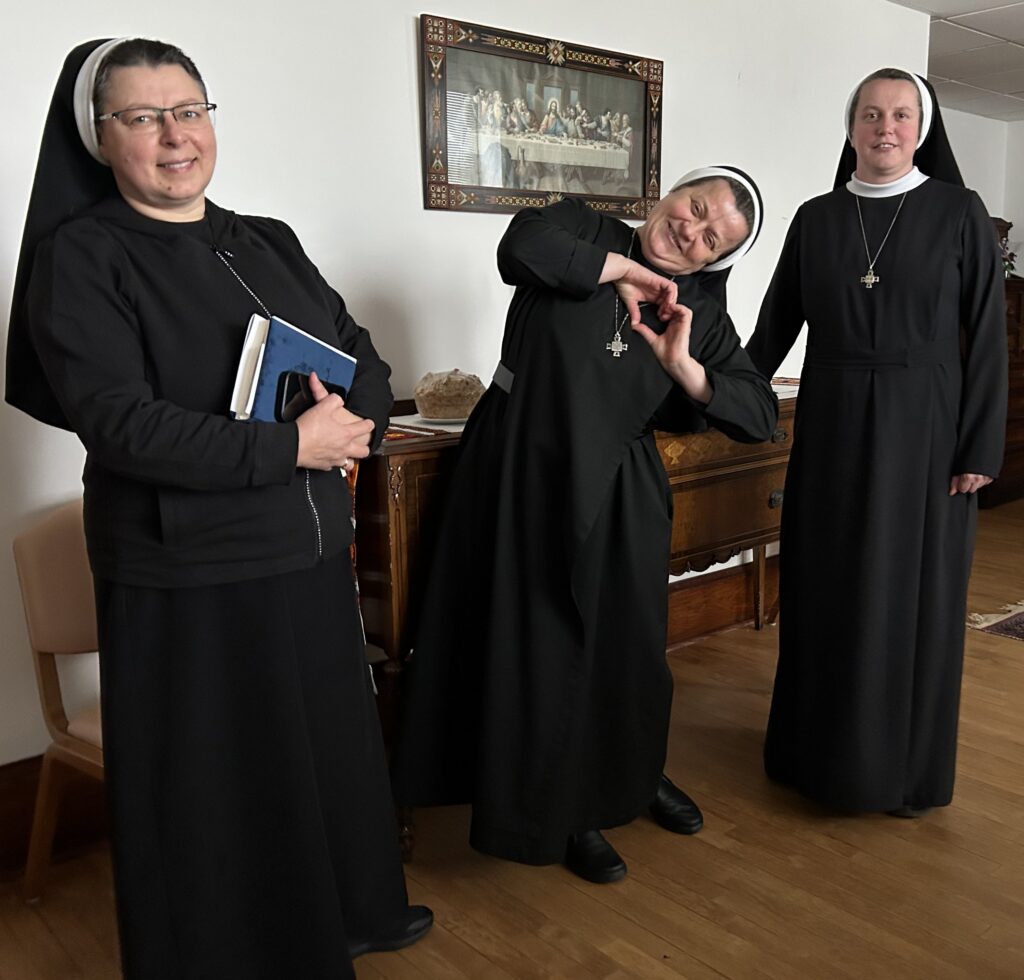
“Sometimes I think the war does not affect me much, because I find I am not very afraid when there are sirens or alarms,” said Sister Inokentiia, who like Sister Sevastiana is based in Lviv, and who is the second provincial councilor and treasurer for the Most Holy Trinity Province.
While bolstered by a “feeling of unity and survival” with Ukrainians, though, she experiences “all the emotions” that Ukrainians confront daily.
“I feel pain and I suffer particularly when I see the pictures or listen to the stories of the war,” she said. “When I see the videos of our soldiers returning from captivity, I can’t watch them without tears.”
Sister Lucia, superior of the province’s monastery in Zaporizhzia, admitted that living less than 10 miles from the front lines, those tears also fall when she is able to find a brief respite from the sirens and strikes.
“I think my body’s reaction is because I live in a constantly stressful situation,” she explained, dabbing her eyes. “When I am in a safe environment, my body starts to release.”
She and the two other Basilians at the Zaporizhzhia monastery, Sister Yelysaveta Varnitska and Sister Bernadette Dvernytska “see so much pain, so much suffering.”
One soldier’s witness
With Russia crippling Ukraine’s energy grid over the bitterly cold winter — leaving millions freezing in the dark for hours, even days — “I see people come to church with a lot of coats on, because they cannot warm themselves,” said Sister Lucia, who previously issued an open invitation to Pope Leo XIV to visit Ukraine.
She said the monastery, which relies on “all these batteries,” is a place of warmth for body and spirit — and protection, since a Ukrainian soldier is now quartered with the sisters.
“He’s very pious; he prays a lot and goes to confession, and receives the sacrament of holy Communion,” Sister Lucia said.
The soldier, whose name OSV News is withholding for security reasons, miraculously survived a strike on his former shelter, having been on an unexpected leave when it was bombed. Only his cross and two icons remained intact.
“He said to me, ‘Explain that.’ And I said, ‘You know the answer,'” said Sister Lucia. “He knows God is very close.”
She and the sisters prepare morning coffee for him as he heads to his command post before dawn.
“He is so tired,” said Sister Lucia. “When he eats, his hands tremble.”
But seeing the soldier return to his post day after day “gives you strength,” she said.
Sister Sevastiana described the sight of soldiers kneeling in prayer before images of Christ crucified as “living icons” — and “a kind of testimony that Ukraine will be resurrected.”
A beacon of hope
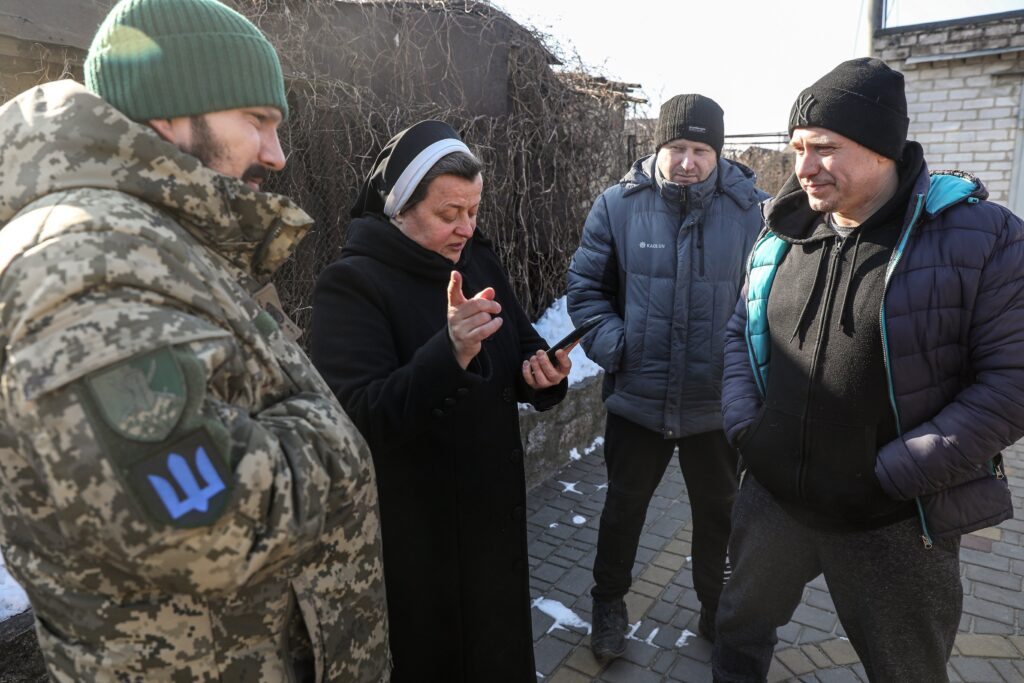
She recounted her recent role as head of a medical committee formed by Major Archbishop Sviatoslav Shevchuk, father and head of the Ukrainian Greek Catholic Church, who asked her to create a program for those wounded, in body and particularly spirit, by the war.
The program addresses “three important issues,” said Sister Sevastiana — pastoral support for the people, psychological health resources and “theology to witness to God as people are lost among all this evil.”
“Often people ask us, ‘Where is God? Why does he allow such things to happen? If he’s good, why do we suffer, lose our homes?'” she said.
In some cases, Ukrainians are too stunned by the war’s atrocities to even utter such questions, she added.
Sister Sevastiana recalled meeting several elderly persons, internally displaced from areas near the front lines, who sat in their wheelchairs “like stones,” mute and avoiding eye contact. A nurse confirmed they had “been like that for several days.”
The sight of them confirmed to Sister Sevastiana that Ukrainians “need someone to be close to them. You don’t have to say anything; you just have to be close.”
Such presence is a comfort to neighbors of the Zaporizhzhia monastery, said Sister Lucia.
An older couple living across the street “watch everything that happens” around the monastery — and if they don’t see the sisters, the husband “calls and asks, ‘Where are you? We are scared without you,'” said Sister Lucia.
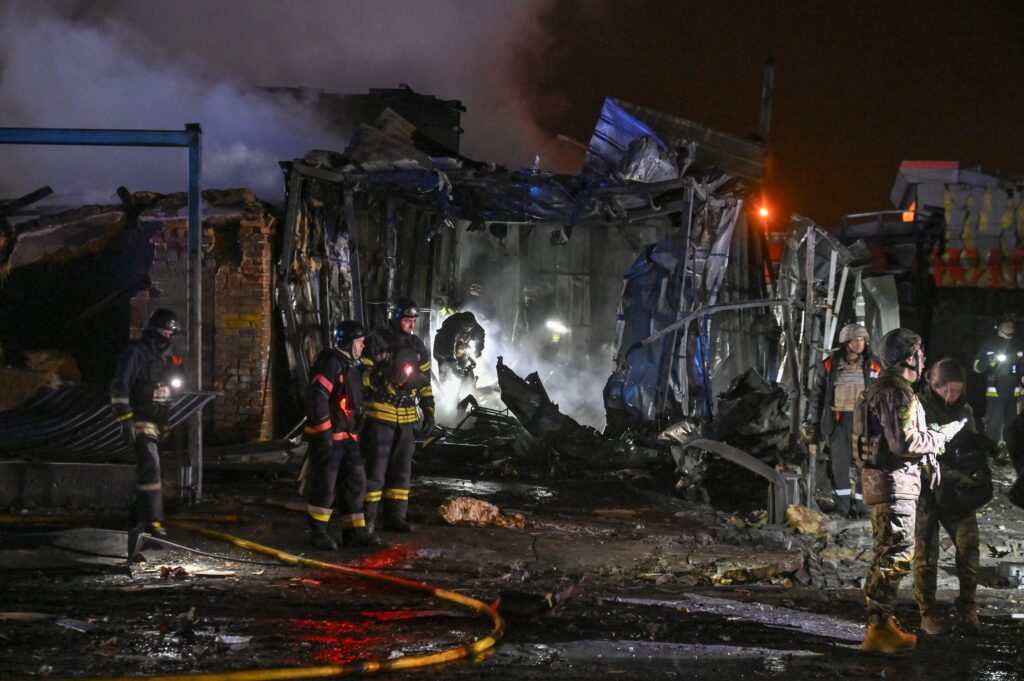
That same consolation extends across Ukraine, with the sisters regarded by many as bringing “the protection of God,” said Sister Inokentiia. “They see hope in us. If we are close, probably God is close.”
The Zaporizhzhia sisters, working with the local priests, offer vibrant catechesis programs for elderly and youth alike, ensuring that faith formation continues despite the daily risk to human life. Sundays at the monastery and parish churches are hectic, said Sister Lucia — with the joyful energy a kind of defiance against death.
Reluctantly, the sisters have discussed relocating the three Zaporizhzia members to the west of Ukraine if Russian forces advance further.
But with “so many things to do” to serve “children, youth, adults and all the elderly,” there is no desire to depart, said Sister Lucia.
“We do not have time to leave,” she said, her voice filled with emotion. “And how can we leave if they stay there?”
Gina Christian is a multimedia reporter for OSV News. Follow her on X @GinaJesseReina
